
Why do laminate veneers change color in Seocho? If you want a natural result, check this.
Hello, I am Han-gyeol Kim, director of Smile View Dental Clinic and a prosthodontic specialist in integrated dentistry with 16 years of experience.
Many people consider laminate veneers for aesthetic reasons, but they often worry about unnatural color or shape after the procedure, as well as the reasons laminate veneers may change color.
My most important treatment principle is to go beyond simply making teeth whiter and more even, and to create a natural smile that brings out each patient's own beauty.
That is why I practice dentistry with the following three promises:
-
I design a smile that naturally suits your face. I consider your facial shape, lip line, and the way you smile to create the smile that suits you best.
-
I do not recommend laminate veneers indiscriminately. As a specialist in integrated dentistry, I accurately assess your dental condition and comprehensively determine and recommend the treatments you currently need most, such as orthodontics or cavity treatment.
-
I understand the feelings of patients who are afraid of the dentist better than anyone. Having personally experienced various dental treatments, I do my best to ensure that you can receive treatment with confidence through thorough explanations and comfortable care.
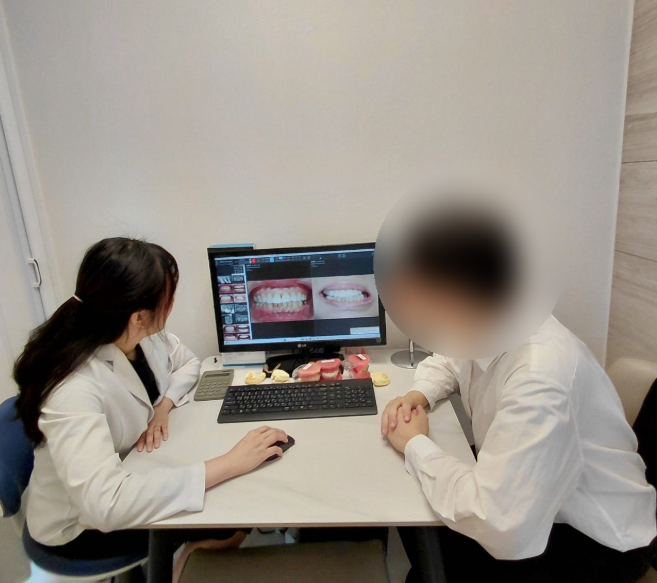
“ I had laminate veneers... Why do only my teeth look like they are floating?”
“After some time, the boundary between the laminate veneers and my gums seems to have become darker.”
Based on the concerns patients raise most often, I will explain in an easy-to-understand Q&A format the key points you should know for natural-looking laminate veneers.
Q1. Why do laminate veneers change color over time?
If the laminate veneers you made a major decision to get have changed color, you may feel very disappointed.
The reasons for laminate veneer discoloration can be broadly divided into three categories.
First, discoloration of the adhesive.
Laminate veneers are made by bonding thin ceramic plates to the teeth. If the adhesive used in the process discolors over time, the laminate veneers may begin to look yellowish.
Second, limitations of the material itself.
Not all laminate veneers are made from the same material.
Some materials containing resin may absorb moisture over time or lose their color or gloss due to microscopic surface wear.
Third, improper lifestyle habits.
Just like natural teeth, laminate veneers can become stained if you frequently consume highly pigmented foods and beverages such as coffee, wine, or curry.
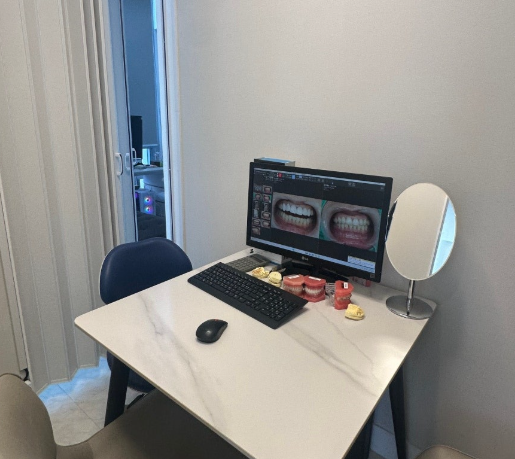
Q2. What material should be used to keep veneers natural-looking without discoloration?
To give you the conclusion first, it is advisable to choose laminate veneers made of reinforced ceramic (porcelain).
It may be easy to understand if you think about dishes.
When red pepper paste sauce stains a plastic bowl, the color does not come out easily. In contrast, smooth porcelain dishes are hardly stained.
Dental materials work in much the same way.
- Reinforced ceramic: Its surface is extremely smooth and has almost no moisture absorption, making it resistant to discoloration and staining.
It also has translucency—the property of allowing light to pass through—that is similar to natural teeth, creating a natural appearance like real teeth.
- Resin/hybrid: Although the initial cost may be lower, its microscopic particle structure means it generally has a higher possibility of discoloration and wear than ceramic.
At Smile View Dental Clinic, we use only high-quality ceramic blocks with excellent resistance to discoloration and strength, while also reproducing the translucency of natural teeth, in an effort to provide results with high long-term satisfaction.
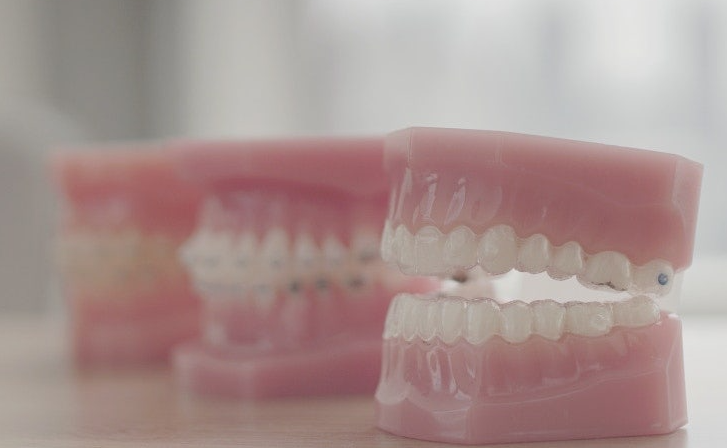
Q3. Is “as white as possible” always the right answer? Finding the shade that suits you
When consulting about laminate veneers, many people show photos of celebrities and ask for teeth that are “as bright and white as possible.”
However, unnatural white teeth can create an artificial impression and make your smile look awkward.
The key to successful laminate veneers is harmony.
Consider your skin tone and eye color: Just as everyone has a unique skin tone, the tooth brightness that suits each person is also different.
I consider your skin tone, lip color, and even eye color to work with you to find the shade that suits you most naturally.
- Harmony with the surrounding teeth: When laminate veneers are placed on only six to eight front teeth, a significant color difference from the neighboring untreated teeth can reduce the aesthetic quality.
It is important to choose a shade that becomes naturally brighter based on the color of the surrounding teeth.
- Designing translucency and texture: Natural teeth become more translucent toward the edges and have a fine surface texture.
Only by reproducing these details can we create laminate veneers that do not look artificial and appear like your “original teeth.”
Q4. If you are concerned about your front teeth, are laminate veneers really the only answer?
“Doctor, should I get laminate veneers?”
This is the first question most people who visit because of the shape or color of their front teeth ask.
However, as a specialist in integrated dentistry, I do not recommend laminate veneers to everyone.
If the teeth are severely misaligned or protruding, correcting their position first through orthodontic treatment may produce a better result than excessively reshaping the teeth for laminate veneers.
There are even patients who trust me enough to travel from Jeju Island and continue visiting regularly for orthodontic treatment.
If you are concerned about removing tooth structure, other alternatives, such as minimally invasive laminate veneers or teeth whitening, can also be considered.
What matters is to comprehensively assess the patient's oral condition, fully explain the advantages and disadvantages, and help the patient choose the most suitable method personally.
Q5. How should I care for laminate veneers so they last a long time without discoloring?
Just as important as receiving meticulous treatment with good materials is aftercare.
If you follow a few habits to avoid the causes of laminate veneer discoloration described above, you can maintain a beautiful smile for a long time.
-
Regular checkups and professional cleanings: It is advisable to visit the dentist once every six months to one year to check the condition of your laminate veneers and gum health, and to remove plaque and tartar that can cause staining through professional cleaning.
-
Be careful of staining: After consuming highly pigmented foods and beverages such as coffee, black tea, wine, or curry, rinsing your mouth with water or brushing your teeth right away can be helpful.
-
Avoid hard and chewy foods: Although laminate veneers have excellent strength, strong impacts—such as biting ice with your front teeth or opening bottle caps with them—can cause fractures, so caution is needed.
Ultimately, laminate veneers are not a procedure completed through technique alone.
Aesthetic judgment to find a design that harmonizes with the patient's face, expertise in accurately understanding and applying the characteristics of the materials, and communication that takes even the patient's smallest concerns into account must all come together to create a satisfying result.
Like the patient who visited us through an introduction from actor Donghyun Bae, I will always do my best to give everyone who visits us through trust rather than advertising a natural and beautiful smile that looks like their “original teeth.”
< Good Articles to Read Together >
| Smile View Dental Clinic near Sinnonhyeon Station |
|---|
| Monday–Wednesday, Friday (10:00–18:30); Saturday (10:00–15:00) * Closed Thursdays, Sundays, and public holidays |
| TEL : 0507-1398-7529 |