Types of Implant Crowns, Insurance Coverage, and Costs/Prices in Gangnam-gu: What to Check Before Comparing Them
Hello. I am Kim Han-gyeol, director of Smile View Dental Clinic and a specialist in comprehensive dentistry with 16 years of experience.
Many people preparing for implants look into the different types of implant crowns.
Today, I would like to explain in detail why prices vary depending on the material and what criteria should be used when making a choice.
I consider the following three principles important in my practice.
-
I design a smile that looks most natural with your face, rather than simply creating white teeth.
-
As a specialist in comprehensive dentistry, I provide a comprehensive diagnosis of the treatments each patient needs, including orthodontics and cavity treatment—not just veneers.
-
Because I understand better than anyone how frightening dental treatment can feel, I help patients receive treatment with peace of mind through thorough explanations.
Based on this treatment philosophy, I will explain how to choose an implant crown you will not regret.

"Zirconia? Gold? PFM? It is so confusing... Which one will last longer and suit my teeth well?"
Implant treatment is an important procedure for restoring the function of a missing tooth.
However, many people focus only on the root (fixture) and make a decision based solely on the price of the crown, which actually determines how food is chewed and affects appearance.
It is important to clearly understand why choosing the type of implant crown matters and what the characteristics of each material are.
Is it okay to choose an implant crown based only on price?
The conclusion is that the position and function should be considered first, rather than the price.
Crown materials are broadly divided into three types: PFM, gold, and zirconia, and each has distinct advantages and disadvantages.
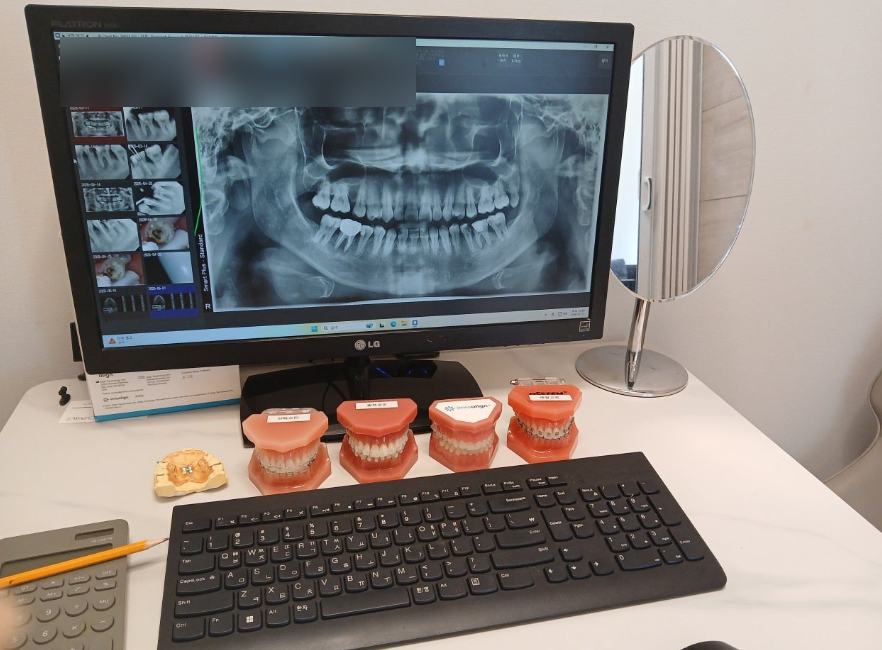
- PFM (Porcelain Fused to Metal)
This type of crown has a metal interior and an outer layer made of tooth-colored porcelain.
It was widely used in the past for aesthetic reasons.
Although it has the advantage of being relatively affordable, the metal inside can make the gumline look dark, and the gums may appear blackish over time.
There is also a risk that the outer porcelain may break under a strong impact.
- Gold (Gold)
Because it is made of gold, it is highly biocompatible and has excellent strength, so it is rarely at risk of breaking.
It may be particularly suitable for areas that receive strong forces, such as molars.
However, because of its distinctive gold color, it is rarely used for front teeth where aesthetics are important. Its cost can also fluctuate significantly depending on the market price of gold.
- Zirconia (Zirconia)
It is so strong that it is often called an “artificial diamond,” and its color and translucency are very similar to those of natural teeth.
Unlike PFM, it is less likely to chip or cause the gums to appear dark, so it is widely used for both front teeth and molars.
Among the current types of implant crowns, it is regarded as a material that satisfies both function and aesthetics.
Since each material has different characteristics, rather than saying that one material is “always the best,” it is wise to make a choice after considering the tooth’s location, the bite relationship, aesthetic importance, and other factors together.
Why a specialist in comprehensive dentistry with 16 years of experience looks at the “entire face”
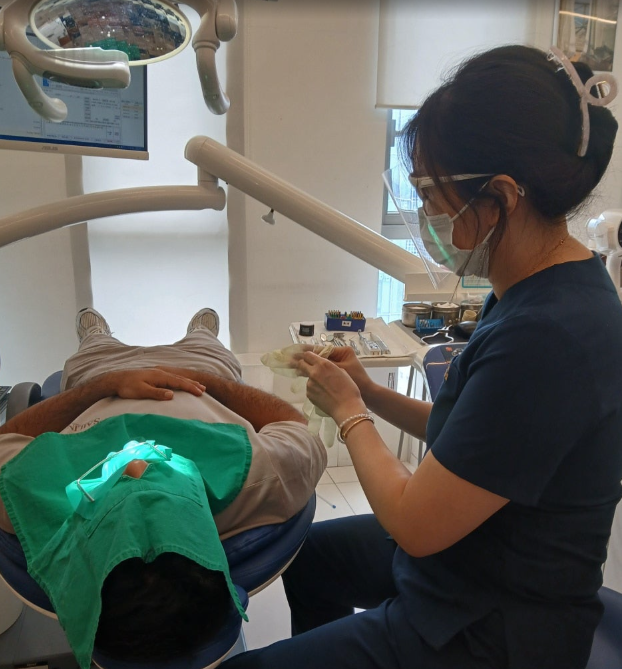
I do not simply explain the advantages and disadvantages of each material when deciding on the type of implant crown.
I also consider the patient’s face shape, lip line, and the extent of the teeth visible when smiling.
For example, even if it is the same molar, if it is in a position that is clearly visible when smiling, I may recommend zirconia rather than a gold crown.
Conversely, I may recommend a more suitable material after considering the condition of the opposing teeth and the patient’s teeth-grinding habits.
This is why, as a specialist in comprehensive dentistry, I provide treatment encompassing various areas, including orthodontics, cavities, and the temporomandibular joint.
Rather than looking at just one tooth, my most important treatment principle is to create harmony throughout the mouth and, ultimately, a natural smile that complements the entire face.
As important as “which crown” is “who provides the treatment, and how”
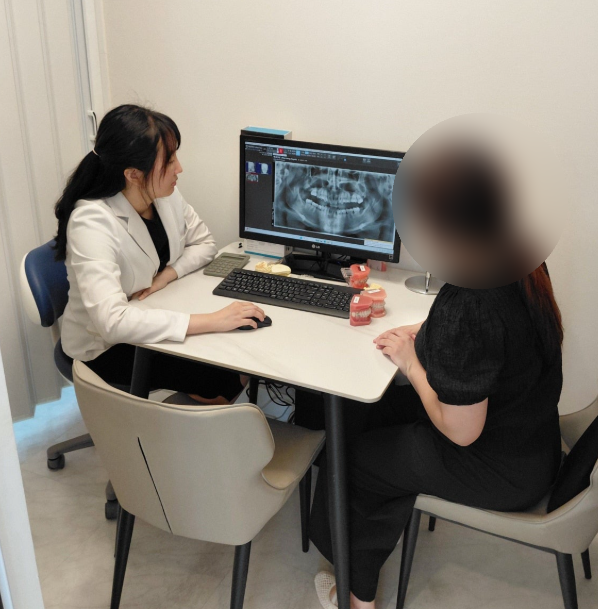
Just as important as choosing a good material is who provides the treatment and how it is performed.
Implant treatment, in particular, requires close consultation and ongoing care.
- The director is involved from consultation through follow-up care.
I personally take responsibility and work with patients from the initial consultation through diagnosis, treatment planning, and post-treatment care as the clinic director.
The trust I have built with the many patients who have visited the clinic over the eight years we have remained in the same location was formed in this way.
Like the patient who visited us after being introduced by actor Donghyunbae, I continue building relationships with each patient based on trust rather than advertising.
- We carefully check and apply implant insurance coverage.
If you are at least 65 years old and enrolled in national health insurance, insurance coverage is available for up to two implants.
However, not every type of implant crown is covered, and there are details you need to know, such as the percentage of out-of-pocket costs.
I provide detailed guidance on the criteria for implant insurance coverage so that patients can receive the benefits without overlooking anything.
- I understand better than anyone how frightening dental treatment can feel.
I have also experienced various dental treatments since childhood, including cavities, root canal treatment, and wisdom tooth extraction.
That is why I understand better than anyone the tension and fear you may feel when lying in the treatment chair.
I believe that the reason patients trust us and continue to visit from far away, like the patient who regularly traveled from Jeju Island for orthodontic treatment, is the trust that began with this empathy.
I will always do my best to help you understand through sufficient explanations before treatment and to ensure that you can receive care with peace of mind in a comfortable atmosphere.
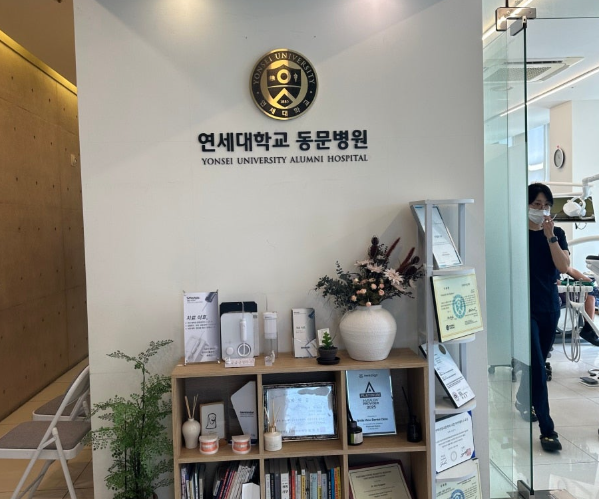
An implant becomes part of your body that you may need to use for 10 or 20 years after a single treatment.
Rather than choosing a clinic based simply on low cost or a short treatment period, I recommend working with dental professionals who can accurately diagnose your dental condition and create the most appropriate treatment plan.
I hope your concerns about implant crowns and choosing the right dental clinic for you have been resolved, at least to some extent.
< Recommended reading >
| Smile View Dental Clinic near Sinnonhyeon Station |
|---|
| Monday–Wednesday, Friday (10:00–18:30) Saturday (10:00–15:00) * Closed Thursdays, Sundays, and public holidays |
| TEL: 0507-1398-7529 |

#GangnamImplants #GangnamDentalImplants #ImplantCrownTypes #ImplantCrownInsurance #ImplantCrownCost #ImplantCrownPrice