"Van Gogh, Banpo Xi, The Lord of the Rings, Ban Ho-kyung. Let's go"
| Nice to meet you. I’m Ban Ho-kyung, a plastic surgeon who dreams of being world-class and looks super youthful. I’m not sure why people keep coming to me to ask for after-sales service on eye surgeries that failed elsewhere, but I’m truly grateful that so many of you visit me. (I didn’t know this myself either, but apparently I’ve built a reputation for being good at ‘eye surgery’...)

0.1 second
Janine Willis and Alexander Todorov of Princeton University’s Department of Psychology published a study showing that first impressions are formed in just 0.1 seconds. They explained that these first impressions do not change easily over time, and that correcting an image requires a long time and effort.
So, what is the key factor that shapes a first impression in just 0.1 seconds?
Yes, it’s the eyes.
In a first impression, the eyes do more than simply serve as a visual organ. They convey emotion, build trust, and are the most important element in determining the overall mood of a face. That’s why having pretty eyes goes beyond appearance alone—it leaves a positive impression on others and connects to confidence and attractiveness.
In fact, the eyes become the most important 기준 when evaluating a person’s appearance. If the eyes are pretty, the face shines more, it becomes easier to gain favor from others, and it also has a big impact on living a confident life. That’s why beautifying and caring for the eyes is not just about improving appearance, but an important way to express yourself.
Maybe that’s why?
Public interest in eye surgery has steadily increased, and clinics and hospitals that welcome this (?) have been popping up everywhere. It would be great if eye-related surgeries and procedures were performed well and satisfactorily, but the problem is that because of places that don’t do that, I keep getting busy.
Of course, surgeries such as under-eye fat repositioning that brighten and sharpen the eyes and the area around them can be effective. But to be honest, even if you have a surgery like under-eye fat removal, once you’ve had your sixtieth birthday party, it all goes back to the same old story. Please remember that in general, once you’re over 60, you often need procedures such as lower blepharoplasty again to remove sagging skin.
Ah, and there are times when people show me photos of Jang Wonyoung or Karina and ask me to make them look like that. I’m actually grateful! It helps me immediately understand what kind of eye style you want.
| In this column, I’ll be going step by step through plastic surgery questions, including industry secrets that no one else tells you honestly. In particular, you can get information and useful tips about eye surgery, so please read to the very end. |

Are you thinking about ‘eye plastic surgery’?
The moment you see the word “surgery,” you hesitate, and if you’ve been wasting time going from one clinic to another, from now on I’ll kindly and easily answer all your questions about eye plastic surgery. So please, put your worries aside and read comfortably.
There are truly many different methods for eye plastic surgery.
Double eyelids, brow lift, forehead lift, under-eye fat repositioning, upper and lower blepharoplasty, and even revision eye surgery. Because the needed approach differs from person to person, a customized diagnosis is essential.
Many people are especially concerned about under-eye fat.
The problem is that it’s hard to accurately understand your own condition, and people around you, even though they’re not doctors, casually “diagnose” you by saying, “That’s your problem.” So instead, they come to me, the doctor, and say, “I have a lot of under-eye fat and it’s bulging, so please remove the under-eye fat.”
In fact, the problem may not simply be bulging fat.
Often the issue is loss of elasticity and sagging skin, and sometimes drooping in the upper eye area is the bigger cause. That’s why I’m doing my best to give an accurate answer to the question, “What method is right for me?”
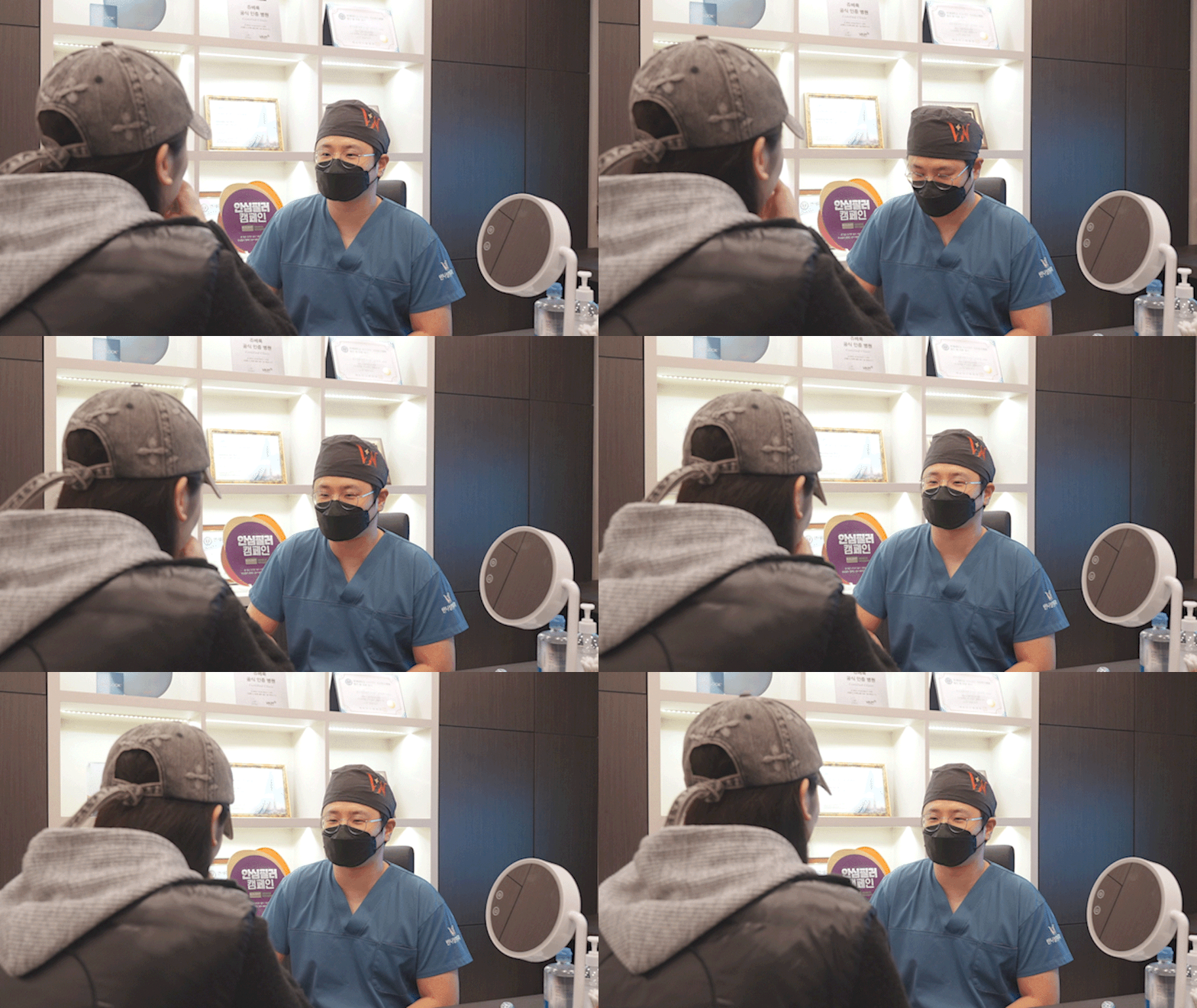
Under-eye fat surgery,
you must know this!
Under-eye fat surgery is common, but if it ends with simply removing fat, the under-eye area can later become hollow and look sunken. When I reposition the fat, I partially remove only what’s necessary and reinforce the septum to maintain elasticity if needed. That’s because this allows for long-term results from just one surgery.
And the device that plays a very important role in this process is the Bovie.
The Bovie is a device that uses high-frequency energy to perform cutting and hemostasis at the same time. It helps reduce bleeding and minimize tissue damage, which in turn reduces swelling and bruising after surgery. It’s an important device that makes the surgical result cleaner and safer. (To be precise, the Bovie is just assisting my hand technique^^.)
Most importantly, one advantage is that if you rest only on the day of surgery and the next day, you can return to your daily life. So if you were worried about recovery time, you can relax.
| Ah, do you know how important “anesthesia” is in under-eye fat surgery? In small clinics, the anesthesia system may be insufficient, and patients can wake up during surgery (which can become very awkward for both the doctor and the patient). If the patient moves in this situation, bruising and swelling at the surgical site can become worse. That’s why I thoroughly manage anesthesia so that this does not happen during surgery. Thanks to that, postoperative swelling and bruising are minimal, and recovery is truly fast. |
Sometimes, people oddly ask me whether the cost is lower than they expected.
The reason is simple. I don’t spend unnecessary money on marketing. And it’s because I operate quickly and accurately. With extensive experience in eye surgery and a high level of skill, I use time efficiently, so I don’t feel the need to charge expensively.
(To be honest, I do keep an eye on my wife’s reaction.)

And when it comes to eye plastic surgery, many people worry about things like becoming “too artificial” or ask, “What if it looks too unnatural?” Don’t worry. The key is naturalness that doesn’t dramatically change your original image.
I value natural beauty the most.
Plastic surgery is a process of bringing out the charm you already have. Rather than overdone designs or trends, I prioritize harmony that suits each individual face.
| ps. If you’re still confused and think, “I really don’t know what kind of eyes suit me,” just show me photos of people you think look pretty, such as Jang Wonyoung or Karina^^. It helps me a lot! |
Don’t plastic surgeons get better as they get older because they have more experience?
Hmm, of course experience matters. But the idea that older automatically means better is outdated. If you entrust your eyes carelessly based only on a doctor’s career length and age, you may fall behind the trends.
If you are considering plastic surgery, especially eye surgery, I hope you’ll remember that younger doctors in their 40s, including me, have many advantages. Let me explain one by one what those strengths are.
- Latest technology? Younger doctors know it inside and out!
Medicine changes with the times.
These days, even in plastic surgery, there are cutting-edge technologies everywhere—lasers, minimally invasive techniques, the latest equipment, and more. I learned and mastered these technologies starting from my school days. I’m from a generation that has internalized the latest trends and techniques.
You could put it this way.
“A newer GPS is more accurate than an old map, right?” What matters here is that doctors like me, who are familiar with the latest technologies and sensitive to trends, can better understand the natural results you want or designs aligned with current trends. Isn’t it reassuring to trust someone like me who’s familiar with the latest technology and sensitive to trends?
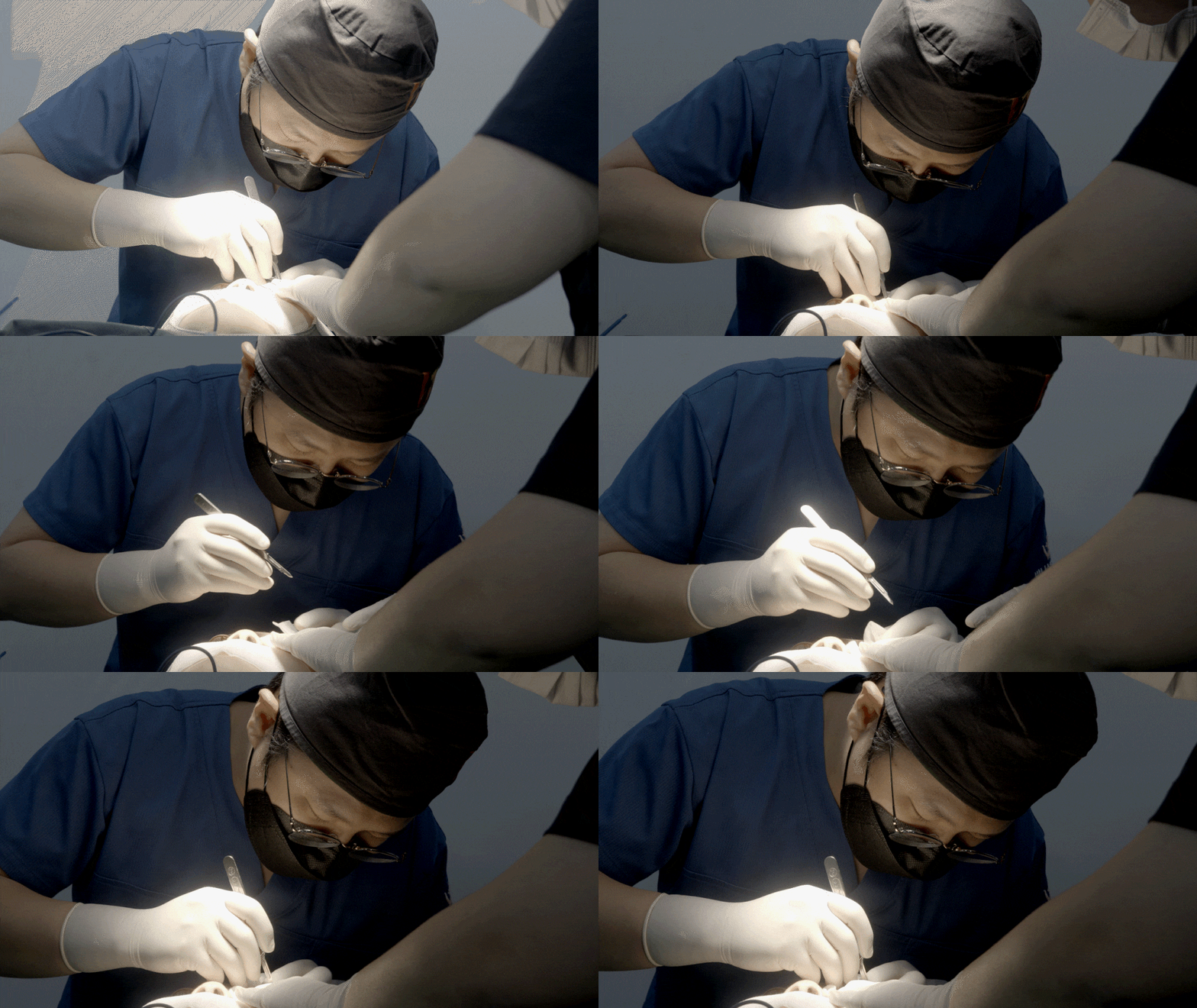
- Hand tremors? That’s still someone else’s problem.
Plastic surgery lives and dies by precision.
Especially when working on small areas like the eyes and nose, manual agility and visual accuracy are extremely important. But as people get older, some hand tremors and eye fatigue can naturally appear. I’m still confident in this area! I have good stamina, can maintain concentration throughout surgery, and pay close attention to details, so I can finish much faster.

- A doctor who communicates well is a good thing!
Everyone, communication between doctor and patient is the most important part of plastic surgery.
“What do you want?”, “What kind of appearance do you want to change into?” Only by understanding these things one by one can we create a design that fits your needs exactly. I can communicate better because I have a lot in common with my patients.
For example, I can immediately catch trendy requests like, “I want a natural look these days.” And during consultations, I talk comfortably and pleasantly, and explain complicated medical terms in an easy way. My strength is helping you approach surgery stories that feel difficult without pressure, or so my wife says.

- Trust a doctor who keeps growing!
I still have a lot of time to keep learning.
I’m likely to keep improving as I gain new experiences and learn the latest techniques. So I’m learning now, and I’ll keep learning in the future.
So what’s the conclusion?
‘Eye surgery = Ban Ho-kyung’
Of course, doctors with lots of years and extensive experience are excellent too. They have their own experience and know-how. But I wanted to say that younger doctors like me also have many strengths—latest technology, a natural aesthetic sense, and communication skills.
| But in the end, what matters most is, “Is this doctor a good fit for me?” You don’t have to come to me specifically. Regardless of age or years of experience, choose a doctor who understands your concerns well and can produce results that don’t require aftercare. But who knows? Maybe I’m the best fit for you! |
"If you’re thinking about eye plastic surgery, how about having a relaxed conversation with me?"
That’s why you’d fall for me—it was Ban Ho-kyung.
Thank you.