Gangnam under-eye fat repositioning that lasts long and is safe
Conditions for a surgery that allows a quick return to daily life
| This column includes a plastic surgeon’s opinion on the conditions for achieving under-eye fat repositioning results that allow a quick return to daily life, are safe, and last a long time (duration, blindness-related side effects, recovery period, and pain during the procedure). |
Hello.
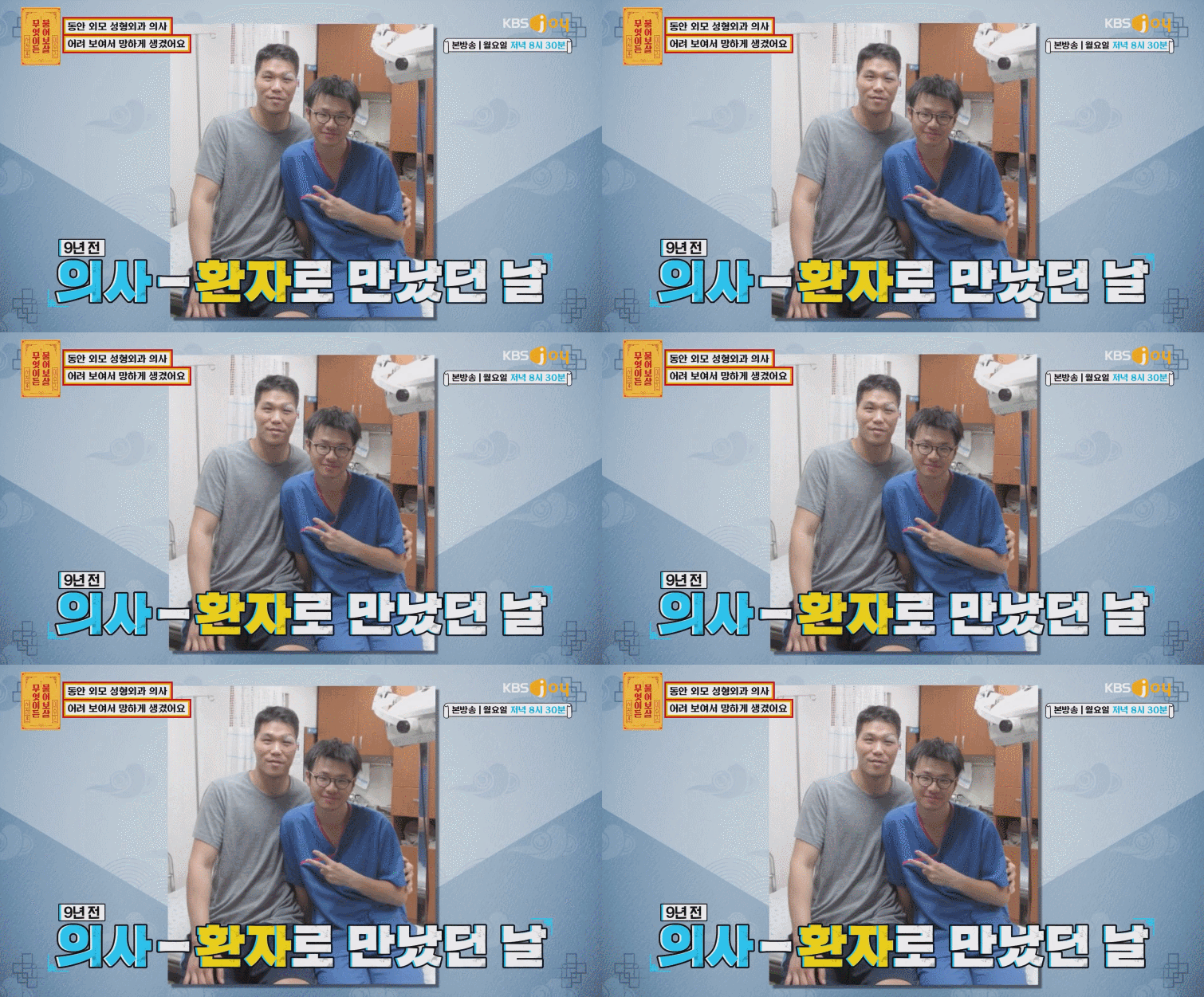
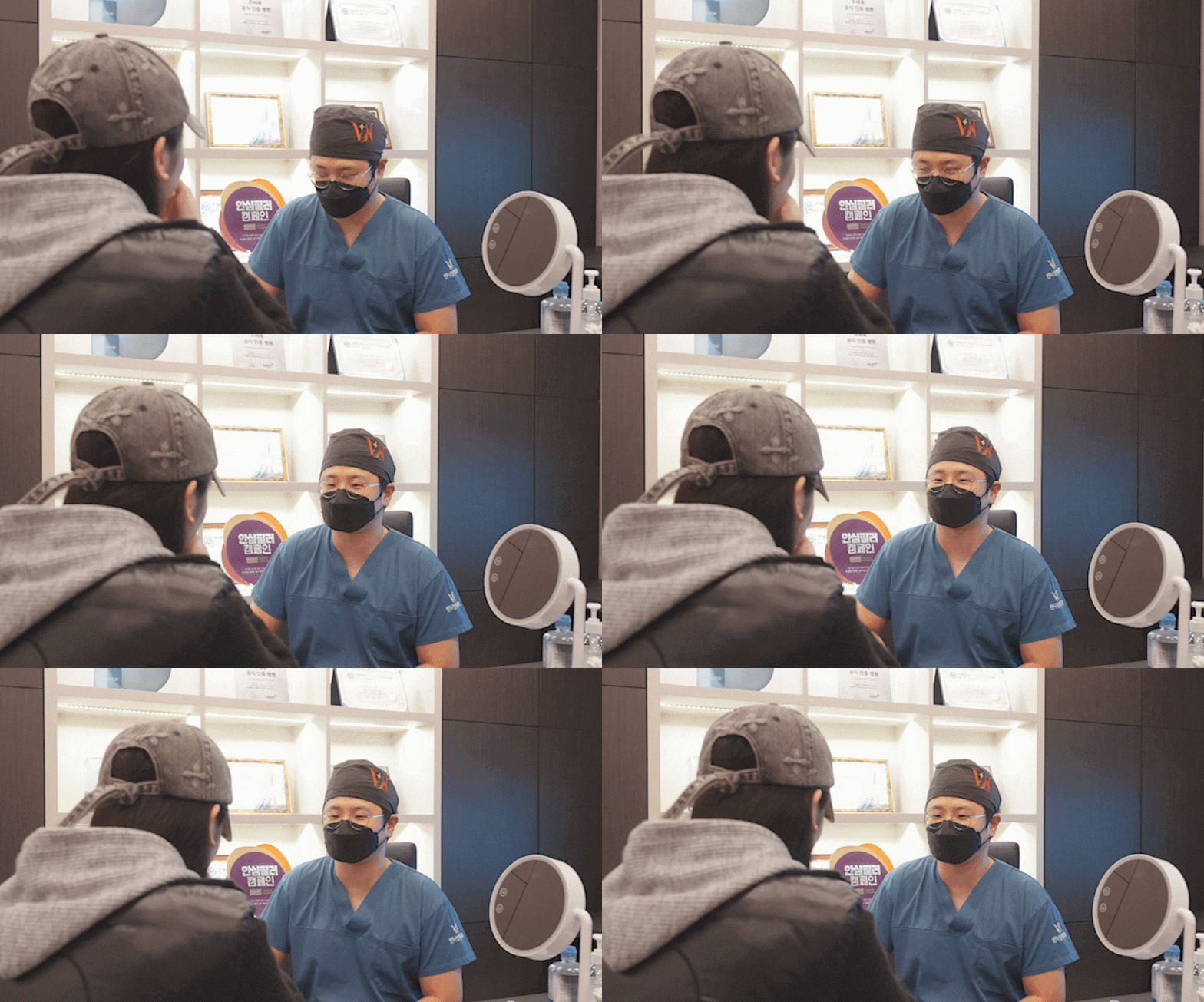
I am plastic surgeon Ban Ho-kyung, whose specialty is eye surgery and whose strongest point is eye revision surgery.

Although our clinic is located in Gangnam, there is no separate consultation fee.
That is because I believe the decision belongs to the patient, but helping them avoid regrets about that decision is also part of the medical team’s role.
Above all, since many people feel confused because each clinic gives different opinions, I explain things from a neutral standpoint, saying, “This is the pros and cons of surgery A, this is the pros and cons of surgery B, and what Clinic C said means this.”
Rather than guiding or forcing a particular choice, the goal is to provide enough information so that the patient can make the right decision on their own.

It would be ideal if I could meet and consult with each person directly like this, but because it is realistically difficult for people from far outside Seoul and Gyeonggi Province to visit in person, I prepared this post.
Based on the questions patients commonly ask during consultations for under-eye fat repositioning, I will explain the answers in detail.
-
Conditions for securing a semi-permanent duration without recurrence
-
Conditions for preventing the under-eye blindness incident that came to the fore about two years ago and for achieving safe results
-
Conditions for undergoing surgery comfortably without discomfort or pain
-
Conditions for returning to daily life 1–2 days after surgery without bruising or major swelling
Let’s go through them one by one in detail. It is not difficult, so please follow along step by step.
Lasts a long time,
No need to worry about side effects,
No pain,
Quick return to daily life,
Conditions for under-eye fat repositioning surgery that leaves no regrets at all
- Under-eye fat repositioning that does not require another surgery until before age 60
Gangnam under-eye fat repositioning, conditions for a surgery without worries about its duration
I see more stories than expected saying that under-eye fat repositioning recurred in less than a year.
Perhaps because of that, I receive a lot of questions about how long it lasts.
When that happens, I always say this.
“You will not need another surgery until before age 60. In fact, even after age 60, it is not that the fat comes back out; rather, you come back to the clinic because the sagging skin bothers you.”
So then, what kinds of cases are the ones that recur after just one year?
They can largely be divided into three types.
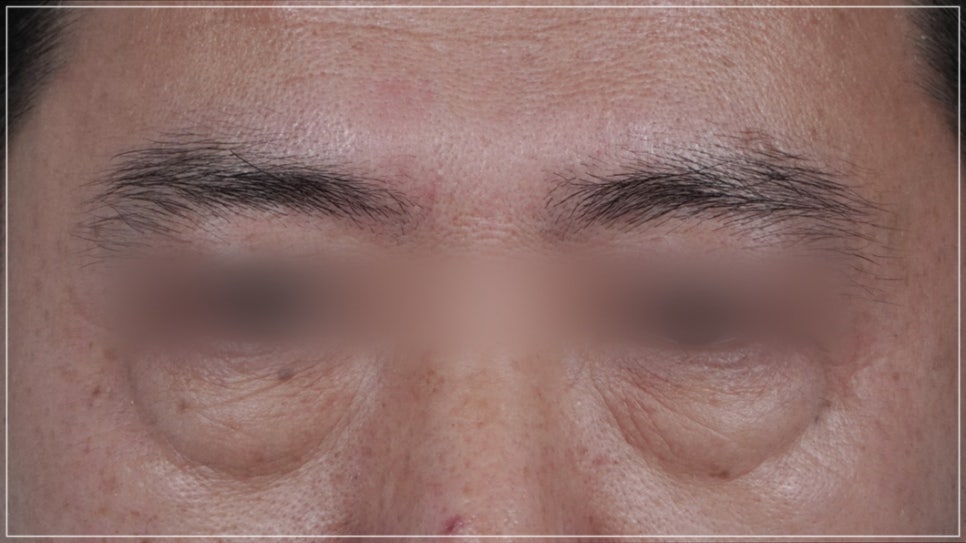
Before under-eye fat repositioning surgery
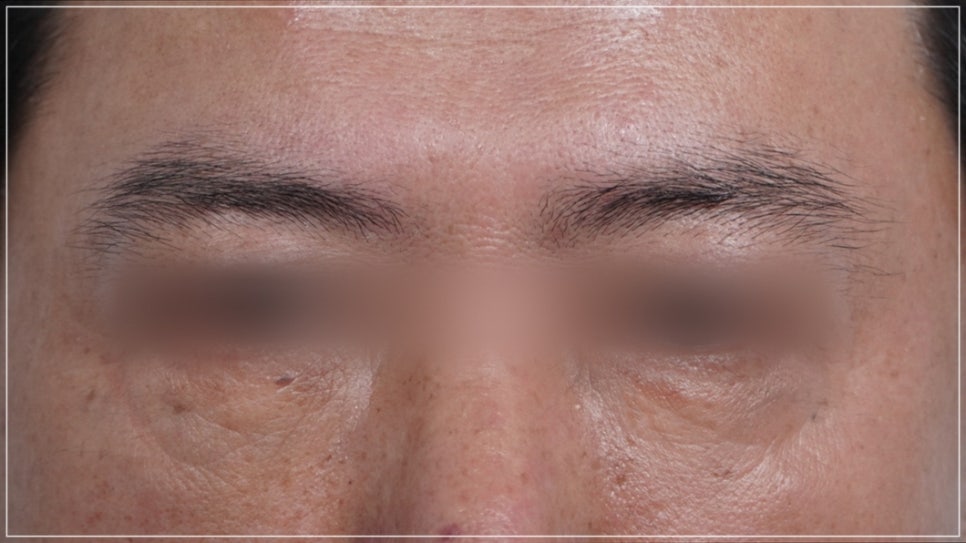
One month after under-eye fat repositioning surgery
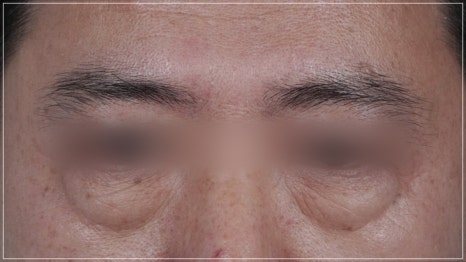
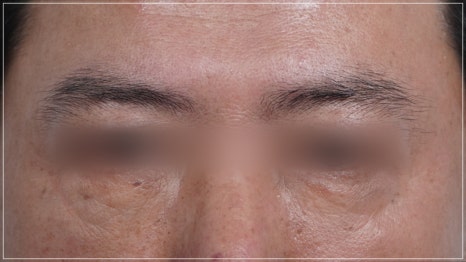
- When the surgery ends after removing only the protruding fat
In fact, because under-eye fat repositioning has become so mainstream, many people think of it as a fairly simple surgery, but in reality that is not the case. For easier understanding, I explain it by dividing it into 5–6 steps.
Above all, as aging progresses, the amount of fat under the eyes decreases, so I preserve the fat as much as possible instead of removing it and move it downward. This is because it helps prevent the under-eye area from becoming hollow with age and from ending up looking worse than before surgery.
After preserving as much fat as possible and moving it downward, I reinforce the septum to block the possibility of recurrence completely.
I have explained it simply here, but this process is more difficult and delicate than it sounds. So sometimes the surgery is ended quickly and simply after only removing the protruding fat. Naturally, that can only become a one-year surgery.
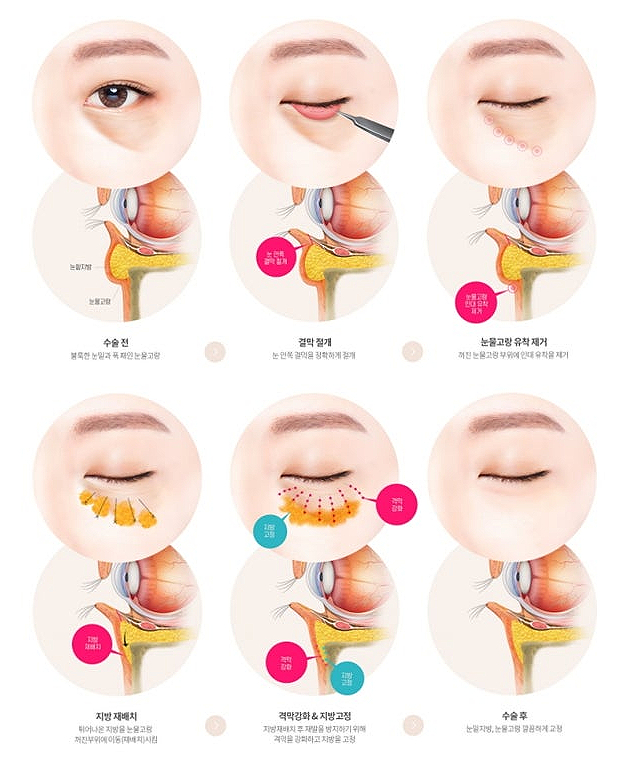
- Septum reinforcement is not all the same.
However, there are also cases where recurrence happens in just 1–2 years even after septum reinforcement.
Why? Yes, because the process is different in practice even if the name “septum reinforcement” is the same.
There are countless reasons why recurrence happens after septum reinforcement, but they can be broadly divided into four categories.
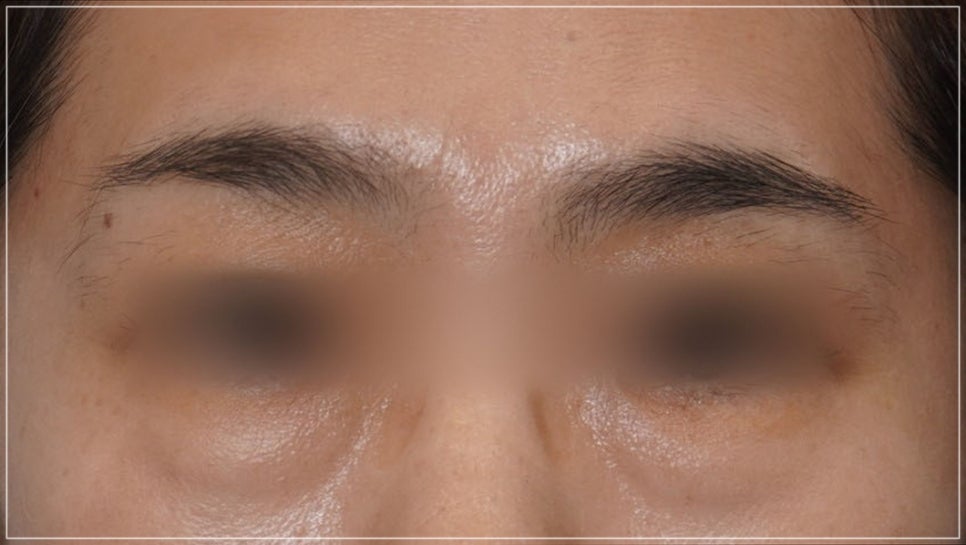
Before under-eye fat repositioning
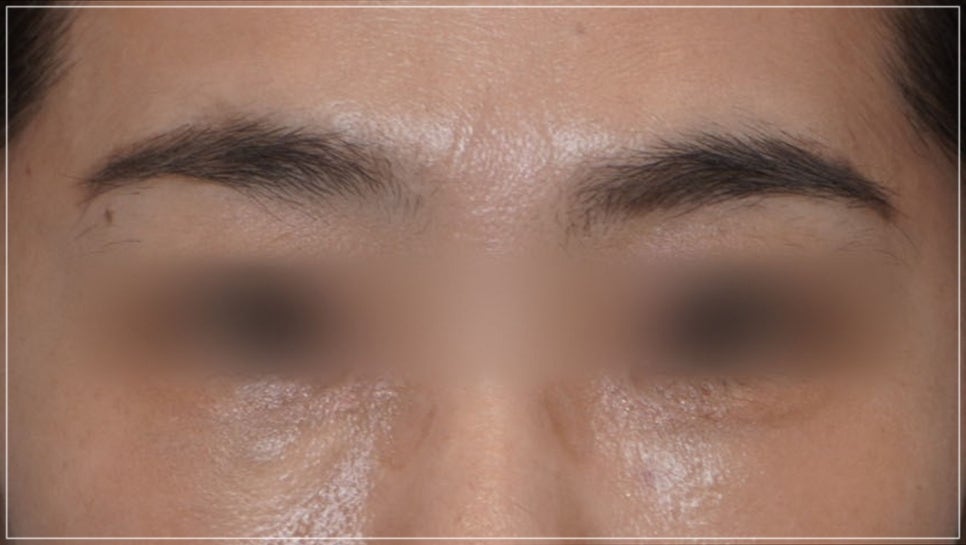
One month after under-eye fat repositioning
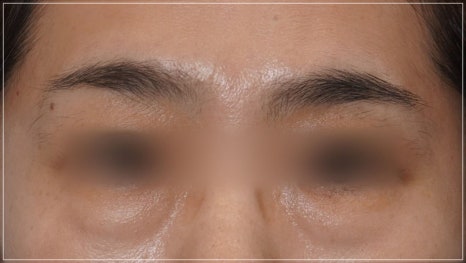
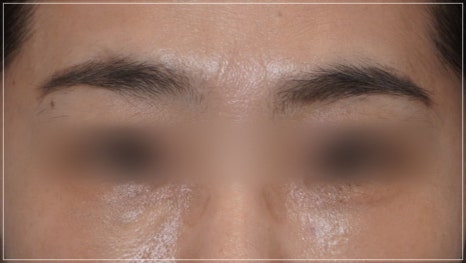
The first is when, during suturing, the septum is fixed incorrectly below its original position, the thread is positioned loosely, or it is not fixed with proper tension. In other words, the tension was not properly controlled during suturing, or the position was wrong.
The second is when the septum could not be firmly fixed to the periosteum.
Because the septal tissue is so thin and delicate, the process of suturing it at the proper position with the correct force is itself difficult. Above all, the under-eye structure is naturally different for each patient, and a customized approach is needed, which is not something that can be learned only in theory. It is an area where you simply have to do it often and develop the technique, so differences in skill between doctors are inevitable.
The third is when the fat is not spread thinly and naturally when it is moved.
What happens over time? Yes, areas where the fat clumps together become raised, and other areas become sunken.
And the final fourth cause is when the ligament under the eye hollow is not sufficiently released.
So why does recurrence happen even after septum reinforcement?
Yes, it means the septum reinforcement was not completed well enough.
You may think this was a doctor’s mistake that could happen with a very low probability, but if a doctor truly knows how to properly perform the septum reinforcement process, they can even cleanly handle the situation if a mistake happens by chance.
- When under-eye fat repositioning is not appropriate
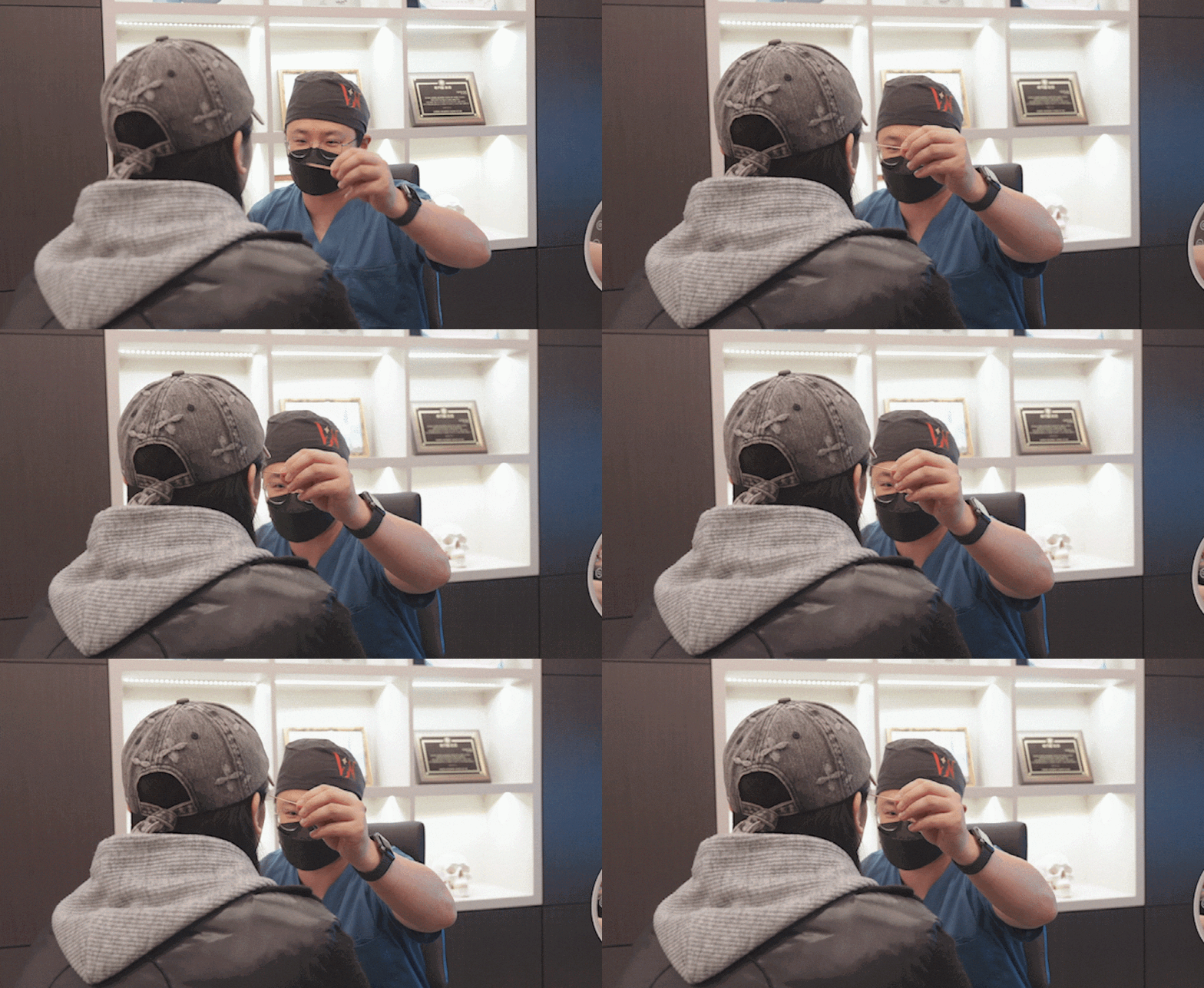
If the tissue around the eyes has weakened or the skin sagging is quite severe, under-eye fat repositioning alone has limitations. Even if the fat is released and repositioned, sagging skin cannot be improved. In other words, the surgical choice was wrong from the start. It was a case where lower blepharoplasty, not under-eye fat repositioning, would have been more appropriate.
Therefore, the surgery your current eye condition needs may be under-eye fat repositioning, or it may be lower blepharoplasty, so rather than going to a clinic that focuses on only one surgery, go to a clinic that specializes in a wide range of eye surgeries.
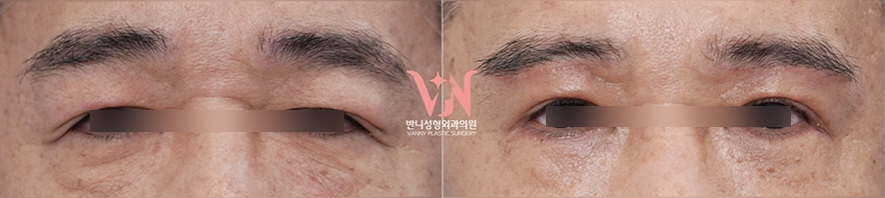
Before and after lower blepharoplasty and brow lift
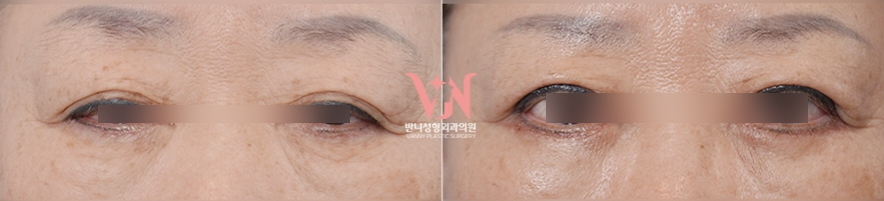
Before and after lower blepharoplasty and upper blepharoplasty
- Conditions for preventing blindness-related accidents in under-eye fat repositioning and achieving safe results
I have mentioned blindness as a side effect of under-eye fat repositioning a few times before. Of course, blindness is by no means a common side effect, and the probability of it occurring is truly very low. Still, it is not zero.

In fact, two years ago, a blindness accident occurred at a plastic surgery clinic in Gangnam.
I think this accident may have been caused by a lack of specific explanations and detailed guidance on how to respond to postoperative side effects.
If blood pools inside the surgical area for under-eye fat repositioning, the pooled blood can press on the eyeball and lead to blindness. If, by any chance, blood pools around the eye, it can be resolved with a simple measure: go to the nearest emergency room immediately and drain the pooled blood. In other words, the progression to blindness can be prevented.
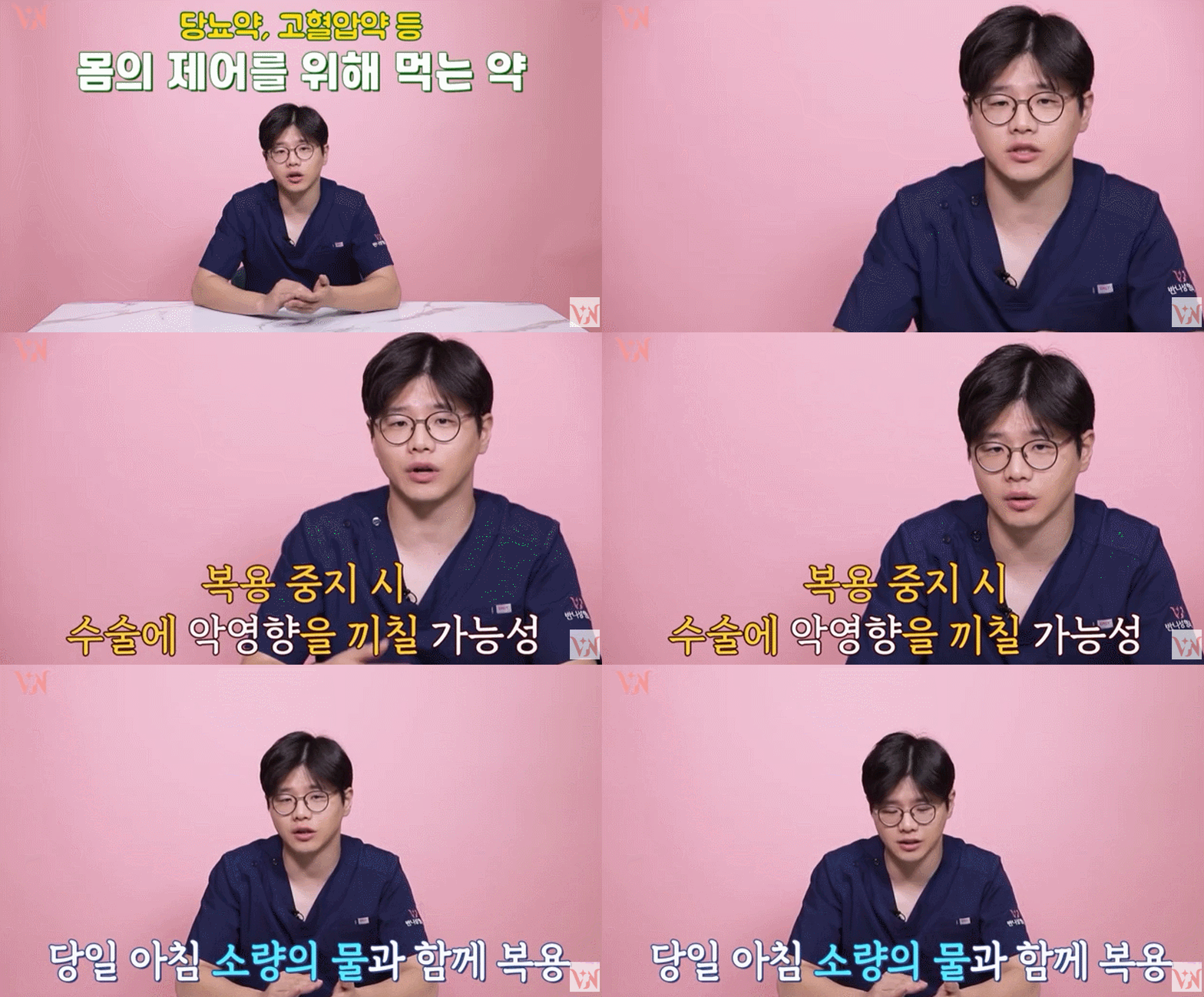
In addition, prevention is possible through precautions such as blood pressure management before surgery, warnings about taking medications that prevent clotting, and restrictions on boarding flights.
What is the way to prevent blindness, the worst possible side effect of under-eye fat repositioning?
Yes. Choose a clinic that transparently and in detail explains the possibility of side effects from under-eye fat repositioning, how to respond, and how to prevent various side effects before surgery.
Side effects from under-eye fat repositioning can be sufficiently prevented, and even if they do occur, they can be stopped through prompt response.
- Conditions for undergoing surgery comfortably without discomfort or pain
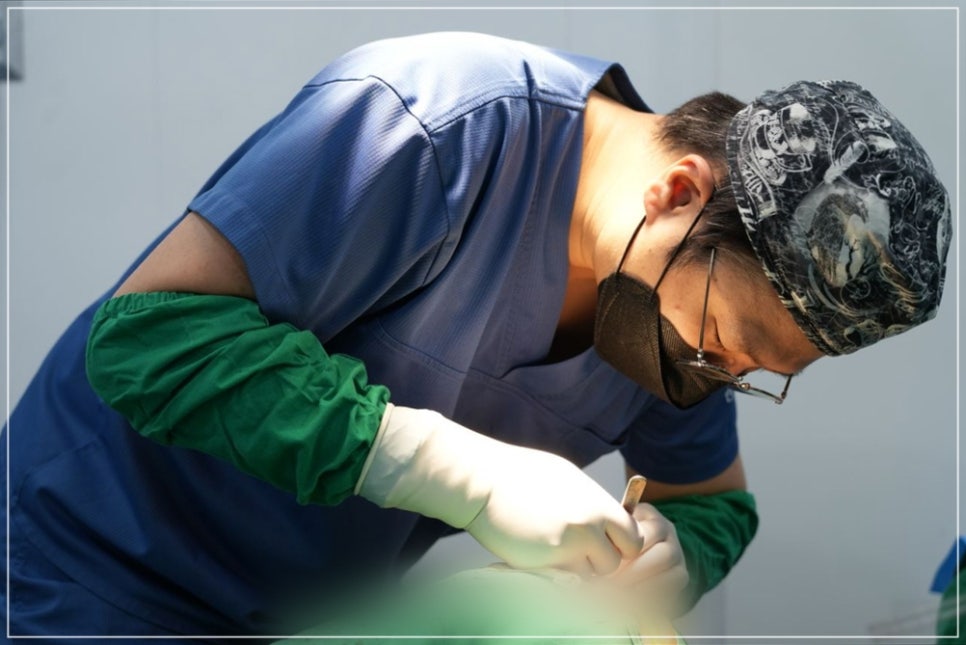
What is needed to ensure a comfortable surgical process without discomfort or pain? Yes, it is very simple. Anesthesia must work well.
“Hm? Then could there be pain or discomfort during the surgery?”
Yes, that’s right. Some of you reading this may be doing so because of under-eye fat revision surgery, and probably 6 or 7 out of 10 of you had quite a bit of discomfort during the surgery. The under-eye area is wide and deep, so it is a part of the face where it is quite difficult to achieve complete anesthesia.
Above all, plastic surgery clinics that focus on eye surgery do not have anesthesiology staff on-site. Plastic surgery clinics with anesthesiology staff on-site are places that perform surgeries requiring general anesthesia, such as breast surgery and contouring procedures. Eye surgery is performed under sedation anesthesia, not general anesthesia.
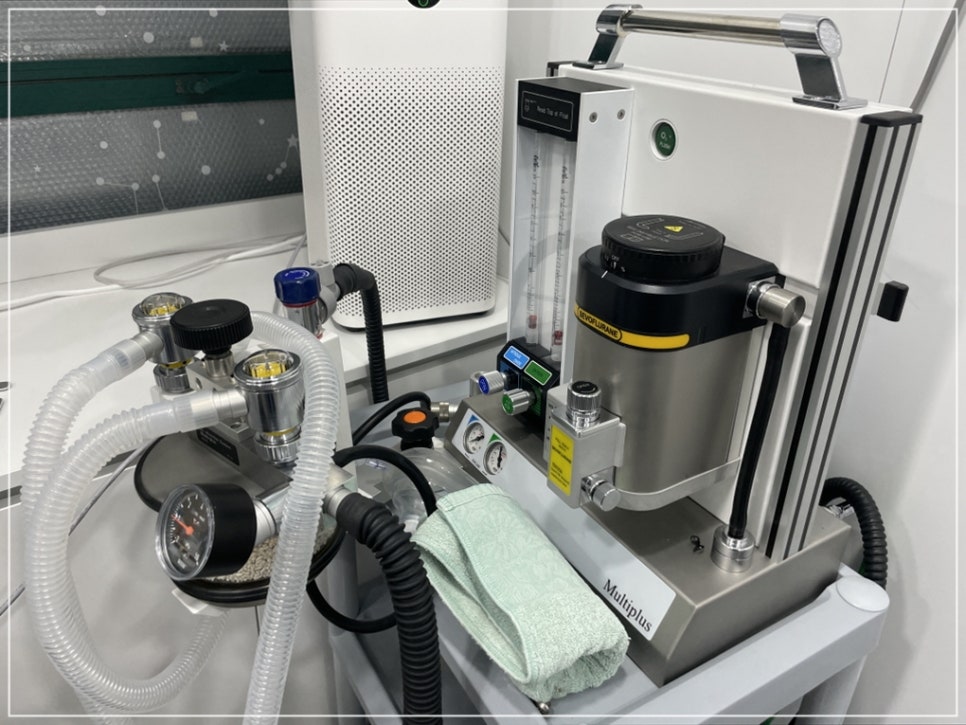
That is why under-eye fat repositioning should be performed by a doctor who is also good at anesthesia. (This includes eye surgeries such as lower blepharoplasty, brow lift, and forehead lift.) Among plastic surgeons, some feel the need for anesthesia skills and learn them separately. I am one of them as well.
If surgery is performed without adequate anesthesia, the patient will naturally feel pain and discomfort, and the surgeon will also be uncomfortable. Because the patient moves more and the surgeon has to pay attention to that, the operation takes longer and becomes more difficult.
If anesthesia is accurate, a surgery that could be completed in under 30 minutes ends up taking an hour.
In the end, when the patient moves more during surgery, more tissues are naturally affected, leading to unnecessary bruising and swelling, which also lengthens the recovery period.
So for eye surgeries, including under-eye fat repositioning, you should go to a clinic where the surgeon is also skilled at anesthesia.
If it is hard to judge whether a doctor is good at anesthesia or not, ask directly.
Ask whether there is pain or discomfort during surgery.
If they give vague answers like, “There may be a little pain or discomfort, but we’ll add more anesthesia,” then there is a high chance that precise anesthesia will not be performed, right?
- Conditions for returning to daily life 2 days after surgery without major bruising or swelling
Many people believe that the biggest factor determining recovery time is the equipment used during surgery, so I will first correct the errors in that claim.
During consultations, quite a few people ask about the Encore laser. They say they saw posts online claiming that.
When performing under-eye fat repositioning, the CO2 Encore laser must be used in order to have almost no bleeding, less bruising and swelling, and a faster recovery. Surgery using a Bovie causes more damage to surrounding tissues and leaves significant injury, resulting in bruising and major swelling. It goes something like that.
To conclude first, determining recovery speed by only one piece of equipment is a critical error.
CO2 Encore laser is not necessary in plastic surgery, and although equipment is one factor among the most important factors determining recovery speed, the essence is the surgeon’s skill.
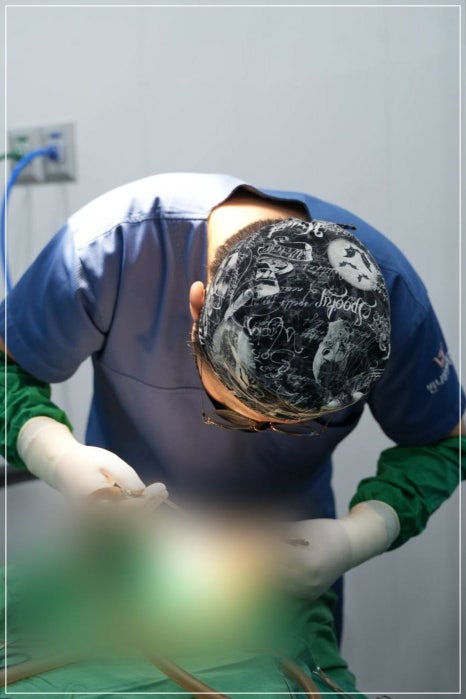
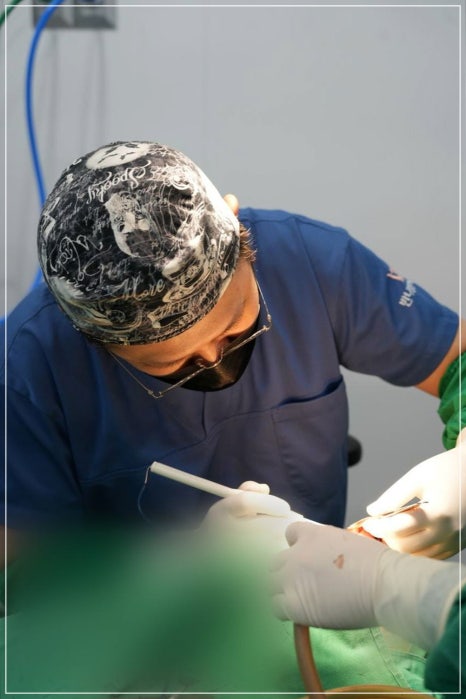
Above all, the CO2 Encore laser is originally a device for skin treatment. It is optimized for refining the skin surface, such as skin regeneration, scar treatment, and mole removal.
Of course, the CO2 laser has the effect of reducing bleeding by coagulating blood vessels while helping with incision. That is why it is also used for surgery, but fundamentally it was not made for surgical operations and is not an essential piece of equipment in plastic surgery.
Under-eye fat repositioning is plastic surgery. (It could also be called a procedure since there is essentially no separate recovery period, but because an incision is made, it is clearly a surgery.)
So as a plastic surgeon, I use equipment for surgical procedures. I use Valleylab equipment, which is ideal for eye surgery because it allows precise incision and immediate hemostasis.
Of course, that does not mean the Encore CO2 laser is wrong. Both are good devices, and one cannot say definitively that one is right and the other is wrong. Above all, while equipment is certainly important in determining recovery time, it is not the only factor.
In essence, the biggest factor that determines recovery time is the degree of tissue damage during surgery.
The more tissue damage there is, the greater the inflammatory response, the more bleeding occurs, and ultimately the more swelling there is and the longer bruising lasts. The surgery also takes longer relatively speaking. The process becomes more complex, so there is more to handle.
People generally think that a longer operation means it is performed more delicately, but for under-eye fat repositioning, it is actually the opposite. If the surgery takes a long time, it means the operation is complicated, and complicated means there is more to deal with, such as bleeding.
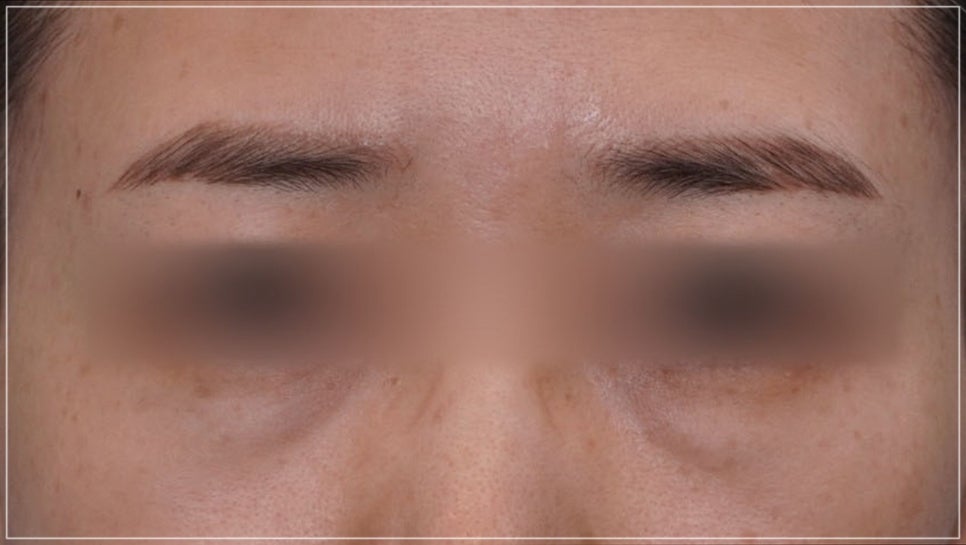
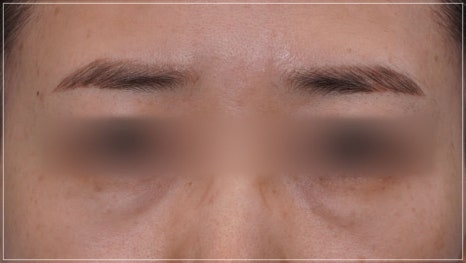
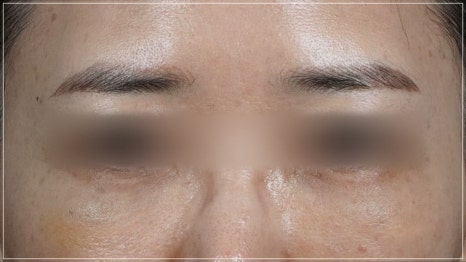
Before under-eye fat repositioning
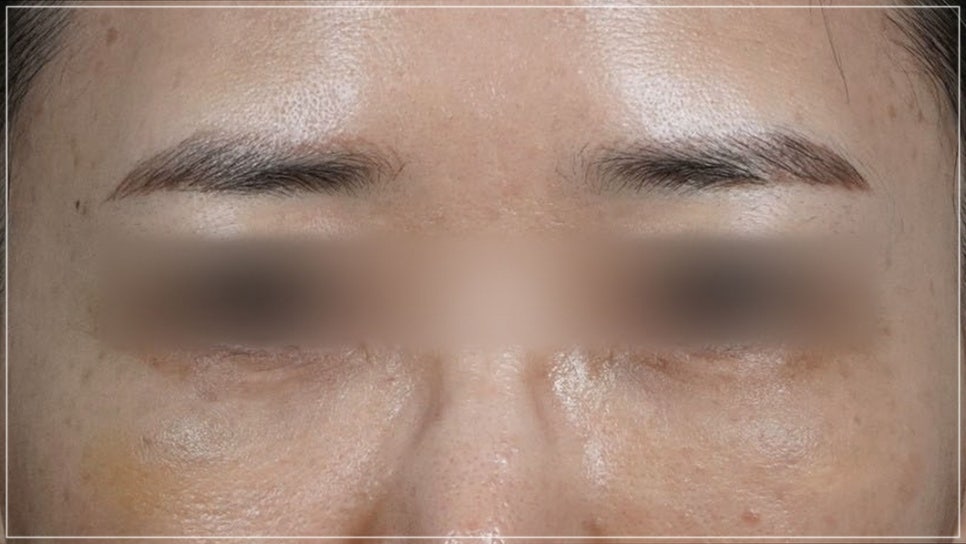
One month after under-eye fat repositioning surgery
If the surgery is short?
It means the surgery was performed efficiently.
And as mentioned in the previous section, the recovery period is also related to anesthesia.
If anesthesia does not work well, the patient is uncomfortable and in pain, so small movements are unavoidable. In the end, those unnecessary movements mean that more tissues are affected.
So in my case, because I am also good at anesthesia, I can finish the surgery in under 30 minutes.
Summary
- Surgery that does not require revision until before age 60
During consultation, be sure to ask, “Do you have patients who needed revision surgery after 1–2 years?” and go to a clinic that focuses not only on under-eye fat repositioning but also on eye surgeries such as lower blepharoplasty, under-eye fat repositioning, and upper blepharoplasty.
- Preventing and responding to side effects such as blindness
Go to a clinic that clearly explains preoperative guidelines that can prevent accidents before surgery, such as blood pressure management and medications, as well as side effects, and that explains in detail how to respond if blood pools after surgery.
- A comfortable surgery process without pain
When you ask, “Is there pain during surgery?” avoid clinics that give vague answers such as, “If it’s uncomfortable, we’ll add more anesthesia.”
- Surgery with fast recovery
Equipment is important, but what determines recovery time is accurate anesthesia and the surgeon’s skill. Before deciding on surgery, if it is hard to judge the doctor’s skill, ask during consultation to see photos of patients on postoperative days 2–3.
Today’s conclusion
A careful first step
saves a hundred steps later.
Will the surgical process be okay, how long will recovery take, and will I have to undergo revision surgery again later?
I understand those worries very well.
In fact, many of the people who come to see me are visiting for revision surgery because they were dissatisfied with the results of surgery they received at another clinic.
A surgery they made up their mind to have after much consideration, only to face the situation of having to think about it again 1–2 years later.
At every consultation, I can feel how much emotional distress they must have gone through in that process.
But if you receive the right surgery from the start, you do not need to worry about such things.
If you choose a clinic with the conditions I talked about today, you can achieve a comfortable surgery process, a fast recovery, and long-lasting results without worrying about revision surgery.
If you need help, please feel free to contact us anytime. Helping relieve your concerns is my role.
This is why you fall for it, this was Ban Ho-kyung. Thank you.
[Gangnam Plastic Surgery Banni,
Why there is no consultation fee (+Ban Ho-kyung’s philosophy)]
https://blog.naver.com/rush_724/223776150003