강남실리프팅 실제 디자인 과정 A부터 Z까지, 피부과 원장이 알려드림
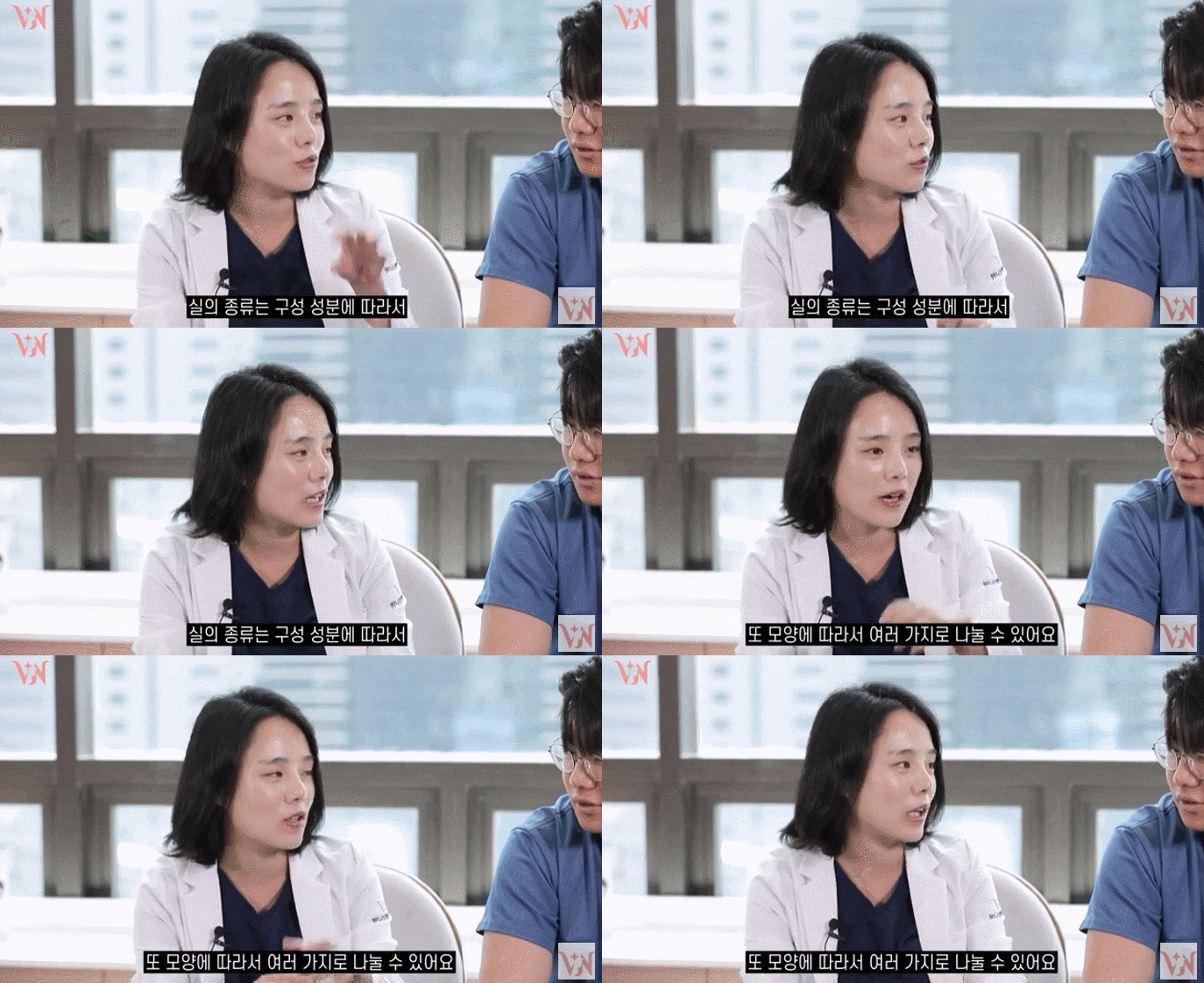
Hello.
I am Mi-ra Lee, the head director of Banni Skin Clinic in Gangnam,
someone who leaves out exaggeration and fills things with sincerity.
Even if you have never had a thread lifting procedure, it naturally seems like the process would be much more complex than laser lifting. And in reality, it is.
Thread lifting, of course, varies depending on the case, but it is performed by combining multiple threads. More than anything, because it can not only lift sagging skin but also move and reposition fat, the practitioner’s mind has to handle a very complex process. Calculations must be made while considering many different possibilities.
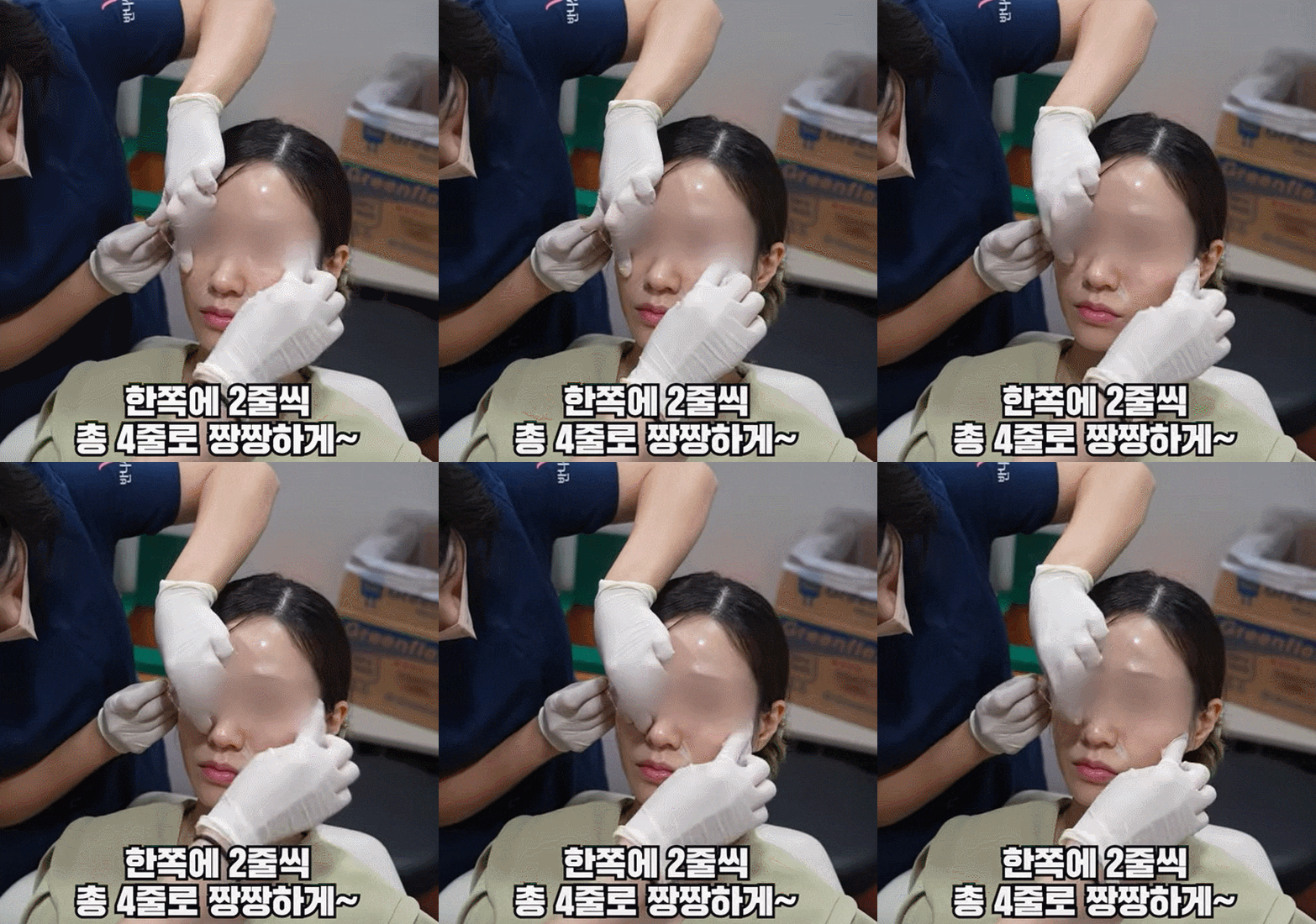
Because of that, patients naturally feel concerned, and they have no choice but to be careful when choosing a thread lifting clinic.
At our clinic, first-time thread lifting patients often say, “It was much harder to choose the clinic than to decide on the procedure itself.” So I fully understand their concerns.
In other words, because the results of thread lifting can vary greatly depending on the practitioner, choosing the right clinic is very important.
So, what makes a good thread lifting clinic different?
Today, I want to share my honest thoughts focusing on that point.
As always, instead of vague talk like “You need to look at the medical team’s clinical experience” or “You should check whether the consultation is thorough,” I’ll explain only the truly important points from actual clinical practice.
The type of thread, number of threads, thread length, pulling force, pulling direction, insertion position.
In the end, it comes down to design.

A treatment for an area where aging can’t be stopped, even with care: thread lifting
In thread lifting, the design process means precisely analyzing the patient’s facial shape and features, then deciding where to place which thread, in what direction, at what depth, and how much to pull it. That is the design.
It is about deciding the procedure method by considering the facial structure, fat distribution, skin elasticity, and degree of asymmetry.
Even when the same thread is used, the outcome can change completely depending on thread placement, pulling direction, strength, and depth. In the end, it is no exaggeration to say that the success or failure of thread lifting depends on the design.
- Face shape analysis: understanding the facial skeleton and contours
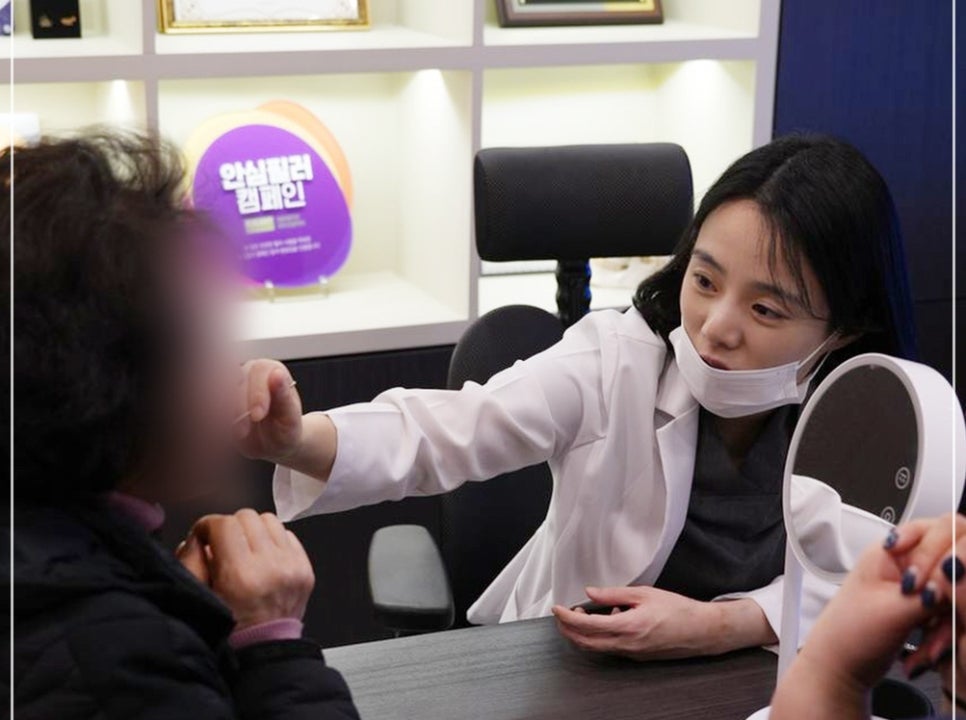
A place that does Gangnam thread lifting well is ultimately a matter of design.
The first step before treatment is a careful analysis of the patient’s face shape and skeletal structure.
We first check the size and position of the cheekbones. If the cheekbones protrude or are large, we adjust the thread path so that the threads do not pass over the cheekbones, designing the procedure so the cheekbones do not appear even larger after treatment.
Conversely, if the cheekbones are small or flat, placing the threads in a way that adds a bit of volume can help improve the face shape.
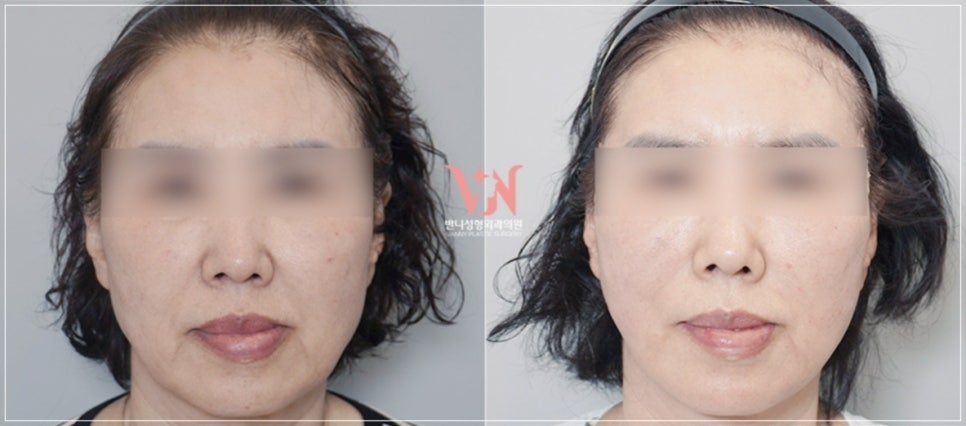
Left: before treatment / Right: after thread lifting
The jawline and the width of the lower face are also important factors.
If the jawline is unclear or the lower face has collapsed, a design that creates a V-line is needed. On the other hand, if the jawline is strong, the threads are planned in a way that softens and refines the line.
At this stage, the length of the face is also considered. A different design is needed depending on whether the face is long or short.
It is also essential to check for asymmetry.
Asymmetry commonly appears around the cheekbones, jawline, and corners of the mouth, and to compensate for this, the design must adjust the number of threads or the direction of insertion on each side.
- Checking skin and fat layer condition; evaluating sagging and elasticity
After analyzing the face shape, the skin condition and fat layer distribution are evaluated.
First, we identify which area is sagging the most. Sagging usually appears in the midface (deep cheek area), nasolabial folds, marionette lines, and jawline.
The next step is to determine which area should be improved first and then design the thread direction and fixation points accordingly.

For sagging and hollowness that are difficult to recover with home care, thread lifting
Skin elasticity is also an important factor.
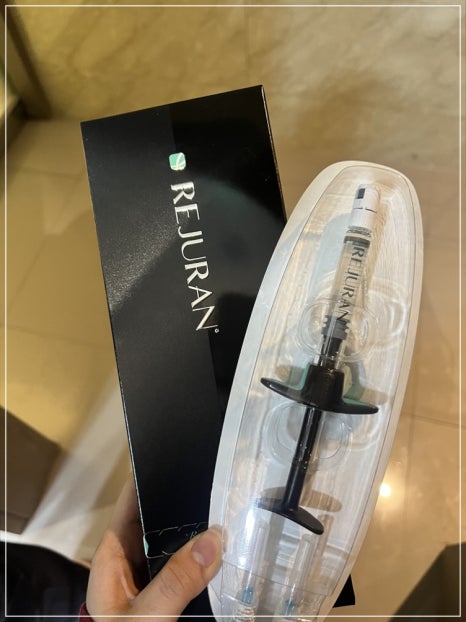
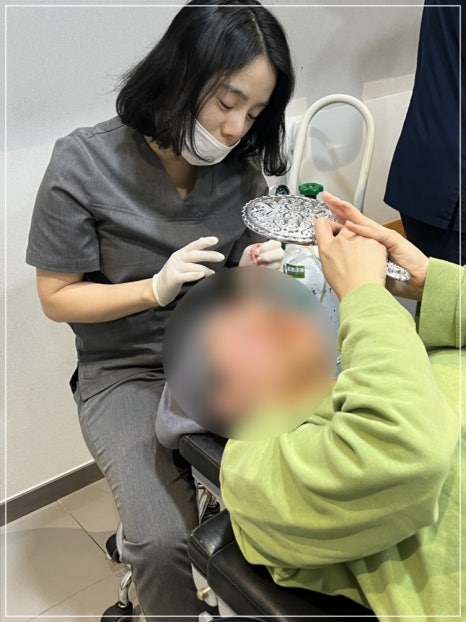
If the skin is thick and elastic, the effects of thread lifting show well. But if the skin is thin or lacks elasticity, the holding power and lifting effect of the threads may be reduced. In that case, the effect can be supplemented by increasing the number of threads or combining the procedure with skin boosters such as Rejuran or Juvelook, as well as radiofrequency treatments.
It is also important to check facial fat distribution. By designing the threads to reduce areas where fat is concentrated and naturally reposition them toward hollow areas, the facial contours become smoother and a more voluminous lifting effect is possible.
- Deciding the lifting direction and thread insertion path
The lifting effect is greatly affected by the direction in which the threads are pulled.
For example, if the cheekbones are large, the threads should be pulled backward while avoiding the cheekbones. If the nasolabial folds are severe, it is more effective to lift them upward from the front.
When refining the jawline, the approach is to pull from below toward the back to create a V-line. Depending on the area to be improved, the pulling direction, thread length, and fixation point all change.
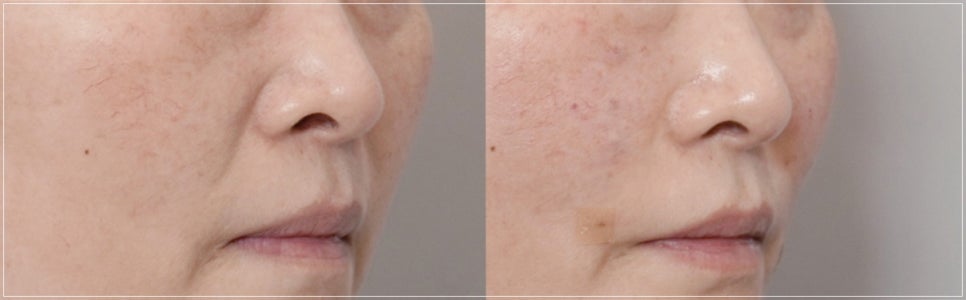 Left: before treatment / Right: after thread lifting for nasolabial folds (+ Juvelook)
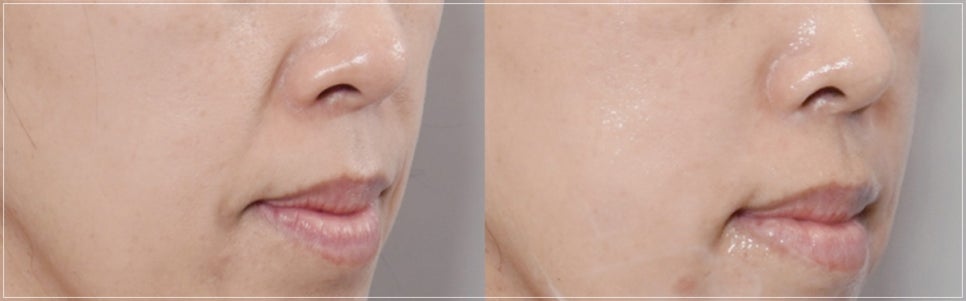 Left: before treatment / Right: after thread lifting for nasolabial folds (+ Juvelook)
In addition, the thread insertion path is important.
Depending on which areas the thread passes through—such as the cheekbones, cheeks, or jawline—the change in facial impression after the procedure can vary greatly. In particular, around the cheekbones, the way the thread passes can make the cheekbones appear either larger or smaller, so path design is key.
- Selecting the type and number of threads
The type of thread depends on the patient’s skin condition and lifting goals.
In general, cog threads (barbed threads) provide a strong lifting effect and are used in areas with significant sagging, while maintenance threads (mono threads) are suitable for tightening the jawline or the upper area of the nasolabial folds.
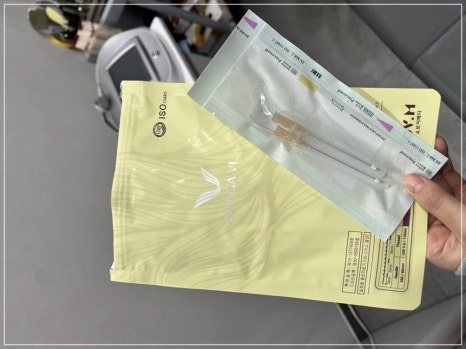
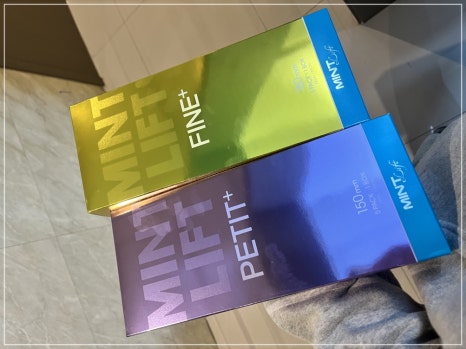
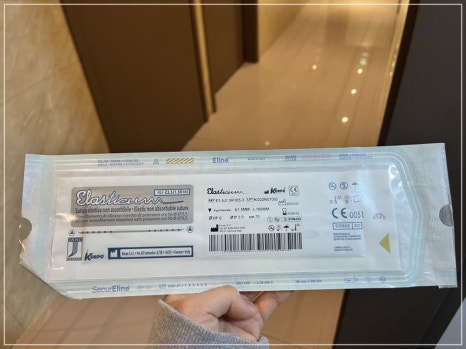
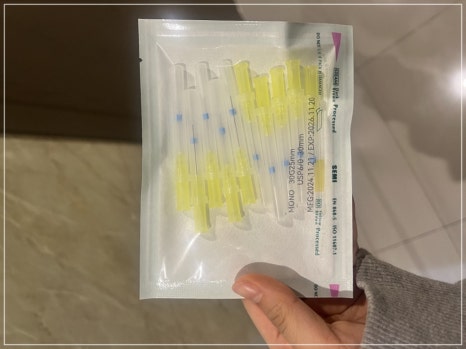
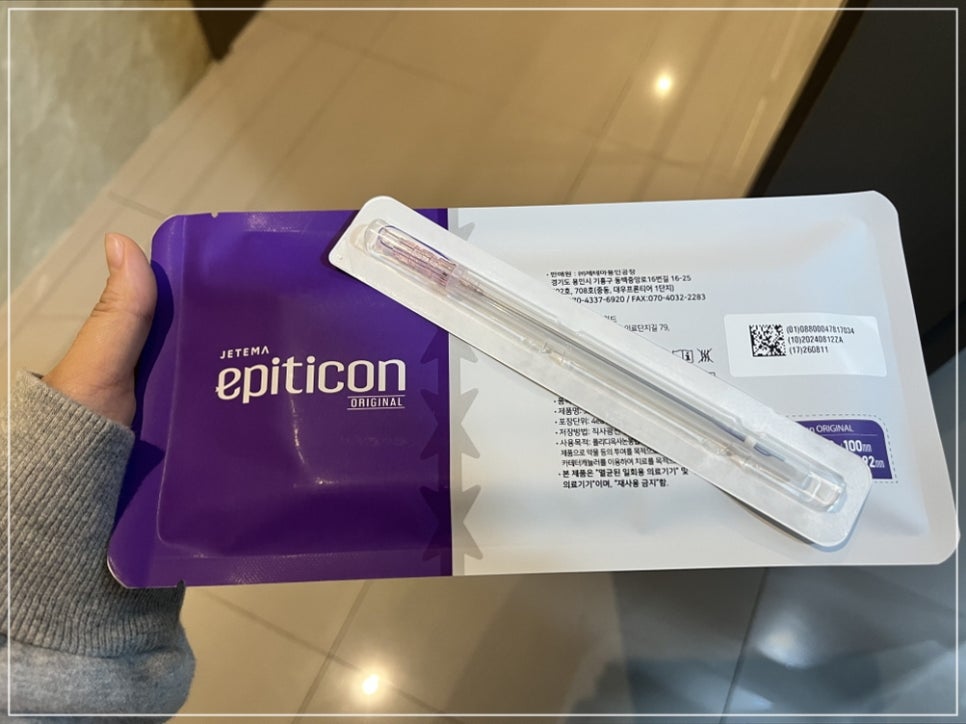
Gangnam thread lifting: the type and material of the thread are also important.
The material of the thread is also important. Depending on whether the material is PDO, PLLA, or PCL, the degree of collagen stimulation, duration of effect, and skin response differ, so it should be selected according to the patient’s skin condition.
The number of threads varies: when targeting only one area, at least 4 threads are used; when treating the entire face, at least 12 threads are inserted. If there is asymmetry, it can be corrected by placing more threads on one side or pulling the threads more strongly.
- Design marking: marking the thread path on the face
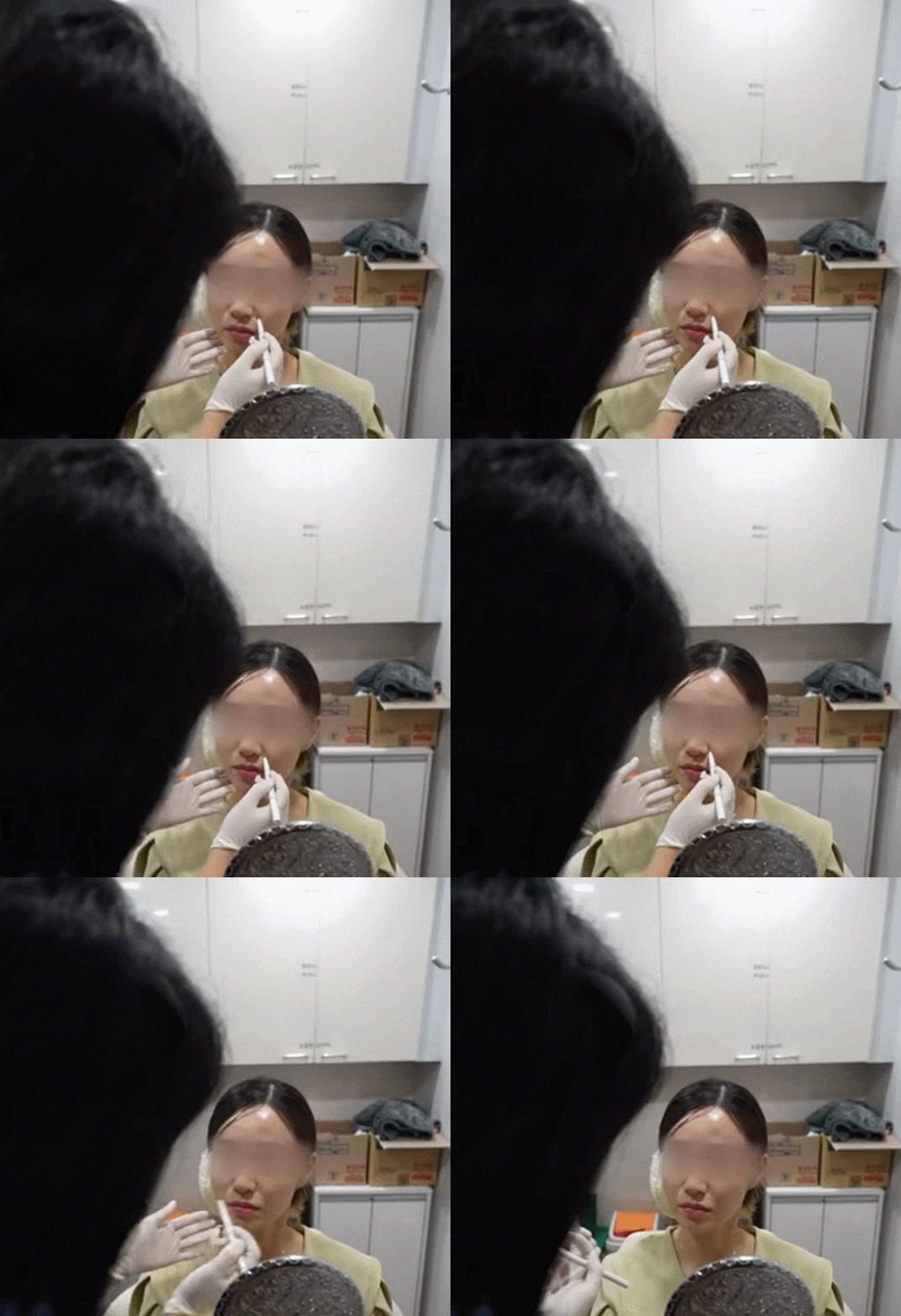
After all the analysis of the patient’s face is complete, the thread insertion path, pulling direction, and fixation points are marked directly on the face. This marking effectively determines the final result after the procedure.
Therefore, once marking begins, it is important to fully communicate with the patient about the lifting direction and expected effects during the process. This helps maximize satisfaction after the procedure and ensures the direction aligns as closely as possible with the patient’s needs.
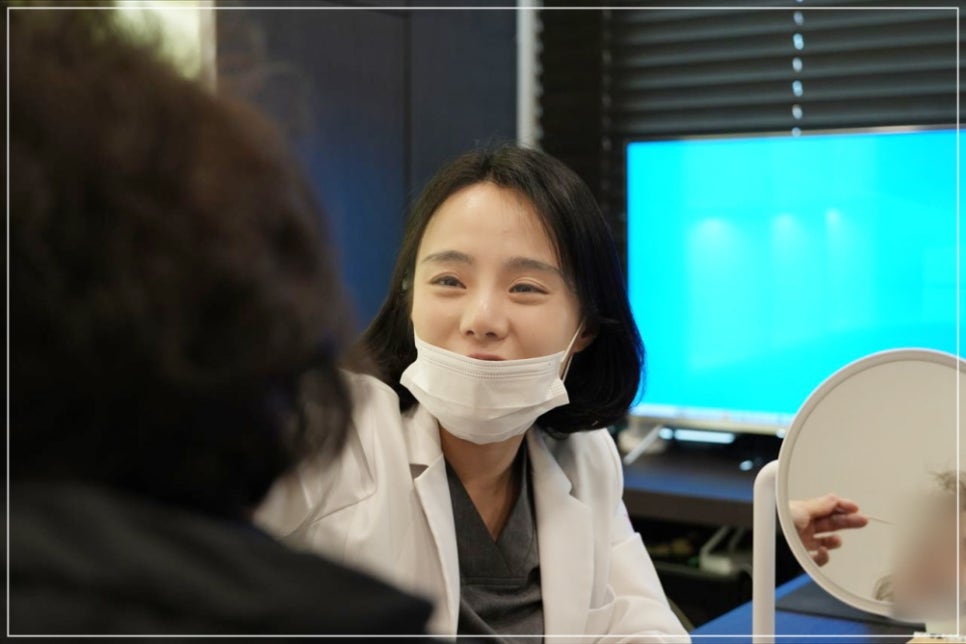
Thread lifting is not simply a procedure that inserts many threads. It is an area of design that carefully analyzes the facial structure and, based on that, combines the type, length, number, and direction of the threads to create the most ideal result.
And beyond that, results can vary greatly depending on how delicately the medical team examines the patient’s face and how sincerely they plan the procedure.
In the end, the key is how carefully it is examined, which is why I think thread lifting is a procedure that depends more on the practitioner’s skill than almost any other. Even if the same thread is used, the result can be completely different depending on who performs the procedure.

That is why, when I perform thread lifting, I first think, especially, “If it were me, what kind of change would I hope for?” And! Beyond the design process, realistic expectations and how the threads are combined are also very important conditions in thread lifting.
I have written about this in a previous post.
If you are planning a thread lifting procedure, please take the time to check the post below as well before making your decision.
https://blog.naver.com/rush_724/223735564209