Hello.
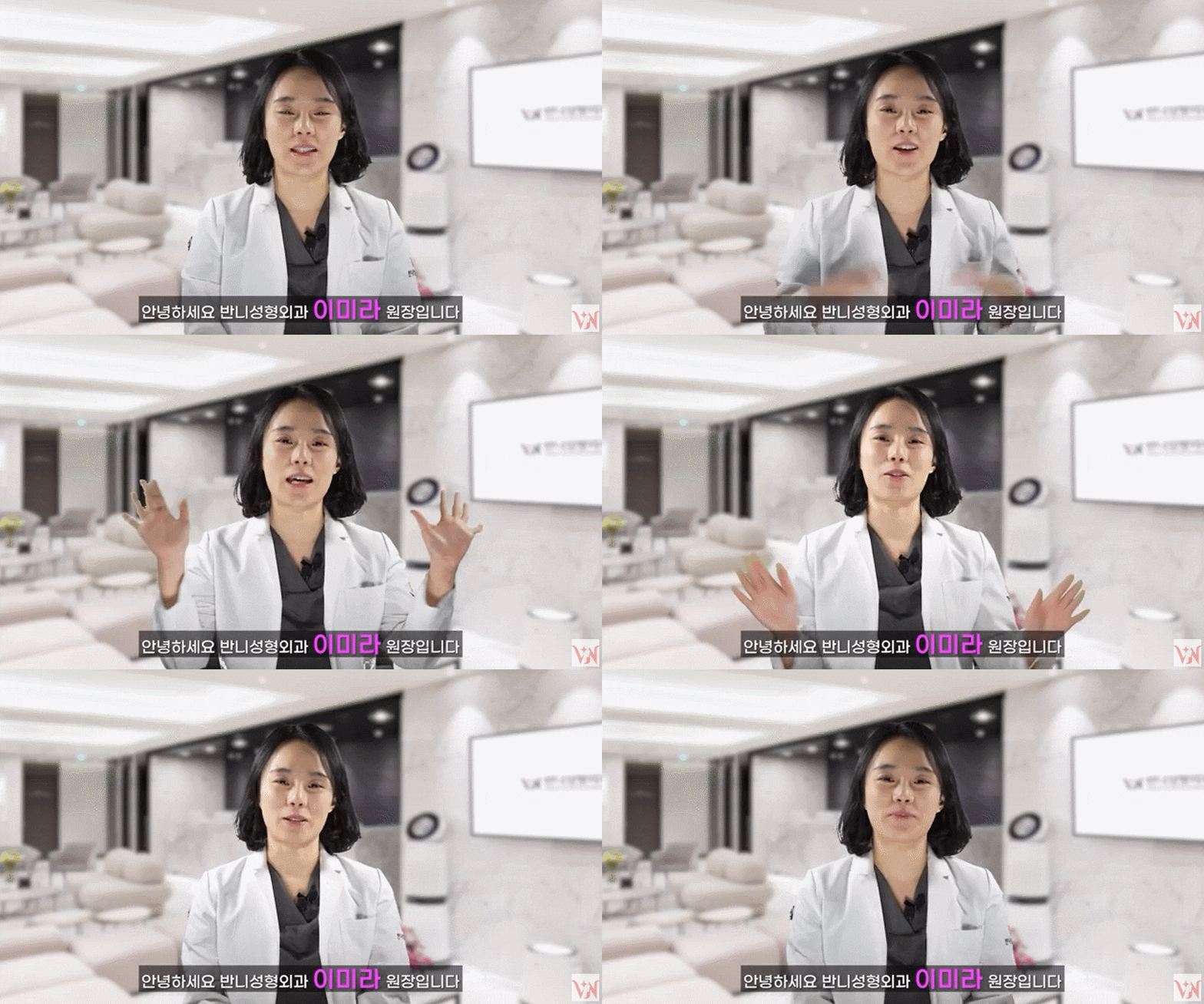
I am Mira Lee, the chief director of Gangnam Banni Plastic Surgery | Skin Clinic, someone who leaves out exaggeration and fills in only sincerity.
“My upper lip is soaked with sweat, but my underarms are perfectly dry.”
Before winter comes each year, mothers prepare kimchi, and for those who sweat a lot, there is an annual routine they must get ready for before summer. Yes, that’s right. It’s Botox for hyperhidrosis.
In summer, there are patients who say they can never wear gray or pastel tops because of underarm sweat, and others who are always cautious when taking public transportation in case they might smell. As it turns out, there are more people than expected who suffer mentally because of sweating in summer.

And after getting hyperhidrosis Botox, some people say they feel more confident than anyone else when holding the handrail on the subway because their underarms are so dry.
When I hear stories like how much more comfortable daily life has become, I think, “Maybe I should try it too?” But since it is a procedure that involves injecting medication directly into the body, it isn’t easy to decide.
That’s why I prepared this post.
I’ll answer the questions that first-time hyperhidrosis Botox patients ask most often and share my honest opinions.
Contents
-
How hyperhidrosis Botox works
-
Areas where hyperhidrosis Botox can be performed
-
Will the odor also go away after Botox?
-
How long does the procedure take, and how painful is it?
-
Precautions during the procedure
-
What to prepare on the day of the procedure
I’ll explain everything about hyperhidrosis Botox.
- Hyperhidrosis Botox: How does it control sweating?
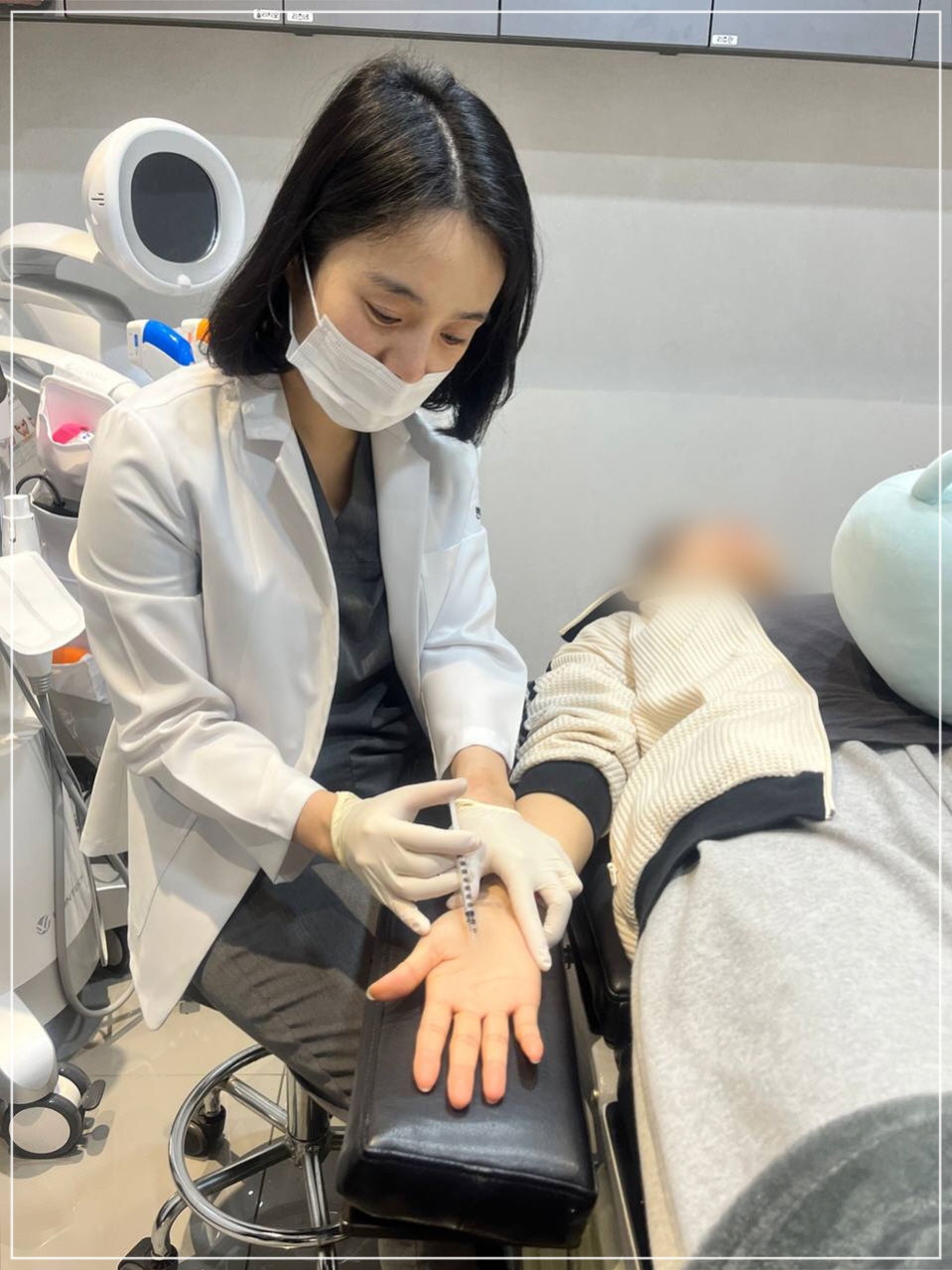
Banni Plastic Surgery Gangnam Hyperhidrosis Botox
Botox is well known for its muscle-paralyzing effect, but in hyperhidrosis treatment, it blocks the nerve signals that go to the sweat glands.
More specifically, it works by blocking the action of a neurotransmitter called acetylcholine, thereby suppressing sweat secretion.
In the past, a surgical method called sympathectomy was often performed for this effect.
This surgery literally cuts the sympathetic nerves, so the effect is immediate, but the serious side effect of compensatory hyperhidrosis was a problem.
For example, even if underarm sweating stopped, excessive sweating would occur in other areas such as the back, abdomen, thighs, or knees.
This compensatory hyperhidrosis is common, appearing in 50–80% of surgical patients, and in some cases it became so severe that daily life was impossible.
In contrast, Botox does not require an incision and acts only locally on the sweat glands, so compensatory hyperhidrosis almost never occurs. Its advantage is that it can selectively suppress only the necessary area.
- Areas where hyperhidrosis Botox can be performed
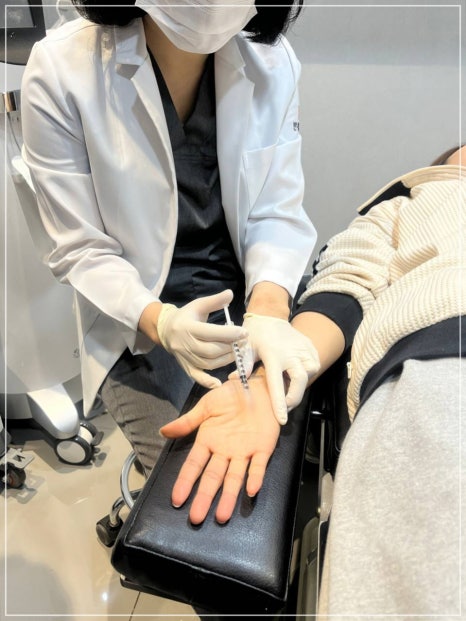
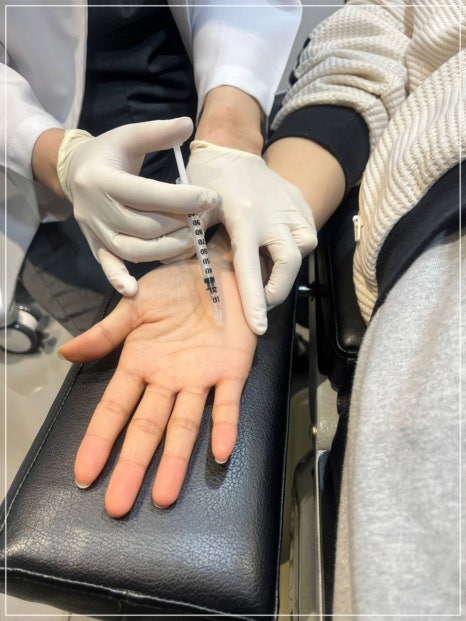
Botox cannot be used on every sweat gland area in the body; in principle, it is performed only in areas where safety and effectiveness have been verified.
-
Underarms
The most common area, with clear results. It also involves less pain and produces stable effects.
-
Palms
Even though excessive sweating here can greatly interfere with daily life, caution is needed because the pain is strong and temporary hand weakness may occur after injection.
-
Soles of the feet
This area can affect walking, and both the pain and the difficulty of the injection procedure are high.
-
Face, forehead, upper lip, scalp
These are areas mainly treated by people who are sensitive about makeup staying in place or about social interactions. Here too, adjusting the dose and depth is very important.
- Will the odor also go away after Botox?
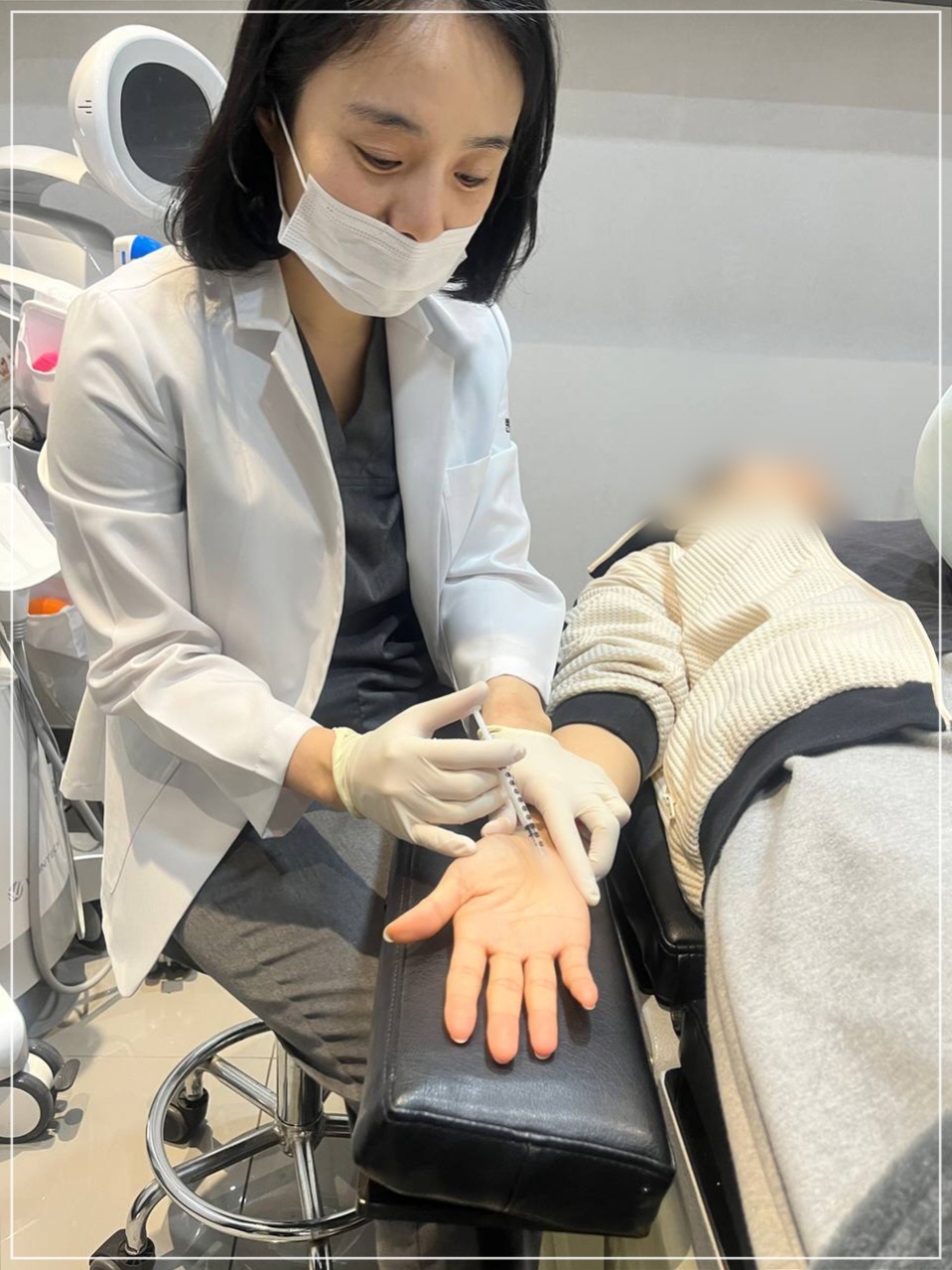
To get straight to the point: yes, the odor also decreases.
The smell from the underarms is not caused simply by sweat itself; it occurs when the protein components in sweat are broken down by bacteria on the skin.
If Botox stops sweat from being secreted in the first place, there is nothing for the bacteria to break down, and as a result, the odor naturally decreases or disappears.
However, if the odor is severe, please remember that it may not be simple hyperhidrosis but may involve a constitutional factor such as overactive apocrine glands!
- How long does the procedure take, and how painful is it?
Botox treatment is simpler than you might think.
The procedure usually takes about 10 to 20 minutes on average, and sometimes it can be finished in under 5 minutes. Depending on the area, anesthesia and marking may take a little longer, but overall it is not a burdensome procedure.
That said, pain varies by area.
The underarms are less painful than the hands or feet, but they are still somewhat painful.
By contrast, the palms and soles are highly sensitive areas, so the pain can be stronger. In some cases, local anesthesia or sedation may be needed.
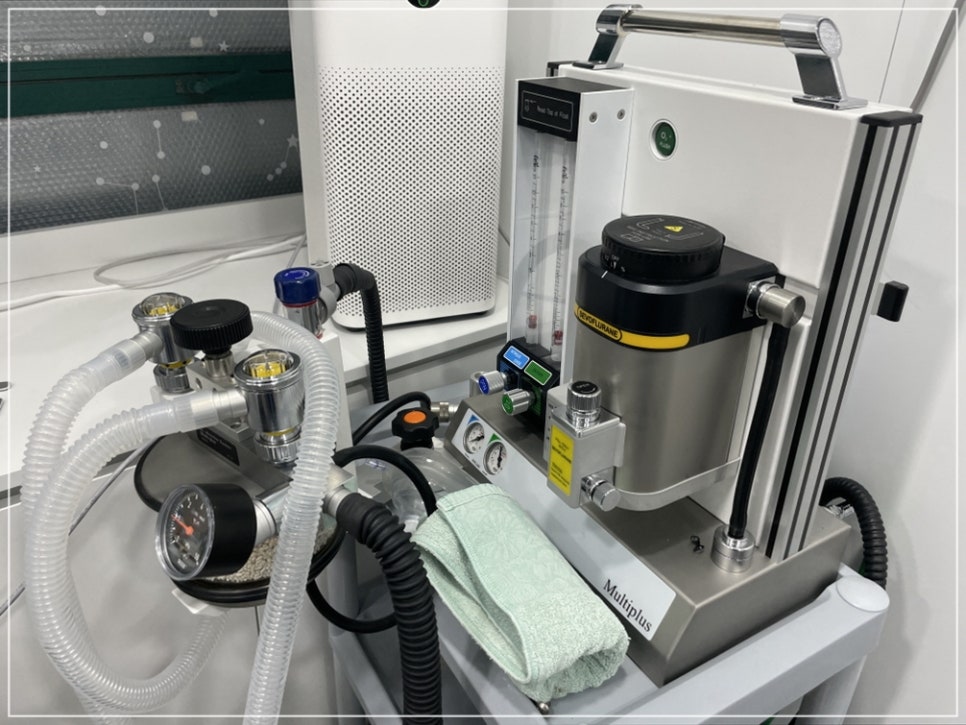
The facial area is not painless either.
So for all areas, the procedure is generally performed after sufficiently applying a topical anesthetic cream. Even with anesthetic cream, people who are sensitive to pain may find it very painful, so the procedure may also be done under sedation.
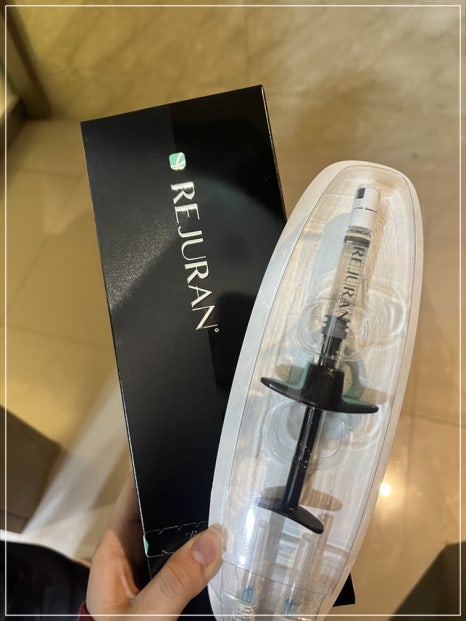
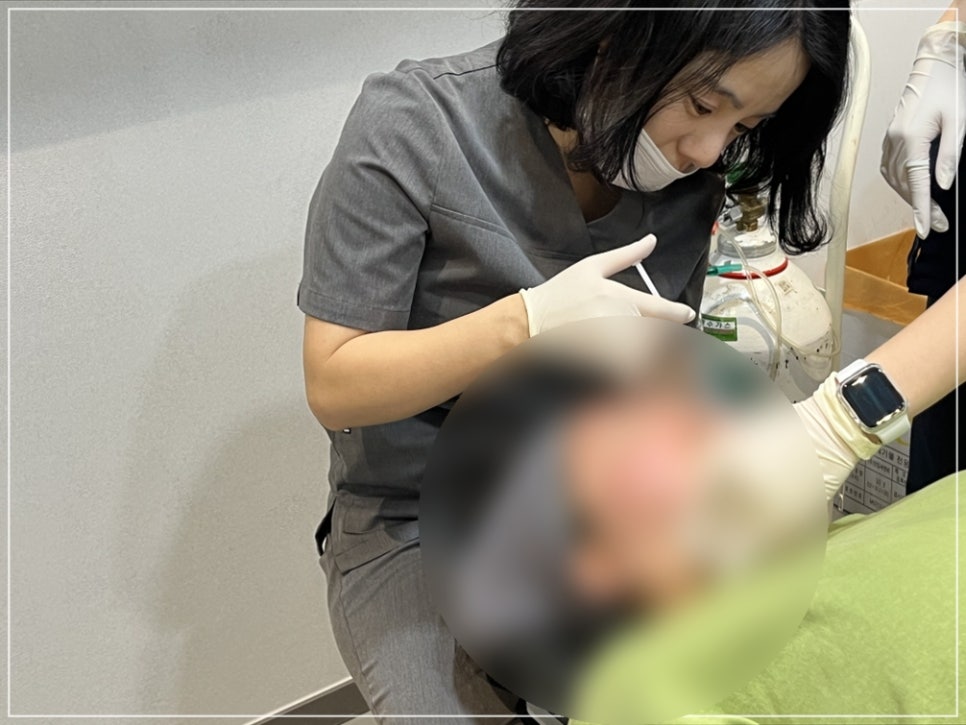 Banni Plastic Surgery Gangnam Hyperhidrosis Botox
You might wonder whether sedation is too much of a burden. In reality, many more patients than expected choose sedation at our clinic. A specialist performs the procedure, making safe anesthesia possible, and while they are under sedation, many patients also combine it with skin boosters or thread lifting, which are currently on promotion.
Patients who have had the procedure under sedation all come back for follow-up visits. (You can check the detailed promotion information on the Banni website.)
However, sedation requires fasting for at least 5 hours before the procedure, so you need to let us know at least one day in advance.
- Precautions during the procedure
- Correct dosage by area
Of course, the amount of Botox used varies depending on the area.
What happens if too little is injected? Right — the effect will be insufficient. And if too much is injected, side effects may occur.
The appropriate dose for each area needs to be adjusted according to the size of the area and the severity of symptoms.
In general, the underarms require 50–100 units per side (100–200 units total), the palms and soles require 50–100 units per side (100–200 units total), and the forehead, upper lip, and scalp require about 10–30 units per area (localized treatment).
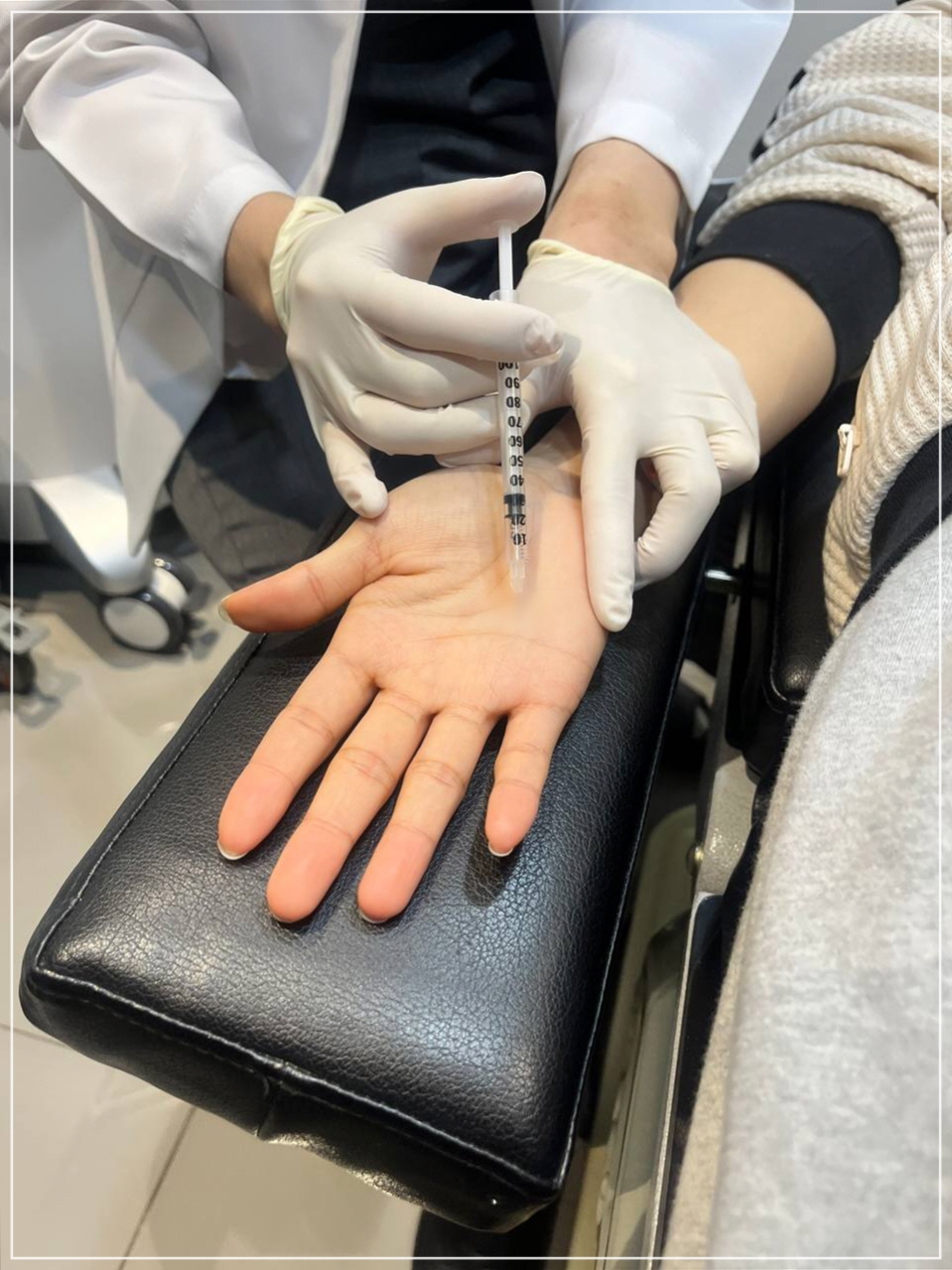
- Injection depth
Hyperhidrosis Botox must be injected into the dermis, not the muscle layer, for it to work.
It needs to be injected precisely just below the surface of the skin, that is, in the layer between the skin and the sweat glands.
If it is injected too deeply into the muscle or fat layer, what happens? Right — the effect may drop significantly or may not appear at all.
Although it looks like a simple procedure on the surface, in reality it depends a lot on the injector’s skill, so it is important to find a clinic that is fundamentally good at injection procedures. Injection technique has limitations when learned only in theory, so there can be a fairly large difference in ability from one doctor to another.
- What to prepare on the day of the procedure
It is best to avoid showering on the day after the procedure.
Because the Botox injected into the skin needs some time to settle, it is better to avoid stimulation from sweat or water. Showering is possible from the next day. Also, it is better to avoid vigorous exercise or any activity that causes sweating for about one week.
If sweat has caused restrictions in what you can wear or you often feel inconvenienced in daily life, hyperhidrosis Botox can be one way to relieve symptoms.
It is not a procedure you must undergo, but if sweat secretion is affecting your daily life, simply knowing what options are available in advance can be helpful, right?
Above all, Botox procedures clearly have both advantages and disadvantages, so it is important to apply them when needed and in the right amount, taking your physical condition and lifestyle into account.
In the end, every decision should be based on your own way of living and your comfort.
I hope this post can serve as a slightly clearer guide for those of you who have been 고민ing over it.
P.S. Around this time every year, we are running a small event as a token of appreciation for patients who visit for hyperhidrosis Botox, so please check the website for details :)
[This is a helpful post to read next.]
https://blog.naver.com/rush_724/223800891479