
| The under-eye area is considered one of the most difficult filler treatment areas. Based on about 20,000 clinical cases, this post covers only practical information on what criteria to use when choosing a clinic so you can avoid side effects and get only the results you expect. I sincerely hope this is helpful for those looking for a good under-eye filler clinic. |
Hello.
I’m Lee Mira, the chief director of Banni Plastic Surgery | Skin Clinic.
The chief director, who is a board-certified plastic surgeon and a definite T personality, has one area where they acknowledge my skills: fillers.
In fact, I never separately announced the opening of my clinic, but when patients who had received treatments at the hospital where I previously worked came to find me, it made me think that I must be quite good at this procedure myself.
Of course, it took about 20,000 clinical cases to master the technique I use now.

The reason patients hear about me through word of mouth and make a long trip here is probably because they know under-eye filler is a procedure that depends heavily on the injector’s hands.
Usually, areas like the chin, side cheeks, and nose are treated at most clinics. In contrast, more clinics do not treat delicate areas like the under-eye area or aegyo-sal at all. There is so much to pay attention to, from the treatment method to reflecting each patient’s needs.
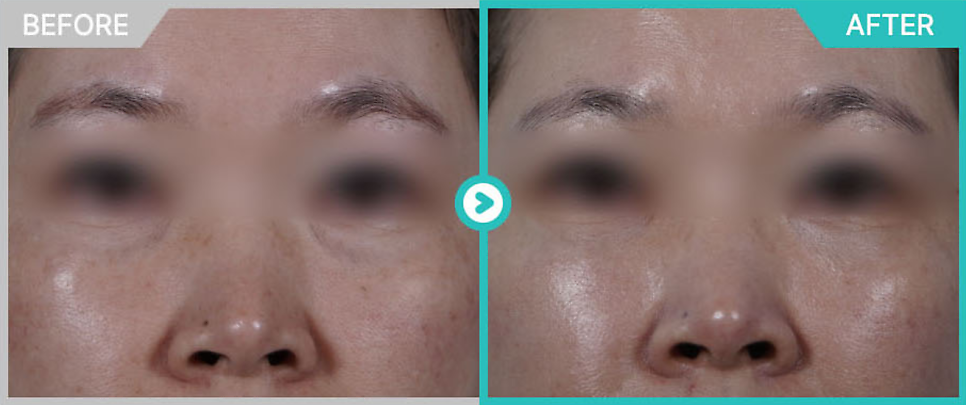
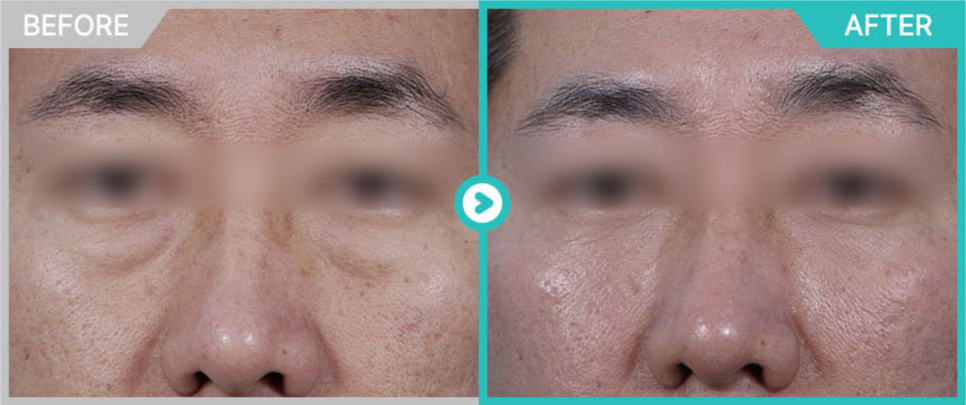
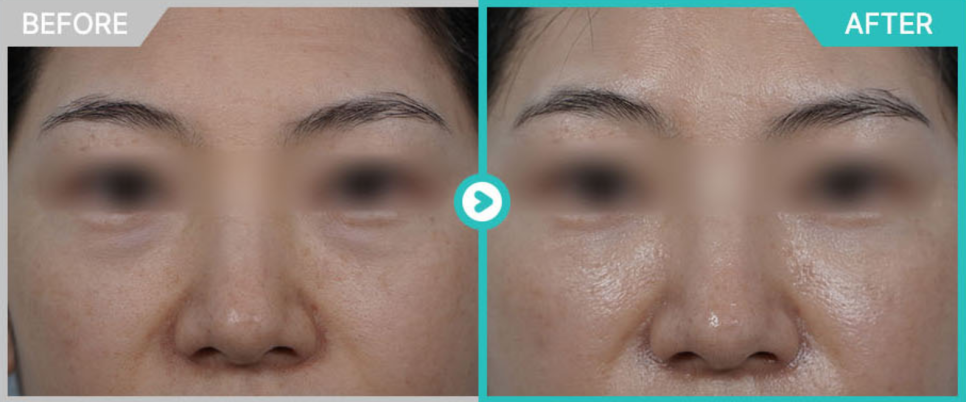
[Before and after under-eye filler]
Above all, the under-eye area has thin skin, and underneath it are thin layers of fat, blood vessels, and muscle.
Because it moves a lot and has a major impact on facial impression, it is difficult to create natural results without precise anatomical understanding and a refined technique.
That is why, in this area, “a little should be fine” does not apply.
In other words, under-eye filler is a procedure that must absolutely be performed by a medical professional who is truly skilled.
So in this article, for those considering under-eye filler, I’ll explain what criteria to use when choosing a clinic and what kind of procedure should be performed for under-eye hollowness and dark circles to improve together, based on my own experience.
If you read this article carefully from start to finish, you’ll be able to clearly distinguish a clinic that is good at under-eye filler.
| Table of Contents 1. Can under-eye hollowness and dark circles improve at the same time? 2. Under-eye filler is not simply a procedure that fills volume 3. Key conditions for safe and attractive results 4. Which clinic should you choose for under-eye filler? |
- Under-eye hollowness filler: Can uneven hollows and dark circles improve at the same time?

Gangnam under-eye hollow filler, Banni Plastic Surgery
To begin with the conclusion, under-eye filler can sufficiently improve dark circles as well.
Rather than simply filling a sunken area, you can think of it as a treatment approach that reduces the dark shadow under the eyes and brightens the overall impression.
That’s because the most common cause of dark circles is not pigment or a skin problem, but a shadow created by imbalance in the under-eye structure. This shadow-type dark circle appears when under-eye fat bulges forward and the area beneath it becomes sunken, creating a shadow along the boundary when light hits the area.
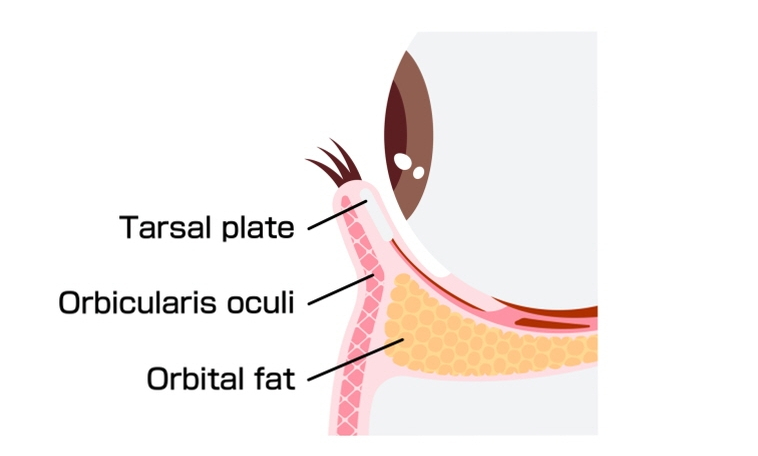
In particular, under-eye fat can bulge more prominently due to aging, a habit of frequently rubbing the eye area, or genetic factors.
When filler is used to naturally connect the protruding fat and the hollowed area, what happens?
That’s right. The dark under-eye area is improved and appears brighter.
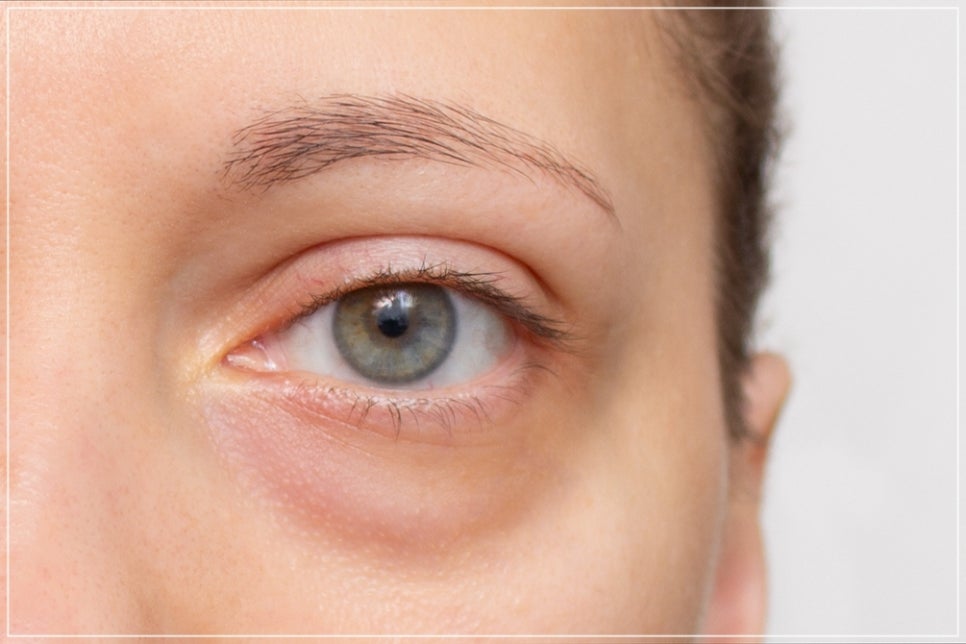
Also, the average thickness of the skin under the eyes is only about 0.3 to 0.5 mm, and because there are many tiny blood vessels and veins beneath it, it can easily appear bluish.
In such cases, if filler is carefully placed and spread in a thin layer, the skin becomes slightly fuller, which can also make visible blood vessels less noticeable. Of course, the skin itself does not actually become thicker.
You can understand it as filling the layer beneath the skin so that the blood vessels are less visible from the surface.
In other words, under-eye filler is not just simple volume replacement; it is a procedure that can improve the overall appearance of dark circles by easing hollowness, shadows, and visible blood vessels together.
- Under-eye hollowness filler,
Design, injection depth, injection amount, and injection speed — all must be considered.

Key conditions that determine the result of under-eye hollowness filler
Creating a good result with under-eye filler does not simply mean filling in the sunken area with volume.
What matters is how smoothly the entire flow from the under-eye area to the upper cheek is connected, and how the product is placed within that structure.
That is why under-eye filler can go wrong if the design is good but the technique is lacking, and problems can also occur if the technique is excellent but the design aspect is insufficient. Only when both are completed at a high level can the result be natural, stable, and inconspicuous.
- Under-eye filler requires 3 injection techniques.
A. Layering technique: a method that achieves both safety and naturalness

One of the most important techniques for reducing side effects while still achieving a natural, refined result in under-eye filler is the layering technique.
It is a method of accurately understanding the skin structure and injecting thinly and evenly into multiple layers.
With this approach, the filler spreads without clumping, while also reducing the chance of blood vessel damage.
Under the eyes, several thin layers are stacked together, including the dermis, fascia, a thin orbicularis oculi muscle, and orbital fat. If the filler collects in only one of these layers, that area is likely to bulge outward, or the filler may shift to one side over time.

That is why, rather than injecting all at once into a single layer, I use the layering technique, which divides the injection into several depths so it spreads thinly. This works like distributing the filler widely and evenly, almost like a thin film within the skin.
Another important reason the layering technique matters is that it can reduce blood vessel damage.
Under the eyes, important blood vessels such as the infraorbital artery and the angular vein run through the area, and they usually pass along the boundary between shallow and deep layers.
If filler is placed too superficially or too deeply in one concentrated area, the chance of contacting these vessels increases, and side effects such as bruising, pain, swelling, and in rare cases vessel compression or color changes can occur.
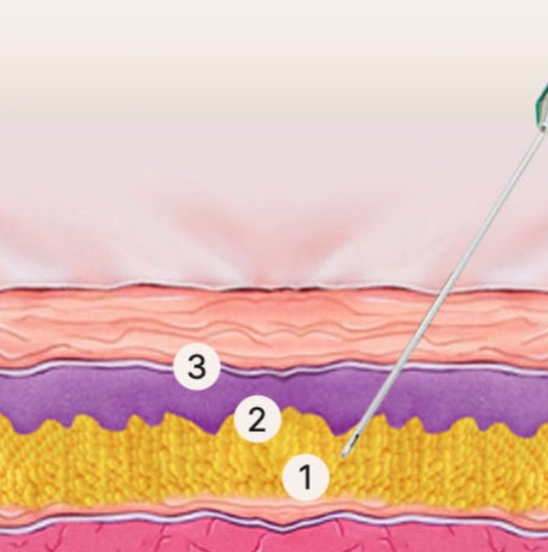
By contrast, anatomically speaking, there is a relatively safe injection layer under the eyes where there are fewer blood vessels. The layering technique distributes filler evenly around this safe layer, allowing it to settle without overlapping with blood vessels, which makes the procedure much safer.
In other words, layering is not simply a technique for spreading filler beautifully; it is a core technique that improves both safety and the quality of the result based on the anatomical structure of the under-eye area.
B. Small-volume injection: an area where even a 0.1 cc difference can change the result
Under the eyes, it is important how much filler is used, but even more important is how it is divided and placed.
Because even a slight excess can make the area look swollen or obvious, it must always be injected in small amounts, divided over multiple points.
Because the under-eye area has thin skin and limited space, even a 0.1 cc difference can significantly change the impression.
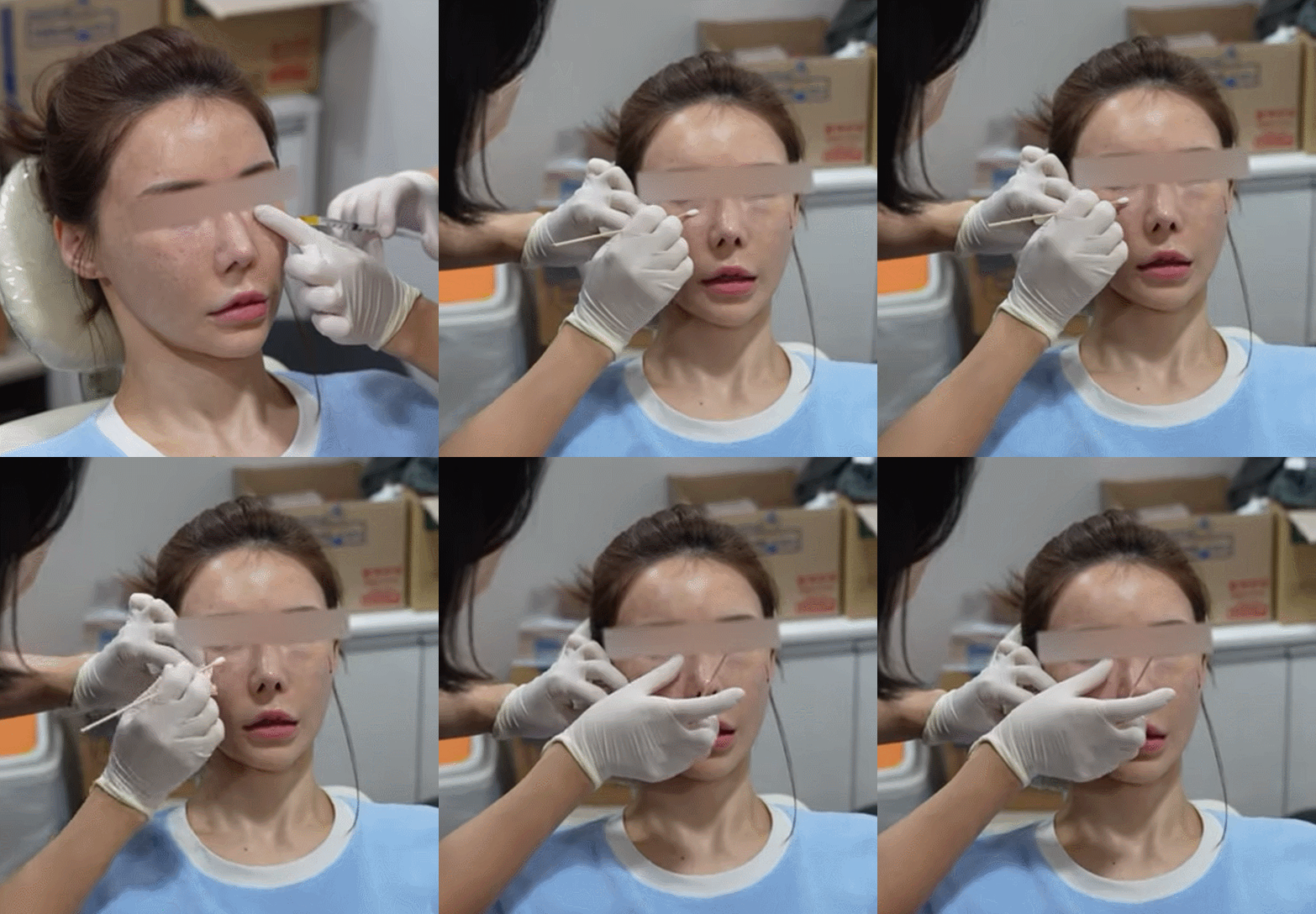
Even a slight change in volume can make it look lumpy or as if only one side is swollen.
If a large amount is injected at once, the filler may collect in one place instead of spreading properly, and it can be compressed or pushed aside, leading to an uneven result. Swelling may also last longer, or the under-eye area may look heavier.
That is why I always inject under-eye filler in very small amounts, divided across multiple areas. This avoids unnecessary volume and allows the line to connect much more smoothly.
In other words, under-eye filler is not about putting in a lot; the key is placing a small amount accurately, several times over.
C. Slow injection: a method that minimizes pressure and blood vessel damage
In an area like the under eyes, where blood vessels are dense, the injection speed is also a variable that affects side effects.
Faster is not better; in fact, the faster it is injected, the higher the risk can be.
That is why under-eye filler must be injected slowly and with steady pressure to be safe.
Because the infraorbital artery, veins, and lymphatic vessels are densely packed into the thin layers under the eyes, injecting filler too quickly can increase pressure at the needle tip and push or compress these tissues.
This can lead to bruising, immediate post-procedure pain, pressure, or, in rare cases, impaired blood flow that may cause skin color changes or pigmentation.
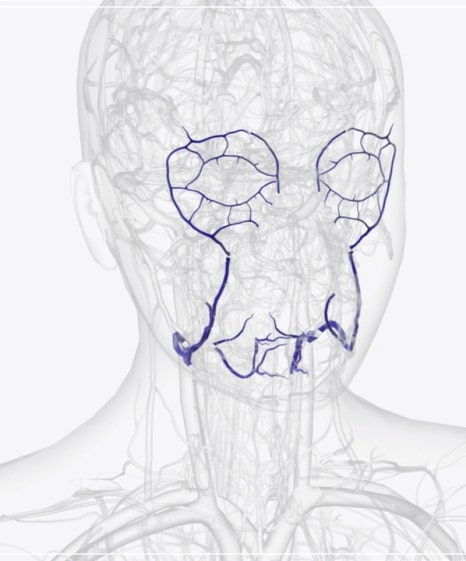
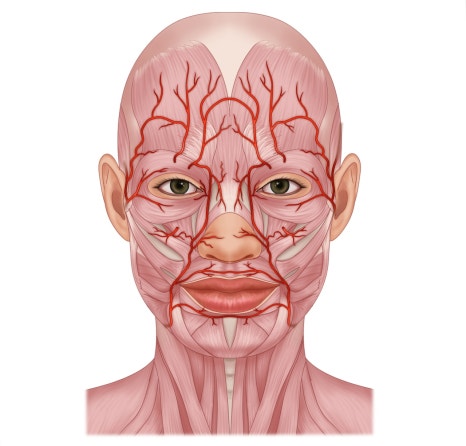
Filler injected too quickly may also fail to spread naturally between tissues and can shift in an undesired direction or clump, preventing a smooth contour.
That is why, during under-eye treatments, I always control hand pressure carefully and inject very slowly. The goal is to allow the filler to enter the tissue smoothly and form natural, stable volume.
In other words, with under-eye filler, the key is not how fast it is injected, but how smoothly it spreads.
- A two-step treatment plan that includes touch-up planning
Under-eye filler is not a procedure that finishes everything in one session.
It is more accurate to view it as a step-by-step treatment that is completed safely over time while observing tissue response.
Because the under-eye area has thin skin and is sensitive to tissue changes, a two-step approach that considers changes after 2 to 3 weeks is much safer and more natural than filling everything perfectly from the start. (Of course, if the result is exactly right 1 to 2 weeks after the first session, a touch-up is not necessary!)

Gangnam under-eye hollow filler, carefully handled through touch-up as well
Immediately after the procedure, the filler has not fully settled yet, so some swelling occurs.
It takes about 1 to 2 weeks for all these changes to stabilize.
That is why, if too much volume is added at the beginning, once the swelling subsides later, the under-eye area may appear more prominent or unnecessarily puffy.
In such cases, it is not easy to dissolve or correct the filler again, so it is important to plan with room from the start.
In other words, under-eye filler is not a procedure that should be rushed to completion. It should be approached as a planned treatment that observes the response and considers fine adjustments.
Only then can you create a beautiful and stable result.
- Design that connects boundaries, not just simple filling
To create a natural result with under-eye filler, the first thing to consider is not just filling the hollow area, but how to connect the boundary as well.
Under-eye filler is not a procedure that ends by filling only the tear trough. It is an area where you need to determine how far the hollow extends and where it should stop.
Under-eye hollowness often starts at the tear trough and extends to the area beneath the front cheekbone. In most cases, the problem is caused by a disrupted connection between the under-eye, upper cheek, and cheekbone area.

Gangnam under-eye hollow filler, Banni Plastic Surgery
What happens if you only fill the tear trough in such cases?
That’s right. It may actually look more noticeable.
If the upper cheek is hollow but only the under-eye area is filled, the point where the volume breaks may stand out more, making the boundary look even clearer.
That is why, during the design stage before treatment, I always first look at how far the under-eye hollow extends and what kind of volume the area in front of the cheekbone has.
The goal is not simply to fill the hollow with filler, but to judge where volume should be distributed within the overall flow to look natural.
For example, for some people, filling only the tear trough is enough, but for others, a slight volume addition in front of the cheekbone can create a softer, more defined impression.
That is why the under-eye area must be designed by considering all the lines connected to the surrounding area, so the result does not look unnatural and the overall face appears smoothly refined.
- If it is hard to judge the technique at an under-eye filler clinic, check just 2 things.

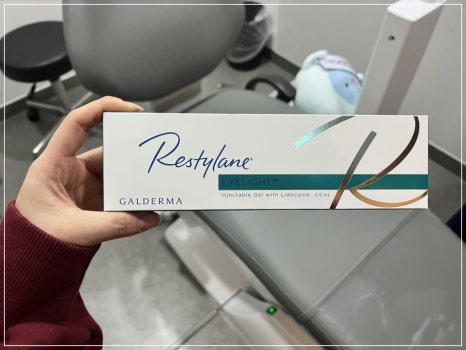
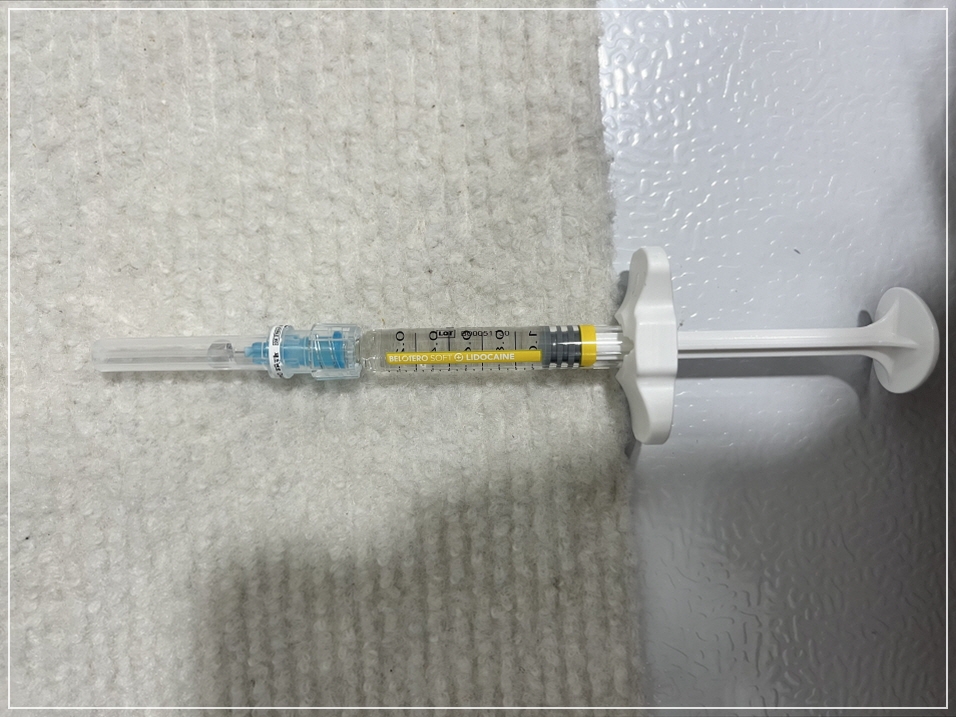
As I mentioned earlier, no matter how expensive or good the filler is, it is hard to be satisfied if the injector lacks experience and focus. And this is an area that is difficult to master through theory alone, including injection technique, depth, and design direction.
In the end, skill in this area comes down to how many cases the clinician has seen and how often they have handled them — in other words, experience directly translates into ability.
So when choosing a clinic, the first thing to look at is whether the doctor has built up enough clinical experience in this area.

Another important thing is whether the clinic takes enough time for the procedure.
Under-eye filler is not a treatment where you simply inject one or two points and finish; the design, injection method, and response must be checked and adjusted in real time.
However, in so-called factory-style clinics that move through dozens of patients a day, this kind of unhurried treatment is practically difficult. If the injector is rushed by time, shortcomings in quality are inevitable.
Of course, factory-style clinics can be attractive because of their lower prices.
But non-factory clinics are not necessarily expensive either.
At our clinic, we started with the idea of creating a place where anyone can have the right to become beautiful, so our prices are set reasonably.
Therefore, when choosing a clinic for under-eye filler, be sure to check these criteria.
-
How much experience the doctor has, especially with under-eye procedures
-
Whether the clinic has a system that allows enough time and focus for the procedure
Under-eye filler may seem like a simple procedure that only fills a hollow area, but in reality it is a precise treatment that affects the overall impression of the face.
The skin is thin, and beneath it are blood vessels, fat, and fascia structures intricately intertwined, so nothing can be neglected — from design to injection depth, amount, and speed.
Because the under-eye area is one where even a 1 mm difference can completely change the result, you need accurate judgment that can read the structure and movement of the face, as well as the kind of dense experience that can bring that judgment to life.
I have performed more than 20,000 filler procedures so far, always with the mindset of “if this were my family.” I want to give patients more than just a prettier appearance — I want to give them a confident daily life.

Gangnam under-eye hollow filler clinic
What I want to tell you in the end is this:
If you are considering under-eye filler, it is important to know what filler is used, but even more importantly, you should first look at whether the clinic treats patients with the right standards and sincerity, and whether the medical team deeply understands this area and has consistently performed the procedure.
Look beautiful without looking like you had anything done!
This was Lee Mira.
Thank you.