
Hello.
I’m Lee Mira, the chief director of Banni Plastic Surgery | Skin Clinic, someone who looks more beautiful without any sign of having had a procedure.
Ulthera has remained consistently popular.
And because it remains popular, a huge amount of information keeps pouring out.
Questions like how many shots are appropriate, how strong the energy should be, and how long the lifting effect lasts, and so on.
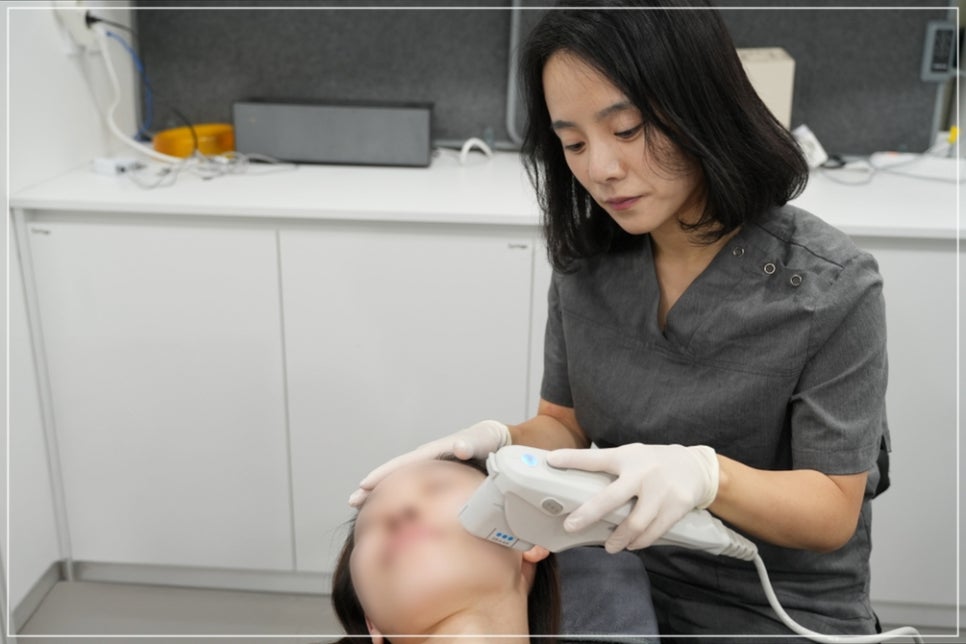
Ulthera at Gangnam Station, Banni Plastic Surgery
But when you actually look into the details, I often feel that there is a lot of distorted information.
For example, statements like, “You have to fire it strongly for a bigger effect” or “The more shots, the better.”
They sound somewhat convincing, but in fact, there is a major flaw in this.
So today, I’d like to talk about the important points that actually determine Ulthera results in clinical practice.
I’ll go over energy intensity, the number of shots, and even treatment methods that can increase and prolong the effect, one by one.
I hope this helps you avoid being swayed by distorted information and instead set standards for lifting that are truly right for you.
I’ll explain everything you need to know about getting Ulthera properly.
- Is stronger energy always better? Beyond a certain level, it can do more harm than good

A place near Gangnam Station that does Ulthera well, energy intensity
When consulting about Ulthera, some people ask, “If it’s fired strongly, it lifts more decisively, right?”
I completely understand that feeling. From the patient’s perspective, you want to see a clear effect even if you have to endure some pain.
But Ulthera is not a procedure where stronger energy automatically means a bigger result.
In fact, once it goes beyond a certain level, the effect may stay the same while the risk of side effects increases.
Let me briefly explain how Ulthera works.
Ulthera focuses ultrasound energy deep within the skin to create localized thermal coagulation points at about 60–70°C.
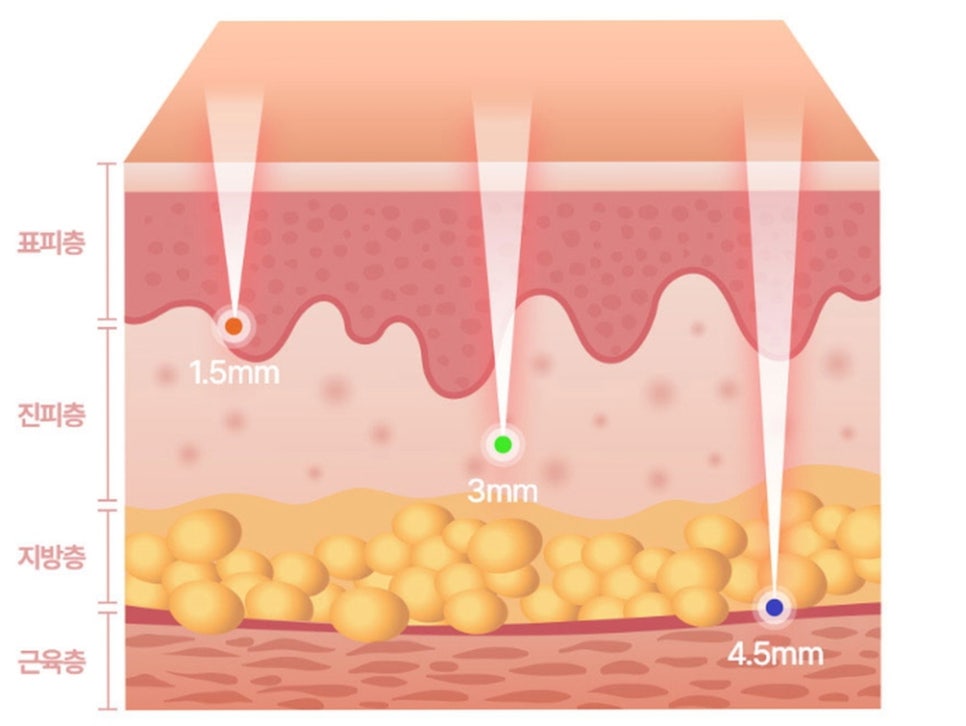
When this temperature is reached, the collagen fibers in the skin contract and then reorganize over the following weeks, improving elasticity. In other words, this temperature can be considered the starting point for collagen remodeling.
But here is the problem.
Collagen response has already begun at this temperature, and pushing the intensity higher does not mean more collagen will be produced, or that it will be produced faster.
Once the fibers have already contracted, they will not tighten any further; instead, only excessive stimulation remains on the skin tissue.
Typical side effects that can occur at this point include heat damage, burns, nerve irritation, and subcutaneous fat atrophy.
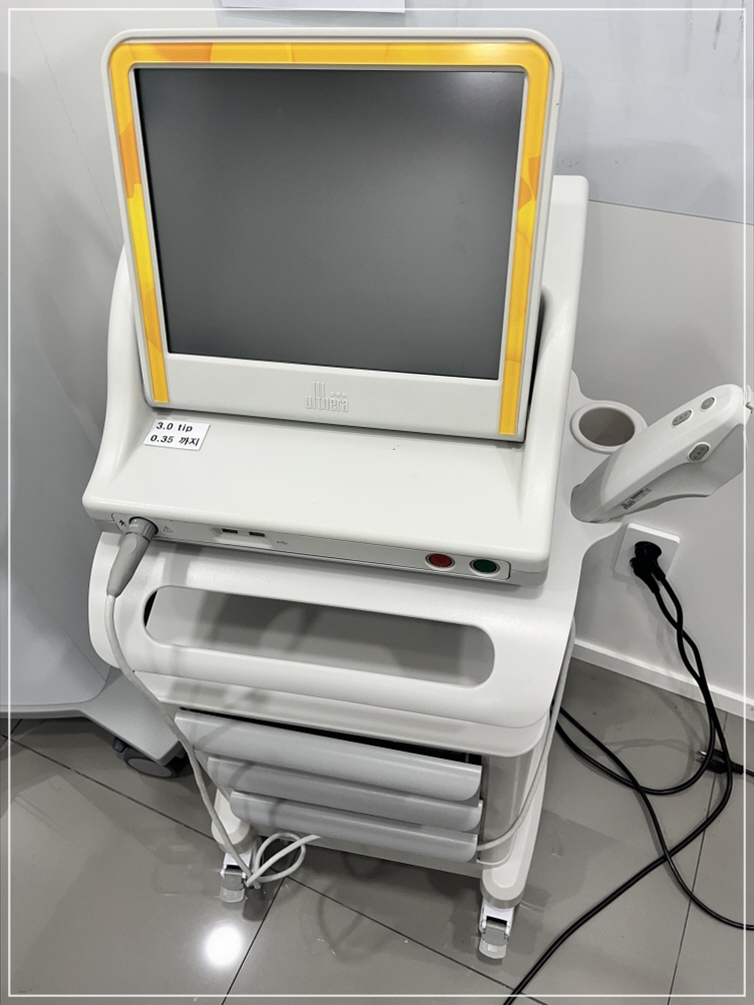
Ulthera at Gangnam Station, Banni Plastic Surgery
In fact, several studies related to Ulthera also emphasize that the energy intensity should be adjusted to a level of pain the patient can tolerate.
In particular, for people with little cheek volume and thin skin, stronger intensity makes it easier for the fat layer to be affected.
Feeling that the face looks sunken later, or that the volume has decreased, may also be the result of this kind of excessive stimulation.
So the important thing is not to use the strongest possible energy, but to deliver the necessary amount accurately.
An appropriate intensity is definitely needed, but anything beyond that does not increase the effect.
- Are more shots always better?

Appropriate number of Ulthera shots near Gangnam Station
One of the most common misconceptions during Ulthera consultations is the idea that “the more shots, the better.”
At first glance, it may sound right.
In practice, as the number of shots increases, the number of thermal coagulation points laid across the face also increases, allowing stimulation over a wider area.
Especially when performing a full-face lift targeting the entire face, a sufficient number of shots must be secured to expect proper results.
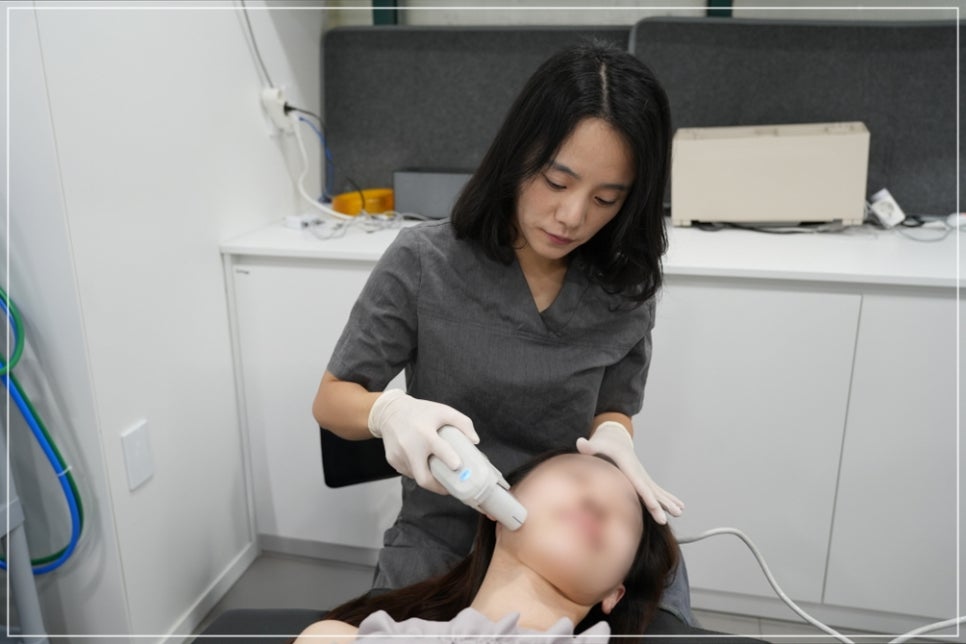
Ulthera at Gangnam Station, Banni Plastic Surgery
But there are clear limits here as well.
Ulthera creates one thermal coagulation point in the skin per shot, and if these points become too many, the same area may be treated repeatedly or stimulation may accumulate more than necessary.
This can lead to heat damage to the skin, or even side effects such as a sunken appearance due to atrophy of the subcutaneous fat layer.
In particular, for people with little cheek volume and thin skin, simply increasing the number of shots does not necessarily produce better results. In fact, these are cases that require a more cautious approach.
So what really matters is not how many shots were fired, but how accurately the planned number of shots was distributed according to the structure of the face.
For example, if you are not trying to improve the entire face but instead want to focus on the midface, lower face, or a specific concern area, there is no need to use 500 or 600 shots.
Even 300 shots can produce satisfying results.
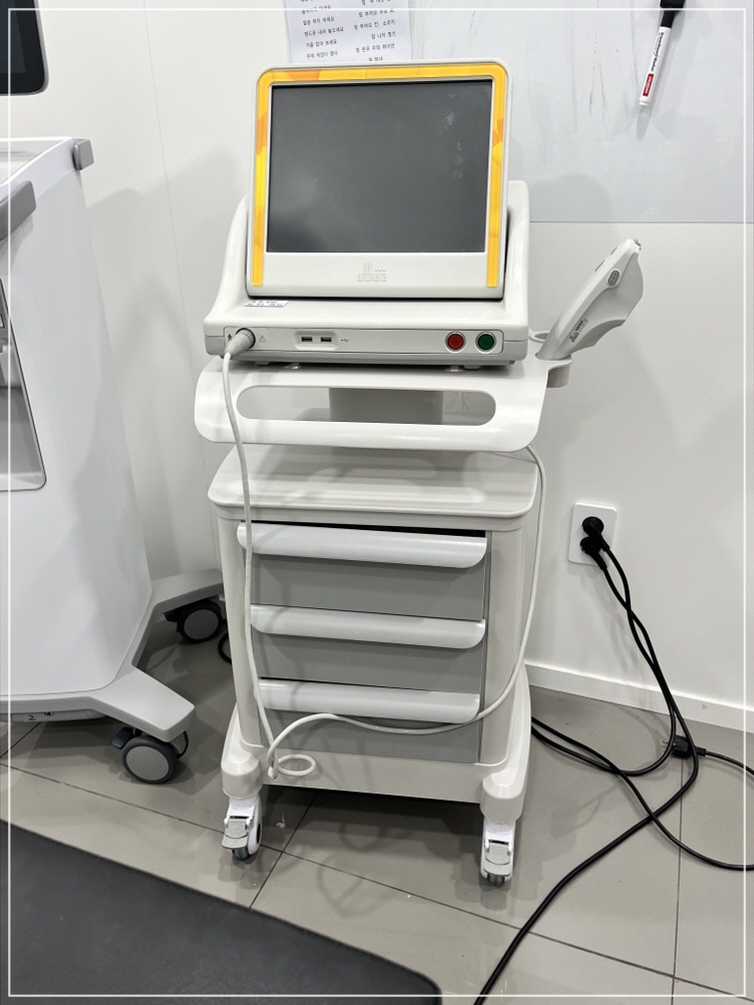
What matters is which areas those 300 shots are delivered to.
At this point, we place a slightly denser overlap of shots on areas that are most affected by gravity—such as beneath the deep cheek area, around the corners of the mouth, and below the jawline—where elasticity has broken down the most, while avoiding the lateral cheeks or the area beside the cheekbones, where sunkenness is more likely, or placing only a minimal amount there.
Doing it this way allows lifting to happen naturally while also restoring a sharper facial contour.
- Why use all of 4.5mm / 3.0mm / 1.5mm?
Ulthera uses three cartridges of 4.5mm, 3.0mm, and 1.5mm depending on the depth within the skin.
This is not just a simple machine option, but a very important standard for deciding which layer should receive what kind of stimulation according to facial anatomy.
- 4.5mm cartridge – targetting the SMAS layer (fascia) / the core of structural lifting
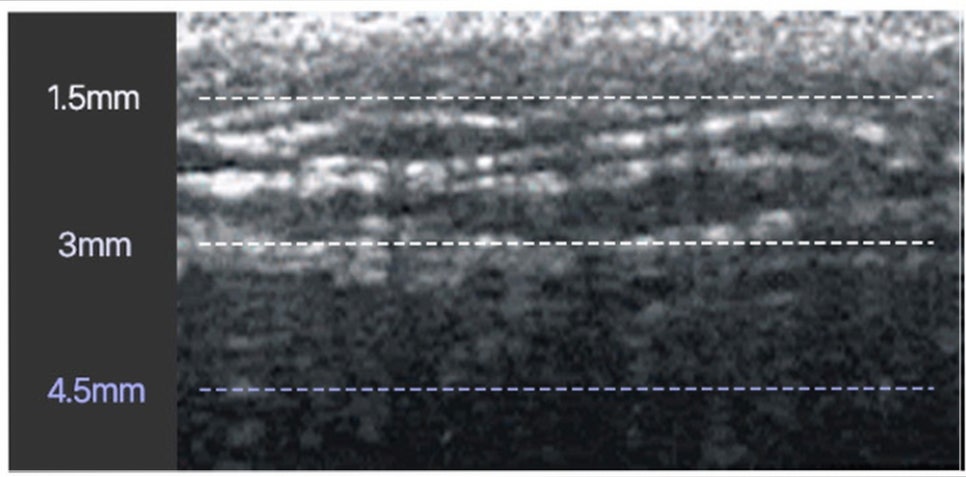
The 4.5mm depth reaches the SMAS layer, the fascia layer that supports the skin and lies in the deepest part of the facial structure. What we commonly feel as skin sagging is actually this SMAS layer losing elasticity and stretching downward.
Stimulating this layer has the effect of tightening and lifting the structure itself that has collapsed in the direction of gravity. In other words, it helps establish the framework that defines the facial contour.
- 3.0mm cartridge – stimulation of the lower dermis / the central layer for collagen regeneration
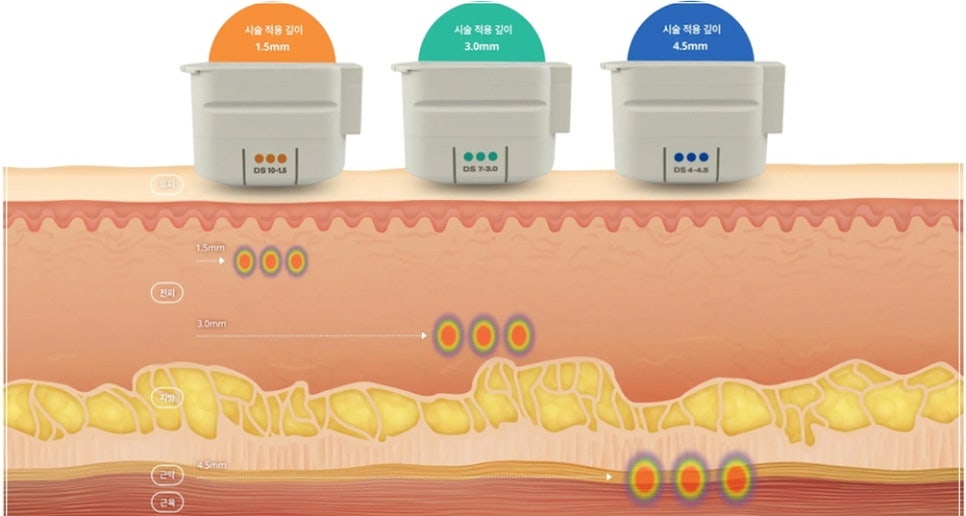
Ulthera triple targeting near Gangnam Station
3.0mm targets the lower dermis, especially the area rich in fibroblasts.
This layer is where collagen production is most active, and it is a key layer for improving skin texture, elasticity, and wrinkles.
When thermal coagulation points are created in this area, remodeling of collagen and elastin occurs most actively. The skin becomes firmer overall and gives a tighter feeling.
- 1.5mm cartridge – upper dermis / complementing thin skin layers, refining skin texture
1.5mm targets the upper dermis, and this layer is especially applied to thin and sensitive areas such as around the eyes and around the mouth. Creating fine thermal coagulation points here helps refine skin texture, improve fine lines, and create a firmer, smoother feel to the skin.
Depending on the condition of the skin, there are cases where focusing on a specific layer is effective, but in most cases there are clear limits if only a single layer is stimulated.
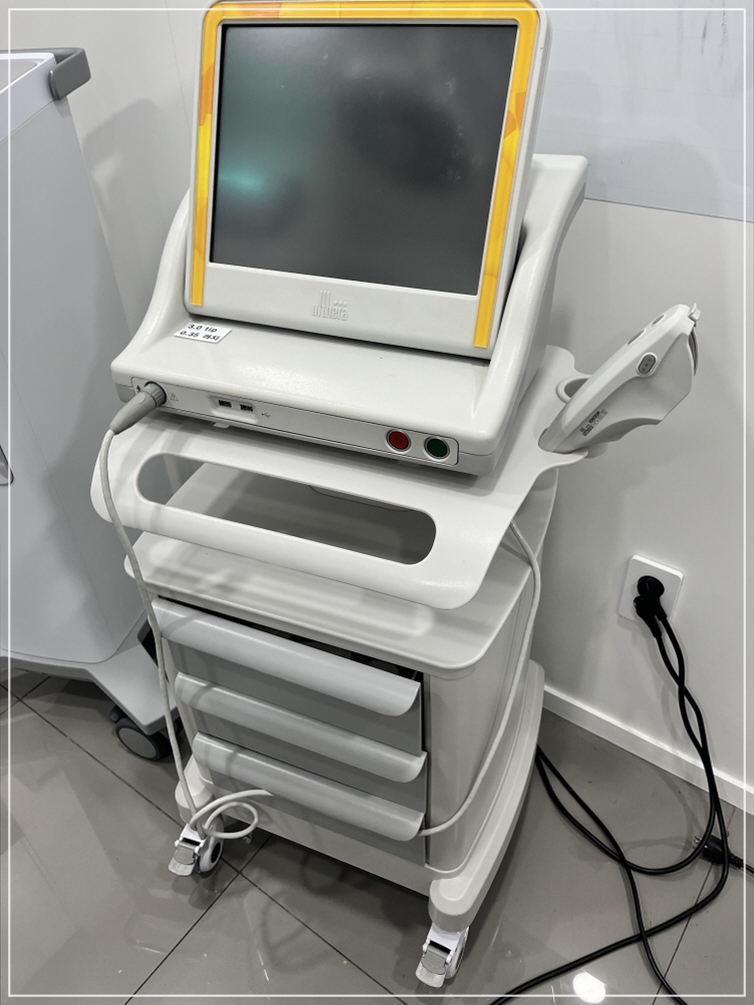
Ulthera at Gangnam Station, Banni Plastic Surgery
For example, if only the 4.5mm cartridge is used, the sagging structure of the SMAS layer will be lifted, but because the dermis does not respond together, the surface-level feeling of firmness may be insufficient.
The contour may be somewhat defined, but when you look in the mirror, the skin texture or plumpness may feel unchanged.
Conversely, if only 3.0mm or 1.5mm is used, the skin texture may improve and fine lines may get somewhat better, but the overall feeling that the face has dropped downward remains.
In particular, cheeks, the jawline, and the lines beside the mouth that have sagged in the direction of gravity are difficult to improve with simple dermal stimulation alone.
Closing
If you have read this far,
-
Stronger energy is not always better; the proper intensity for your skin condition is the safest and most effective.
-
Rather than focusing on whether the number of shots is high or low, where and how they are delivered matters much more.
-
If you want lifting effects to stay natural and last longer, you need a procedure that stimulates different depth layers evenly.
I hope you will keep these three points in mind and get the full benefit of what Ulthera can offer.
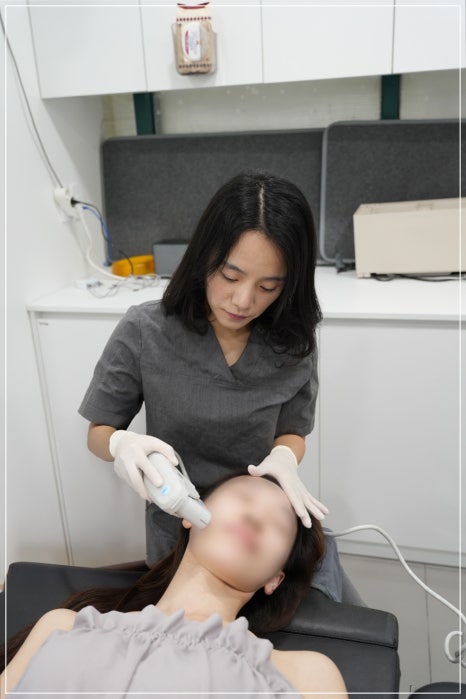
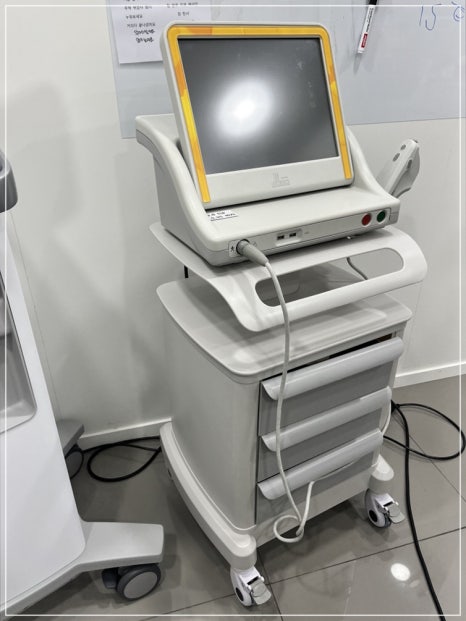
A place near Gangnam Station that does Ulthera well
Ulthera is considered one of the top HIFU devices, but in the end it is the medical staff who handle the device, so the results can vary greatly depending on who performs the procedure.
I’ll come back next time with a topic that can provide practical help to patients.
This was Lee Mira, leaving out exaggeration and filling it with sincerity.
Thank you. :)