How to Maximize Results with a Set Number of Custom Ulthera Shots in Gangnam

Hello.
No visible signs of treatment, only visible signs of becoming more beautiful.
I am Mira Lee, Chief Director of Vanny Plastic Surgery | Skin Clinic.
You have probably heard that Ulthera results vary greatly depending on who performs the procedure, right?
Ulthera does have manufacturer guidelines, meaning standardized protocols, but there are quite a few frustrating limitations in terms of effectiveness.
Ultimately, medical professionals who understand the limits of the standard protocol look for and apply methods that can produce more dramatic results. I do too.
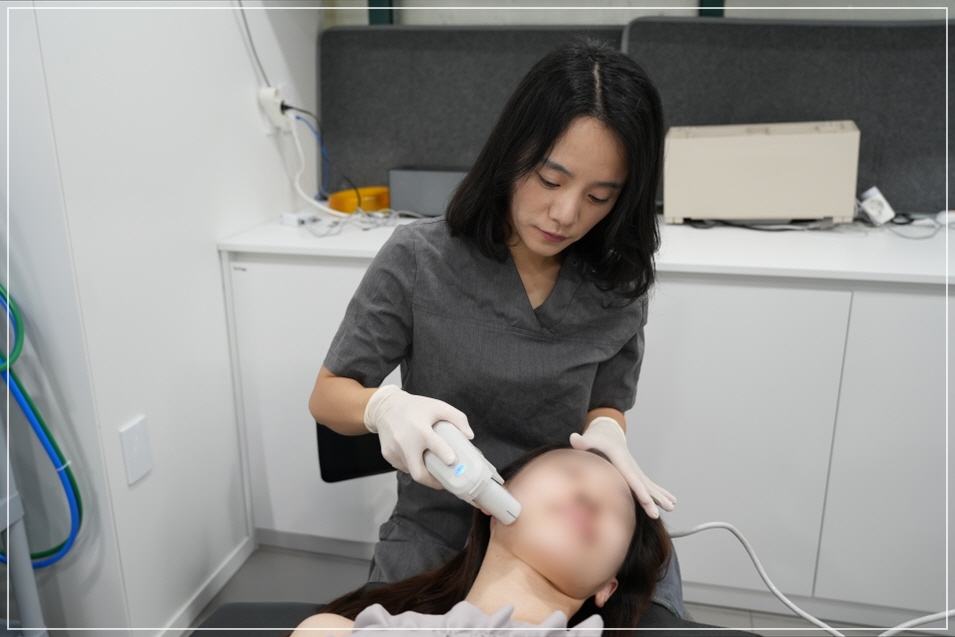
So I’ve always wanted to explain to patients why Ulthera depends so much on each clinician’s unique know-how in a way that really resonates, and I recently came across an interesting paper while reading, so I’d like to introduce it.
The paper describes a procedure performed in a way that the Ulthera manufacturer does not recommend, and the result? Yes, that’s right. Even though it went against the recommendation, it produced better results.
Of course, it would be difficult to apply this to every patient exactly as described in the paper. But since it shows how important the practitioner’s skill is, I think this article will help you clearly understand why the person performing Ulthera matters so much.
The Importance of Personalized Treatment: Custom Ulthera
Why Are Manufacturer Guidelines Necessary?
A very typical Ulthera procedure is performed based on the recommended protocol provided by the manufacturer.
This method divides the face into several sections and distributes the shots relatively evenly.
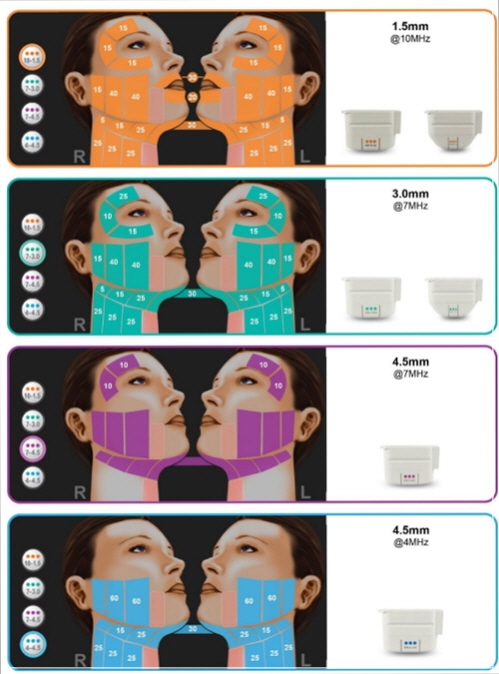 Gangnam custom Ulthera shot count, standardized protocol
Such standardized protocols can be safely applied to almost anyone, and they are especially useful for ensuring safety and predictability for clinicians with less procedure experience.
In other words, it serves as a stable starting point for maintaining consistent quality worldwide.
At the same time, it is natural to wonder whether distributing all shots in the same pattern is truly optimal for individuals whose facial structure, skin thickness, SMAS layer distribution, and fat volume all differ.
This concern was closely related to what was discussed in the paper.
Why the 'Experiment' Not Recommended by the Manufacturer Was Interesting
In the paper published in 2024,
the total number of Ulthera shots was kept the same, but two groups were compared based on different shot distribution locations.
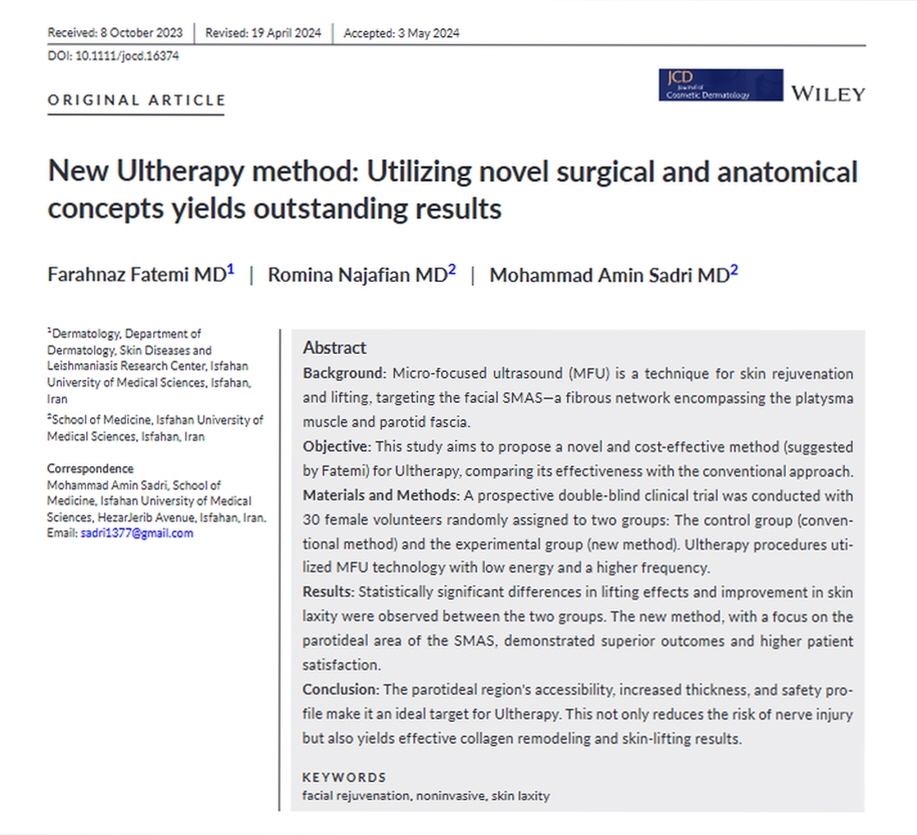
One group followed the existing recommended guideline and distributed the shots evenly,
while the other group placed more than half of the total shots 집중적으로 in the parotid gland area, that is, the line below the cheek near the front of the ear. Aside from that, the tip used, energy, and total number of shots were all kept the same.
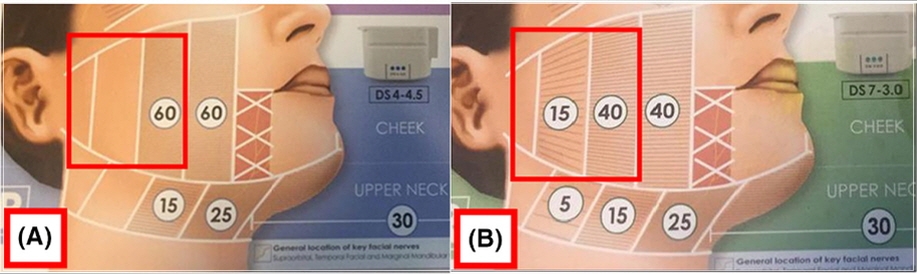
This was not the manufacturer-recommended approach, and it was closer to an experimental method based on the clinician’s judgment and anatomical knowledge.
The parotid gland area is a region where the SMAS is thick and well-defined, and it is a point where the structure is relatively clearly visible on ultrasound imaging.
Also, because the facial nerve is located in a deeper layer, it is known as an area with a good balance between tissue response and safety, since higher energy can be delivered relatively safely.
The result?
In several measures, such as lower-face lifting score, jawline improvement, neck line improvement, and patient satisfaction, the group with concentrated shot distribution recorded higher average values.
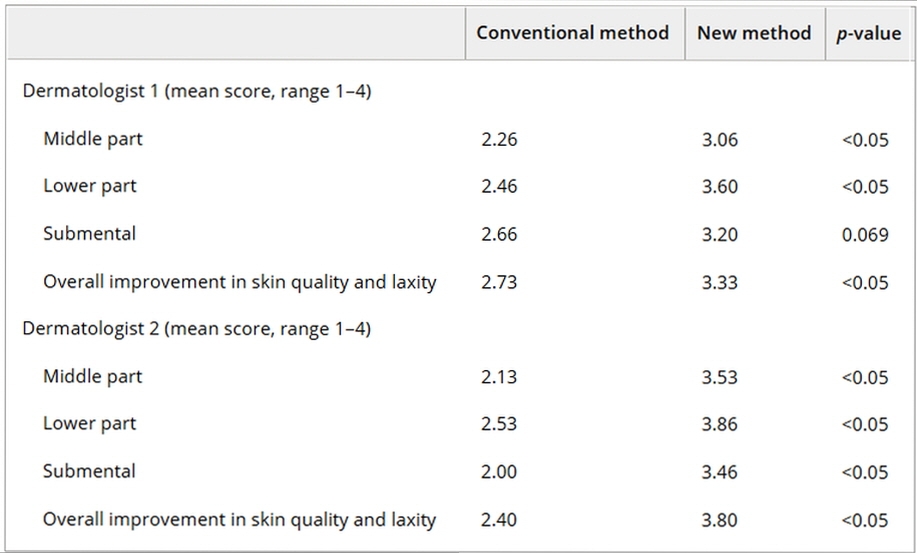
Even though the treatment was performed with the same machine and the same number of shots, the fact that changing only the shot location produced a meaningful difference in numbers was a result that made me think again about the importance of customized treatment design.
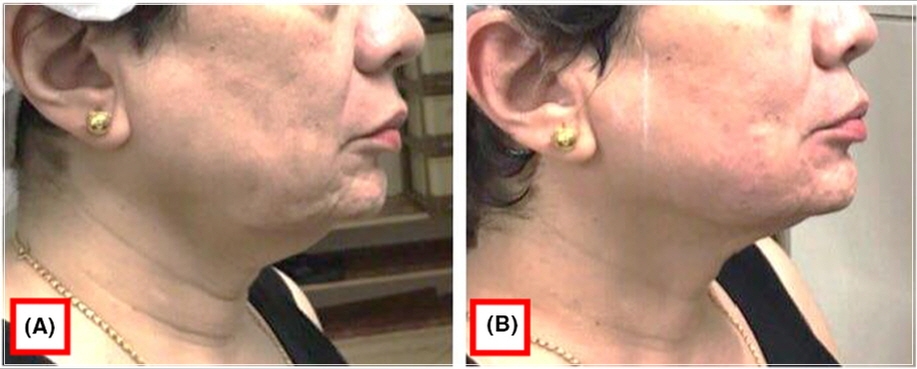
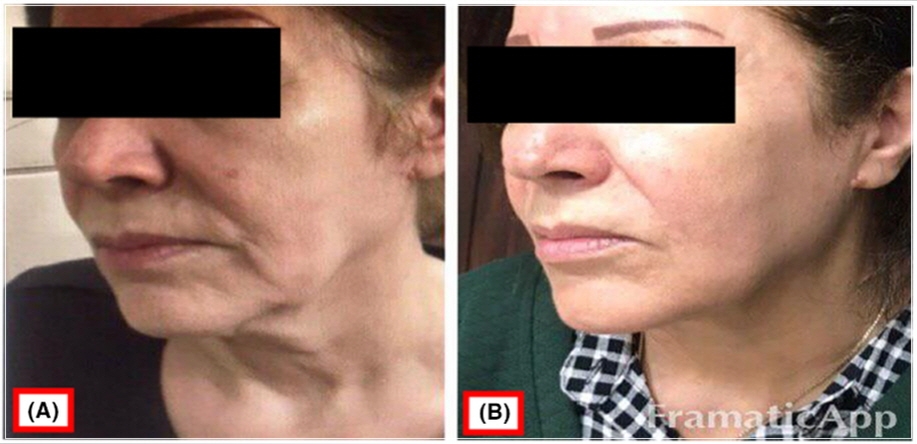
But! It is difficult to apply this to every case.
We cannot conclude that this method is always better, or that the existing method is always insufficient.
This is because each face has different anatomical structures, and elasticity, volume distribution, and skin responsiveness also vary greatly from person to person.
Also, concentrating shots only in the parotid gland area may be effective for some face shapes, but if sagging is mainly occurring in other areas, such as in cases with little cheek fat or prominent cheekbones, the effect may be limited instead.
But In the End, What Matters Is Customized Treatment
Still, as the paper also demonstrated, following only the standard protocol leaves a lot to be desired in terms of results.
Uniform shot distribution, energy levels, and design for everyone make it difficult to achieve good results.
Of course, as mentioned earlier, following the device manufacturer’s guidelines allows for safe application and can provide a certain degree of safety and predictability, especially for clinicians with less procedure experience.
 Gangnam custom Ulthera shot distribution—how should it be arranged?
The issue is patient satisfaction.
Ulthera results clearly differ depending on where, how much, and at what depth the shots are delivered.
For example, under the standard guideline, the area from below the jawline to the upper neck is usually recommended to receive shots in a straight line along the underside of the jawline, with shots distributed at regular intervals across the central neck and both sides. It also states that the procedure should proceed in a fixed order of 4.5 mm → 3.0 mm.
However, rather than that approach, it is better to first use ultrasound before the procedure to check roughly where the platysma (the neck muscle) is and how thick the skin is. (Depending on the person, the fascial structure beneath the neck skin can be close to 3 mm in some people and at 4.5 mm in others.)
If the fascia is found to be close to 3 mm, use the 3.0 mm tip; if it is at a depth of 4.5 mm, use the 4.5 mm tip; and if necessary, also use the 1.5 mm tip so the upper skin layer can be covered as well. The tip is adjusted to match each patient’s different depth.
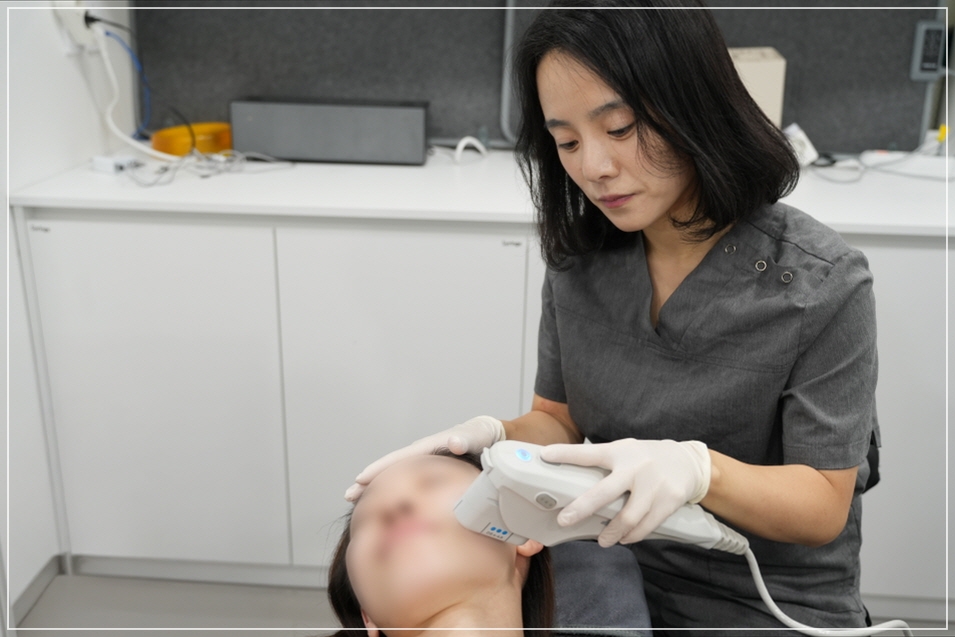
And if the existing method distributes the shots evenly under the jawline, it is more effective to focus more shots in an angled direction on the area where sagging actually gathers—the side where the lower jaw meets the neck, commonly called the double chin boundary.
Rather than mechanically dividing and firing a fixed number of shots, you first identify the area with the most sagging and deliver the energy precisely there. As a result, the jawline becomes more defined and the lifting effect naturally continues into the neck line.
 Gangnam custom Ulthera shot count, the importance of personalization
In Closing,
In the end, Ulthera’s effectiveness does not depend simply on the number of shots or the device specifications.
Even with the same device and the same tip, the results can vary completely depending on where, at what depth, and at what density the shots are delivered according to facial structure.
That is why, before every procedure, I always spend the most time and attention carefully checking the patient’s skin thickness, the direction of sagging, and even the positions of the SMAS and platysma, and then planning the right tip selection and shot distribution strategy accordingly.

There are definitely important points that can be missed with a standardized pattern alone.
So if you want the real effect of Ulthera, please remember that what matters more than the machine is who performs it and how it is performed—in other words, the clinician’s anatomical understanding and ability to design a customized treatment.
With sincerity, without exaggeration,
This was Director Mira Lee.
Thank you.