Hello.
No visible signs of having had a procedure! Only the signs of having become prettier!
I’m Mira Lee, chief doctor at Bannie Plastic Surgery | Skin Clinic.
Lately, maybe because of my touch, I’ve been doing Ultherapy almost as routinely as eating meals.
However, among first-time clients, there are quite a few who come in with major misconceptions about Ultherapy’s effects.
Specifically,
- Thin people with little facial fat should not get Ultherapy.
- Ultherapy can fill in sunken areas.
These are the two points.
Personally, whether it’s Ultherapy or Thermage, I read a lot of domestic and international papers to maximize the effect relative to the number of shots. The idea that Ultherapy can produce a fat-repositioning effect is not something that can be explained theoretically. That is also true from clinical experience.
This column introduces a recent interesting paper and explains how to get the maximum effect.
https://blog.naver.com/rush_724/223928553375
In addition, the claim that thin people should not get Ultherapy is something I disagree with.
Thin people can absolutely undergo Ultherapy, and there are areas that need improvement. Being thin does not mean sagging will never happen.
 Gangnam Ultherapy effectiveness truth: Thin people O, filling sunken areas X (+ event dermatology clinic) fact check
So today, I’d like to take some time to correct these two misconceptions.
I’ll explain, based on facts, why it is difficult to improve sunken areas with Ultherapy and how thin people can receive Ultherapy without side effects like hollowing. (Oh! You can check the event details at the end of the post.)
- “Can Ultherapy fill in sunken areas?” Is that really true?
“Ultherapy can fill in hollow cheek areas.”
“It can improve under-eye hollowness.”
It’s not hard to come across claims like these.
However, I want to say that these expressions come from a misunderstanding of how Ultherapy actually works.
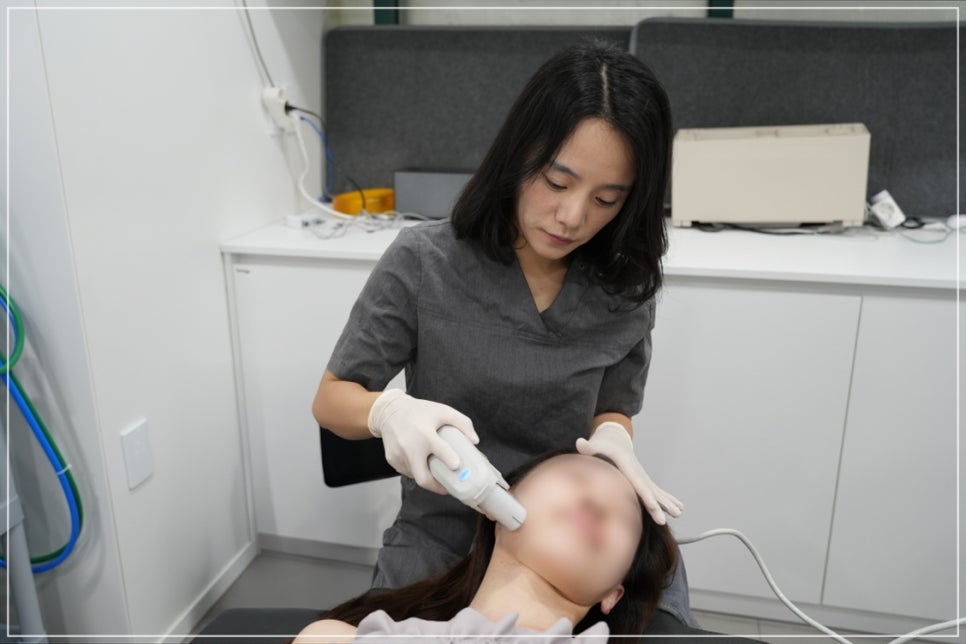
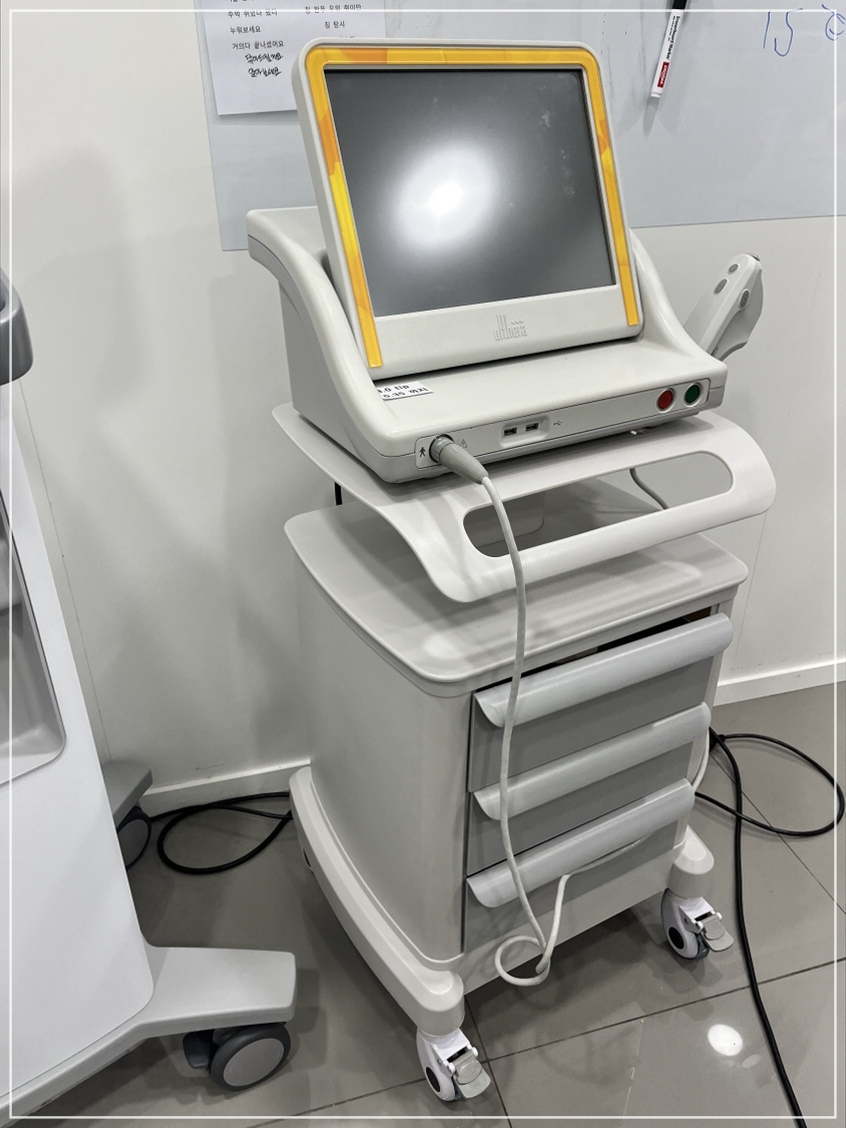
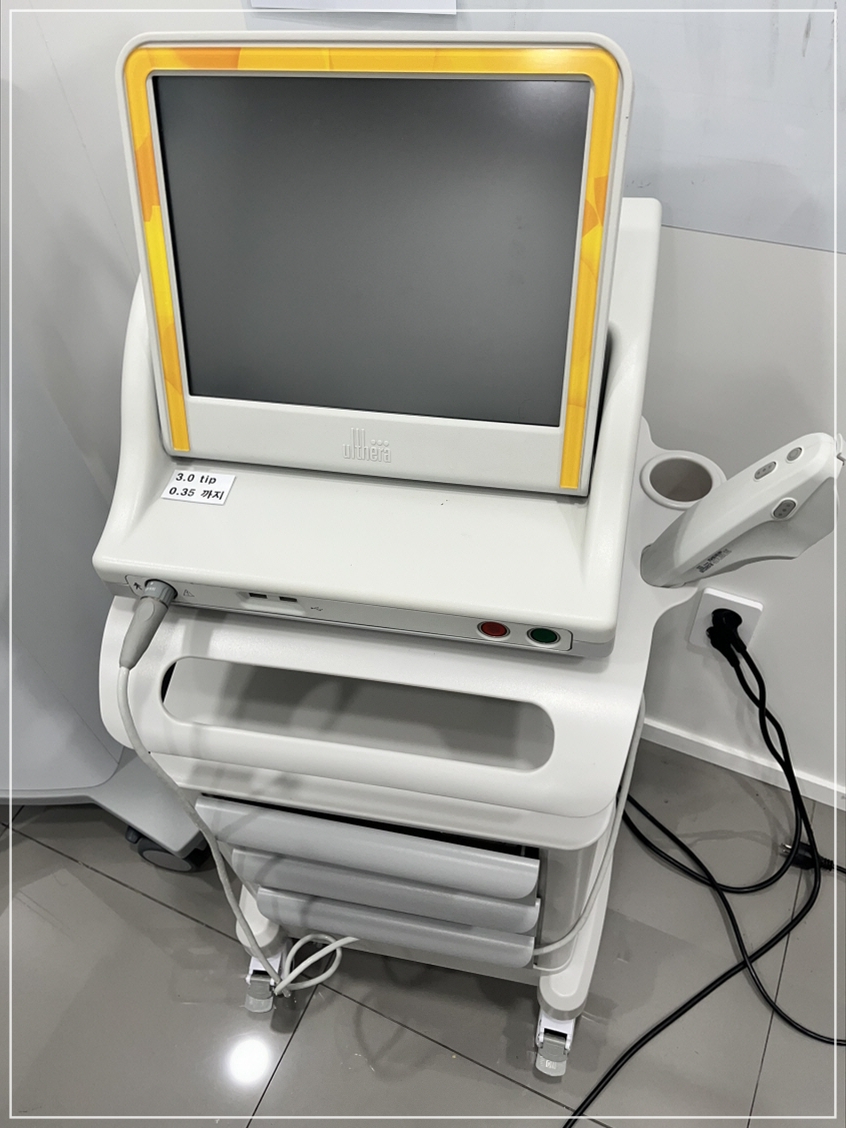
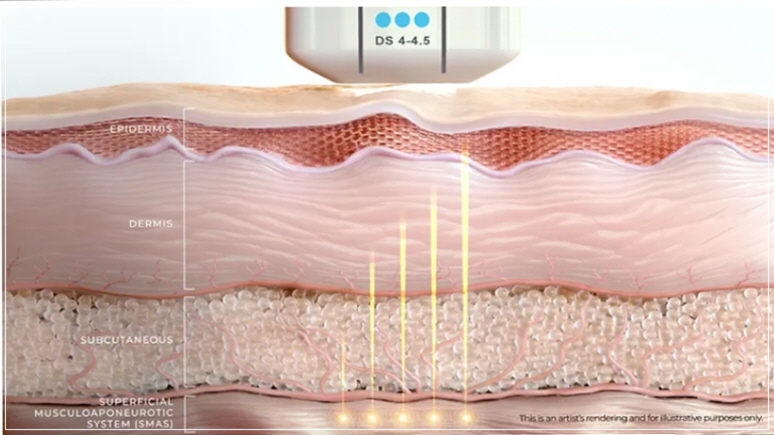
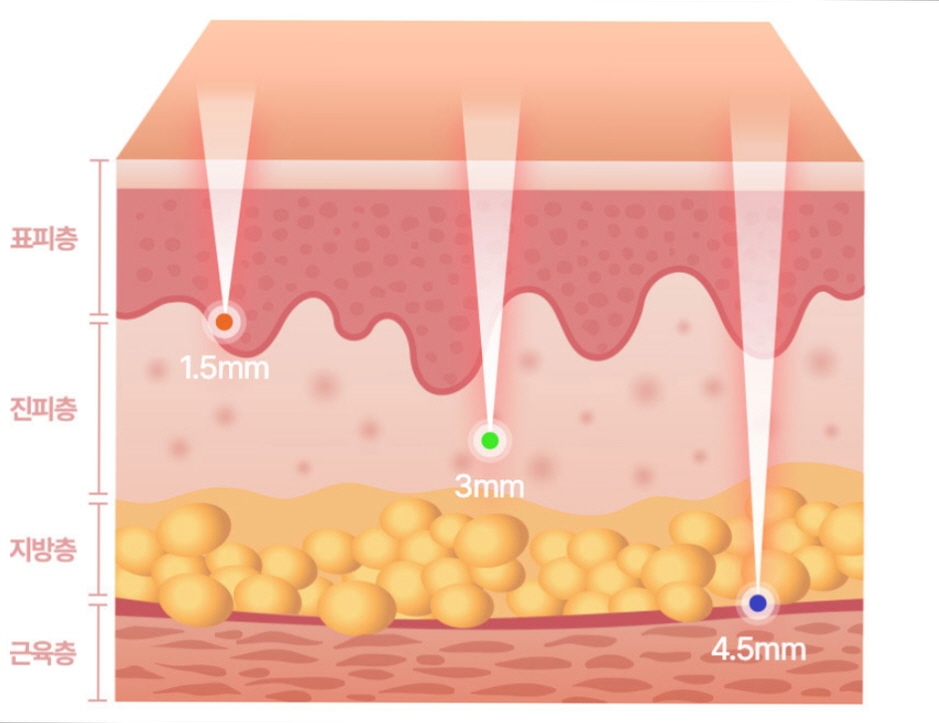
Ultherapy is “high-intensity focused ultrasound,” a device that delivers energy deep into the skin.
More specifically, it precisely delivers high-temperature energy to deeper areas such as the subdermal layer, SMAS layer, and subcutaneous fat layer to create thermal coagulation points. At these thermal coagulation points, collagen regenerates and the SMAS contracts, which in turn causes the subcutaneous fat layer to contract as well. It is in this process that the skin lifts and a lifting effect appears.
 Gangnam Ultherapy effectiveness truth: Thin people O, filling sunken areas X (+ event dermatology clinic) Why is that?
And the basis for saying it fills in hollow volume is that pulling up sagging skin fills the surrounding hollow areas. The claim that “pulling up the skin fills hollow areas” is theoretically not possible.
In fact, if you look at how Ultherapy really works, the opposite effect appears.
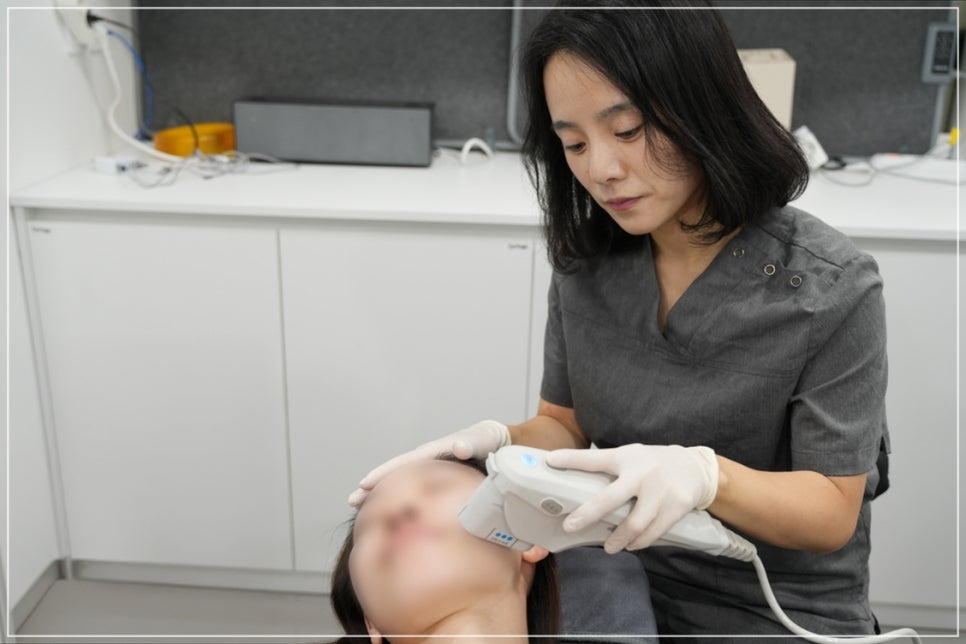
The thermal stimulation from Ultherapy tends to induce atrophy of subcutaneous fat cells and make the fat layer thinner.
In other words, rather than filling with fat, a reduction in volume can actually occur.
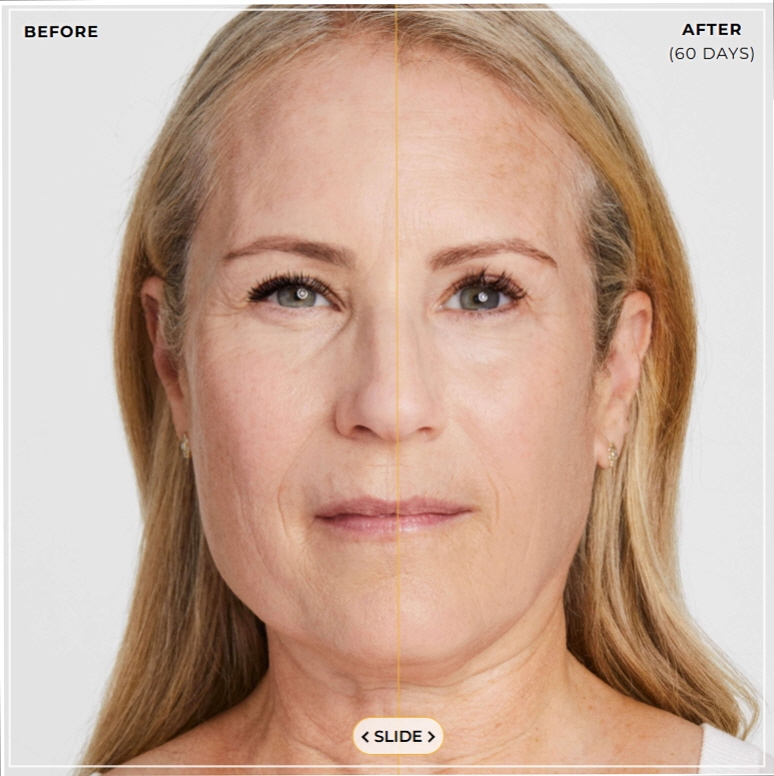
Of course, after the procedure, you may feel that the sunken area has improved, but in reality the hollow area has not been filled. It is an optical illusion created as the lifted tissue returns to its original position.
Let me give a more specific example.
If the jowls or midface area are pulled upward by Ultherapy, the nasolabial fold area below may appear less sunken relatively. But this is not because fat has actually moved there or been redistributed; it is simply a visual effect created by the surrounding tissue moving upward.
Above all, fat cannot freely change position just from external energy. Therefore, it is impossible for a device like Ultherapy to move fat from one place to another.
So if a lack of volume is the fundamental issue, Ultherapy alone cannot be a fundamental solution.
In such cases, you need a method that truly fills in the hollow areas. Procedures such as fillers, Juvelook, or thread lifting are much more realistic and effective.
- Is the saying “Ultherapy is prohibited for thin faces” really true?
“Doctor, I barely have any cheek fat. If I get Ultherapy, won’t it get even more hollow?”
There is some truth in this question, but also some misunderstanding.
In fact, if someone with a very thin face repeatedly gets Ultherapy on the areas beside the cheeks or below the cheekbones, volume loss can occur.
As mentioned earlier, this is because Ultherapy applies thermal stimulation to the subcutaneous fat layer and induces fat cell contraction.
 Gangnam Ultherapy effectiveness: Thin people can absolutely receive it. Event details are at the bottom.
But what is important here is that this is not a problem with Ultherapy itself.
The key lies in targeting and energy settings, meaning the clinician’s judgment.
The Ultherapy device is simply a tool that delivers ultrasound energy according to depth, and where to apply it, how strong it should be, and what pattern to design are entirely up to the clinician.
In fact, if you understand the characteristics of a thin face well before receiving the procedure,
you may get even better results.
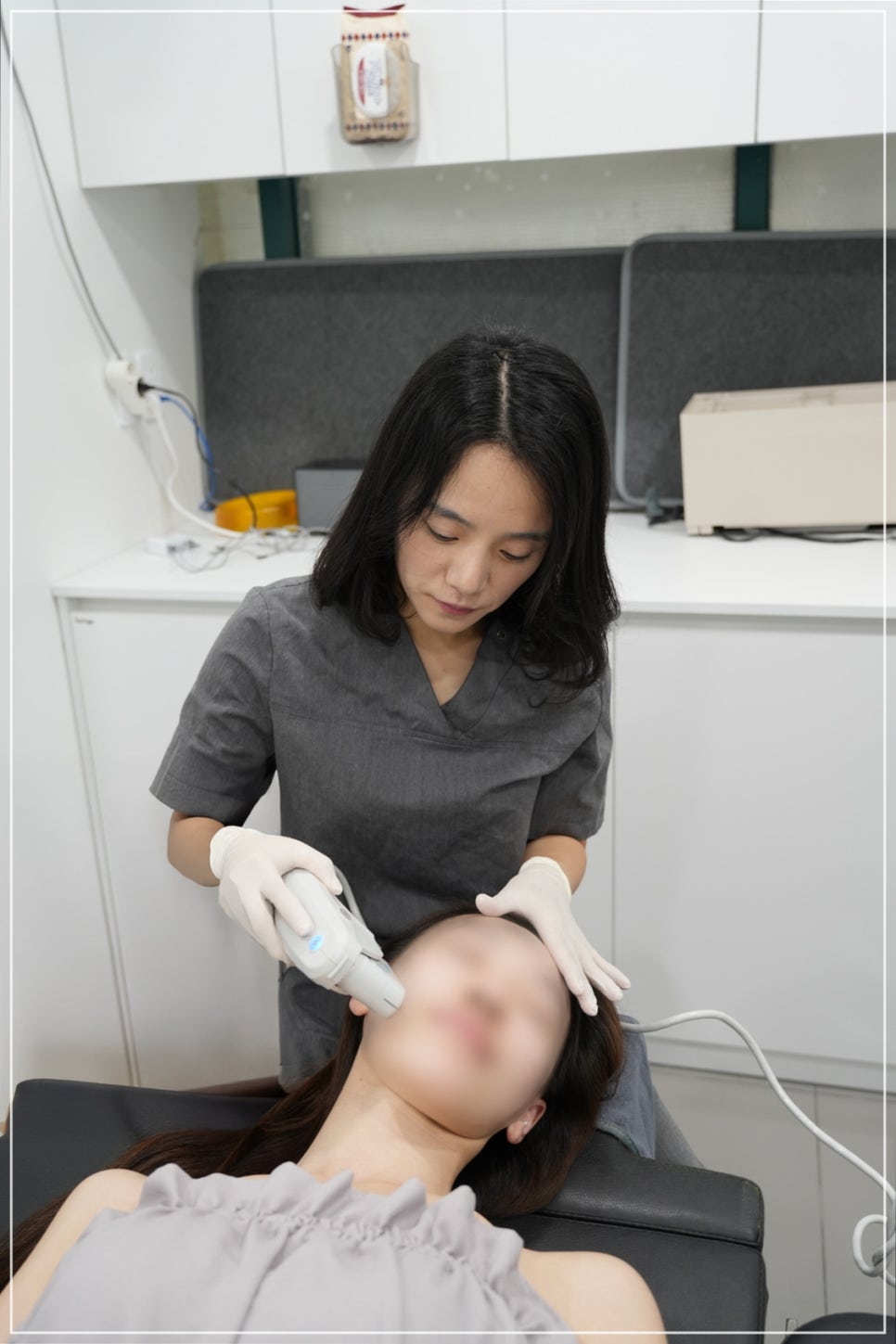
Because thin faces have a thinner fat layer, stimulation is delivered more directly to the SMAS layer or fascia layer. So even with the same energy, a more distinct lifting effect can be seen.
So Ultherapy is not an absolute contraindication for thin faces.
Rather, on thin faces, where elasticity can decline rapidly, the tissue contraction effect of Ultherapy can more effectively restore facial contours.
What matters is just one thing: avoid areas where volume is important, and precisely target only the areas that need lifting.
| 1) Below the jawline | This is an area where the boundary is lost due to SMAS laxity. Sagging occurs here regardless of the amount of fat, so Ultherapy works very well. In particular, on thin faces, the jawline can appear much clearer. |
| 2) Marionette lines around the corners of the mouth | This area easily sags due to the influence of facial muscles, and improvement can be especially noticeable on thin faces. As the corners of the mouth lift, the overall impression also looks brighter naturally. |
| 3) The connection between the underside of the chin and the neck | This is the fascia connection area of the platysma and is where a double chin can easily form. Here, too, the issue is often fascia laxity rather than the amount of fat, so Ultherapy is effective. |
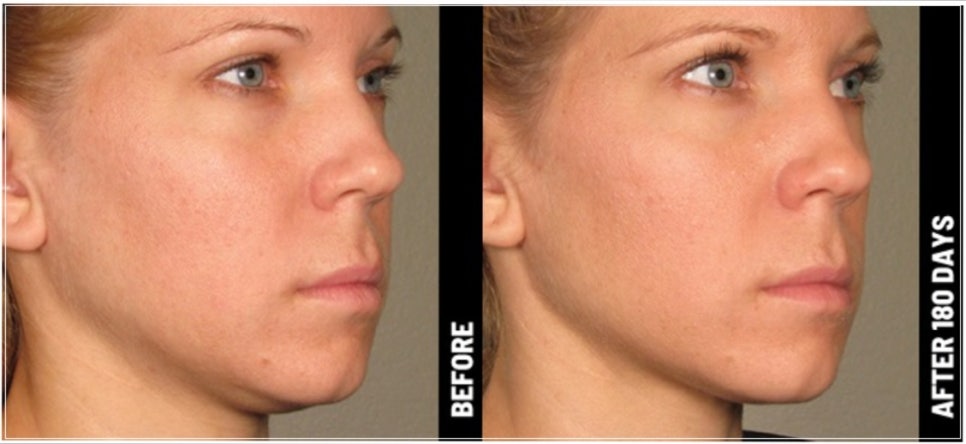
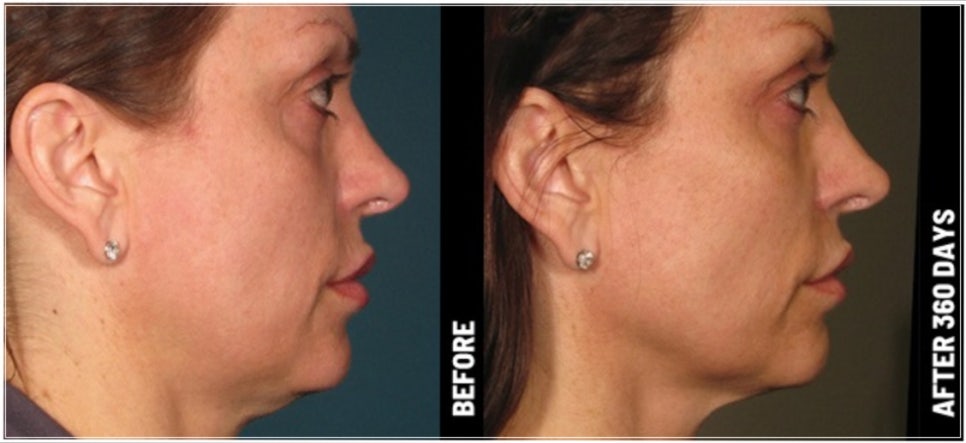
Another good option for thin people is a combination treatment with radiofrequency devices.
If you use radiofrequency to induce collagen remodeling in the superficial dermis after tightening the internal structure with Ultherapy, not only apparent firmness but also skin density improves much more.
In fact, there are clinical data showing that when Ultherapy and radiofrequency are combined, collagen density recovery is much higher than with a single treatment, and this also leads to longer-lasting results and higher satisfaction.
In closing,
I’ve summarized two major misconceptions about Ultherapy. What did you think?
First, the idea that Ultherapy fills in sunken areas is not medically accurate information.
Ultherapy is a device specialized for lifting and improving elasticity, not a procedure that increases volume. In fact, because it has a contraction effect on the fat layer, for areas lacking volume, we recommend other procedures such as fillers, Juvelook, or thread lifting.
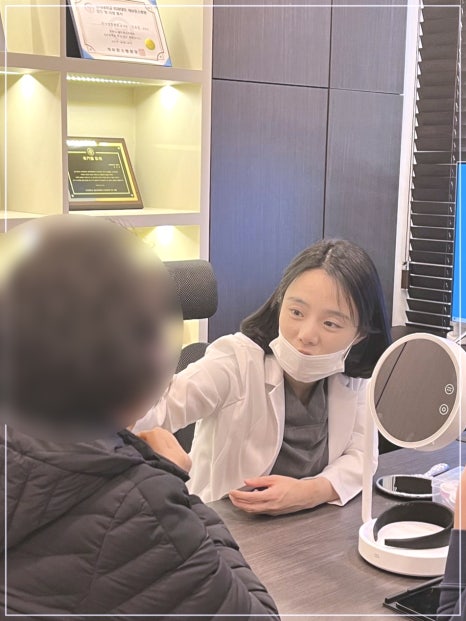
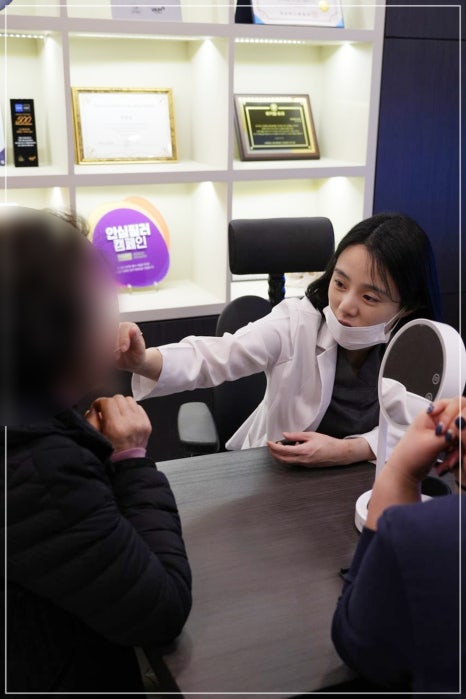
 Gangnam Ultherapy effectiveness truth: Thin people can absolutely do it, and hollowness cannot be filled. Event details are below.
Second, you do not necessarily need to avoid Ultherapy just because you have a thin face.
Rather, if the practitioner accurately understands the individual’s facial characteristics and applies it only to the appropriate areas, excellent lifting results can be achieved even on thin faces.
What matters is avoiding areas where volume is important and precisely targeting only the areas that truly need lifting.

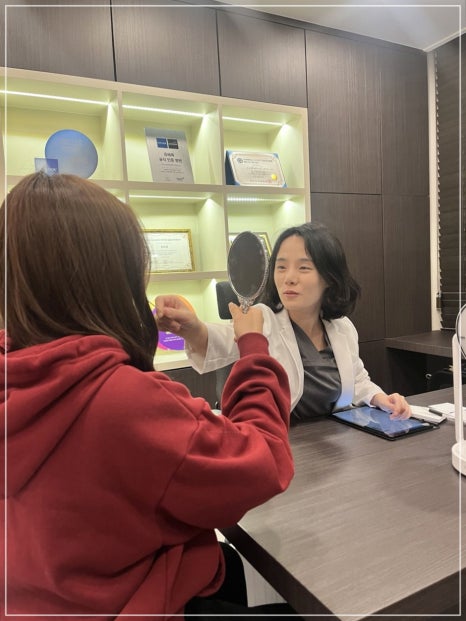
Ultimately, with Ultherapy or any other procedure, the most important thing is not the machine but the skill and judgment of the person operating it.
Even with the same device, the result can change completely depending on who performs the treatment and how.
| ps. | I often hear people saying they are hesitant about Ultherapy because of online reviews such as “it didn’t work very well” or “there wasn’t as much change as expected.” In fact, these disappointing results are often due to treatments being performed uniformly without accurate judgment and individualized planning, as mentioned earlier. In other words, the problem is more about the approach than Ultherapy itself. For that reason, during this July, we are offering a special event price for 300-shot Ultherapy at 690,000 won. We’ve lowered the barrier so you can experience firsthand what Ultherapy really is and what kind of changes you can expect when it is done properly. We recommend this opportunity to those considering Ultherapy for the first time, or those who received it elsewhere before but were not satisfied with the results, so you can see the real effects of Ultherapy. |
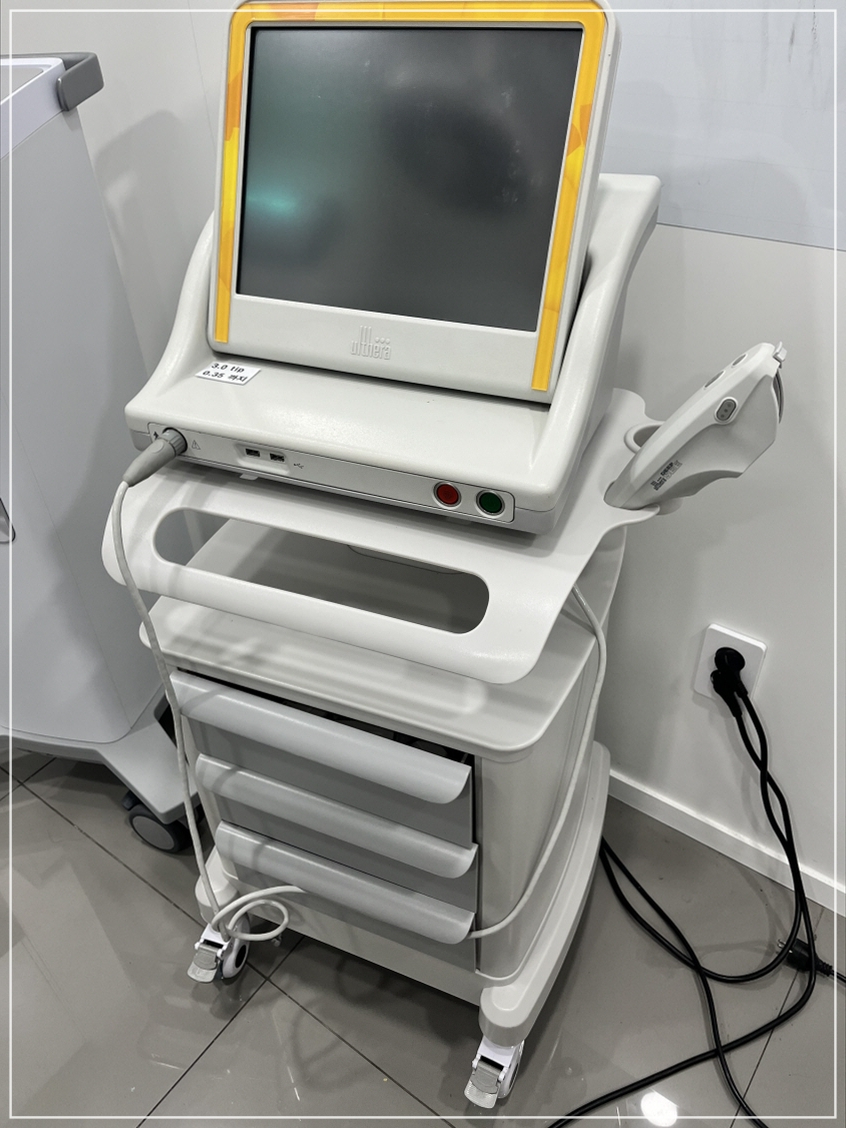
So if you are considering Ultherapy, look more carefully at how accurately the clinician makes decisions and whether they provide realistic and honest opinions. And above all, make your decision with a clear understanding of the effects and limitations Ultherapy can actually offer, rather than exaggerated advertising or reviews.
I’m Director Mira Lee, leaving out the exaggeration and filling in only sincerity.
Thank you.