Ultherapy Prime is less painful… Should you believe that?
3 selection criteria that Ulthera ads never tell you

Hello.
I’m Mira Lee, Chief Director of Banni Plastic Surgery | Skin Clinic.
Because Ulthera is on the pricier side compared with other lifting lasers, many people worry about it even before getting Ultherapy Prime.
If you’re interested in Ulthera treatments, you may already have heard things like:
“Ultherapy Prime is less painful than the original Ulthera,”
“It’s a more upgraded device.”
But one question remains.
If the pain is reduced and the device is newer… does that automatically mean the results on my face will be different?
And will that difference be the same for everyone?
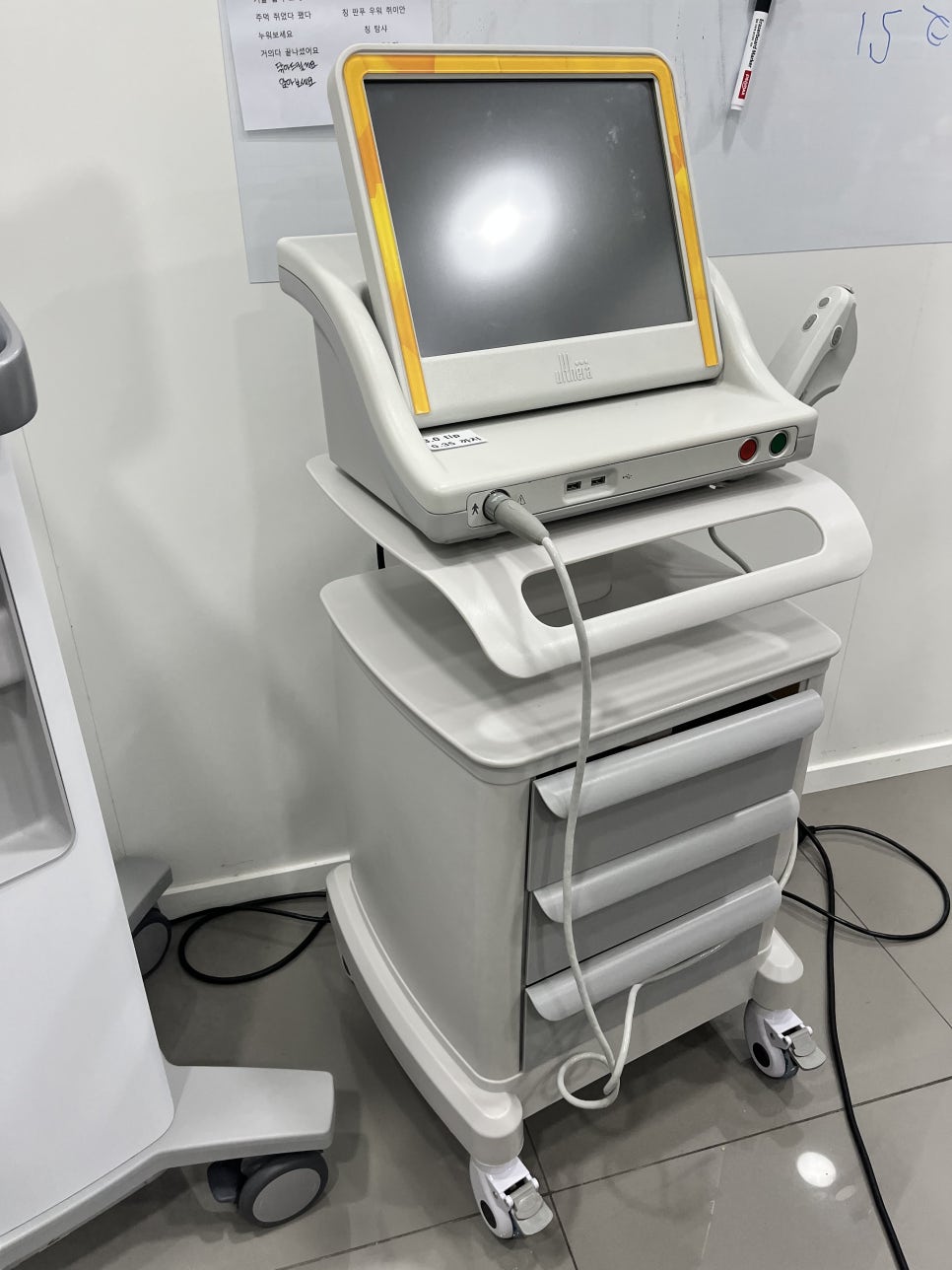 "Ultherapy Prime is less painful" — Should you believe that?
In fact, Ultherapy Prime has differences that can’t be summed up simply as “it’s better.”
The phrase “Ultherapy Prime is better” should be viewed not just as “it’s newer,” but from the perspective of how much it improves precision and consistency in the treatment process.
So today, when comparing Ulthera and Ultherapy Prime, let’s go beyond “Is it less painful?” and fact-check:
which people see the difference more clearly,
and, on the other hand, in which cases the original Ulthera is already sufficient.
[ Table of Contents ]
① Are Ulthera and Ultherapy Prime the same in terms of ‘principle’?
② What changed in Ultherapy Prime?
③ Original Ulthera vs. Ultherapy Prime: for whom is the difference more obvious?
Ulthera and Ultherapy Prime — are the ‘principles’ the same?
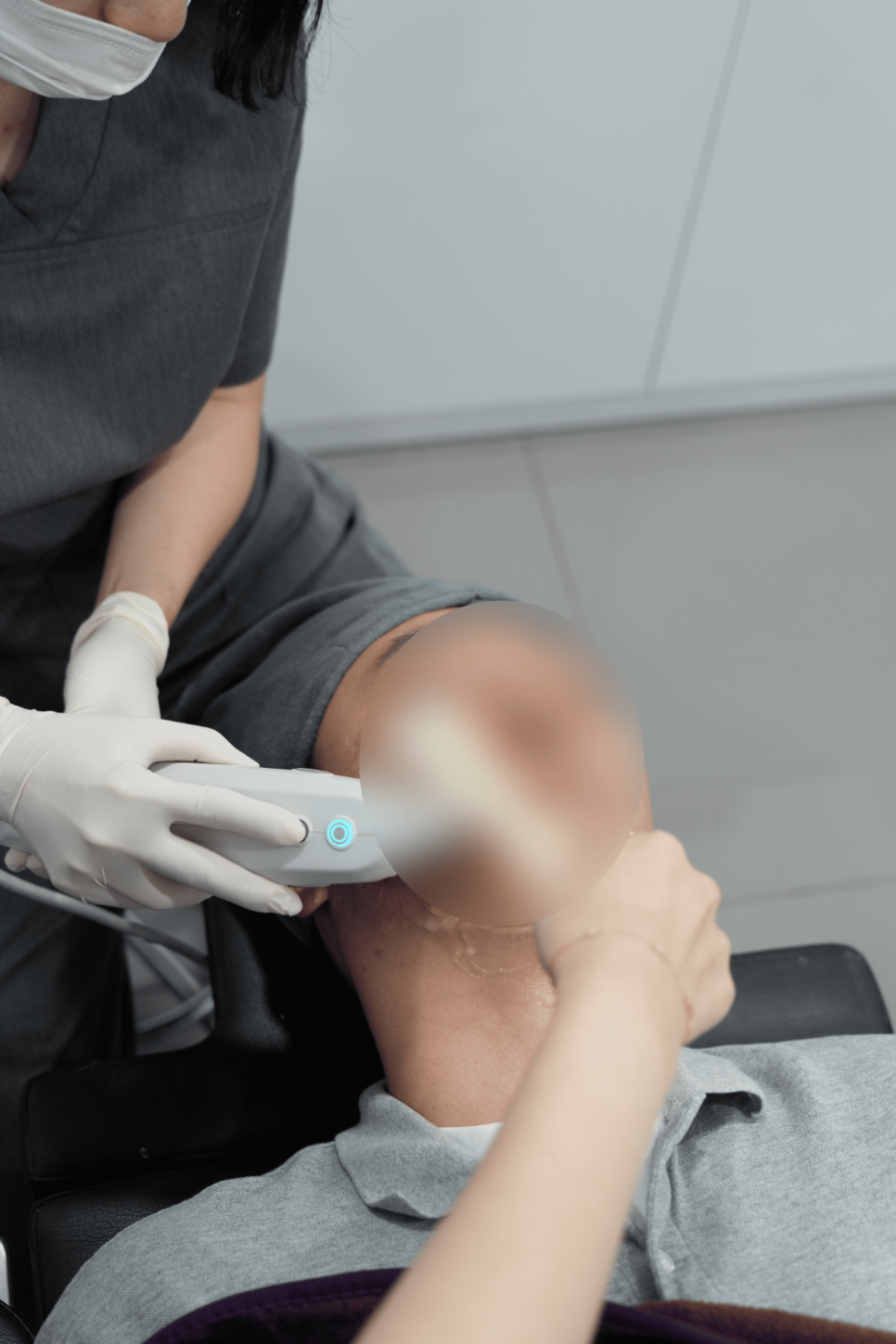 Are Ulthera and Ultherapy Prime the same in terms of ‘principle’?
Ulthera and Ultherapy Prime are not different procedures; they are platforms that deliver the same kind of lifting using the same principle.
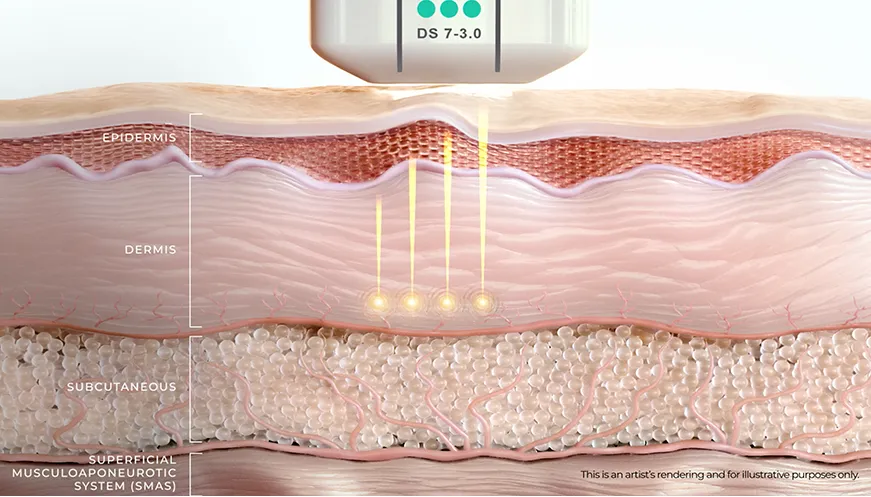
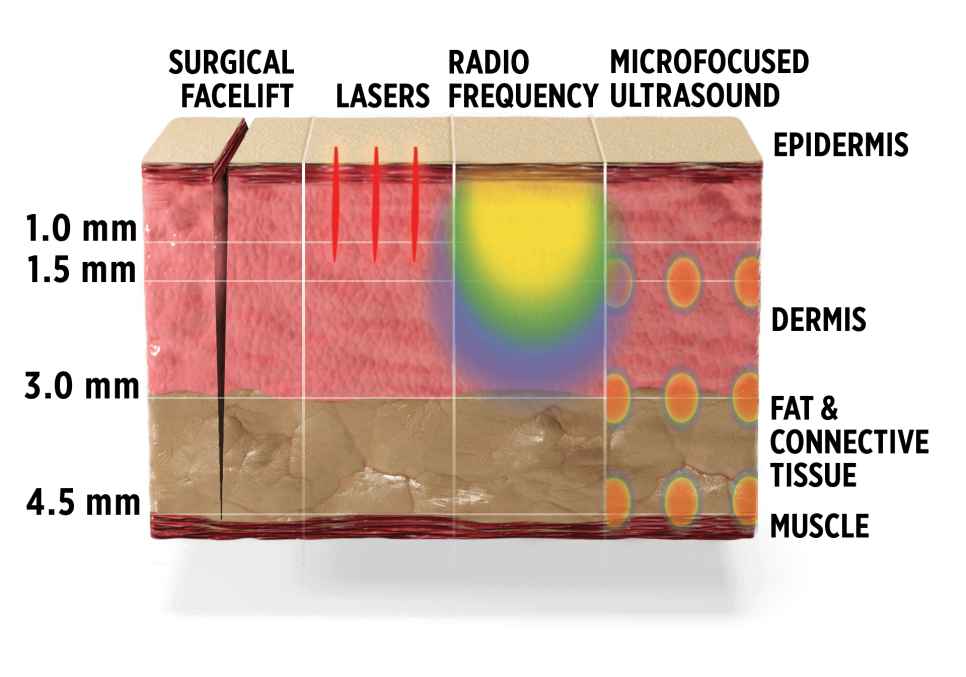 Official Ultherapy Physicians comparison image: analysis comparing which layer is affected by laser/radiofrequency vs. microfocused ultrasound
Both Ulthera and Ultherapy Prime precisely deliver ultrasound energy to a specific depth inside the skin to create “thermal coagulation points,”
and in that process, they induce collagen remodeling.
In other words, this is not a treatment that removes or peels away the skin surface; it is closer to a treatment that precisely places energy into a target layer inside the skin.
The results of Ulthera and Ultherapy Prime are not determined by the device name alone.
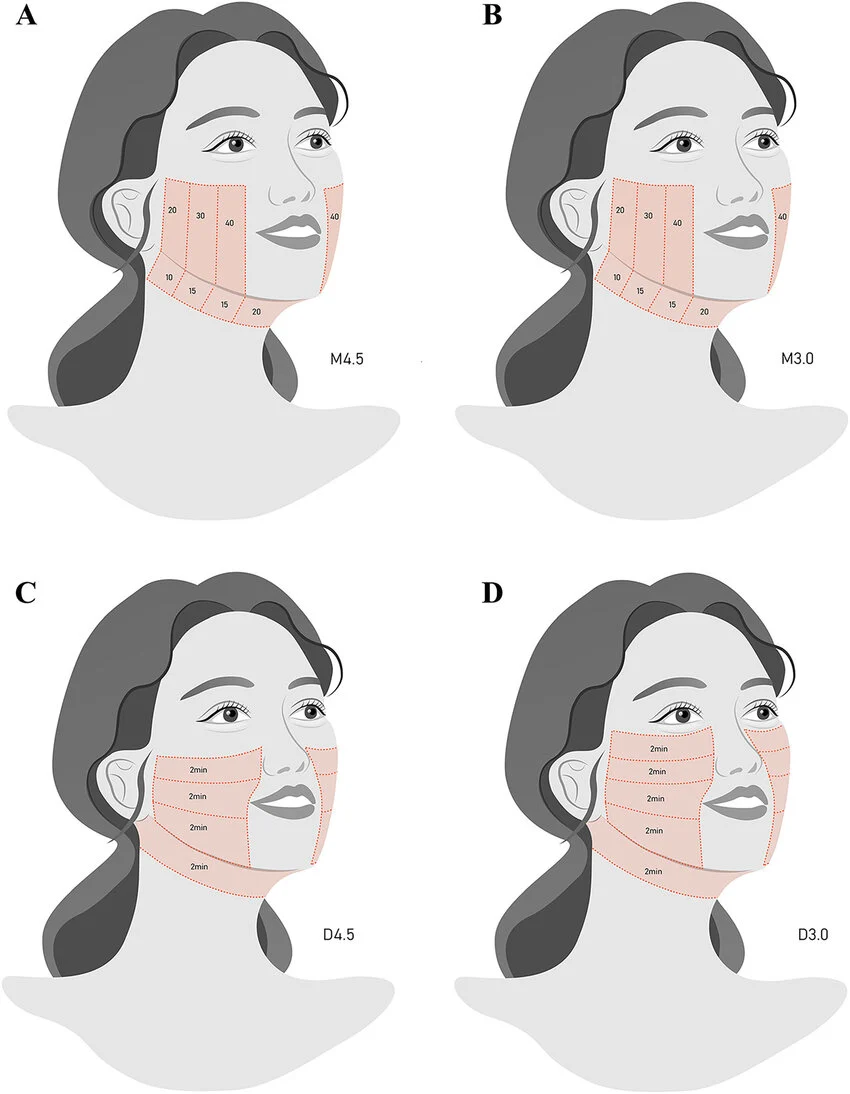 Are Ulthera and Ultherapy Prime the same in terms of ‘principle’?
Even though they are treatments in the same Ulthera family, the reason results can differ is that it depends on where the energy is placed.
So Ulthera and Ultherapy Prime are not fundamentally different procedures in principle; it is more accurate to see them as differing in how much they improve precision and procedural efficiency within the same principle.
Why do results differ even with the same Ulthera treatment?
Lifting treatments like Ulthera are often explained only by the number of shots.
But from a medical professional’s perspective, there is a more important question than the shot count itself.
⑴ Where the center of sagging is (cheeks, jawline, under the chin)
⑵ What the skin thickness and fat distribution are like
⑶ Whether the loss of elasticity is a “skin problem” or a “support structure” problem
⑷ Whether different areas of the same face require different depths
These criteria apply across the Ulthera family of treatments — Ulthera and Ultherapy Prime alike.
Ultherapy Prime is based on the same principle as the original Ulthera treatment, but because it improves real-time imaging confirmation and treatment efficiency, it should be understood as a change that helps this kind of design be carried out more stably in clinical practice.
Ulthera or Ultherapy Prime… aren’t ultrasound treatments all basically the same?
The ultrasound technology of original Ulthera vs. Ultherapy Prime
One reason Ulthera treatment is often distinguished from other ultrasound lifting procedures is that it is performed while checking the structures beneath the skin in real time.
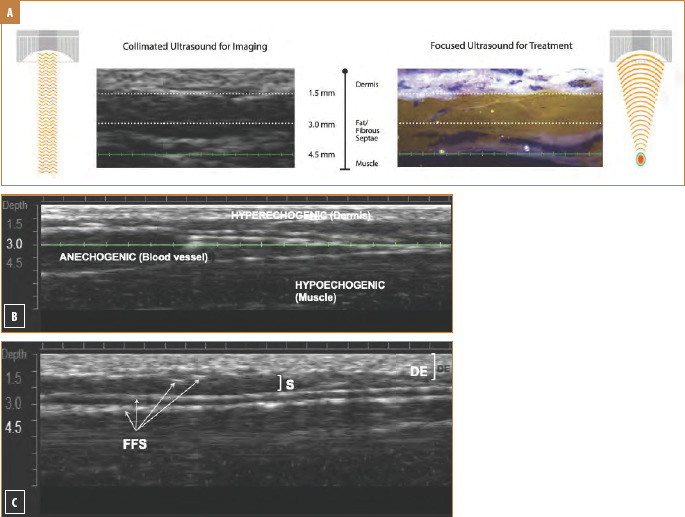 Ulthera or Ultherapy Prime… aren’t ultrasound treatments all basically the same?
This does not simply mean “there is a screen.”
Using the screen, the clinician places shots while checking the current depth reached by the tip, the thickness of the skin layer, and the location of fat layers or important structures.
Why is this process important? Because Ulthera is ultimately a treatment in which the target must be matched within a visible structure.
Even on the same face, the layers differ by area, and even in the same area, thickness varies from person to person.
So rather than “the machine tightens it automatically,” it is closer to a process in which the medical team checks the structure and approaches it in a planned way.
Ulthera and Ultherapy Prime are the same in principle.
The key point of comparison is not simply that Ultherapy Prime is a newer device,
but what meaning that upgrade has for “precise planning.”
What changed with Ultherapy Prime compared with Ulthera?
⑴ Original Ulthera vs. Ultherapy Prime: changes in treatment speed and workflow
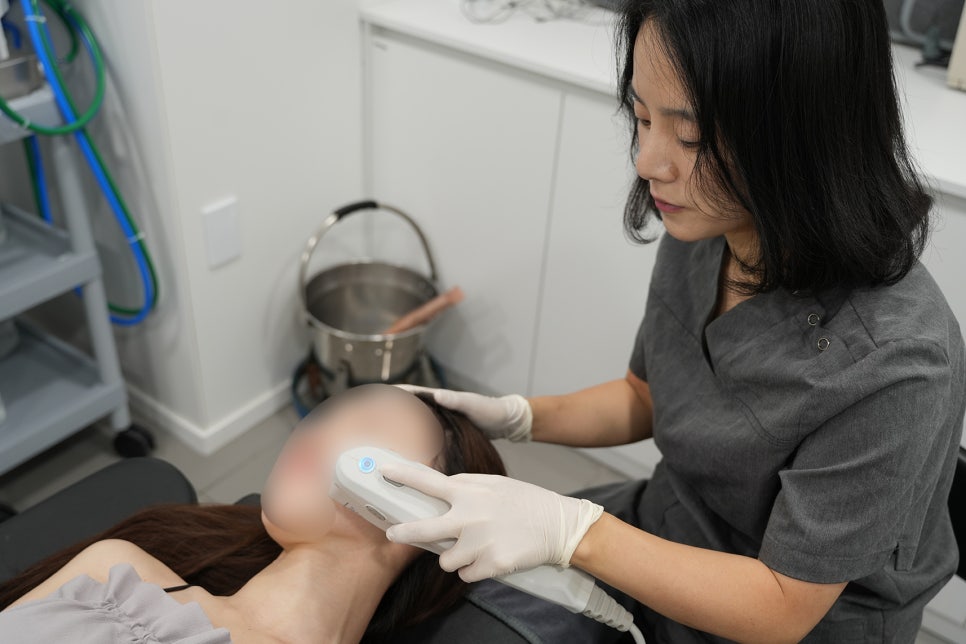 What changed with Ulthera ➡️ Ultherapy Prime?
Ultherapy Prime is introduced by the manufacturer/official website as a “platform that is 20% faster than the original Ulthera.”
In general, for face and neck treatments (based on a 60–90 minute range), this may be translated into roughly 48–72 minutes.
(※ This may vary depending on treatment area / number of shots / individual condition)
Ultherapy Prime is designed so that the treatment platform processes more efficiently than the original Ulthera, allowing the same procedure to be carried out in a faster flow.
Shorter treatment time can reduce perceived fatigue for the patient, and it may help the clinician carry out the planned shot placement in a more consistent flow.
However, this does not guarantee that Ultherapy Prime is more effective than the original Ulthera.
⑵ Original Ulthera vs. Ultherapy Prime: changes in treatment speed and workflow
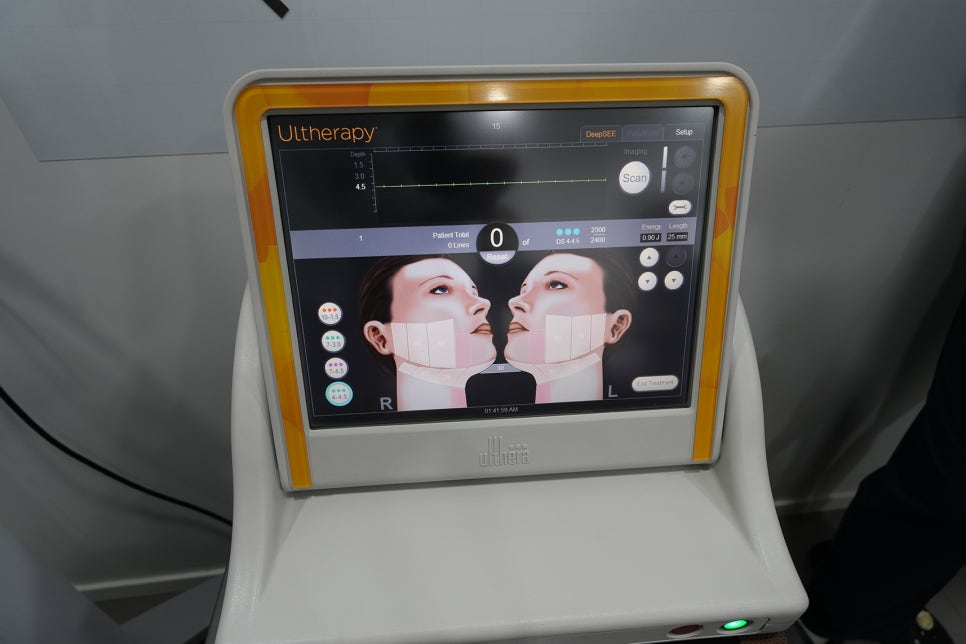
When learning about Ulthera and Ultherapy Prime, there is one point people most often overlook.
It is the question: “Aren’t all ultrasound lifting treatments basically the same?”
But the core distinction in the Ulthera/Ultherapy family is closer to “checking inside the skin with ultrasound imaging” than simply “delivering ultrasound energy.”
In other words, while looking at real-time imaging, the clinician places shots by judging:
-
how thick the layer currently being viewed is
-
whether it is entering the target depth correctly
-
whether there are any structural points that require caution
This workflow is what Ultherapy Prime is introduced as strengthening.
If we stick to the facts rather than materials floating around online, the main improvements confirmed in official Ulthera materials can be summarized into three points.
☝🏻 Ultherapy Prime has a larger screen than the original Ulthera device
Ultherapy Prime emphasizes a screen that is 35% larger in official materials.
The point where a larger screen matters goes beyond simply “being easier to see”; it is connected to a more stable experience when checking the information needed during treatment (layer/boundary/thickness).
Especially for procedures like Ulthera that require “design,” the clearer the confirmation process, the more meaningful it becomes in reducing the chance that the plan wavers.
✌🏻 It is not that the results are “better” than the original Ulthera; it is only that the Ultherapy Prime device itself is better.
In manufacturer materials, Ultherapy Prime imaging is described with terms such as faster image refresh and brighter, clearer images.
This still cannot be concluded as “the results are definitely better,” but for a device in which ultrasound image confirmation is part of the treatment itself, it is a sufficiently meaningful point of improvement.
Also, what many people misunderstand is the claim that Ultherapy Prime can reduce pain by 30% compared with the original Ulthera.
There is no official source for that claim, no matter how hard you look 🙅🏻♀️
Among people who believed that and received Ultherapy Prime treatment,
this is exactly why many say, “The pain is not much different from the original Ulthera treatment.”
Within the currently public scope of information on Ultherapy Prime, this figure of “30%” is not clearly stated in primary documents such as the manufacturer’s official materials or the instruction manual.
And in reality, pain differs from person to person even with the same device and the same procedure.
This is not simply a matter of “pain tolerance,” but the result of a combination of skin and tissue structure, treatment area, and individual sensory characteristics.
👌🏻 Regarding Ultherapy Prime information, “8 mm” is not the treatment depth.
A phrase often seen in online posts is that “Prime goes up to 8 mm,” but strictly speaking, ‘treatment depth’ and ‘imaging depth’ are different.
- According to the Ultherapy Prime IFU (Instructions for Use), the image depth is listed as 0–8 mm.
- However, the actual treatment depth is listed as < 1.5 / 3.0 / 4.5 mm > depending on the transducer.
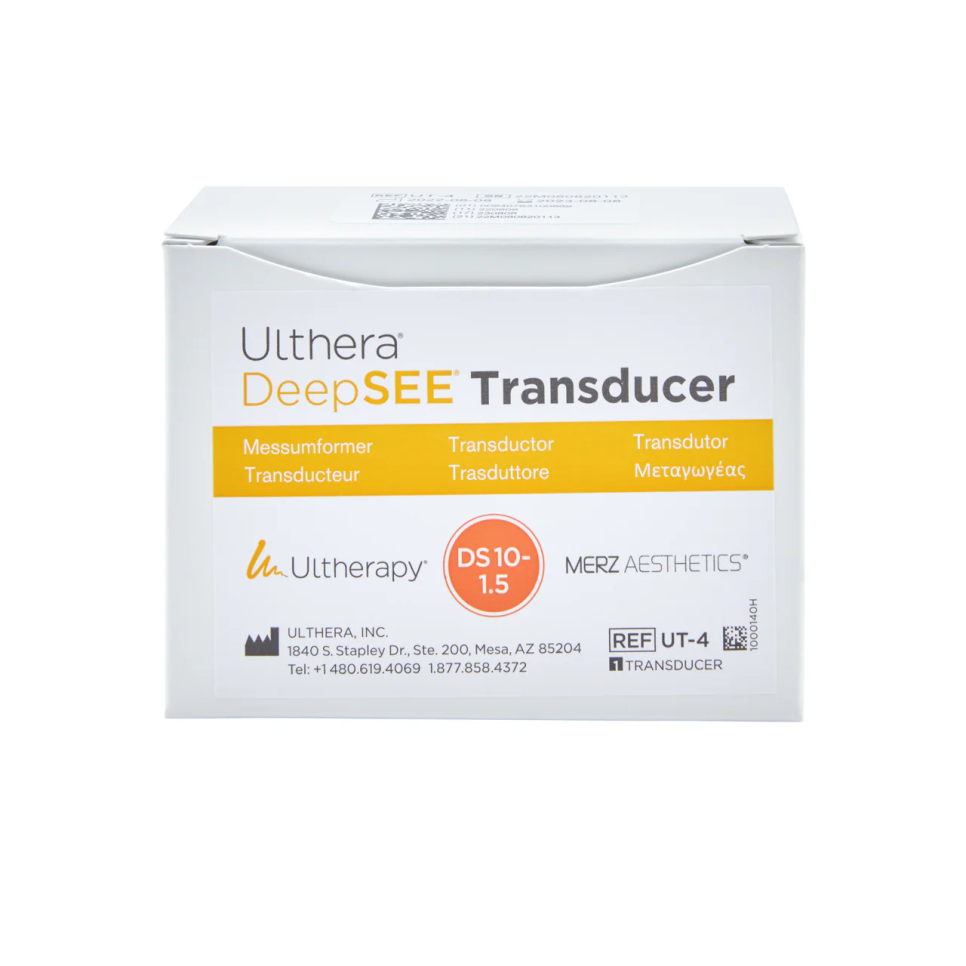
The word that appears here is transducer, which may not be familiar to general readers.
A transducer is, simply put, the tip (treatment head) that delivers ultrasound energy to the skin.
Even with the same machine, the depth to which energy is designed to reach changes depending on which transducer is attached.
Ulthera treatment is structured so that by replacing these tips, the clinician chooses which depth to deliver energy to.
In other words, Ultherapy Prime allows visual confirmation up to a maximum depth of 8 mm, while the treatment depth is selected according to the transducer.
For reference, because I have seen and treated the skin of countless people, I do not say that “newer devices are better” even more strongly.
Also, this column is not written to disparage Ultherapy Prime.
If Ultherapy Prime is more suitable for someone, then that person should receive Ultherapy Prime.
In fact, Banni recently introduced Ultherapy Prime, so even though I should actually be promoting it more, I am still speaking this honestly....🥹
This is how sincere I am with my patients.
The right treatment direction is different for each person.
At Banni, we recommend personalized treatments depending on each patient’s skin condition and type!
What layer of the skin does Ulthera treatment target?
The skin is composed of the epidermis, dermis, and subcutaneous tissue, and even on the same face, thickness and composition (fat distribution) vary by area.
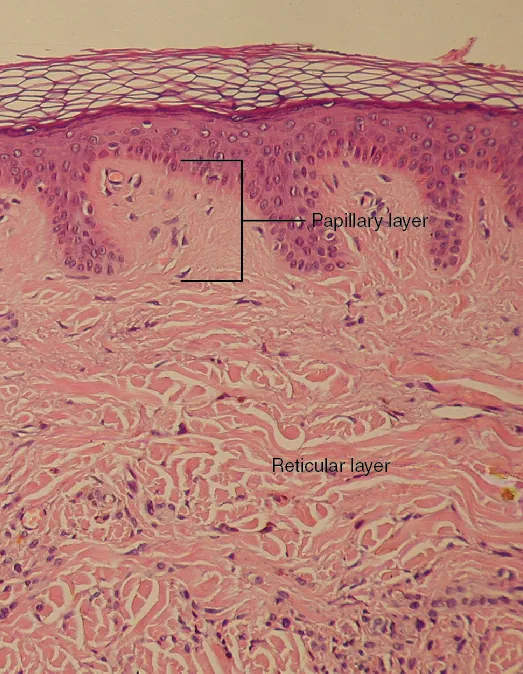 What layer of the skin does Ulthera treatment target?
The dermis is divided into the superficial layer (papillary dermis) and the deep layer (reticular dermis), and depending on the target layer, the meaning of the treatment approach (depth selection) changes.
Even within the broad concept of “elasticity,” changes centered on the superficial layer and changes centered on the deep layer can feel different.
That is why it is important to check the skin thickness and structure by area before choosing the depth.
- 1.5 mm: a depth targeting the superficial dermis
The 1.5 mm transducer is introduced in official materials as a treatment depth for the superficial dermis.
Clinically, it is often explained in connection with “surface condition” issues such as mild loss of elasticity and improved skin texture.
(However, perceived effects may vary depending on an individual’s skin thickness and the treatment area.)
- 3.0 mm: a depth targeting the deep dermis
The 3.0 mm transducer is introduced as targeting the deep dermis.
Because the dermis is a representative layer where collagen is distributed, 3.0 mm is often used as a central depth when describing overall firmness.
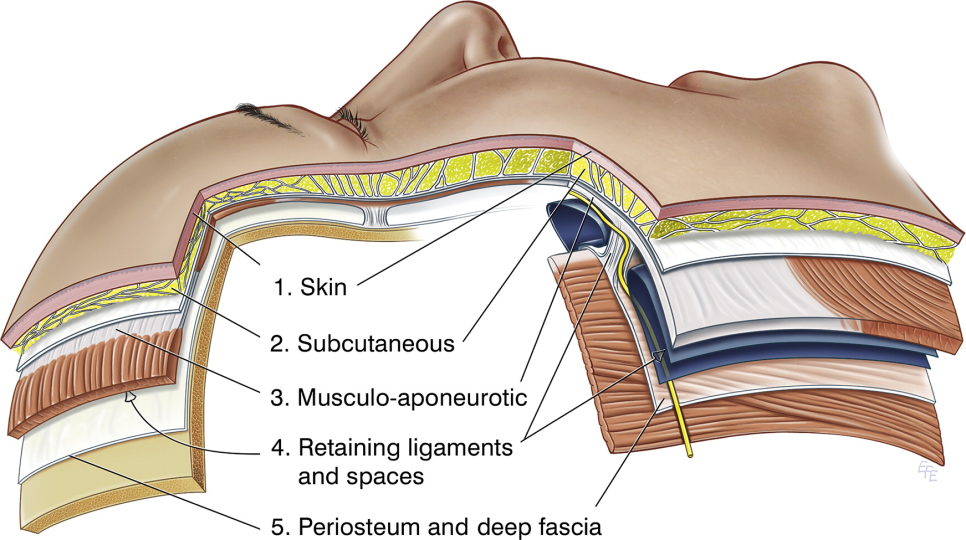
The face is composed not only of skin and dermis, but also of subcutaneous fat and support layers such as the SMAS.
Because sagging can also be related to these support structures, it is not correct to interpret treatment depth as simply “deeper is better.”

- 4.5 mm: a depth targeting deep support layers such as the SMAS / platysma
The 4.5 mm transducer is introduced in official materials as targeting the SMAS/platysma (deep support layers).
In other words, it should be understood as a depth that approaches deep support structures affecting sagging and changes in the contour line, rather than the skin surface.
💁🏻♀️ The platysma is a thin muscle broadly distributed in the superficial neck, and it is mentioned together with treatments for the neck and under-chin area.
Especially because the neck and under-chin area differ from the face in tissue composition and thickness, it is necessary to distinguish the treatment approach and target depth by area.
Ulthera treatment: original Ulthera vs. Ultherapy Prime —
for whom is the difference more obvious?
 Ulthera treatment, original Ulthera vs. Ultherapy Prime — for whom is the difference more obvious?
When deciding whether to choose Ultherapy Prime, the simple conclusion that “newer is better” can actually get in the way of making the right choice.
Ulthera and Ultherapy Prime share the same principle, but the people who are better suited to original Ulthera and the people for whom Ultherapy Prime is more effective are different.
It’s like buying the latest smartphone and then realizing your old phone was actually more comfortable, had a better grip, and didn’t annoy you at all.
First, typical cases where Ultherapy Prime may be relatively more suitable are:
- When precise planning is more important (cases with large variation by area)
Even on the same person’s face, the cheeks, jawline, under the chin, and neck differ in layer thickness, fat distribution, and target contour.
In cases where there are large differences in thickness and structure by area, the difference in an environment where treatment is planned while confirming real-time imaging may become relatively more important.
If the skin is thin, or if there are large differences in thickness by area such as the jawline, under the chin, and neck, simply understanding the concept of depth and choosing treatment accordingly can help reduce unnecessary expectations or misunderstandings.
- When depth selection is important (cases requiring separate application of 1.5 / 3.0 / 4.5 mm transducers)
Of course, even with the original Ulthera, it is possible to choose treatment depths and perform a customized Ulthera procedure suited to your skin.
Ultherapy Prime did not create the concept of depth selection itself; rather, by improving the real-time ultrasound imaging environment and treatment efficiency while still making the same “depth selection,”
from the patient’s perspective, this difference may make it clearer to hear and understand why a certain depth was chosen for a certain area of the face, rather than making it “go deeper.”
Especially in areas where thickness and structure vary greatly by region — such as the jawline, under the chin, and neck — it is more important than the number of millimeters used to consider whether that choice has been designed to match the structure of the face and the patient’s concerns.
- When the goal is to refine the line naturally, focusing on the lower face / neck line
 “After one MFU treatment, subjects achieved significant lifting and tightening effects on the facial and neck skin for up to 180 days.”
Research on MFU-V (visualization-based microfocused ultrasound) has accumulated evidence evaluating safety and effectiveness for improving laxity of the facial and neck skin.
*MFU (Micro-Focused Ultrasound): a method that concentrates ultrasound energy at one point to provide micro-stimulation at a specific depth inside the skin
*V (Visualization): means confirming the layers beneath the skin with ultrasound imaging (screen) during treatment
In other words, it is a lifting treatment using ultrasound that is performed while checking with imaging.
 “All subjects felt that after 180 days, their faces had become slimmer and that skin elasticity and contour had improved. The operator and all patients were very satisfied with the results.”
There are also reports showing improvement in the lower face (jawline).
Because MFU-V performs this process while checking the screen, even if only roughly, it can be described as a lifting treatment that proceeds by looking at the structure and matching the target depth, rather than a lifting treatment done by intuition alone.
So when choosing Ultherapy Prime, the key is not “it’s a new machine so it must be better,” but rather understanding it as receiving a treatment in a proven MFU-V family under a better visualization and workflow environment.
Summary: people for whom Prime tends to be especially advantageous are those in these cases.
-
When the biggest concern before treatment is “Will this be done safely and appropriately for my face?”
-
When thin skin / sensitive areas / large variation by area make depth explanation (1.5 / 3.0 / 4.5 mm) important
-
When you want to decide only after understanding the mechanism and evidence (MFU-V research basis)
👉🏻 Then in what cases is original Ulthera enough to be satisfying?
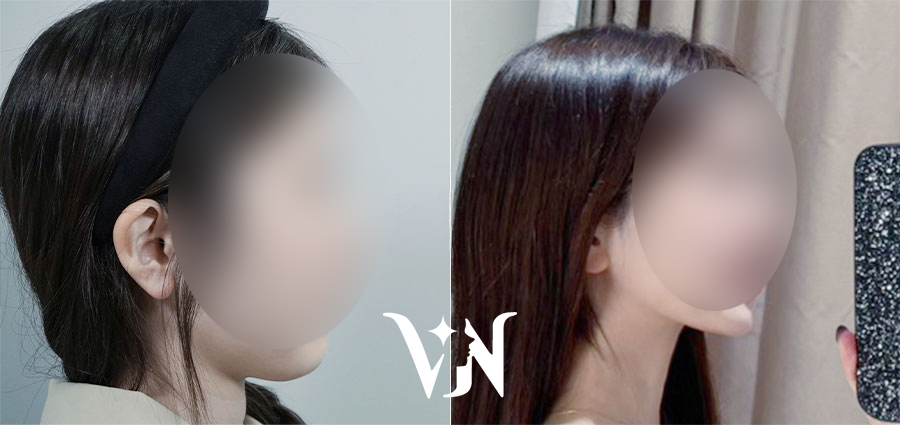 Before & After of Ulthera treatment at Banni Plastic Surgery in Gangnam
- When the goal is closer to natural refinement
Ulthera has been introduced as FDA-cleared for purposes such as eyebrow lifting, improving under-chin and neck lines, and improving décolletage wrinkles, and it emphasizes results that improve naturally over time.
So if you are expecting not a dramatic lift but a subtle refinement of the line and a gentle improvement in elasticity, many people are fully satisfied with Ulthera as well. (Individual results vary.)
- When sagging is not severe and falls into the early-to-mid stage
There are clinical studies evaluating the effects of MFU-V ultrasound treatments like Ulthera on facial and neck laxity at 90 and 180 days, and there are also reports of significant changes observed especially in the submental area.
In other words, if the degree of sagging is not such that surgical correction is structurally necessary, it is possible to set evidence-based expectations and proceed with treatment using the original Ulthera.
- When you prefer changes that build over time rather than something “big all at once”
Ulthera treatment creates micro thermal stimulation at a specific layer inside the skin to induce the collagen remodeling process, and the results of Ulthera usually begin to appear as firmness changes after about 2–4 weeks, with more distinct contour improvement often felt around 1–3 months compared with before the treatment.
Because of this characteristic, people who expect a gradual refinement rather than an immediately dramatic change are more likely to be satisfied with Ulthera.
In closing..
 Ulthera treatment at Banni Plastic Surgery in Gangnam
Ulthera and Ultherapy Prime are usually performed in units of 100 shots / 300 shots / 600 shots, right?
At our clinic, Banni, we start from 300 shots.
Ulthera treatment at Banni Plastic Surgery in Gangnam
Ulthera and Ultherapy Prime are usually performed in units of 100 shots / 300 shots / 600 shots, right?
At our clinic, Banni, we start from 300 shots.
100 shots usually cover only a very narrow point (some areas), but starting from at least 300 shots makes it easier to achieve good results for major concern areas such as the jawline.
In other words, the reason we start Ulthera treatment from 300 shots is not to sell more, but because a minimum range is needed for the treatment to truly function as treatment.
Our clinic sets its standards not by lowering the shot count to match a price, but by securing a basic treatment volume to increase the likelihood of achieving results.
There is a separate range possible with a small number of shots, but the expected outcome is limited.
Conclusion
Ultimately, the results of Ulthera are not determined simply by the number of shots or one device specification.
Even within the same family of ultrasound lifting treatments, differences in an individual’s skin thickness, the direction of sagging, and the target area change the results depending on what area is treated and how that treatment is planned.
That is why, starting from the consultation before treatment, I first organize whether the patient’s concern is the “overall contour” or a “specific area,”
and whether the goal of change is “natural refinement” or “more distinct line improvement.”
Only after that do I set the necessary treatment range, treatment density, and step-by-step plan, and I honestly explain the expected changes and limitations as well.

Ultherapy Prime has recently been introduced at our clinic.
However, no matter what the device is, the important thing is always the same.
It is to receive a sufficient explanation of what treatment your face needs, and to make the decision when that explanation makes sense to you.
At Banni, we operate in a way that honestly and accurately explain the patient’s condition and design treatment methods accordingly,
while respecting the patient’s decision.
Without exaggeration, filled only with sincerity,
This was Mira Lee.
Thank you.