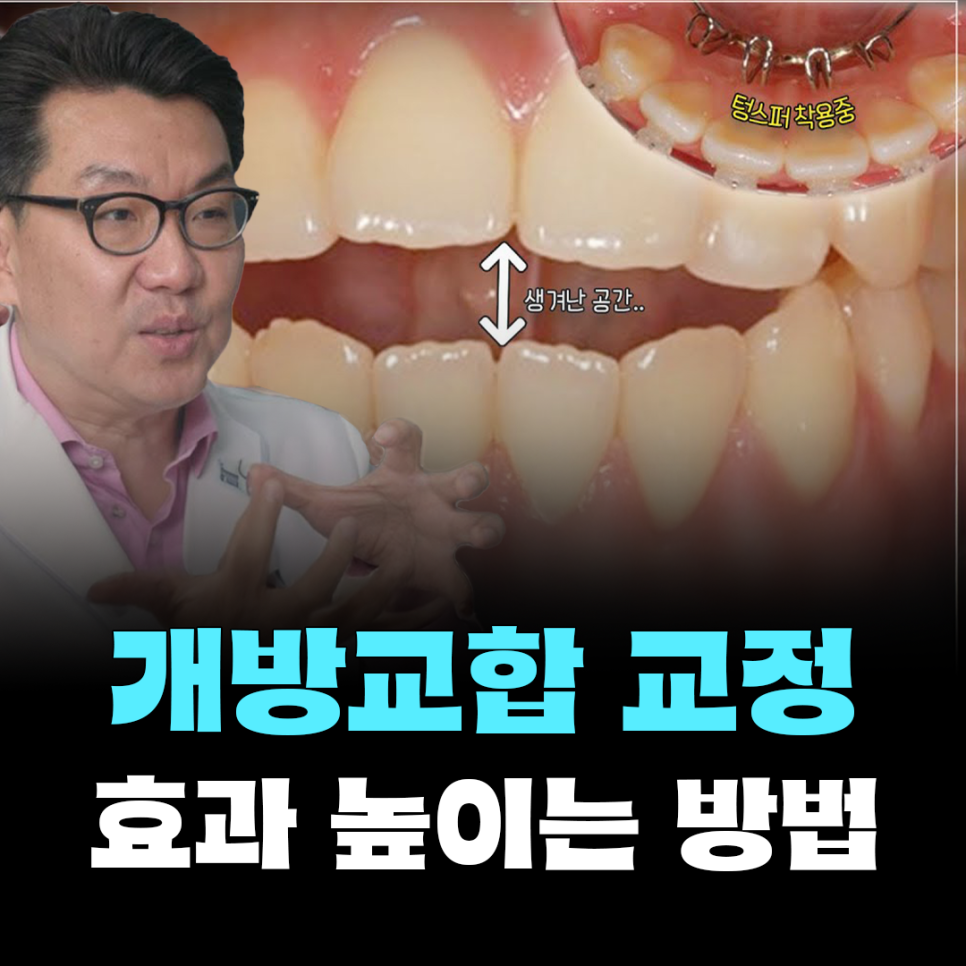
Hello,
This is Director Kim Hyun-sun of Ceramic Dental Clinic.
When you smile,
have you ever taken a close look
at your own smile in the mirror?
If you are smiling brightly,
but your front teeth are not very visible,
or your teeth feel slightly separated,
you may have an open bite.
You may not notice it and simply move on,
but open bite is absolutely not something to take lightly.
If left untreated, it can affect not only the temporomandibular joint,
but also facial balance.
Today, from open bite treatment methods to
its causes, we will explain everything carefully
at our Gangnam orthodontic dental clinic.
This may be your own story, so please read carefully to the end!
- What is “open bite”?
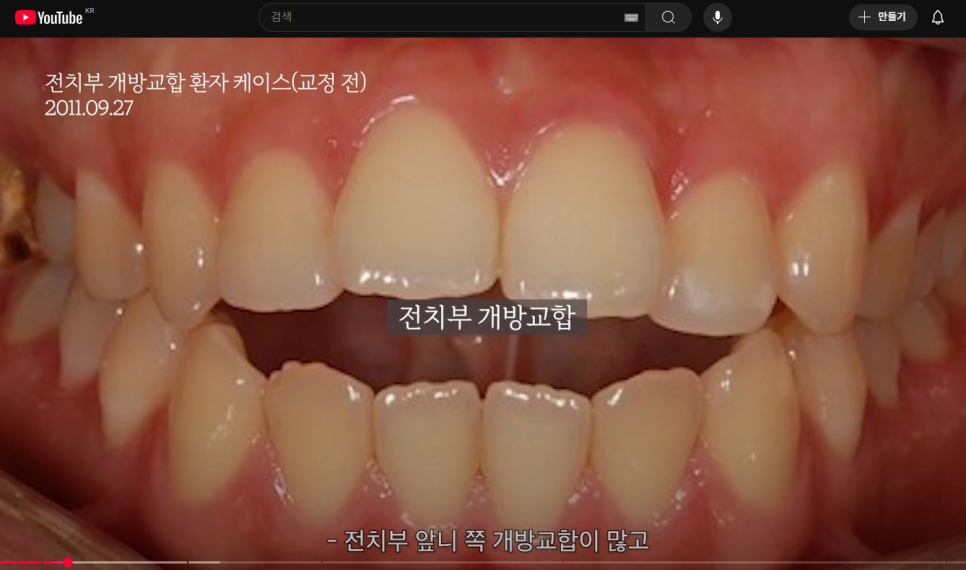
Open Bite is
a type of malocclusion in which the upper and lower teeth
do not touch and remain separated.
Normally, when we close our mouth,
the upper and lower teeth should fit together,
but this refers to a condition in which the front teeth
or some teeth do not touch and a gap forms.
▶ Anterior open bite
: When the front teeth do not touch when the mouth is closed
▶ Posterior open bite
: When the molars do not touch when the mouth is closed
- Why does open bite occur?
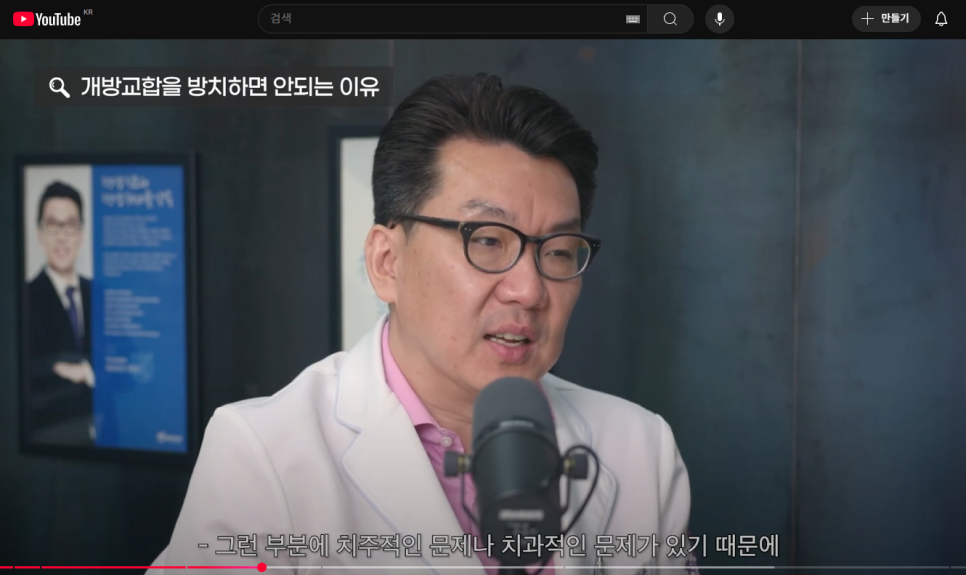
▶ Oral habits
Thumb sucking, tongue thrusting,
and long-term pacifier use in childhood
can create spaces between the front teeth.
▶ Genetic factors
Open bite can develop depending on how the jawbone grows,
and in some cases it is related to family history.
▶ Skeletal problems
If the lower jaw grows excessively
or the upper jaw does not grow enough,
it can occur due to a problem with the jawbone itself,
not the teeth.
▶ Tongue position issues
The habit of pushing the tongue forward,
or a habit of pushing the tongue between the front teeth when swallowing,
is one of the common causes of open bite.
- Why open bite should not be left untreated
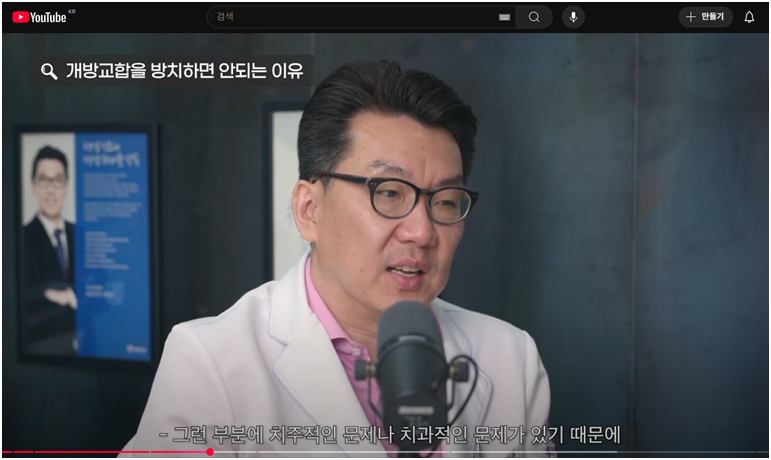
.
.
"The teeth just do not fit together,
so is treatment really necessary?.."
.
.
On the surface,
it may seem like a simple alignment issue,
but in reality, it goes beyond aesthetics
and can cause various inconveniences and functional problems
in everyday life.
(1) Temporomandibular joint problems
Because the teeth do not fit together properly,
unbalanced force is placed on the jaw,
which can cause pain.
(2) Tooth wear
Excessive force is placed on only some teeth,
which can lead to wear.
(3) Changes in facial appearance
As the position of the jaw changes, facial balance issues such as a recessed chin or underbite can also occur.
✔ Even if it does not feel uncomfortable now, delaying treatment
can lead to bigger problems over time.
- Treatment methods for open bite
Treatment is carried out according to the patient’s dental condition.
Here are two representative cases.
① Anterior open bite
(when the front teeth do not touch)
If the front teeth are excessively positioned upward,
orthodontic appliances and mini-screws are used to move the front teeth downward.
Mini-screws act as anchors,
making it very effective because only the target area can be precisely adjusted
without unnecessary tooth movement.
② Posterior open bite
(when the molars do not touch)
Orthodontic appliances and mini-screws are also used to adjust the vertical position of the teeth so that the molars fit together properly.
※ In addition, if the cause is skeletal
and due to the position of the jawbone,
surgical approaches may be necessary,
and for adolescent patients who have not yet completed growth,
the use of growth-control appliances may be considered.
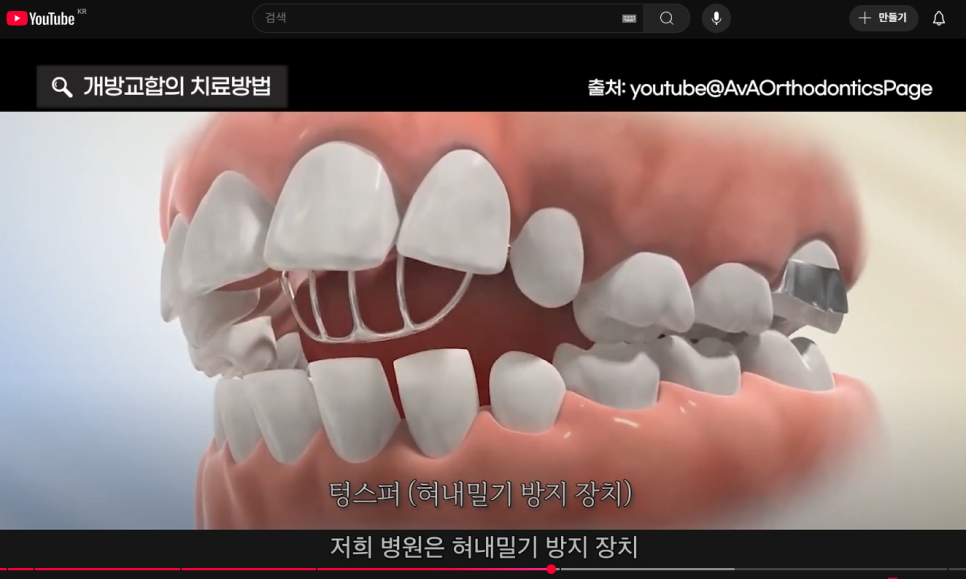 Improving daily habits is also a key part
of treatment!
Improving daily habits is also a key part
of treatment!
We often forget that small habits we repeat without thinking
can have a big impact on the body.
The same applies to dental occlusion.
In particular, open bite often stems from
habitual tongue position.
✔ Pay attention to tongue position!
When the mouth is closed,
a habit of pushing the tongue tip against the teeth or sticking it forward,
or a habit of keeping the tongue pressed down on the floor of the mouth,
can cause or worsen open bite.
✔ Here is how to improve tongue position!
- Keep the tongue resting against the roof of the mouth at all times
- Use a tongue spur to prevent tongue thrusting
- Combine consistent tongue training with myofunctional therapy
Open bite is not simply an aesthetic issue.
If it is not treated in time, it can lead to various problems,
such as changes in jaw position, changes in facial contours,
and reduced chewing function.
If you are wondering, "Could this be me too?",
we recommend getting an accurate diagnosis from an orthodontic specialist.
A healthy smile
starts with proper occlusion.
Gangnam orthodontic dental clinic Ceramic Dental Clinic










Previous image
Next image