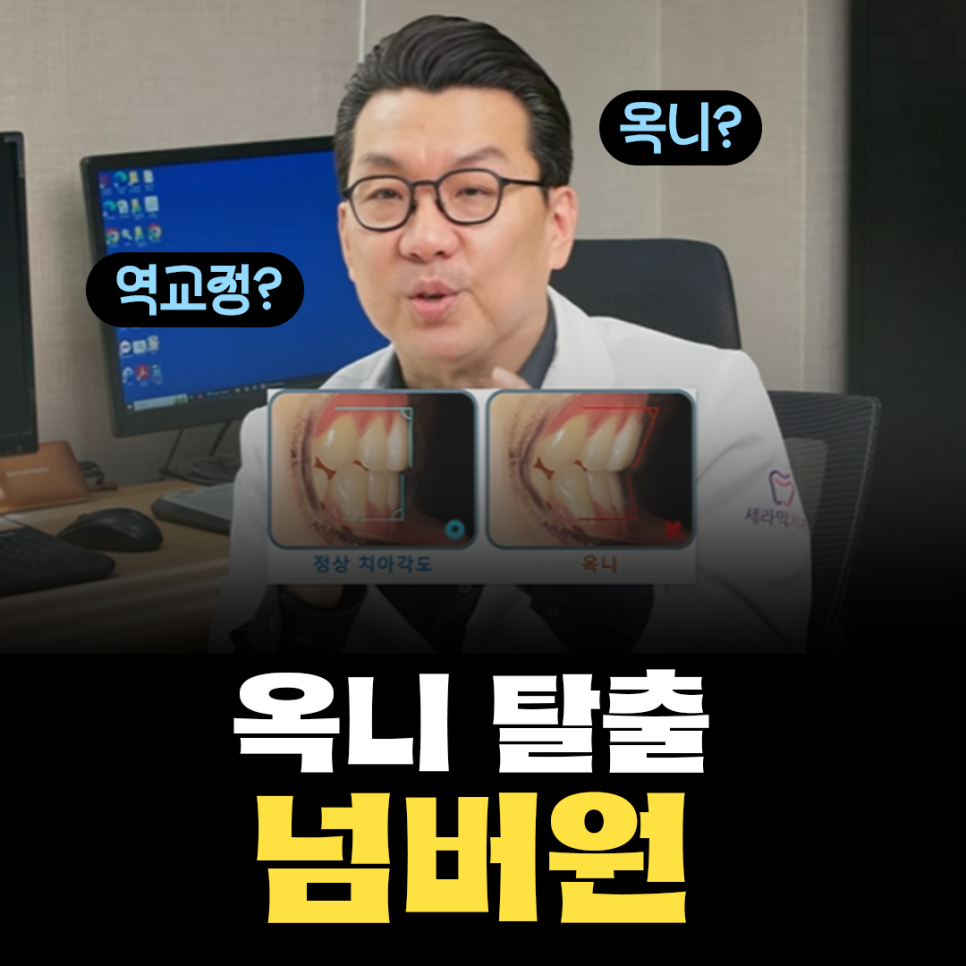
Hello. This is Ceramic Dental Clinic at Hakdong Station,
an orthodontic dental clinic in Gangnam.
Dreaming of a beautiful smile,
you ambitiously start orthodontic treatment...
But what if, after treatment ends,
smiling feels awkward instead,
or unexpected changes in appearance make you lose your smile?
Orthodontic treatment is not just about
straightening the alignment of teeth.
It is a complex treatment that must also
consider the harmony and function of the entire face.
However, if teeth move too much during the orthodontic process,
or if treatment is carried out without considering facial changes,
new discomforts or complexes can arise.
For example,
when retracting protruding front teeth,
the teeth may be pushed in too far,
creating a new complex: “sunken teeth.”
▶ What are sunken teeth?
This refers to a state in which the visible crown
(the upper part of the tooth) is excessively tilted inward
relative to the root of the tooth.
If tooth angulation is not adjusted properly
during orthodontic treatment,
this problem can occur.
Even if the teeth look neatly aligned at first glance,
it is actually a side effect in which the tooth axis
is imbalanced and tilted inward.
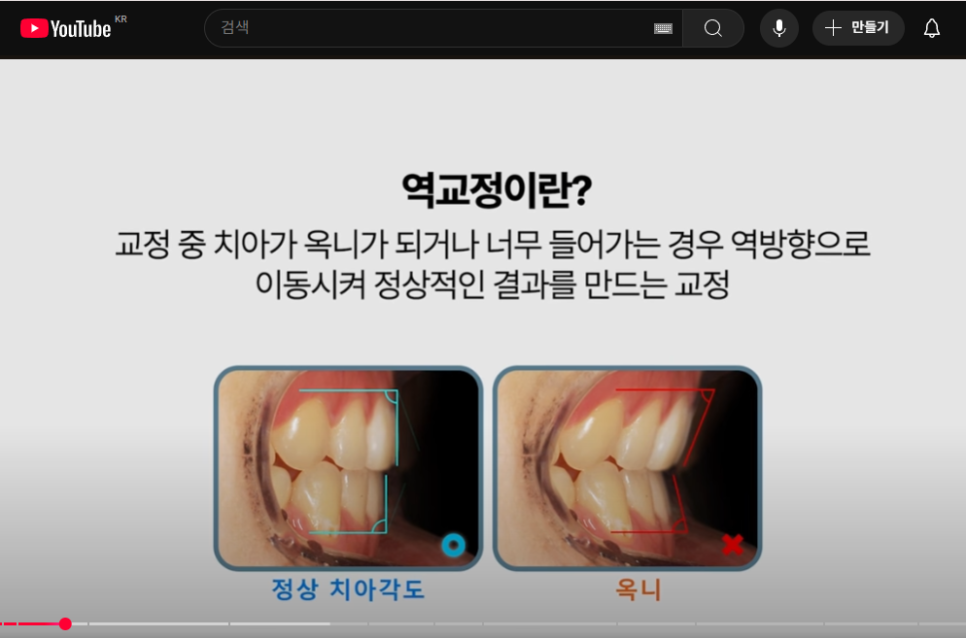
What is needed here is reverse correction!
“Sunken teeth” are not just an aesthetic issue;
they can also affect tooth function,
such as unclear pronunciation and discomfort while chewing.
In such cases, reverse correction is needed
to move the teeth back to the proper position.
So what exactly is reverse correction?
Many people often confuse “reverse correction”
with “re-correction.”
But these two concepts are clearly different.
Re-correction vs. reverse correction
▶ Re-correction
This refers to performing orthodontic treatment again
when the teeth have shifted back out of alignment after
treatment has ended, or when the results are unsatisfactory.
▶ Reverse correction
This is the treatment process of adjusting teeth in the opposite direction
and returning them to an ideal bite when, during orthodontic treatment,
the teeth have moved beyond the planned position.
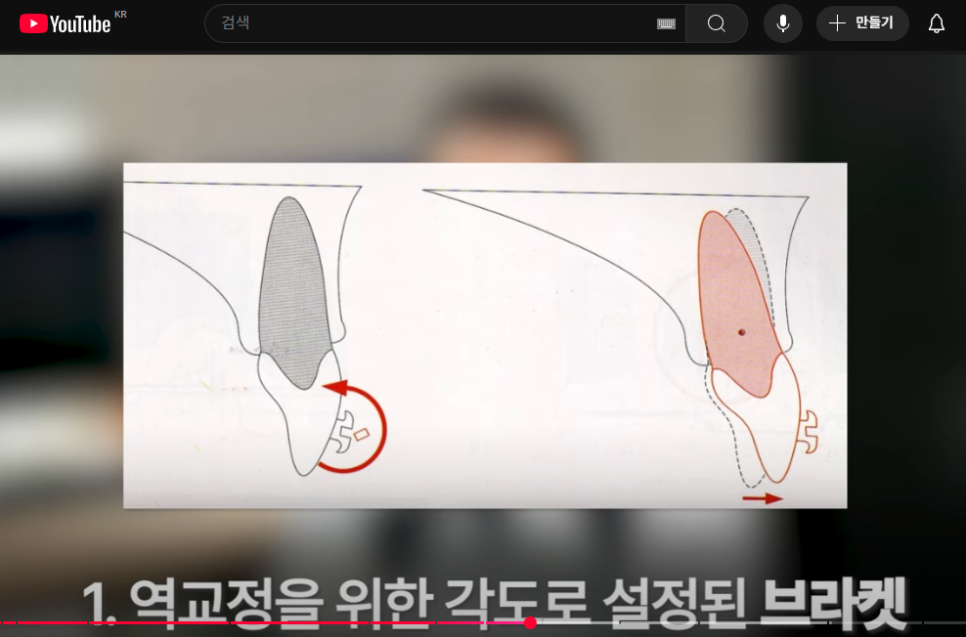
High-difficulty reverse correction
is not as easy as it sounds.
Reverse correction requires a higher level of precision
and clinical judgment than general orthodontic treatment.
Because the teeth have already moved beyond the treatment plan
and shifted too far,
fine control of the micro-movement path is necessary,
and even a small error can have a major effect on the overall bite.
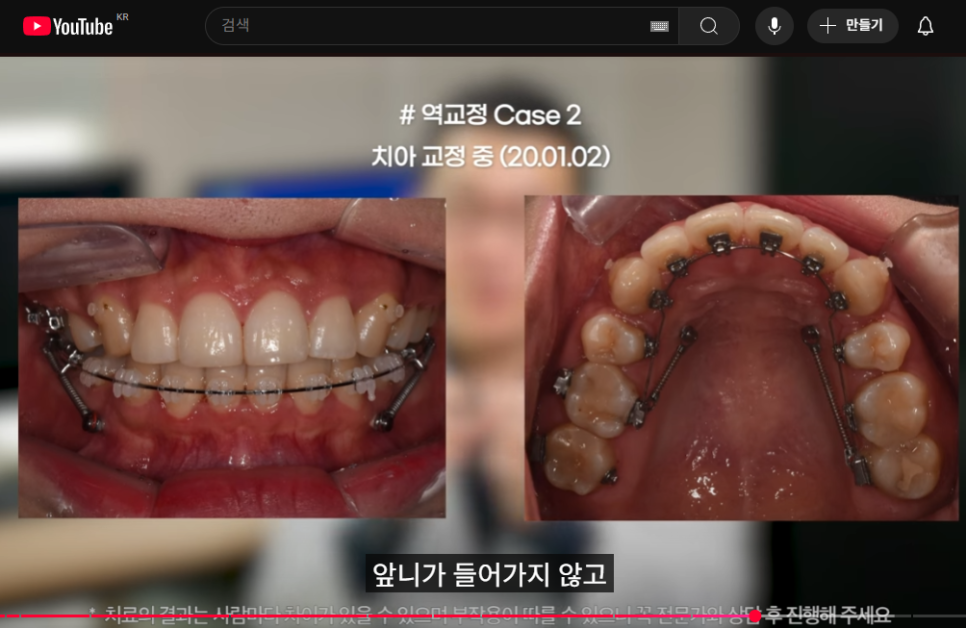
| (1) Use of special bracketsUnlike ordinary orthodontic appliances, brackets set at special angles are used to guide the teeth in a specific direction. (2) Reverse-correction-specific wireUnlike regular wire, a special wire with the front part bent by about 10 degrees is used. (3) Use of mini-screwsMini-screws are placed around the canines, requiring precise technique to pull the molars forward. |
It is important to receive treatment from an orthodontic specialist
with extensive clinical experience in handling various reverse correction cases.
Reverse correction, which requires moving the teeth back outward again,
cannot be solved by simply applying force.
It requires advanced techniques.
The speed and direction of tooth movement,
bite interference, and the response of the surrounding alveolar bone
must all be considered comprehensively,
and regular observation and careful treatment adjustments are essential.
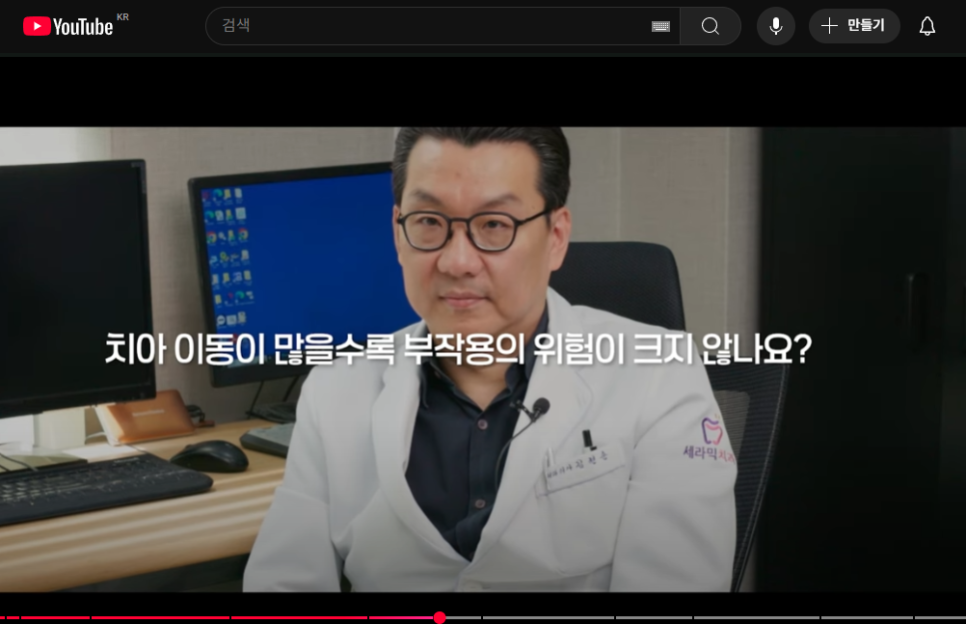
Worried about the side effects of
reverse correction for sunken teeth?
The more tooth movement there is,
the more you may worry that the risk of side effects increases.
However, performing reverse correction once does not mean
that the tooth roots or gums will be significantly damaged.
This is because experienced dental clinics carefully consider
the speed and direction of tooth movement,
as well as the condition of the gums and alveolar bone.
❗Of course,
if teeth are moved repeatedly,
there is some possibility of issues such as root resorption
or changes in periodontal tissue.
That is why reverse correction requires
even more precise diagnosis and planning,
as well as advanced techniques.
In orthodontic treatment,
above all, protecting your precious teeth
and gum health is the most important thing.
Based on an accurate diagnosis,
the treatment purpose and the current condition of the teeth are closely analyzed,
and when treatment is carried out under the judgment of an orthodontic specialist
with extensive clinical experience,
satisfying results can be expected.
A bright and confident smile
can be restored again.








Previous image
Next image