Hello, today I’d like to talk about why you shouldn’t delay dental treatment at Apgujeong Dental Clinic.
“Since it doesn’t hurt yet, can’t I just wait a little longer?”
“I’m scared they’ll tell me to get all sorts of treatment once I go to the dentist.”
“I’m so busy that it’s really hard to make time.”
These are things we hear very often in the treatment room. Honestly, the dentist is not a place people want to go. The sound of the drill, worries about treatment costs, and the burden of time — I completely understand the urge to put it off.
But as a dentist, I’ll say this honestly: there is almost nothing that costs you more the longer you delay than dental treatment. Today, I’ll explain why, based on real cases and medical evidence.
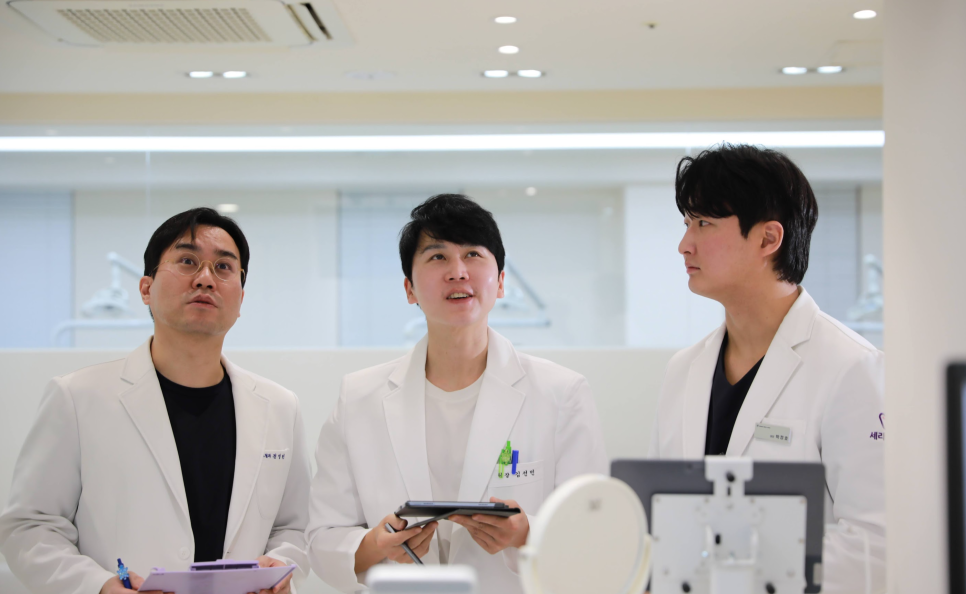
Ceramic Dental Clinic Directors
“Since it doesn’t hurt yet, it must be fine” — why people put off going to the dentist
In fact, the reason people delay dental visits is not simply because they are “too lazy.” In most cases, fear, financial burden, and lack of time all work together.
Especially for people who have had unpleasant experiences at the dentist in the past, those memories make it even harder to take the first step. Then, when they come across misinformation online, they end up concluding, “Yes, it’s still fine, so let’s wait a little longer.”
But the problem is that this “a little longer” becomes not days, but months, and sometimes even years. And during that time, quiet but definite changes are happening to our teeth.

Don’t put it off just because you’re afraid of the dentist
Teeth do not “heal naturally”
Most parts of our body have amazing natural healing ability. When skin is cut, new flesh grows back; when a bone breaks, it eventually rejoins over time. Muscles recover, and the liver has regenerative capacity.
But once tooth decay starts, it does not return to its original state. More precisely, once it goes beyond the very earliest stage — the stage where even at the dentist it may not yet be clearly called decay — it does not go back on its own.
The same applies to gum disease (periodontitis). Once gum bone has been lost due to periodontitis, it does not regenerate again except in extremely rare exceptional cases.
A cracked glass cup does not heal itself over time. Instead, one day it suddenly shatters. Teeth are the same.
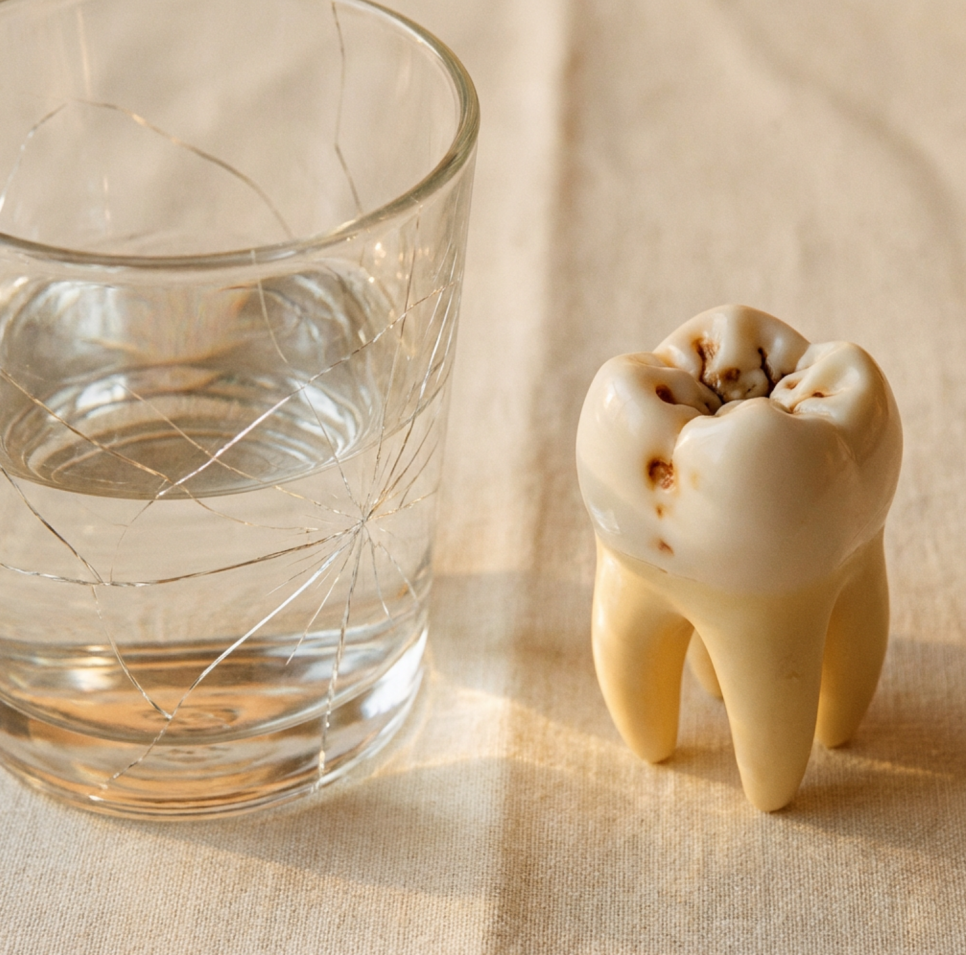
Just as a cracked glass bottle does not disappear, teeth are the same.
That is why the scale of treatment needed changes completely depending on when treatment begins. Please take a look at the table below.
| Stage of progression | Required treatment | Number of visits | Approximate cost level |
|---|
| Early decay (surface damage only) | Resin filling | 1 visit, 10–20 minutes | Tens of thousands of won |
| Mid-stage decay (progressed deeper) | Inlay/Onlay | 1–2 visits | Around 200,000–300,000 won |
| Severe decay (infected up to the nerve) | Root canal treatment + crown | 2–3 visits or more | Around 500,000–700,000 won |
| Tooth loss (after extraction) | Implant | Several visits, several months | 700,000–1,000,000 won or more |
For the same tooth, the cost can differ by more than tenfold depending on when treatment starts.
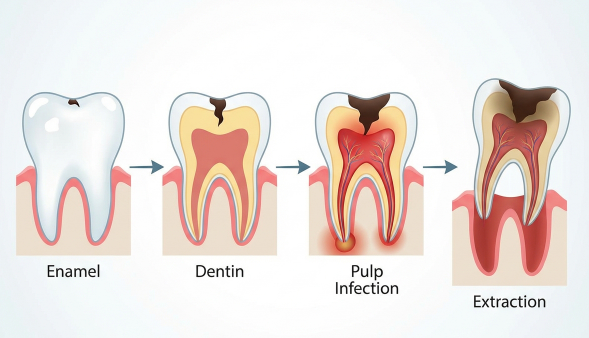
The same goes for gum disease. In the early stage of gum inflammation (gingivitis), you can restore healthy gums with scaling and proper brushing alone. But once it progresses to periodontitis and the gum bone begins to dissolve, the lost bone does not grow back. In fact, periodontal disease is the number one cause of tooth loss in adults.
“Let’s just wait a little longer” — the ending
The most dangerous misconception that makes people delay dental treatment is the idea that “if it doesn’t hurt, it’s fine.”
“No pain = no problem” is a statement that is partly true and largely wrong. In the early stages, there may truly be no symptoms at all. But by the time pain is felt, in most cases the nerve has already been infected or a significant amount of gum bone has already been lost.
Let’s compare the stories of two patients with the same cavity.
| 🅰 Patient A (detected early) | 🅱 Patient B (visited after being left untreated) |
|---|
| Time of visit | Found immediately during a regular checkup | 6 months to 1 year after pain began |
| Treatment | 1 resin filling | 2–3 root canal treatments + crown |
| Treatment time | About 15 minutes | Several visits over several weeks |
| Cost | Tens of thousands of won | Increased by 5–10 times |
| Pain | Almost none | Significant discomfort before and after treatment |
The most ironic part is that people delay because they are afraid of the dentist, only to end up needing a bigger and more frightening treatment later.
If periodontal disease is left untreated, the scenario becomes even more dramatic. What could have been solved with one scaling session becomes: gum bone loss → loose teeth → extraction → implant. What could have been finished in 30 minutes at the start turns into a major treatment spanning several months.
Delaying dental treatment is like a warning light turning on in your car and then covering it with tape. The warning light is hidden, but the engine keeps getting worse.

No, it’s not fine.
If you have any of these symptoms, don’t delay any longer — signs that you need to visit the dentist
If even one of the symptoms below applies to you, there is a high chance that treatment is already needed. In particular, if you have pain, the condition may already be fairly advanced.
-
Your teeth are sensitive to cold or hot foods and drinks
-
Your gums bleed when you brush
-
You can see a black spot or hole in a tooth
-
Your bad breath is consistently severe
-
A certain tooth feels uncomfortable or painful when chewing
-
Your teeth feel loose
-
Your gums are swollen or pus is coming out
Even if you have no symptoms, it is important to get a regular checkup and scaling every six months. This alone can prevent most serious dental problems.
Criteria for choosing a good dental clinic
Rather than recommending treatment unconditionally, it is important to choose a dental clinic that accurately explains your current condition and transparently informs you of the treatment options and the pros and cons of each.
It’s best to choose a place that accurately diagnoses your current condition through a full oral examination and panoramic X-ray, explains it to you directly with photos and videos, distinguishes between what needs treatment right away and what can be monitored, and shares the treatment plan and estimated costs transparently in advance.
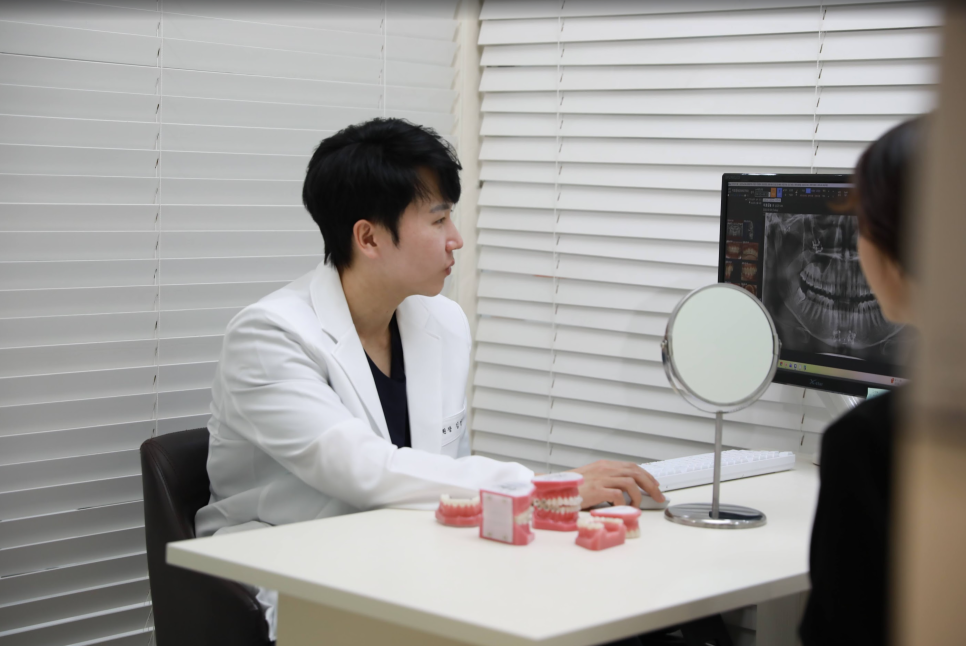
The best dental treatment is prevention so that treatment is not needed. The next best is treating it quickly while it is still small. The worst choice is to delay.
Today’s 30 minutes saves months in the future
Let’s summarize today’s main points.
Teeth do not heal themselves. If you solve a problem while it is still small, you can minimize time, cost, and pain. The longer you delay, the larger the treatment becomes, the higher the cost, and the longer the pain lasts.
If you have been putting it off because you are scared, busy, or think it doesn’t hurt yet — now is the fastest time. The greatest gift to your future self six months from now may be making one phone call to the dentist today.
If you have any questions or need consultation about your current symptoms, please feel free to contact us anytime. If making a phone call is difficult, online consultation is also available.
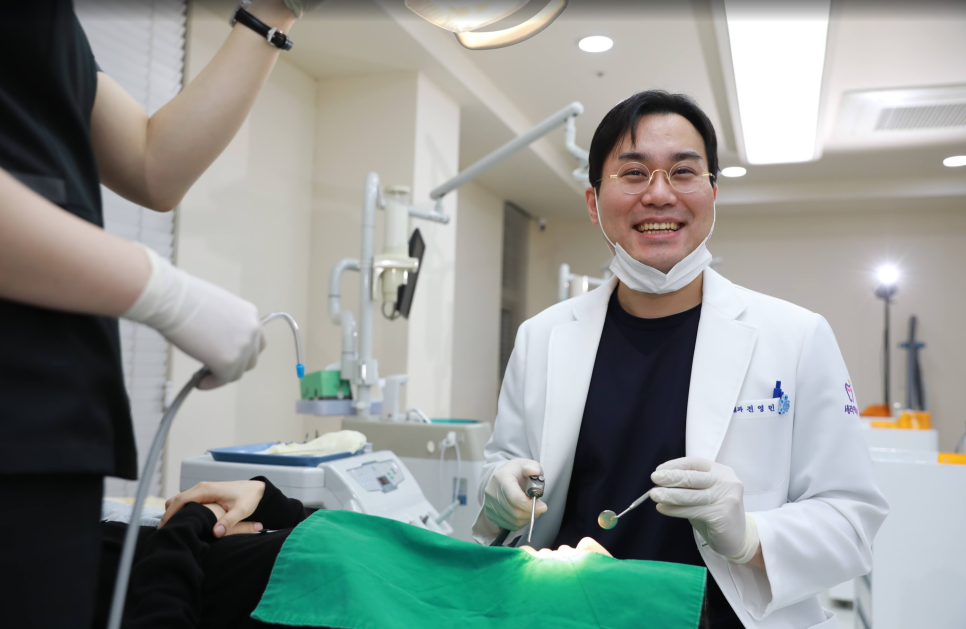
A small amount of attention can change the lifespan of your teeth. If you’ve been putting it off, why not call the dentist now?