Hello, today we would like to talk about the age limit for implants at Hakdong Dental Clinic, where many implant procedures for older adults are performed.
If you are reading this article now,
you may be considering an implant for an elderly parent,
or you may be looking into treatment for yourself.
Can you get an implant after your 70s or 80s?
I heard it’s not possible because the bones are weak when you’re older...
We hear concerns like these very often.
We understand that it is not because you want to put it off.
That is why we are talking today about the age limit for implants in older adults.
If you read to the end,
you will surely find it helpful in easing unnecessary worries.^^
Is there an age limit for implants?
To put it simply, there is no "upper age limit" for implants.
Many people think implants are impossible once they reach their 70s or 80s.
In fact, what matters much more than age itself is
your current health condition.
If there is enough jawbone support,
and there are no major problems with overall health,
it is fully possible even in your 80s.
Then why do people say, "It’s not possible if you’re older"?
There is a reason for this misunderstanding.
As people get older,
the following changes occur.
-
The jawbone gradually decreases
-
Chronic conditions (such as diabetes and high blood pressure) become more common
-
Recovery is slower than in younger people
But this does not mean "it cannot be done."
It means "it requires more careful preparation."
To use a house-building analogy,
if the ground is weak, you make the foundation work even more solidly.
If there is not enough bone, bone grafting is done first,
and if there is a systemic condition, we consult in advance with the internal medicine physician.
Saying, "You’re older, so you can’t have it" unconditionally
is incorrect.
Older adult implants: just check these points
I cannot claim that my opinion is always right,
but I will summarize what I have felt after more than 10 years of practice.
- Check overall health status
Please refer to the table below.
| Item | Points to check |
|---|
| Diabetes | Whether it is being controlled |
| High blood pressure | Whether it is being stably managed with medication |
| Blood thinners | Whether medications such as aspirin are being taken (pre-adjustment may be needed) |
| Osteoporosis | Whether bisphosphonate medications are being taken |
In particular, people taking osteoporosis medication
must let us know in advance.
These medications can affect healing of the jawbone.
To explain simply,
osteoporosis medication is used to prevent bones from dissolving.
However, during the process in which new bone must grow after an implant,
this medication can actually interfere.
It is true that it is a medicine that prevents bone loss, but in fact it also slows the formation of new bone.
If you think of the bone remodeling process as peeling off old wallpaper and putting up new wallpaper,
this medicine is like holding the old wallpaper in place so it cannot be removed.
- Condition of the jawbone (alveolar bone)
Through CT imaging,
we need to accurately check the height and thickness of the bone.
Even if bone is insufficient,
it can be reinforced through bone grafting.
It is like adding more soil to a flowerpot
before planting a tree.
However, after bone grafting,
the bone needs about 3 to 6 months to become firm.
The older the patient is, the longer this period may be,
so it is good to know this in advance.
- Choose a medical team with experience
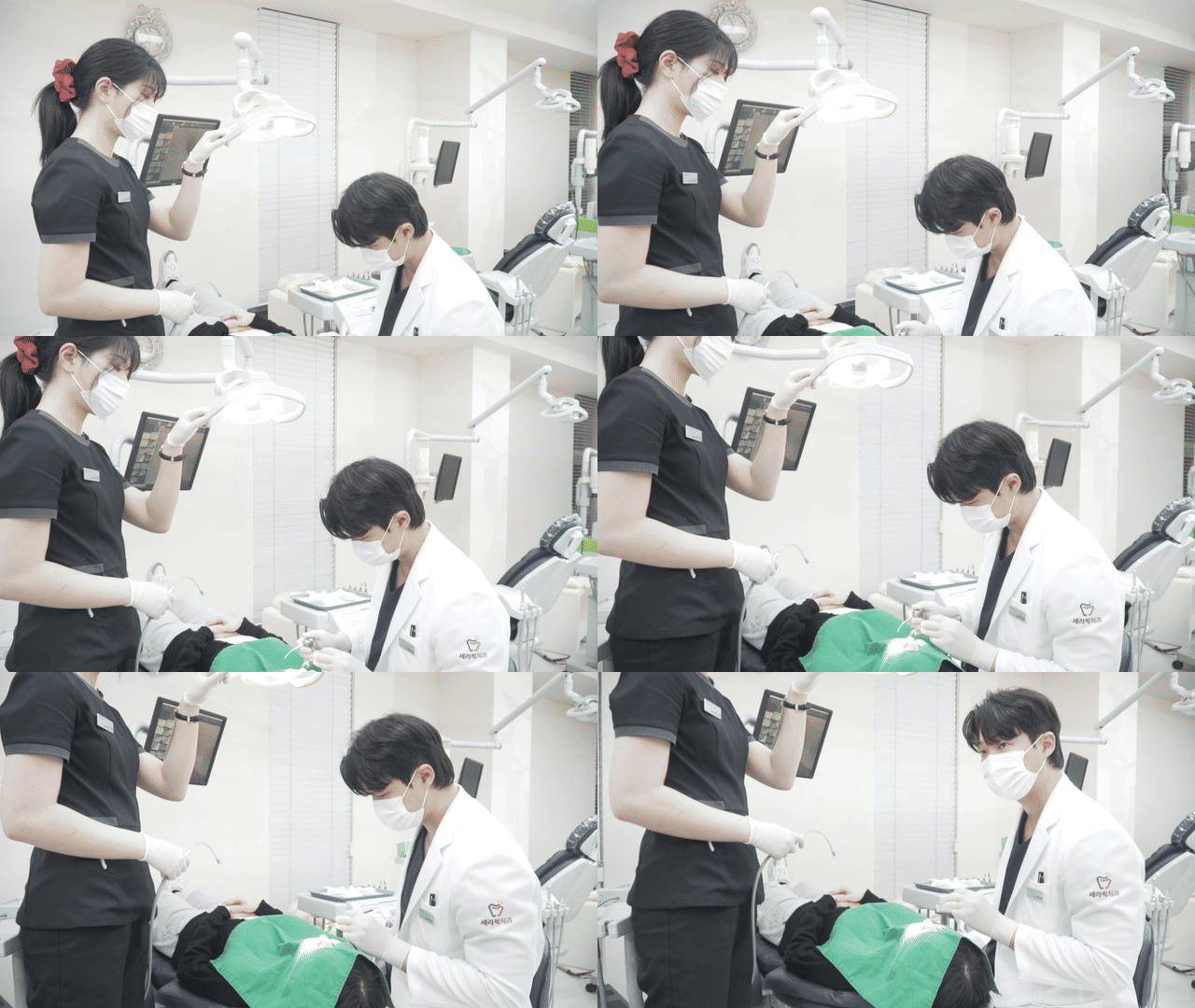
Implants for older patients require
both assessment of overall health + a precise surgical plan
to be carried out at the same time.
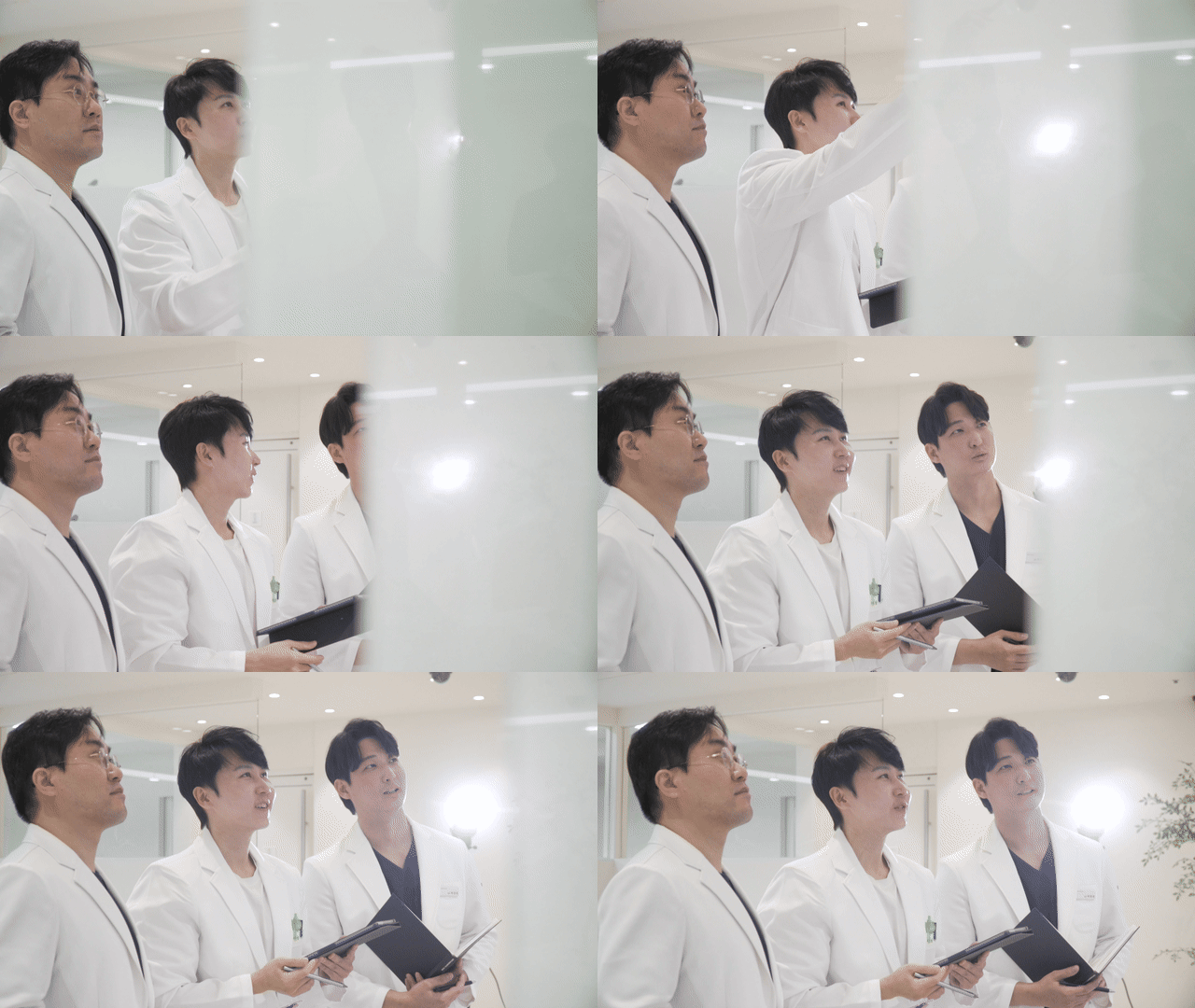
If you are looking into Hakdong Dental Clinic,
we recommend checking whether the clinic has extensive experience with older patients and whether it has an internal medicine collaboration system.
Older adult implants vs dentures: which is better?
This is also a question we receive very often.
Here is a simple comparison.
| Item | Implant | Denture |
|---|
| Chewing force | About 80–90% of natural teeth | About 20–30% of natural teeth |
| Comfort | Fixed like my own teeth | There is a foreign-body sensation |
| Bone preservation | Helps maintain jawbone | Bone gradually decreases over time |
| Care | Similar to regular brushing | Must be removed and cleaned daily |
| Cost | Higher upfront cost | Relatively affordable |
Among people who have used dentures for a long time,
we often see cases where the gums have receded significantly.
Because dentures rest on top of the gums,
they do not stimulate the bone, so the bone gradually decreases over time.
It is similar to a house that has not been lived in for a long time gradually deteriorating.
So if your overall health allows it,
considering implants at an appropriate time
can be a better long-term choice.
How old can you actually be and still get implants?
In my practice as well,
I have successfully performed implants for patients well into their mid-80s and older.
In fact, I do not consider it something especially unusual.
Of course, I cannot say it is possible for everyone,
but
I would like to emphasize once again that health status matters more than age.
For those who feel burdened by surgery,
today there are also many improved methods that minimize incisions.
This is a method where the implant is placed
without 크게 opening the gums,
by making only a small hole.
To compare it with clothing,
it is similar to opening just one button instead of opening a large zipper.
There is less bleeding, and recovery is faster.
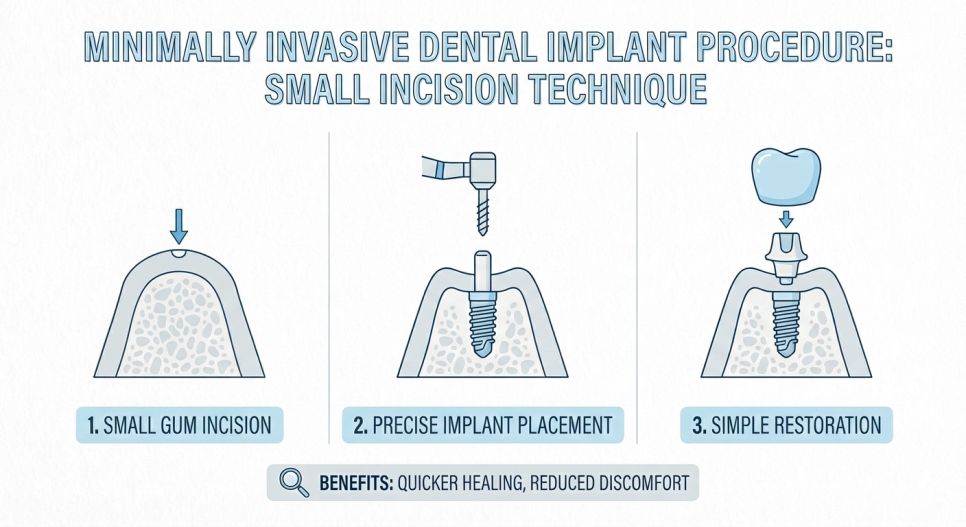
It is possible to perform surgery by drilling only a small hole exactly where the implant goes
Older adult implant treatment proceeds in this order
To reduce vague fear,
let us briefly summarize the overall process.
-
Consultation and CT imaging — check bone condition and overall health
-
Internal medicine collaboration — communicate with the primary doctor if needed
-
Treatment planning — decide whether bone grafting is necessary
-
Implant placement (surgery) — about 30 minutes to 1 hour
-
Healing period — about 3 to 6 months (bone and implant integrate)
-
Prosthetic restoration (crown) placement — final tooth completion
The whole process may look long,
but the actual surgery time is about 30 minutes to 1 hour.
You do not have to sit in the dental chair for a long time, so please do not worry too much.^^
In closing
"I’m old, so I just have to put up with it..."
There are still many people
who think this way.
But being able to chew well is
not just about the pleasure of eating.
There are many research findings showing that it is also connected to nutrition,
digestive function, and even dementia prevention.
Rather than giving up because of age,
we gently recommend first getting an accurate examination.
If you have any questions,
please feel free to contact us.
Thank you. :)