Hello, this is Ceramic Dental Clinic, a dental clinic near Nonhyeon Station.
If you are reading this post now,
you are probably feeling very worried because you are about to get an implant.
Or perhaps you already had an implant,
but it feels uncomfortable or loose somewhere,
so you are searching for answers.
"I heard implants can come loose. Why does that happen?"
"If one fails, does that mean I can never get it done again?"
These worries are completely understandable.
We know you are not putting it off because you want to.
Today, I’d like to organize the main reasons implants fail
and how you can avoid them in advance.
Please focus for just 3 minutes,
and I hope this helps you a lot.^^
Why do implants fail?
First, let’s clarify what “failure” means.
Put simply, implant failure means
the inserted screw does not bond with the jawbone and comes out.
Think of hammering a nail into wood.
If you drive it into solid oak, it holds firmly,
but if you drive it into rotten wood, it will wobble and eventually come out, right?
Implants are the same.
Depending on the condition of the bone, the health of the gums, and lifestyle habits,
the result can change completely.
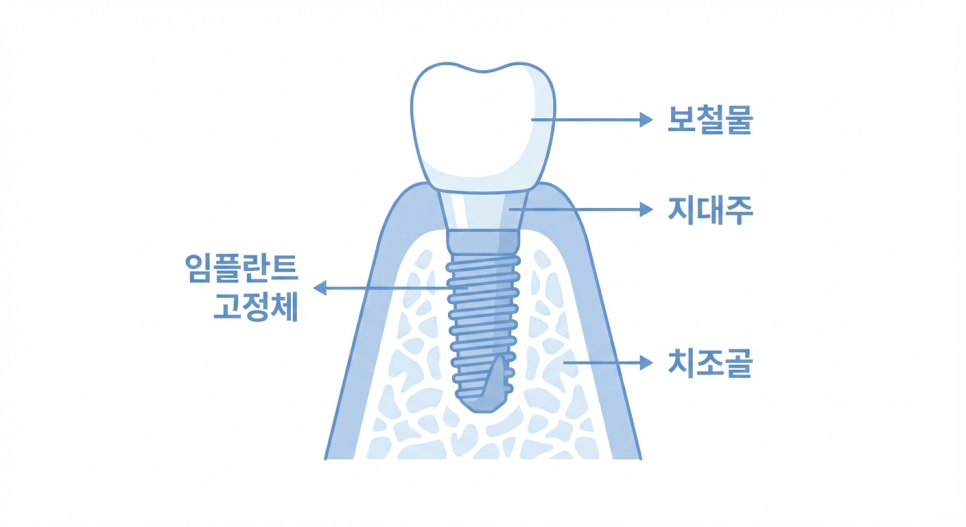
Cause of failure 1. Not enough jawbone
This is one of the most common causes.
If a tooth is left out for a long time and neglected,
the jawbone gradually shrinks as it is resorbed.
If an implant is placed forcefully when there is not enough bone,
the implant will not be properly secured.
In such cases, a bone graft is needed first.
If a clinic says it will place the implant right away without a bone graft no matter what,
it may actually be worth being cautious and questioning that once.
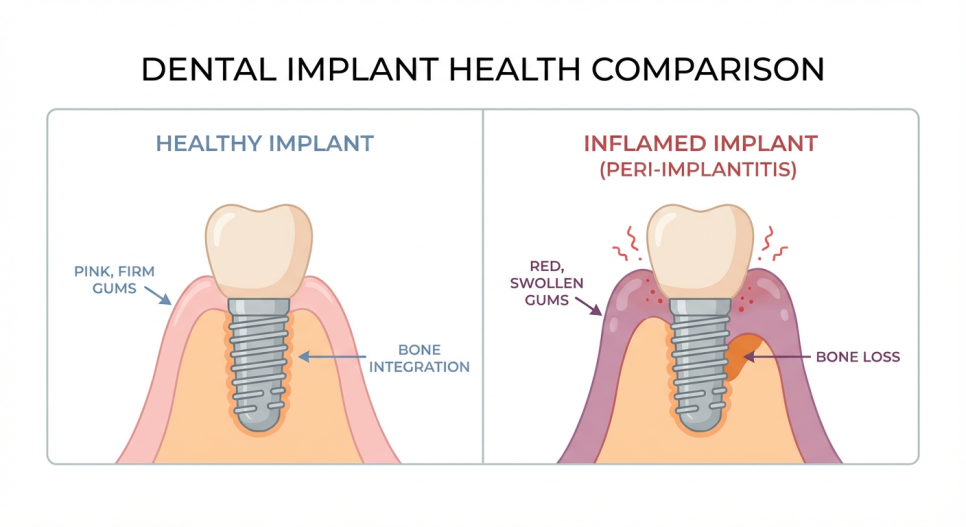
Cause of failure 2. Gum inflammation (peri-implantitis)
Just as gum disease (periodontitis) can occur around natural teeth,
inflammation can also develop around implants.
This is called peri-implantitis.
The main causes of peri-implantitis are as follows.
In particular, smoking interferes with blood circulation,
severely reducing the bonding between the jawbone and the implant.
Managing an implant is more important than placing one.
Cause of failure 3. Using it too early
After an implant is placed,
time is needed for the bone and screw to bond firmly.
Usually, you wait about 2 to 4 months.
If you chew hard foods during this period
or too much force is applied to the surgical area,
the bonding can fail.
Simply put, it is like applying glue and then touching it before it has fully set.
To put it gently,
if you are only drawn to promises of quick treatment,
it may end up taking even longer.

Cause of failure 4. Systemic health problems
This is something many people unexpectedly overlook.
| Systemic condition | Effect on implants |
|---|
| Diabetes (when not controlled) | Slower gum healing and increased risk of infection |
| Osteoporosis | Lower jawbone density and weaker fixation |
| Blood pressure medication / blood-related medications | Increased risk of bleeding during surgery, effects on bone metabolism |
Having one of these conditions does not mean
you absolutely cannot get an implant.
However, please make sure to tell the clinic in advance,
and it is safer to proceed at a place that can coordinate care with your internal medicine doctor.
Cause of failure 5. Proceeding without a detailed diagnosis
I cannot say my opinion is always right,
but this part is truly important.
An implant is not a treatment that simply “places a screw in an empty space.”
-
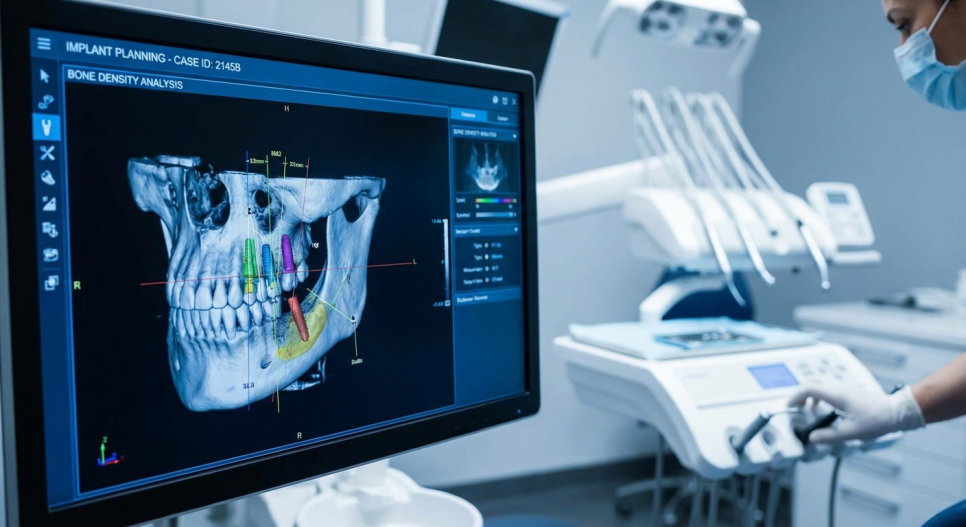
Check the width, height, and density of the bone
-
Identify the location of the nerves
-
In the case of upper teeth, measure the distance to the maxillary sinus (the empty space beside the nose)
-
Analyze the occlusion (bite) with the remaining teeth
All of this must be identified in advance
through 3D CT and detailed examinations.
Driving somewhere unfamiliar without navigation
and placing an implant without a detailed diagnosis are similar.
Rather than a place that says surgery can be done on the same day no matter what,
a place that makes a plan after sufficient examination is safer.
So how can you reduce the risk of failure?
Here is a summary.
-
Choose a clinic that provides thorough detailed diagnostics (such as 3D CT)
-
If a bone graft is needed, make sure it is done first
-
Allow enough recovery time after surgery
-
Quitting smoking is essential. Be sure to stop for at least 2 weeks before and after surgery
-
Do not miss regular checkups after surgery
-
If you have a systemic condition, be sure to inform the clinic in advance
The success rate of implants is generally known to be over 95%. However, that 95% applies when the conditions above are properly followed.
If done well, an implant can last together with you for 10 years, 20 years, or more.
That is why the initial diagnosis and planning are so important,
and post-surgery management must continue to the end.
For more than 10 years, I have personally diagnosed and performed implant surgery for many patients.
From that experience, I can say with certainty that
being thorough and prepared matters more than rushing,
and it completely changes the outcome.
If you are looking for a dental clinic near Nonhyeon Station,
please make sure it is a place that proceeds step by step,
starting with a detailed examination.
If you have any questions,
please feel free to contact us anytime.
I am sure it will be helpful.^^
Thank you.
Sincerely,
Ceramic Dental Clinic