Hello. We are Ceramics Dental Clinic, the representative dental clinic near Gangnam-gu Office Station.
If you are reading this post now,
it seems you may already have dental implants or be planning to get them soon.
You may be wondering about things like this:
"Do implants eventually come loose, too?"
"I’m not sure how to take care of them so they last a long time."
Those are very reasonable concerns.
The cost is not small, and the treatment also takes quite a bit of time.
Today, I’d like to honestly explain
the lifespan of dental implants.
If you focus for just 3 minutes while reading,
I think this will definitely be helpful.^^
Dental implants and the real meaning of “semi-permanent”
"Dental implants are semi-permanent."
You may have heard that often.
But the term “semi-permanent”
can sometimes create a bit of misunderstanding.
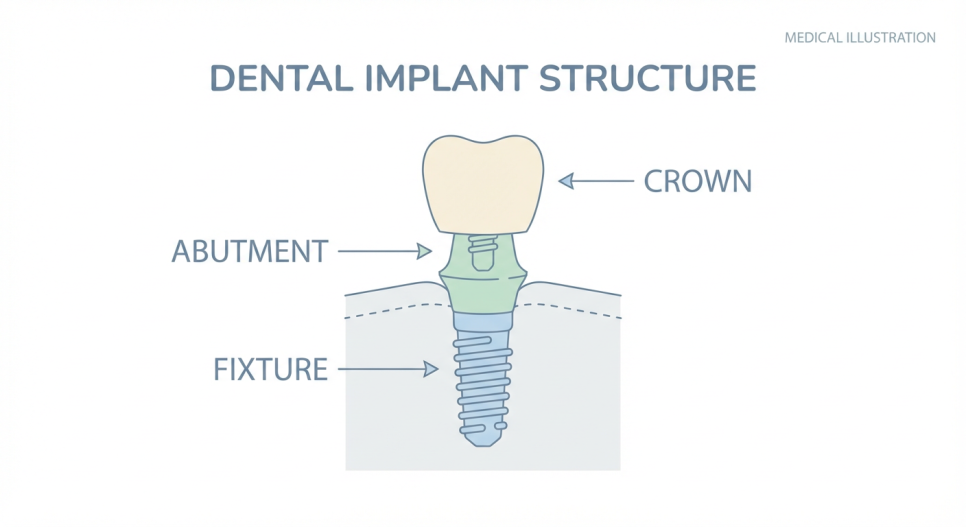
A dental implant is broadly divided into three parts.
-
The fixture that acts as the root (the screw placed into the jawbone)
-
The abutment, which is the connecting post (the component that connects the screw to the upper part)
-
The visible prosthetic tooth (the part you actually chew with)
To put it simply,
it is like building a house with the foundation (fixture), then setting up the pillars (abutment), and placing the roof (prosthesis) on top.
Just as a house lasts a long time when the foundation is solid,
an implant can be used for a long time if the fixture is well integrated.
However, just as a roof may need repairs over time,
the prosthesis on top may need to be replaced.
In other words, the screw placed in the bone can be semi-permanent, but the prosthesis on top may need replacement.
If you understand this difference,
your vague anxiety will likely decrease a lot.
How long do dental implants actually last?
According to studies and clinical data,
the 10-year survival rate is reported to be about 90–95%.
There are also quite a few people who use them for
more than 20 years.
Then why do some people lose them in less than 5 years?"
Some people ask this question.
To put it carefully,
what determines implant lifespan is often
what happens after the procedure rather than the procedure itself.
Here are the main reasons implants fail early.
| Cause | Simple explanation |
|---|
| Peri-implantitis | Inflammation in the gum around the implant. Similar to gum disease around natural teeth |
| Excessive force | Stress placed on the prosthesis or screws due to teeth grinding or clenching |
| Insufficient jawbone | A case where the implant was placed aggressively when the bone was weak from the beginning |
| Systemic disease | Conditions such as uncontrolled diabetes that interfere with healing |
In particular, peri-implantitis
is not an exaggeration to call the number one cause of implant failure.
When gum disease develops around a natural tooth,
the tooth becomes loose and eventually falls out, right?
The same applies to implants.
If the surrounding bone is lost, the screw becomes loose.
To use an analogy,
no matter how strong a stake is, if the ground around it collapses, it will be pulled out.
Please keep just this in mind if you want it to last a long time
Over more than 10 years of experience,
I have seen many implant cases.
People who use their implants well for a long time have one thing in common.
-
They do not skip regular checkups
-
You should be checked at least once every 6 months
-
The key is to catch problems before they occur
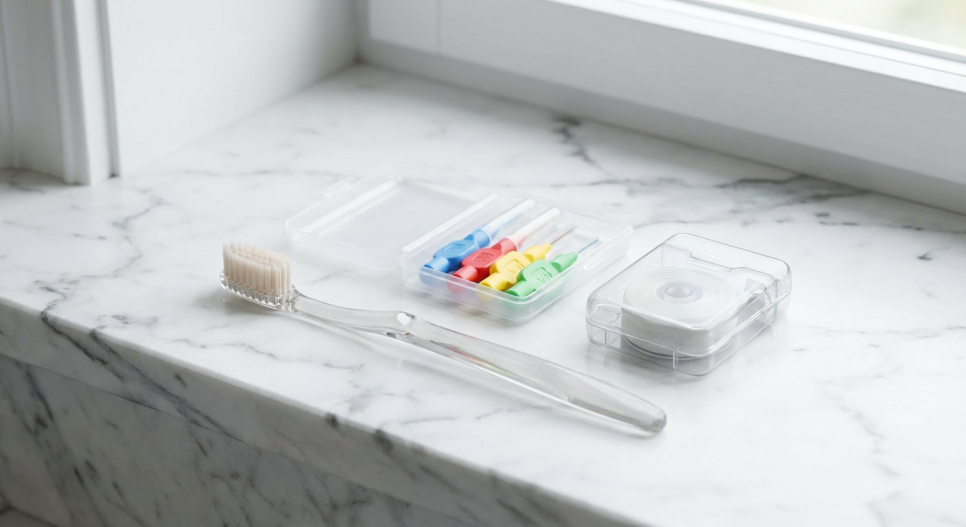
- Be sure to use interdental brushes and dental floss
-
A toothbrush alone cannot clean around an implant completely
-
Gaps are more likely to form than around natural teeth, so auxiliary tools are essential
- If you grind your teeth, be sure to mention it
-
For people who grind their teeth while sleeping,
-
it is a good idea to wear a night guard (sleep appliance)
- Reduce or quit smoking
In one sentence, implant care means, “Pay a little more attention than you would to a natural tooth.”
On the other hand,
it also means that if you pay just a little more attention,
you can use it much longer.
The initial placement determines the lifespan
I said that care is important,
but in fact, the starting point can be just as important.
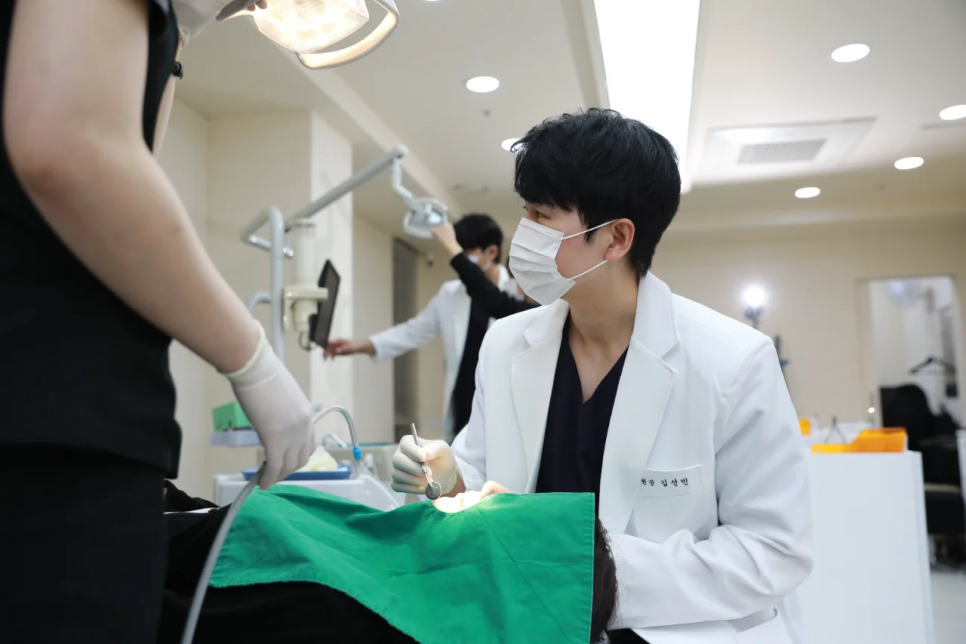
Even if the same implant material is used,
the result can be completely different depending on
where it is placed, at what angle, and how deep it is inserted.
Just as a tree grows well when it is planted correctly in soil with enough space, an implant must also be placed after accurately analyzing the amount and direction of bone in order to last a long time.
So when looking for a dental clinic near Gangnam-gu Office Station,
it is a good idea to check the following:
-
Whether they sufficiently analyze the bone condition with CT scans
-
Whether they suggest bone grafting first if there is not enough bone
-
Whether they are simply pushing for immediate placement no matter what
If a clinic only emphasizes that “same-day placement is possible,” it is worth being cautious.
Of course, same-day placement is appropriate in some cases.
However, it is not suitable for every situation.
In my case as well, if the patient’s bone condition is not sufficient,
I recommend bone grafting first, even if they have to wait.
Even if it is a little inconvenient,
that is what makes the difference 10 or 20 years later.
Don’t be too afraid of prosthesis replacement
As mentioned earlier,
the upper prosthesis may need to be replaced.
Usually, around 7 to 15 years,
the prosthesis may wear down or break.
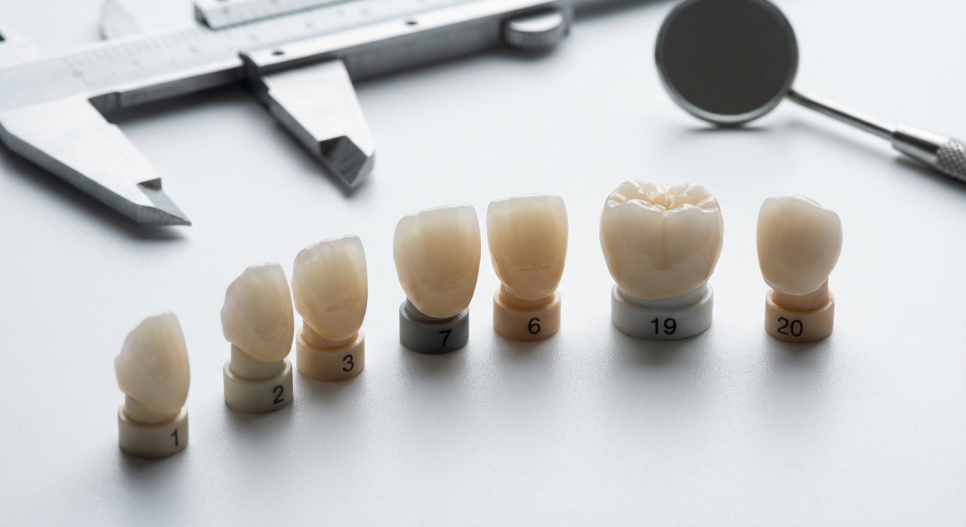
This is similar to replacing the tires on a car.
The engine (fixture) is still fine,
and you only need to replace the tires (prosthesis).
The cost is also much lower than the first implant treatment,
and it takes less time.
So because of the possibility of prosthesis replacement,
you do not need to be too disappointed and think,
"Dental implants are not permanent."^^
The key is to protect the root (fixture). If the root stays healthy, the upper part can be replaced whenever necessary.
Natural teeth vs. implants: lifespan comparison
I sometimes get asked this:
"Wouldn’t it be better to save the natural tooth instead?"
That’s true.
I can’t say my opinion is always right,
but if a natural tooth can be saved, saving it is the best option.
| Item | Natural tooth | Implant |
|---|
| Shock absorption | The periodontal ligament acts as a cushion | Fixed directly to bone (no cushioning) |
| Sensation | Feels temperature and pressure | Sensation is dull |
| Difficulty of care | Standard care | Auxiliary tools needed |
| Lifespan | Can last a lifetime with good care | More than 20 years with good care |
Natural teeth have something called the periodontal ligament.
Think of it as the cushion in the sole of a sneaker. It absorbs shock.
Implants do not have this cushion.
That is why they are more vulnerable to excessive force.
"I already had the natural tooth extracted—what should I do?"
If that is your concern, don’t worry.
Implants are currently the best way to replace a lost tooth.
If you take good care of them, you can use them for a very long time.
Let me summarize at the end

Here is a brief summary of what I explained today.
-
The implant root (fixture) is semi-permanent, while the prosthesis can be replaced
-
The 10-year survival rate is 90–95%, and with proper care, it can last more than 20 years
-
The number one cause of failure is peri-implantitis (gum care is the key)
-
Regular checkups + interdental brushes + quitting smoking are the three keys to extending lifespan
-
Accurate diagnosis and planning at the time of initial placement determine lifespan
A dental implant is not something you “place and forget”; it is something that begins after placement.
For those of you looking into dental clinics near Gangnam-gu Office Station,
I hope today’s post was helpful in some way.
If you have any questions,
please feel free to contact us. :)
I understand that you are not postponing it just because you want to put it off.
Still, one checkup now
can change the lifespan of your implant 10 years from now.
Thank you.^^