Can orthodontic treatment still be done in your 40s?
If you’re reading this now,
you may be wondering,
"I’m over 40—can I still get orthodontic treatment?"
"If I get braces in my 40s, won’t my teeth become loose?"
"It would be awkward to go to work wearing braces..."
These concerns are completely understandable.
In fact, among people who come in for orthodontic consultations,
the percentage of patients in their 40s and older is increasing every year.
So today, I’d like to talk carefully about orthodontic treatment in your 40s.
I’ll be honest, from the advantages to the precautions.
If you read through this for just a moment with focus,
I think you’ll find it very helpful.^^
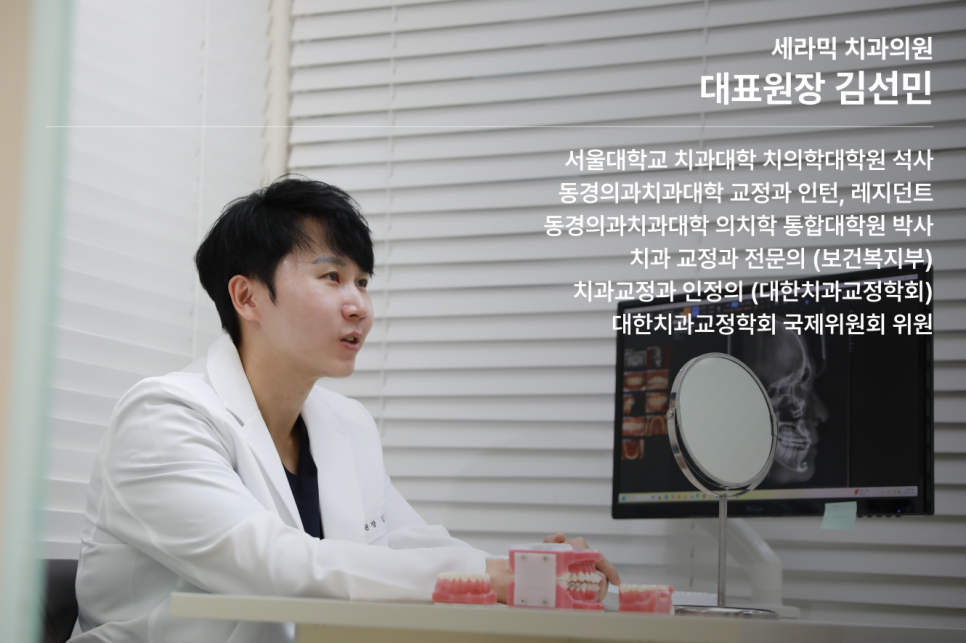
Why do people decide to get orthodontic treatment in their 40s?
In the past, it was true that people over 40 felt a bit embarrassed to show interest in appearance.
But these days, people in their 40s are physically, mentally, and socially much younger than before.
Along with that, when people reach their 40s, they often start to notice
that their front teeth are gradually spreading apart,
or the lower front teeth are becoming crooked,
and these small changes begin to bother them.

In cases like these, orthodontic treatment can not only improve appearance in the short term,
but also serve a preventive purpose by helping stop things from getting worse over time.
In a way, it can also be considered "treatment-oriented orthodontics."
"Doesn’t the bone stop moving as you get older?"
But this is a concern many people have.
It’s the question we get most often.
Let me give you the conclusion first.
Teeth move regardless of age.
This is how orthodontics works.
When gentle force is applied consistently,
the bone is resorbed and then rebuilt,
allowing the teeth to move in the desired direction.
This process is the same whether you’re in your 20s or your 40s.
There is, however, one difference.
How is orthodontic treatment in your 40s different from your 20s?
I’ll be honest.
| Item | 20s | 40s |
|---|
| Tooth movement speed | Relatively fast | May be somewhat slower |
| Gum condition | Generally healthy | Gum disease may be present |
| Presence of prosthetics or implants | Almost none | Often present |
| Treatment period | 1.5–2 years | Around 2–2.5 years |
| Importance of maintenance | Important | Very important |
In your 40s, gum health is the key issue.
When remodeling a house, the foundation must be solid before you can change the wallpaper.
Orthodontics is the same.
Treatment should be started only when the foundation—your gums—is in a strong condition.
That is why, before orthodontic treatment in your 40s,
gum treatment is often done first.
If a clinic skips this order
and says, "Let’s start orthodontic treatment right away,"
you may want to think carefully about where that clinic’s real priorities lie.
Worried about braces because you’re an office worker?
This is also something people ask about a lot.
"It’s a bit awkward to go to work with wires on..."
That’s completely understandable.
There are now many options.
- Clear aligners (such as Invisalign) — removable and nearly invisible.
- Lingual braces — appliances attached to the back side of the teeth. They are not visible from the outside at all.
- Ceramic brackets — appliances close in color to the teeth. They look much more natural than regular brackets.
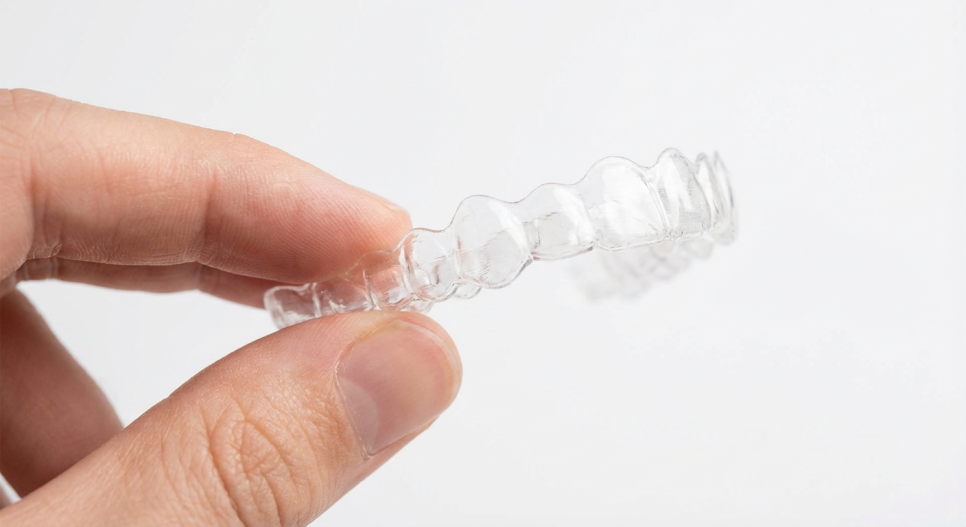
In particular, clear aligners
can be removed when eating and put back in after brushing,
so they cause almost no disruption to daily life.
Think of them like contact lenses.
There’s something on your eyes, but other people can’t tell, right?
Clear aligners are similar.^^
Can I still get orthodontic treatment if my gums are in poor condition?
This is actually the most important question.
To give the conclusion first,
it’s possible after gum treatment. In fact, orthodontics can sometimes help improve gum health.
When teeth are crooked,
there are areas that your toothbrush can’t reach.
Tartar builds up in those spaces,
and the cycle of swollen gums and bone loss repeats.
If orthodontic treatment straightens the teeth,
your toothbrush can reach more evenly,
making gum care much easier.
Of course, this depends on the condition of the gums.
So if you’re considering orthodontic treatment in your 40s,
I recommend starting with a detailed gum examination.
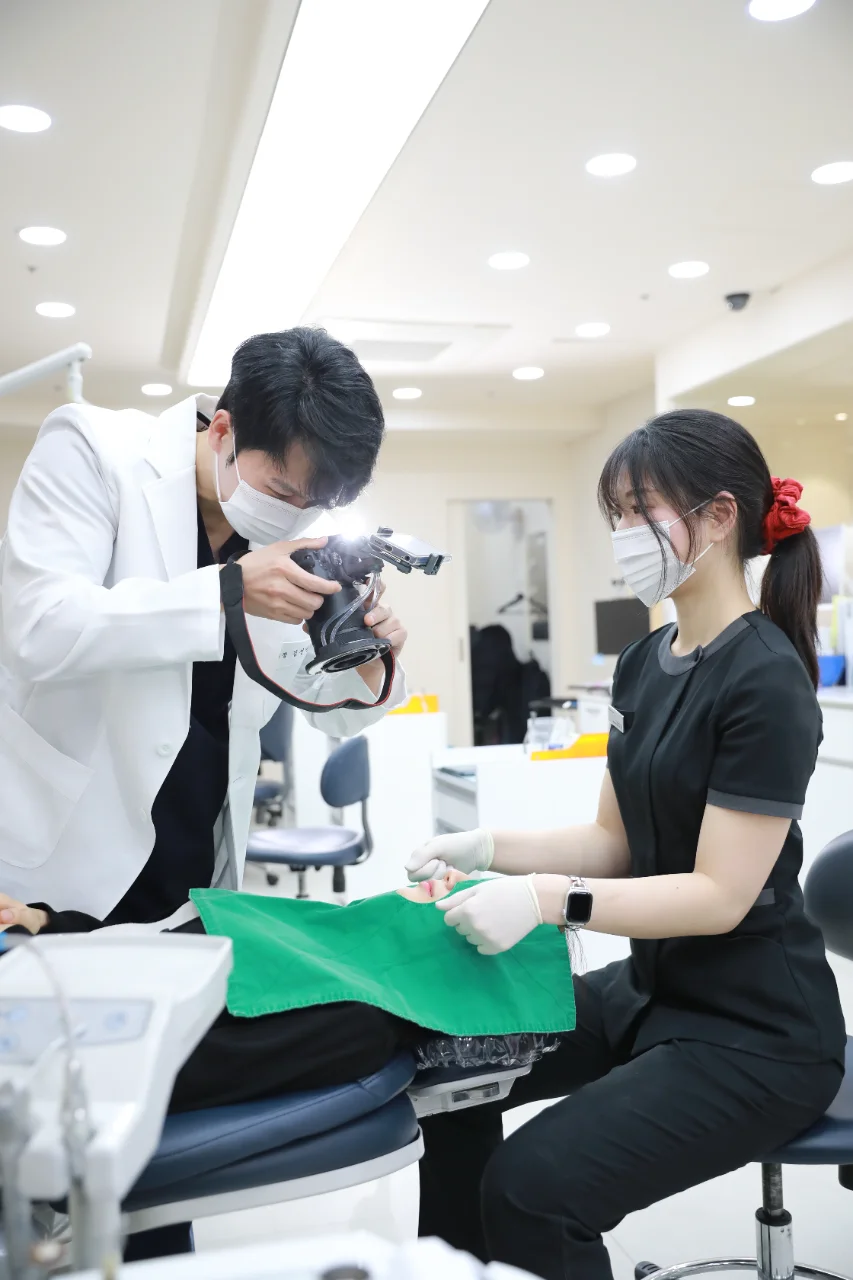
Why retention after treatment is even more important
In your 20s, after orthodontic treatment ends,
there are many cases where even if you neglect the retainer,
the teeth do not shift much.
But in your 40s, it’s different.
Because the jawbone is not as strong as it was when you were younger,
you must wear your retainer after treatment.
Even after orthodontic treatment is finished,
it is essential to visit the clinic regularly
and check the retention status.
What kind of clinic should you choose?
Orthodontic treatment in your 40s is not simple.
Gum disease, prosthetics, implants, cavities,
and other issues are often intertwined.
That’s why it’s better to proceed at a clinic that can look at your overall oral condition comprehensively,
rather than one that only does orthodontics well.
In particular, check for these points.
- Whether they carefully examine your gums before treatment
- Whether they create a separate plan if you have prosthetics or implants
- Whether they have a retention management program after treatment
If you check these three things,
you can greatly reduce the chance of failure.
Wrapping up
To those of you considering orthodontic treatment in your 40s,
I’d like to say one last thing.
Orthodontic treatment is best done when it is needed.
If you are feeling discomfort now,
then now is exactly that "needed time."
I understand very well that you may want to keep postponing it.
But as time passes,
your gum condition may worsen,
and the difficulty of treatment may increase.
I can’t say my opinion is always right,
but even just getting an examination once
would definitely be helpful, I think.^^
I hope today’s post was helpful.
Thank you.