Hello, I’m the lead doctor at Ceramic Dental Clinic.
When treating patients at the clinic, I hear things like this very often.
"Isn’t laminate veneer something younger people get?"
"Isn’t it a bit late to get laminate veneers in your 50s?"
To be honest, age is not the 기준.
In fact, there are cases where laminate veneer becomes an even better choice precisely because you are in your 40s or 50s.
Today, I’d like to talk a little about that.^^
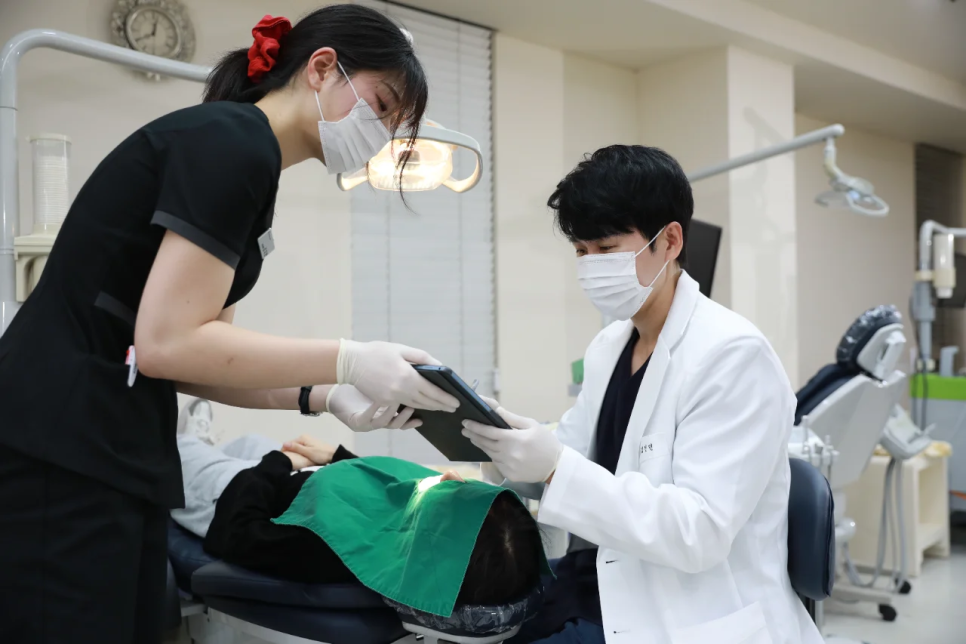
What happens to teeth in your 40s and 50s?
As we get older, it’s not just our skin that changes:
teeth also age along with us.
After decades of chewing food, clenching teeth, and drinking coffee, teeth gradually change.
Let me summarize the typical changes.
-
The color becomes darker — and in many cases, whitening won’t restore it
-
The edges of the front teeth wear down and become uneven
-
As the gums recede, gaps between teeth appear
-
Multiple fine cracks develop
Each one is a small change.
But when they add up, there comes a moment when you look in the mirror and think, "Did my teeth always look like this?"
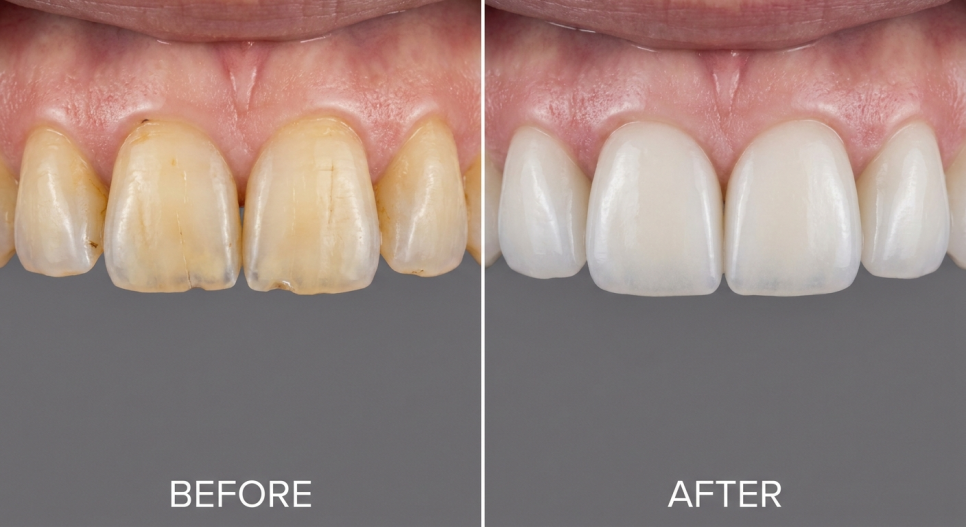
This is an AI-generated example photo to help with understanding
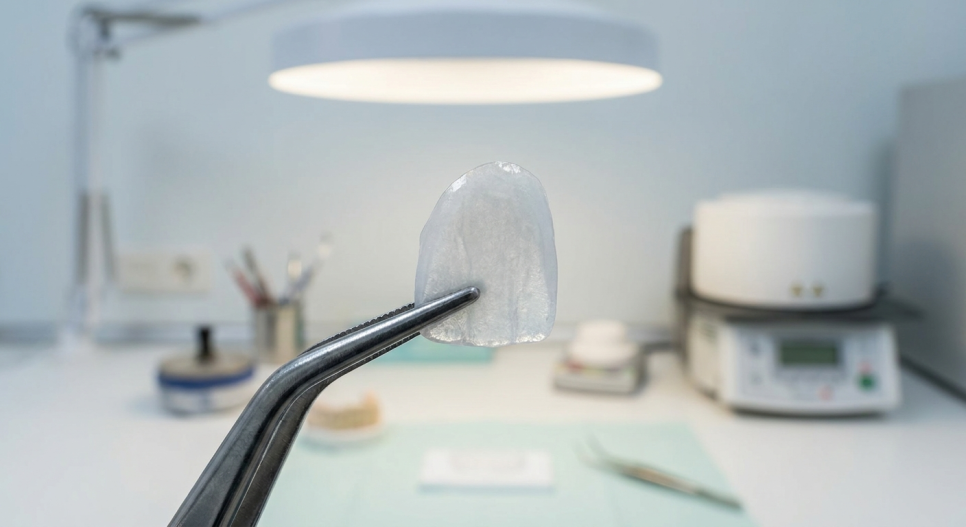
Laminate veneer, simply put, is this
The word laminate veneer may sound complicated.
Think of the nail tips that are attached to fingernails.
Imagine something like that being thinly attached to the front surface of a tooth.
It does not mean shaving away a lot of the tooth.
These days, the procedure may involve not shaving the tooth at all, or only very lightly smoothing the front surface, and then attaching a thin ceramic piece on top.
In other words, its biggest advantage is that it preserves as much of your remaining natural tooth as possible.
Let’s clear up the misunderstanding of "At that age, why bother?"
Misunderstanding ① — Are laminate veneers only for younger people?
"Isn’t this something people in their 20s and 30s do to look better?"
That statement is both right and wrong.
It’s true that younger people often get them for aesthetic purposes.
But in your 40s and 50s, the purpose is a little different.
| Category | 20s–30s | 40s–50s |
|---|
| Main purpose | Improve tooth shape and alignment | Restore wear, discoloration, and gaps |
| Tooth condition | Mostly healthy teeth | May also have fine cracks and gum recession |
| Expected effect | More attractive appearance | Restore teeth closer to their original look |
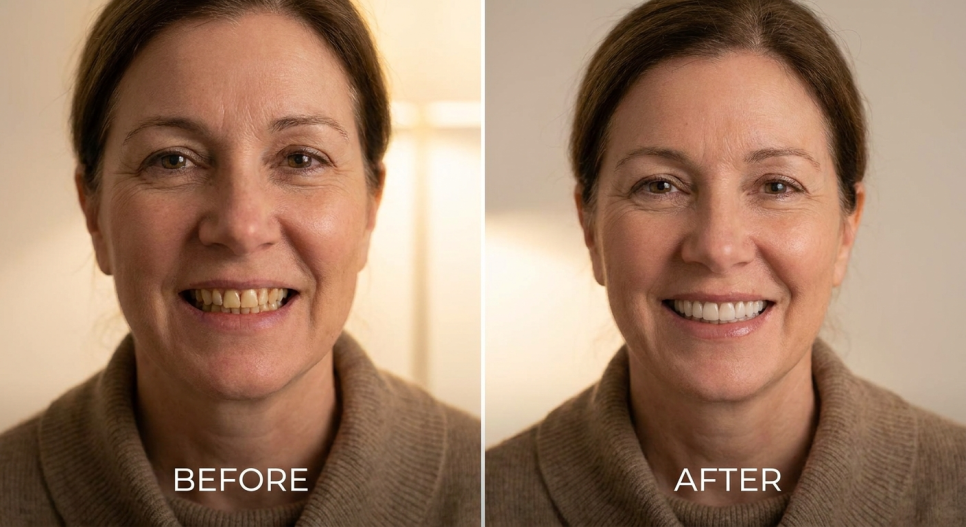
In other words, laminate veneer in your 50s is less about "making teeth pretty" and more about "regaining what was lost."
Misunderstanding ② — Isn’t it impossible if the gums are weak with age?
"My gums aren’t in great shape—can I still get laminate veneers?"
This is something that needs to be checked carefully.
If the gum condition is stable, it is possible regardless of age.
On the other hand, if there is significant bone loss around the gums or severe gum inflammation, gum treatment should come first.
The gums, which form the 'foundation,' need to be strong first for laminate veneers to last a long time.
If a clinic says, without qualification, "Let’s just do it right away," it’s a good idea to be cautious.
If this applies to you, consider laminate veneer
For people in their 40s and 50s, laminate veneer may be a good answer if you have concerns like these.
-
Teeth that remain discolored even after whitening multiple times
-
Front tooth edges that have worn down and become uneven
-
Gaps between teeth that cause food to keep getting stuck
-
Old resin fillings that have discolored and look stained
-
Fine cracks in the front teeth that make you worry they may break
On the other hand, other treatments are needed first in the following cases.
-
When gum inflammation has not yet been controlled
-
When you have a habit of severely grinding your teeth (bruxism)
-
When the tooth damage is too extensive and a crown is more appropriate
If a crown is like tearing down a house completely and rebuilding it from scratch, laminate veneer is like neatly attaching tiles to the exterior wall.
Which method is right depends on examining the actual condition of the teeth.
What matters if you want it to last
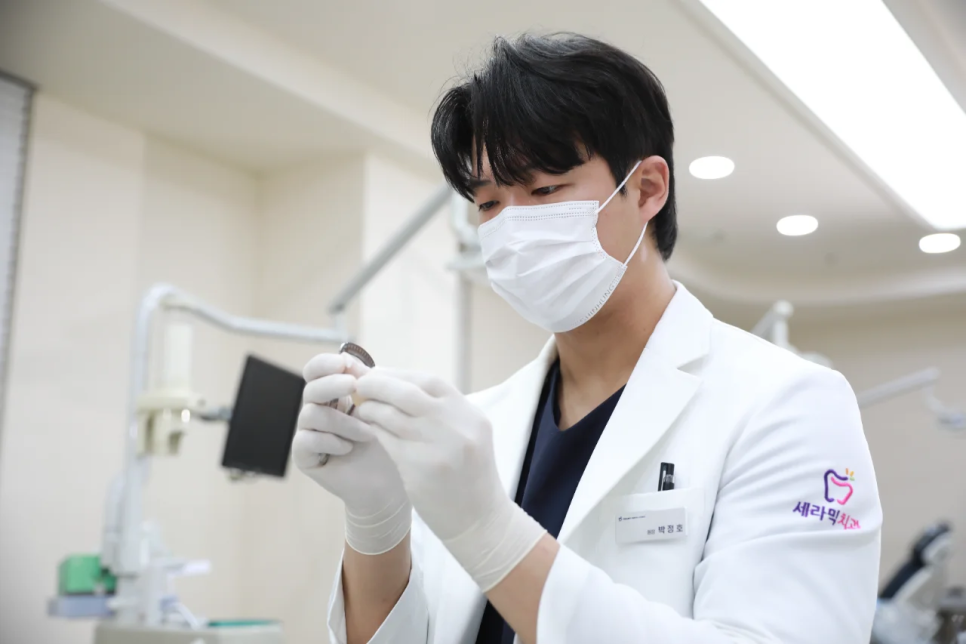
The question people in their 50s ask most often about laminate veneers is lifespan.
With proper care, many people use them for 10 years or more.
Let me tell you three key points for making them last.
-
Ceramic quality — low-cost materials discolor more quickly
-
Bonding technique — the attachment process is actually the most important part
-
Bite design — the force from the upper and lower teeth should be well distributed
At Ceramic Dental Clinic, together with the lead doctor who studied at Seoul National University and trained at the University of Tokyo,
we have long been conducting research on ceramic restorations.
After more than 10 years of practice, what I’ve realized is that laminate veneer is not something you simply "attach and finish"—design is everything.
At Ceramic Dental Clinic, we always begin with bite analysis and checking gum health before treatment.
I believe our role is to help make sure there is no "regret after it’s done."^^
Teeth are also at an age where they can smile again
While writing this, one thought came to mind.
People in their 40s and 50s often put themselves last because they are always taking care of others first.
Teeth are the same.
I have seen many people delay treatment while saying, "It’s still manageable," or "What do I need this for at my age?"
I understand that it’s not because they want to delay it.
But changes in teeth progress in a direction that cannot be reversed.
The earlier you get a consultation, even a little, the wider your options will be.
Please feel free to ask any questions anytime.
If you come in for a consultation, bringing a note of your current concerns and the look you want will help us provide more accurate guidance.
Thank you.
Sincerely,
Ceramic Dental Clinic