Hello, this is Ceramic Dental Clinic.
"Is it okay to get orthodontic treatment at this age?"
"If I get braces in my 50s, won’t all my teeth fall out?"
You probably have these kinds of concerns quite often.
Today, to help ease that hesitation,
I’d like to carefully share an honest story
about orthodontic treatment in your 50s.^^
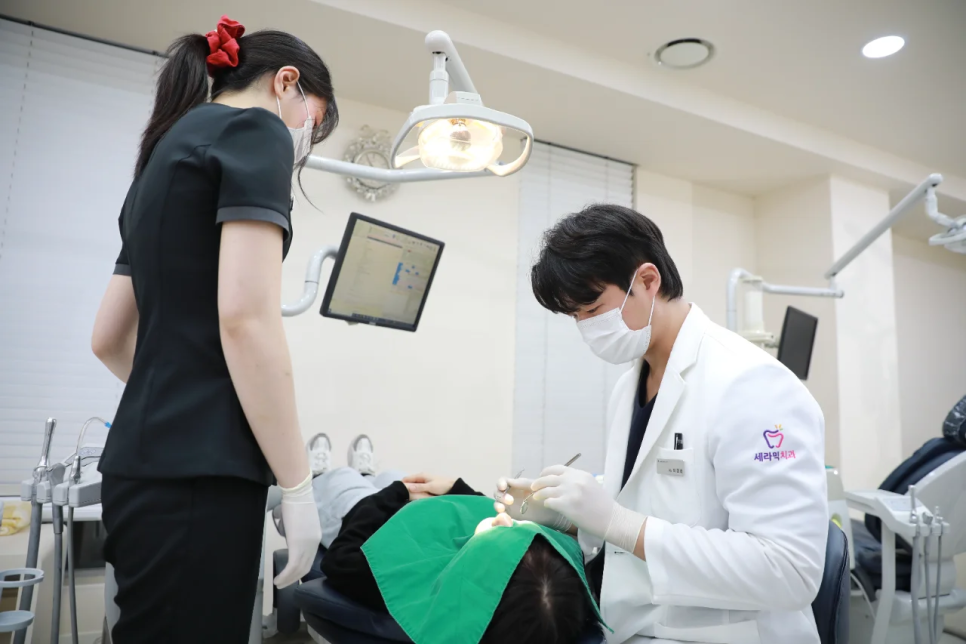
Why has orthodontic treatment in your 50s become more common now?
In fact, even 10 years ago,
orthodontics was mostly for people in their teens and 20s.
But things are different these days.
The proportion of patients in their 40s and 50s
undergoing orthodontic treatment has noticeably increased.
The reason is simple.
- Life expectancy has increased
- More people recognize that dental health is directly linked to overall health
- Devices such as clear aligners have advanced, reducing the burden
To put it simply:
Just because a house is 50 years old doesn’t mean it can’t be remodeled.
If the foundation is solid, it can become a house that lasts even longer.
The same goes for teeth.
If the alveolar bone supporting the gums is healthy,
age is not an obstacle to orthodontic treatment.
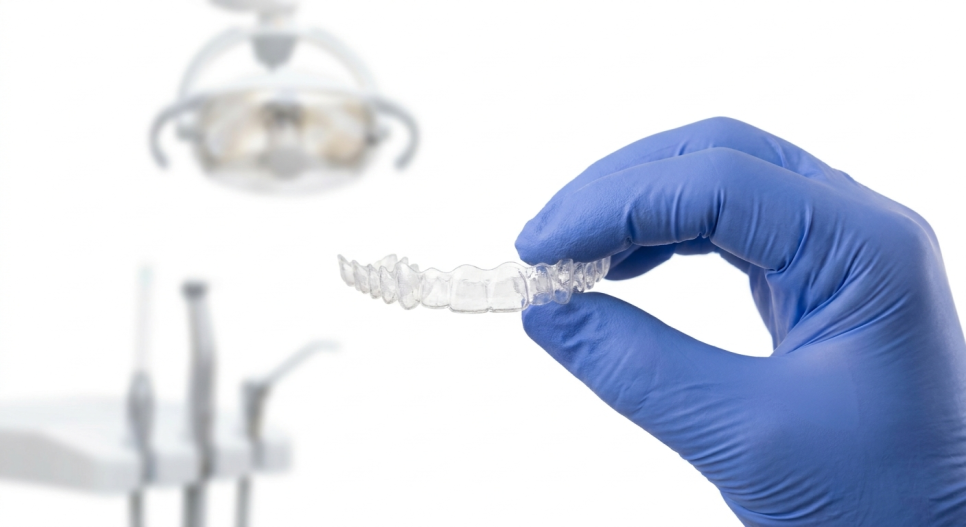
"If I get braces in my 50s, won’t my teeth become loose?"
Let’s start with the most common misconception.
"Aren’t gums weaker as you get older, so teeth fall out if you get orthodontic treatment?"
It’s understandable to worry, but that is a bit of an exaggeration.
To be precise,
if excessive force is applied when the gums are already weakened,
problems can occur.
The issue is not age itself,
but starting treatment while ignoring the condition of the gums.
When moving heavy luggage, you first check whether the floor is sturdy.
Orthodontics is the same.
You first check the "floor" called the gums,
and then move teeth slowly with the appropriate amount of force.
What’s different between orthodontic treatment for younger patients and treatment in your 50s?
| Category | Orthodontics in your 20s | Orthodontics in your 50s |
|---|
| Gum condition | Mostly healthy | Pre-checks are essential |
| Strength of orthodontic force | Standard | Weaker and more delicate |
| Treatment period | 1–2 years | 1.5–2.5 years (varies by individual) |
| Pre-treatment | Almost none | Gum treatment may come first |
| Appliance choice | Various options | Clear aligners are often preferred |
The key is "the same method, different intensity."
If a clinic says, "If you’re older, you can’t get orthodontic treatment," it’s worth being skeptical.
Making a judgment based only on age
without a detailed examination is not appropriate.
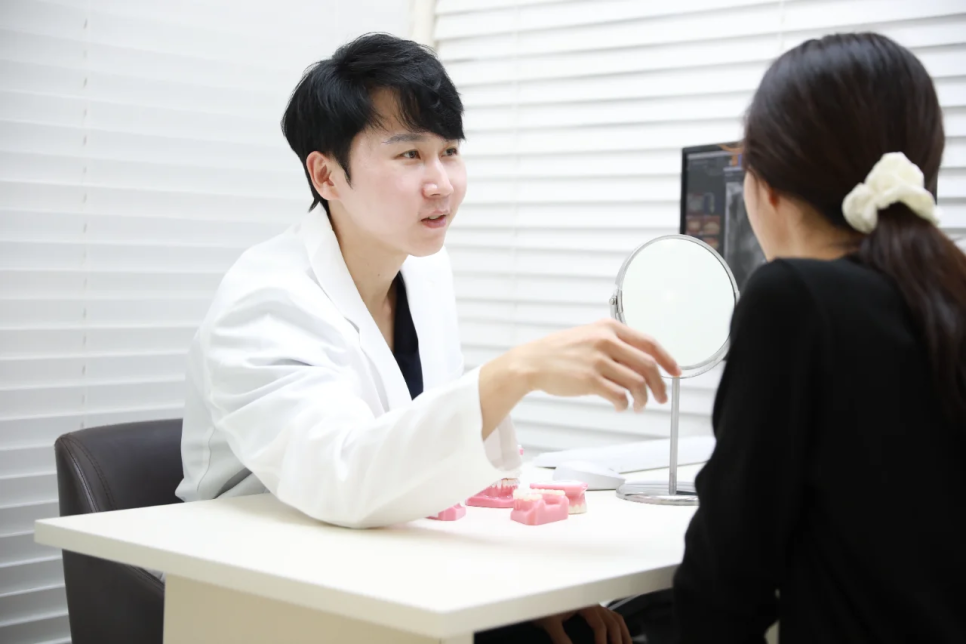
Orthodontic treatment in your 50s is especially helpful for these people
We do not recommend orthodontics to everyone.
But if any of the situations below apply to you,
I believe it could definitely be helpful.^^
- People whose front teeth are gradually becoming more spaced out
- People whose upper and lower teeth do not fit together well, making chewing uncomfortable
- People whose teeth keep trapping food between them
- People who are concerned about spaces that opened up after gum treatment
- People who need their alignment corrected before prosthetic work (crowns or implants)
Number 5 is especially important.
If you align the teeth before getting implants or crowns,
the lifespan of the prosthetic work can be much longer.
Just as you do the foundation work first when building a house,
orthodontics helps set the "position" properly.
On the other hand, when other treatment is needed first:
- People with active gum disease (periodontitis) → gum treatment first
- People with severe cavities → cavity treatment first
- People taking osteoporosis medication for systemic disease → consultation with the attending physician is essential
Orthodontics is not a procedure that is simply "good to do."
It is a procedure where you must first confirm whether the condition is suitable for treatment.
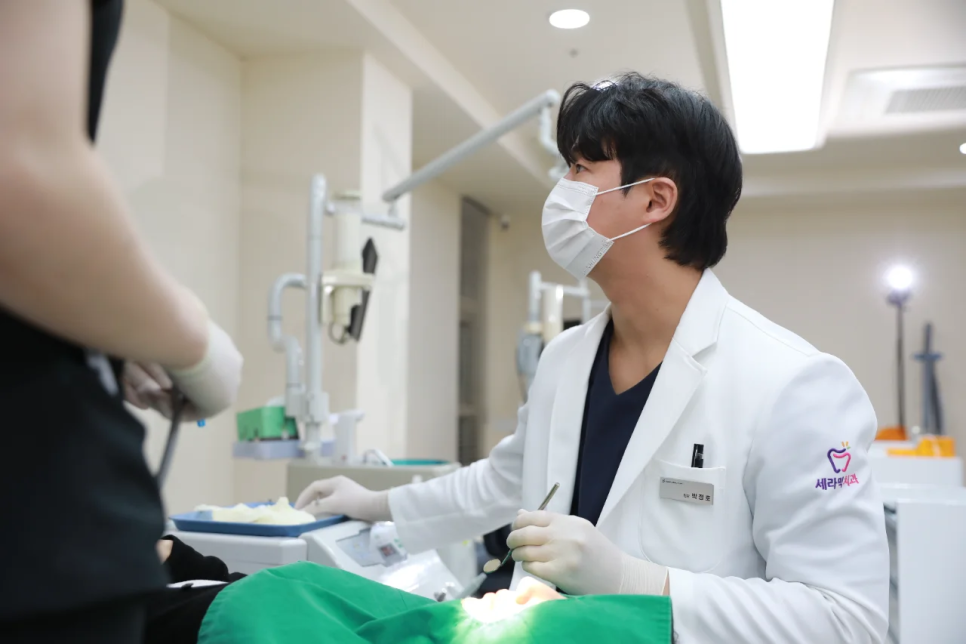
How we carry out orthodontic treatment in your 50s
At our Ceramic Dental Clinic,
before any orthodontic consultation,
we always carefully check the condition of the alveolar bone first.
Based on the fundamentals I learned at Seoul National University
and the experience I gained during training at the University of Tokyo,
we place importance on designing treatment that moves teeth accurately even with gentle force.
We believe our role is to make sure there are no "regrets after orthodontic treatment."
To be honest,
orthodontic treatment in your 50s requires more attention than in your 20s.
But if it is planned just as carefully,
there are many cases where the results are even more satisfying.
We recommend consulting a clinic that looks at everything from gum care and orthodontic force control to coordination with prosthetic treatment
as one continuous process from start to finish.
They say the time you think it’s too late is actually the earliest time
If you are reading this,
you have probably been thinking about it for a long time.
Even while telling yourself, "What kind of braces at my age?"
you may still have felt bothered every time you looked in the mirror.
I can’t say that my opinion is always right,
but I can say one thing clearly.
What matters more than age is the current condition of your gums. If the condition is okay, orthodontic treatment in your 50s is absolutely possible.
When you come for a consultation,
if you can bring a list of the medications you are currently taking
and any X-ray images taken in the past,
it will be very helpful.
If you have any questions, feel free to ask anytime.
Thank you.
From Ceramic Dental Clinic ^^