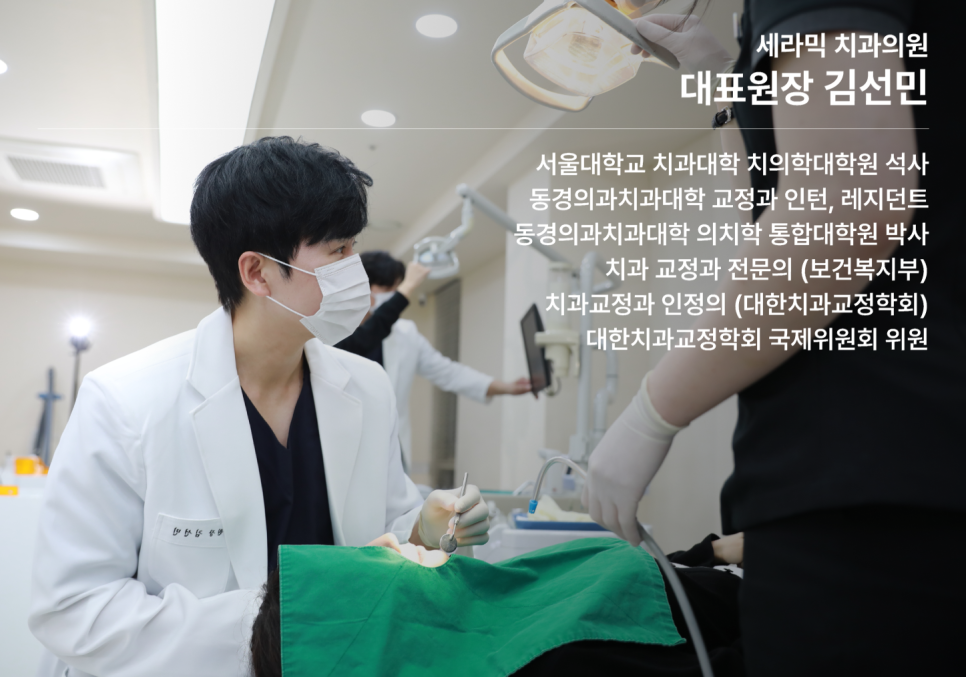
Hello, this is Ceramic Dental Clinic. Today, we will calmly整理 the questions patients often ask about self-ligating orthodontics.
If you are reading this now, you may have heard the word “self-ligating” for the first time during an orthodontic consultation.
You may have felt confused by the unfamiliar term.
“I'm not sure what self-ligating is. How is it different from regular braces?”
“I heard the treatment time becomes shorter. Is that really true?”
“I heard it costs more, but I’m not sure whether it’s worth it.”
For those searching with these concerns in mind, today we will explain what self-ligating orthodontics is and how it differs from traditional braces in an easy-to-understand way.
Please take just 3 minutes to read, and we hope it helps you make a small but important decision about orthodontic treatment.
What Is the Difference Between Self-Ligating Orthodontics and Traditional Braces?
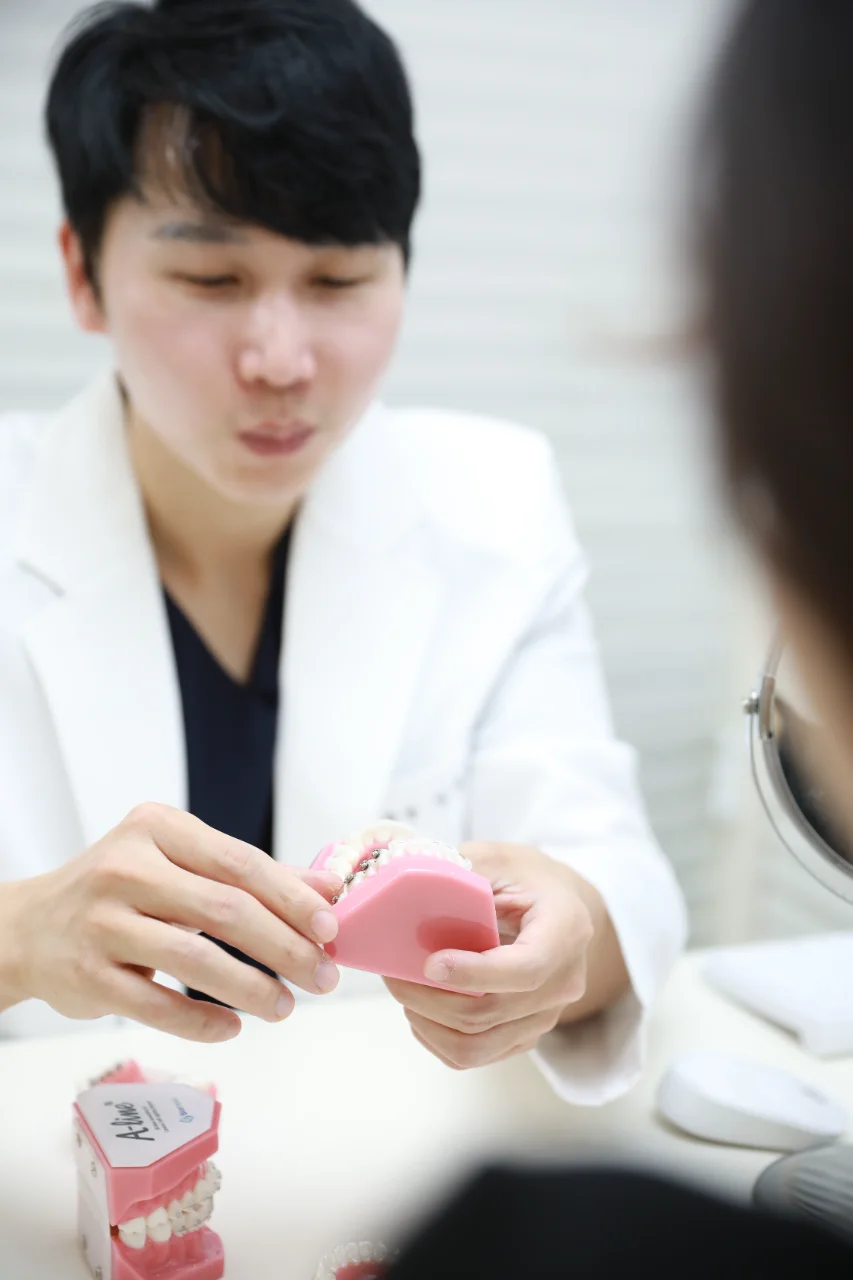
Self-ligating orthodontics uses a small built-in clip inside the bracket to hold the wire directly.
That is why, structurally, it is different from traditional braces, which use rubber rings (ligatures) to tie the wire in place.
Traditional braces attach brackets to the teeth, place the wire over them, and secure it with rubber rings.
Self-ligating brackets work differently. They have a small “door” or clip that opens like a lid on the bracket. When the wire is inserted and the door is closed, it is held in place without rubber rings. It may be easier to understand if you think of a self-locking drawer. The latch works similarly, holding the wire directly in place.
This structural difference leads to several practical differences.
A table makes it easier to compare at a glance.
| Category | Traditional Braces | Self-Ligating Orthodontics |
|---|
| Wire fixation method | Uses rubber rings | Clip inside the bracket |
| Friction | Relatively higher | Relatively lower |
| Visit interval | About every 4 weeks | About every 6–8 weeks |
| Oral hygiene | Bacteria can accumulate around rubber rings | Easier since there are no rubber rings |
Lower friction means less resistance when the teeth move.
This is the theoretical basis for moving teeth more efficiently with the same amount of force.
Self-ligating orthodontics: a device that reduces friction by securing the wire with a built-in clip instead of rubber rings,
and may allow longer intervals between visits.
Who Should Consider Self-Ligating Orthodontics?
Self-ligating orthodontics can be used in most cases that require orthodontic treatment.
The people who show particular interest during consultations are often in these situations:
-
Office workers and students: Longer intervals between visits make scheduling relatively easier.
-
People concerned about oral hygiene: Since there are no rubber rings, brushing tends to be a bit easier.
-
People who want to reduce the feeling of a foreign object in the mouth: In low-profile product lines, the brackets are designed to be smaller.
-
People worried about treatment time: In some cases, the treatment period may be shorter than with traditional braces.

What Is the Treatment Process Like?
The treatment flow for self-ligating orthodontics is not much different from that of traditional braces.
-
Precise examination: Panoramic X-rays, 3D CT, and intraoral scans are used to assess the condition of the teeth and jawbone.
-
Treatment planning: The direction of tooth movement, whether extraction is needed, and the expected treatment period are reviewed together.
-
Bracket placement: After cleaning the tooth surfaces, self-ligating brackets are bonded in place.
-
Wire placement: The wire is inserted and secured inside the bracket clips.
-
Regular visits: You return about every 6–8 weeks to replace the wire and check tooth movement.
-
Appliance removal: When tooth movement is completed as planned, the brackets and wire are removed.
-
Retainer wear: A retainer is worn to prevent the teeth from shifting back to their previous position.
The duration of retainer wear varies greatly from person to person.
It is a good idea to discuss this thoroughly with your doctor before treatment begins.
Frequently Asked Questions We Often Hear in the Consultation Room
Q1. Is self-ligating orthodontics less painful?
For the first 2–3 days after the brackets are attached, your teeth may feel sore or heavy.
This reaction is similar whether you have self-ligating orthodontics or traditional braces.
There is also the view that lower friction allows force to be transmitted more gently, but the level of pain felt varies greatly from person to person.
Q2. Are there ceramic (clear) self-ligating brackets?
Yes, there are.
If you are worried about metal brackets being noticeable, you can choose self-ligating brackets made of ceramic.
However, compared with metal, they are more prone to wear and are often more expensive.
Q3. How much does it cost?
Most standard orthodontic treatment is a non-covered service and not covered by National Health Insurance.
However, in some cases, such as orthodontic treatment combined with orthognathic surgery or for patients with cleft lip and palate, health insurance may apply.
The cost of self-ligating orthodontics varies widely depending on the scope of treatment and the clinic, so it is best to confirm it directly during the consultation after a detailed examination.
In many cases, the price is set somewhat higher than traditional braces.
Q4. Are there any food restrictions?
Hard or sticky foods require caution.
They can cause brackets to come off or wires to bend.
During the initial 1–2 week adjustment period, many people eat softer foods.
Q5. Will the teeth move back after treatment ends?
If you do not wear a retainer, your teeth may gradually shift back toward their original position.
It helps to think of it not as the end of orthodontic treatment, but as the beginning of the retention phase.
Is It True That “Treatment Time Is Cut in Half”?
I would like to speak cautiously about this part.
The expression “cut in half” is likely exaggerated in most cases.
There is a theoretical basis that lower friction may allow teeth to move more efficiently.
So there are definitely cases where the treatment period is shorter than with traditional braces.
However, treatment time is not determined by the type of appliance alone.
The degree of malocclusion
Whether extraction is needed
How far the teeth need to move
Whether regular visits are kept consistently
The direction of the treatment plan set by the doctor
If a clinic says, “Because it’s self-ligating, it will definitely finish faster,” it is worth being cautious.
In general, orthodontic treatment often takes between 1.5 and 2.5 years.
There are cases where self-ligating appliances shorten treatment by several months, but it is not common for the time to be reduced to half.
Items You Should Really Compare When Choosing a Clinic
Many people receive consultations at several clinics.
If you focus only on the name of the appliance, it is easy to miss important details. If you look at the four items below together, you can make a much more practical decision.
- Depth of the examination
If a treatment plan is presented immediately based only on what is seen with the naked eye, without a 3D CT or intraoral scan, caution is needed.
Check whether the explanation is based on detailed imaging data.
- The orthodontic experience of the doctor in charge
In orthodontic treatment, how precisely the initial plan is made greatly affects the outcome.
You may ask directly during the consultation about the doctor’s orthodontic experience and whether they are a specialist.
- Retention phase and aftercare policy
Ask in advance what type of retainer will be used and for how long it must be worn.
If retention management is not carried out properly, it is difficult for the orthodontic results to last.
- Transparency of the cost structure
Check whether the initial quoted amount includes regular visit fees, retainers, and follow-up treatment.
It is also a good idea to ask in advance whether additional costs may arise later.
Before Starting Orthodontic Treatment, Please Check Once More
Self-ligating orthodontics is an appliance that clearly differs in structure from traditional braces.
However, the result is not determined by the appliance alone. In the end, what makes the bigger difference is a treatment plan that suits your teeth and finding a doctor with whom you can build that plan together.
Before starting orthodontic treatment, please check the following items once:
-
After a detailed examination (including 3D CT), did you receive an explanation of the treatment plan?
-
Did you hear a specific reason why self-ligating orthodontics is suitable for your condition?
-
Did you confirm the expected treatment period and the basis for it?
-
Did you check the retention plan (including duration and whether costs are included)?
-
Were the total costs (visit fees, retainers, additional costs, etc.) explained clearly?
If you have any questions, feel free to ask during your consultation. We believe that fully understanding and deciding before treatment begins is the surest way to achieve good orthodontic results.
This has been Ceramic Dental Clinic.^^