If, some time after receiving an implant procedure, you feel that the artificial tooth is moving slightly, the first thing that may come to mind is the anxiety, “Could this several-million-won implant fall out?” There is more than one cause of looseness. It could be a simple problem, such as a loose screw that can be resolved by tightening it during the appointment, or it could be a sign that the bone is gradually receding. Because the appropriate response and timing of your visit depend on the cause, it is important to first determine what type of looseness you are experiencing.
Today, Hakdong Station Ceramic Dental Clinic will explain implant looseness and how to respond to it.
How do you feel at the moment an implant becomes loose?

The first emotion that usually follows is fear about the cost. Since the procedure costs several million won, even the slightest movement of an artificial tooth can make you think, “Could it be coming out?” and leave you unable to stop worrying.
Another behavior that often follows is repeatedly checking the area with the tip of your tongue. At first, you may lightly touch it once or twice, but over time many people do it more often and repeat the same motion unconsciously. However, this habit itself can create additional discomfort. When your tongue frequently touches the area, it may feel more sensitive, adding to the confusion: “Is it really moving, or am I just being overly sensitive?”
In the dental office at a Hakdong Station dental clinic, the first words of people who complain of looseness are generally similar. Because they come in with anxiety, accurately identifying the cause of the looseness also helps calm their worries first.
Even when the sensation is the same, what is moving can be different
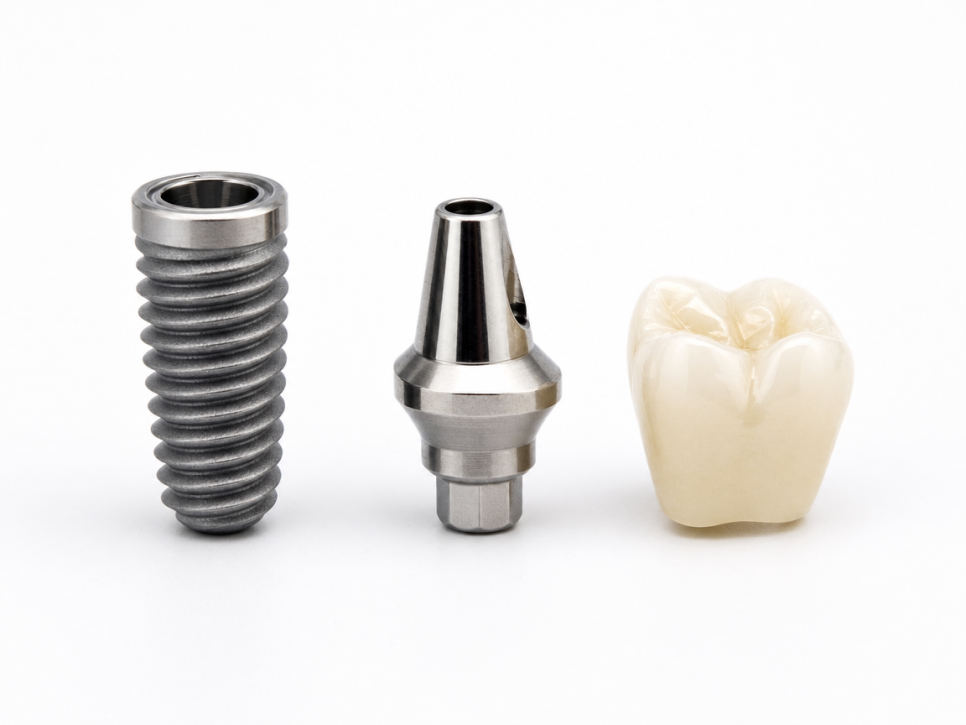
The feeling that “the entire implant is moving” can actually be misleading. From a patient’s perspective, it may feel as though the whole implant is shaking, but in reality, the sensation may be caused by looseness in just one small component at the top.
An implant is broadly divided into three parts.
| Area | Role | Simple name |
|---|
| Fixture | Metal post placed in the jawbone | Implant root |
| Abutment | Component connecting the root and artificial tooth | Connector |
| Prosthesis (crown) | Artificial tooth visible from the outside | Artificial tooth |
If the abutment screw becomes loose, slight play develops between the crown and the connector, making it feel as though the upper prosthesis is moving as a whole. However, this movement is unrelated to the bone or the fixture itself.
The most common cause is a loose screw, but do not tighten it yourself
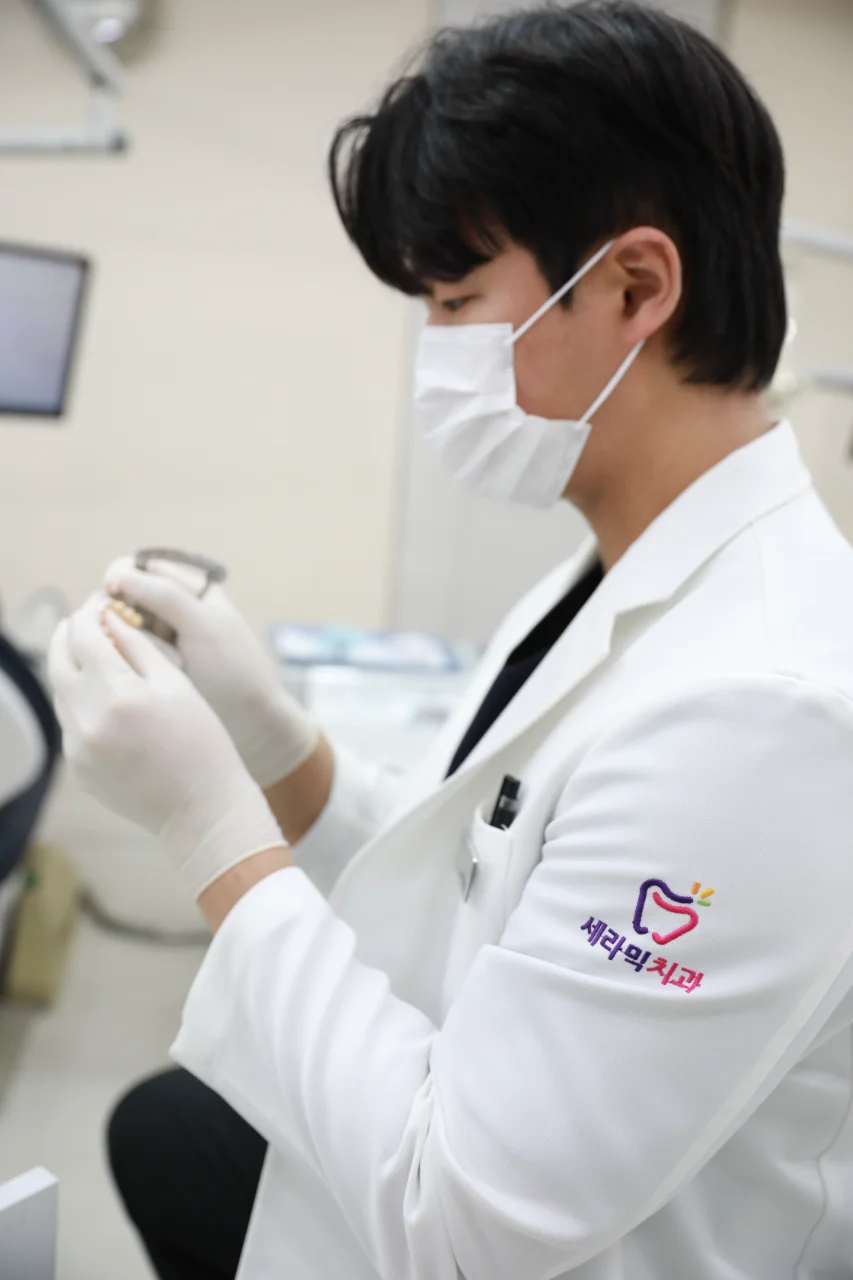
The most common cause encountered in the dental office is a loose abutment screw. Repeatedly chewing hard foods during meals or accumulating force from grinding your teeth during sleep can gradually loosen the screw at the connection point.
A loose screw may be suspected from the following signs.
-
The artificial tooth itself moves, while the area around the gums feels firm (though this is not always easy to distinguish)
-
A foreign-body sensation with a “clicking” sound when chewing
-
A change in your bite, as though the height of the tooth has changed slightly
The most important thing to be careful about at this point is trying to fix it yourself at home. Turning the crown with your fingers to tighten it again or deliberately chewing hard foods to help it settle can instead damage the threads of the abutment screw. Once the threads are damaged, retightening them at the dental clinic may become difficult. In some cases, this can require replacing more components or lead to a more complicated procedure if the screw breaks.
A loose screw is not a failure of the implant itself.
If you visit the clinic as soon as it is discovered, it can often be resolved with a simple procedure,
and tightening it early during regular checkups is the best approach.
The meaning of looseness varies depending on when it occurs
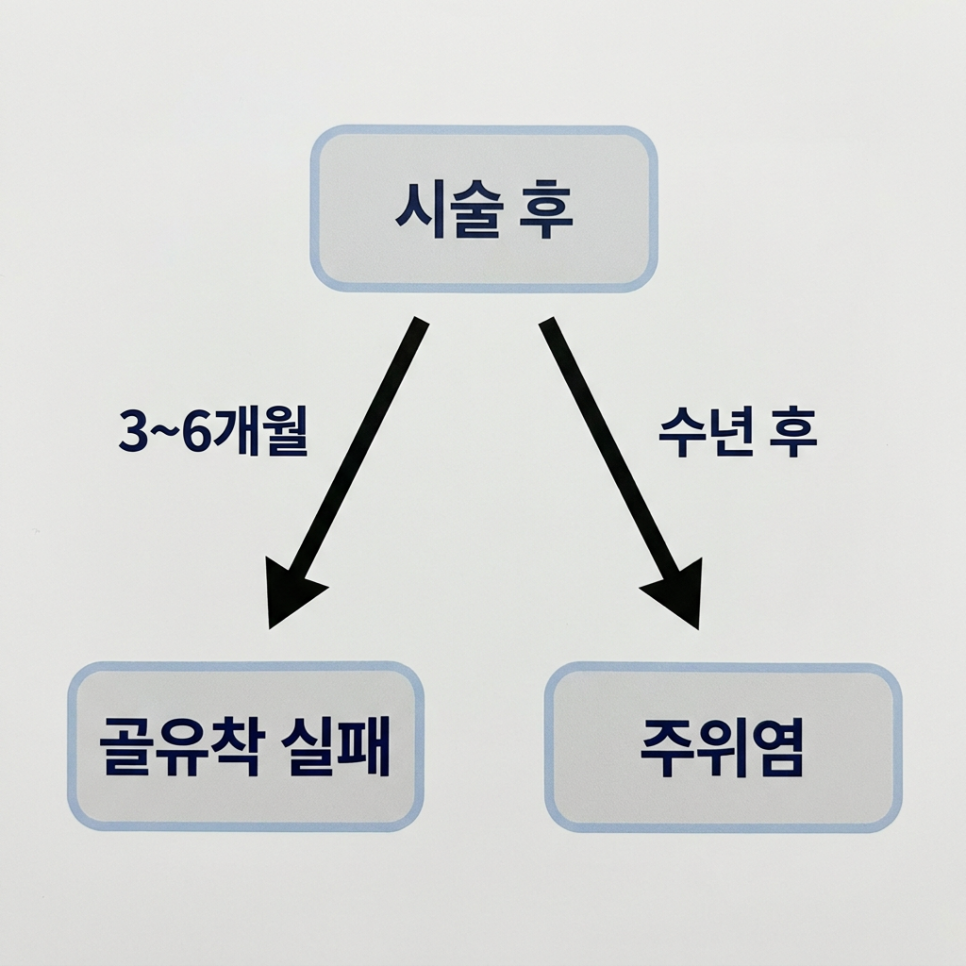
Even with the same sensation of looseness, the possible causes differ depending on whether it occurs soon after the procedure or several years later. Looking at the timing is the starting point for diagnosis.
If it occurs within 3–6 months after the procedure, failure of osseointegration should be considered first. Osseointegration is the process by which the implant root becomes firmly attached to the jawbone. Just as a tree gradually takes root in the soil, the bone and metal need time to bond directly. This usually takes about 2–3 months for lower teeth and 3–6 months for upper teeth. If excessive force is applied during this period or smoking and poor blood-sugar control are also present, the bond may not form properly. The fixture itself may move slightly, accompanied by gum swelling and pain.
Conversely, if the implant suddenly starts to feel loose several years later, peri-implantitis is a strong possibility. This is a condition in which the bone around the implant is gradually resorbed by bacteria. Because there is often little pain in the early stages, looseness is frequently noticed only after the condition has progressed considerably. The 2017 World Periodontology Association’s diagnostic criteria for peri-implantitis consider bone loss of 2 mm or more after the initial bone remodeling to be one of the key indicators, and active intervention is needed from this point.
Unlike natural teeth, implants do not have
the periodontal ligament that connects the tooth root and the gum bone.
Therefore, their resistance to bacteria is relatively low,
and peri-implantitis progresses faster than it does around natural teeth.
When should you visit the clinic? You also need to observe the pattern after meals
The criteria for deciding when to visit the clinic are relatively clear. People sometimes wait, thinking, “It will probably be fine after a while,” only to find that treatment becomes more complicated. With looseness, waiting is almost always counterproductive.
Situations requiring an immediate visit
-
A sensation that the fixture (implant root) itself is moving
-
Pus or bleeding from the gums
-
Pain and swelling when chewing
-
New looseness occurring within 3 months of the procedure
Situations in which a visit in the near future is recommended
-
A clicking or foreign-body sensation suggesting a loose screw
-
A feeling that the bite of the artificial tooth has changed
-
New sensitivity around the gums
-
A repeated pattern in which it feels better briefly after eating, then becomes loose again
The last pattern in particular is an easy-to-miss sign. While chewing, the gums may be temporarily pressed down, making the implant feel as though it has become fixed, but the looseness returns after some time. This period often overlaps with the point at which peri-implantitis has progressed to a certain degree, so the difficulty of treatment can increase quickly as care is delayed. This is why, whether at a Hakdong Station dental clinic or any other dental office, repeated occurrence of the same pattern is a reason to prioritize an evaluation.
Treatment direction and recovery: An X-ray alone is not enough
The treatment approach varies depending on the cause and degree of progression. The differences are easier to see in a table.
| Cause | Main treatment approach |
|---|
| Loose screw | Retightening or replacement of the screw |
| Failure of osseointegration | Removal of the fixture and consideration of re-implantation after recovery |
| Early peri-implantitis | Professional cleaning and gum treatment |
| Advanced peri-implantitis | Surgical cleaning, combined with bone grafting |
Even if the fixture needs to be removed, re-implantation is often possible after the bone has recovered, so there is no need to determine the outcome from the beginning.
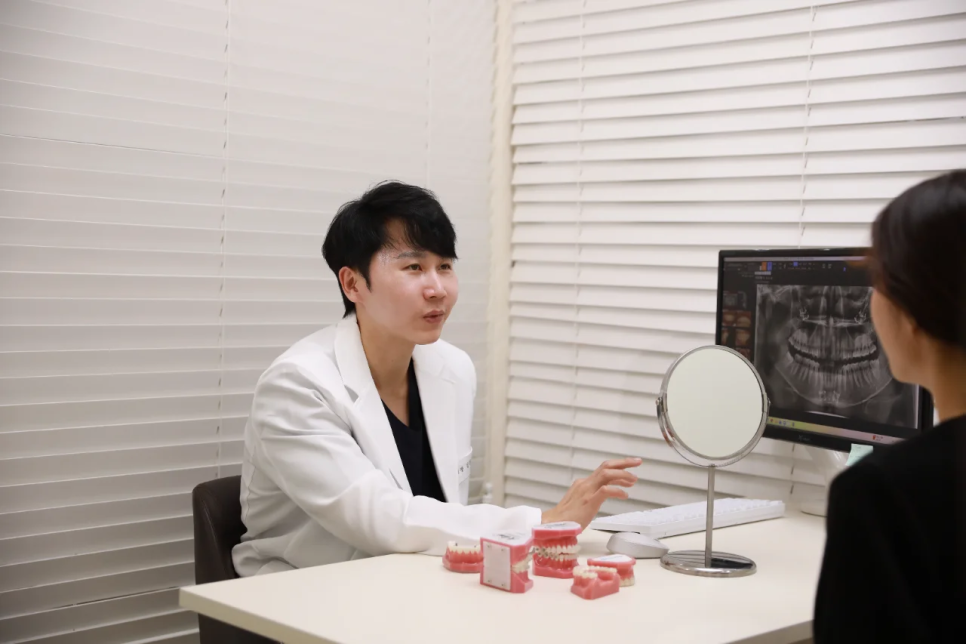
There is one issue that often arises during the diagnostic stage: “The X-ray looked fine, so why is it moving?” Looseness can occur even when no change in the bone level is visible on a radiograph. Conversely, bone resorption may be visible even when the patient experiences almost no symptoms. Therefore, a combined diagnosis that includes finger palpation, a torque test (a test in which the screw is turned with a specified amount of force), and clinical symptoms is necessary.
It is also helpful to know in advance what sensations may occur immediately after treatment. Mild unfamiliarity often remains for several days after a screw is retightened or a component is replaced. If you keep checking the area with the tip of your tongue, anxiety may return even after the procedure has been completed properly, making you wonder, “Is it loose again?” In most cases, the sensation settles and the balance when chewing returns within 3–7 days. However, if it lasts longer than 2 weeks or pain, swelling, or a change in your bite develops again, it is safer to have the same area reevaluated.
You do not have to judge a loose implant on your own
If you have read this far, you are already taking the situation seriously and observing it carefully. The causes of looseness range from relatively minor issues such as a loose screw to conditions requiring active intervention, such as peri-implantitis. The key point of this article is that even the same sensation can have completely different meanings.
Therefore, you do not need to make the judgment on your own. If the foreign-body sensation lasts for more than 2 weeks, or if it is accompanied by any of the following—gum swelling, pus, or a change in your bite—it is safer not to delay your visit. If you grind your teeth, using a night mouthguard together with six-month regular checkups and comparing radiographs can help detect changes in bone levels before symptoms develop. However, if you begin to feel new looseness despite this care, it is best not to delay.
It is also fine to bring in the hesitation itself—the thought, “Is this really serious enough to go in for?” Having the looseness accurately evaluated is the most reliable way to protect your implant for longer. If the discomfort keeps recurring, we recommend first having the condition of your gums and screws checked at a nearby dental office, including a Hakdong Station dental clinic.