Many people find their hand instinctively moving toward their mouth when they smile in front of a mirror. Some smile with their mouth closed when taking photos, or become cautious about their pronunciation because it feels as though the “s” sound is escaping during conversation.
At some point, you may even find yourself unable to
smile openly in front of others.

What makes things feel even more daunting is visiting the dentist. When thoughts such as “What if it turns out to be a major treatment when it might not even be a serious problem?” or “It would be burdensome if they recommended a long treatment” keep circling your mind, it can be difficult to press the appointment button.
However, if gaps between the front teeth are left untreated, food can become trapped, and the gums in that area may be repeatedly irritated. The fact that this is not merely a cosmetic issue is one reason it can become more concerning the longer you delay making a decision.
The causes of gaps between the front teeth are more varied than you might think
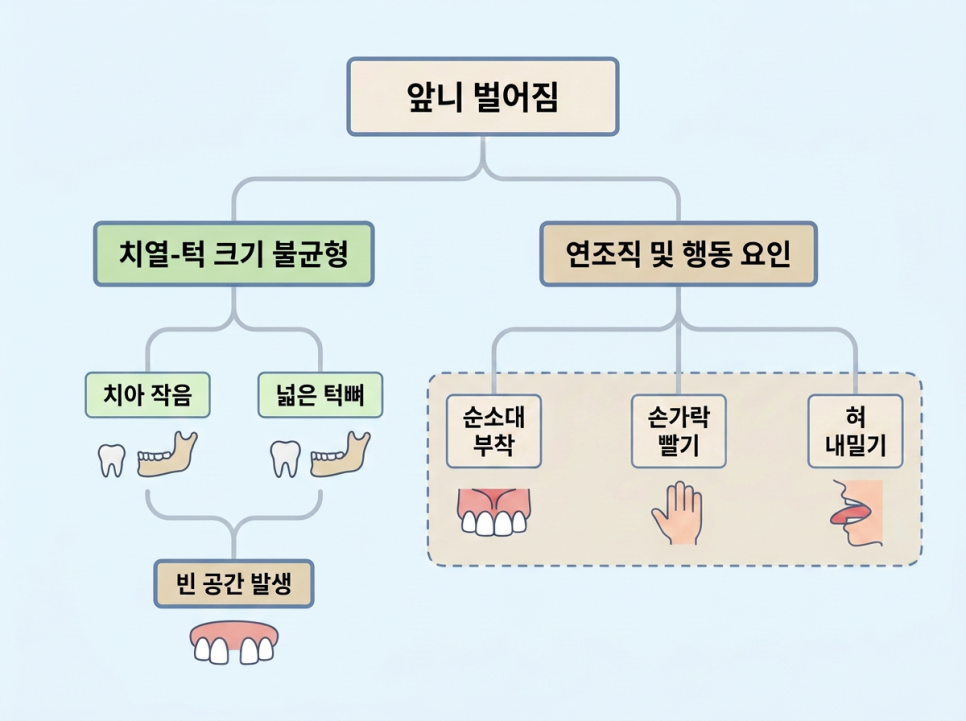
The reasons spaces develop between the front teeth can broadly be divided into two categories. One is when the teeth themselves are too small relative to the jawbone, leaving extra space. The other is when tissue between the tooth roots or oral habits push the teeth sideways.
If the midline labial frenum—the thin band of tissue connecting the inside of the lip and the gums—extends unusually far down between the two upper front teeth, the teeth may remain separated.
Childhood habits such as thumb-sucking or pushing the tongue forward can also gradually push the front teeth apart over a long period of time.
Finally, in rare cases, a tooth may be congenitally missing, leaving space where it should have been.
If the cause lies in the gum tissue or an oral habit,
that issue must be addressed first;
otherwise, after treatment,
space may develop again in the same area.
Orthodontic treatment: Closing the space by moving the teeth from their roots
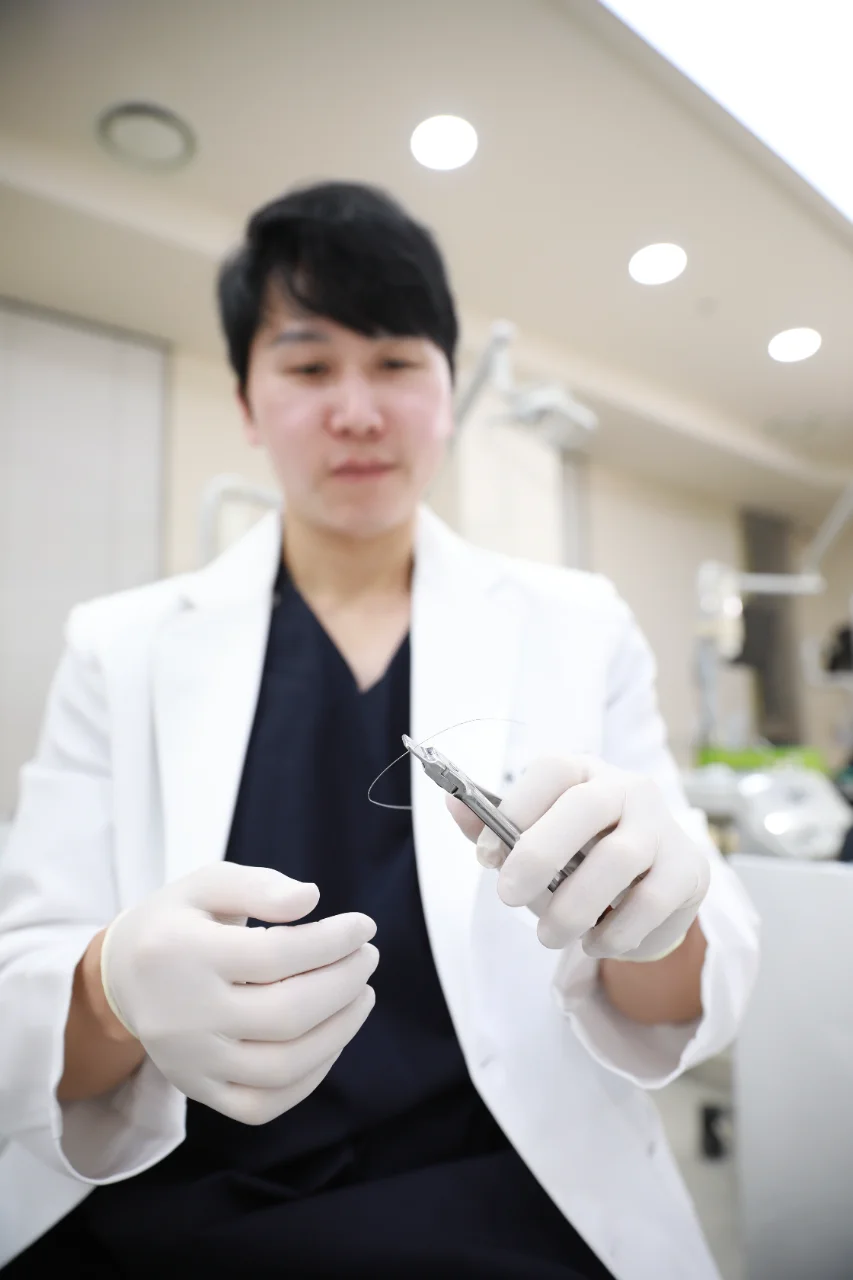
Orthodontics closes the space by moving the teeth from their roots, without shaving them down or adding material to them.
The contact points between the teeth naturally settle into place where the space has been closed with orthodontics. Because the balance of the upper and lower arches is also organized, the option of finishing with veneers remains open if you later want to change the color or shape.
The greatest advantage of orthodontics is that it begins while preserving the teeth’s natural structure.
There is one point worth noting. It is uncommon to move only the two front teeth simply because the space is between them. If only those two teeth are moved, another space will eventually open elsewhere, so treatment is usually planned to adjust the balance of the entire dental arch as well.
In particular, when tooth rotations or protrusion are also present, orthodontics is usually the first option considered.
Composite resin bonding: Filling the space without removing tooth structure
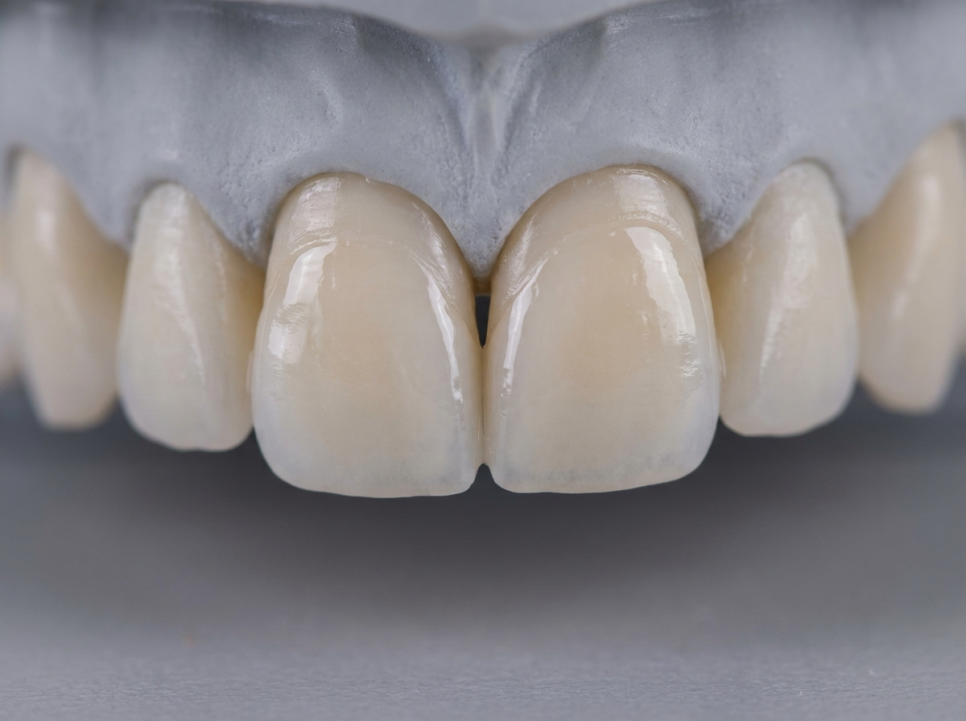
Composite resin bonding is a method of reducing the space by adding a dental material called resin to the sides of the teeth to make them wider. You can think of it as adding clay to the sides of the teeth to shape them.
Although it is quick because the procedure can be completed in one day, it has several limitations and should be considered carefully.
Over time, resin tends to absorb pigments from food and beverages and become yellowish. Its surface may also become microscopically rough, making it more prone to plaque buildup.
Because its average lifespan is relatively short, repeat treatment in the same area is common, which can also be burdensome as the cost and time accumulate.
The limitations of resin become more apparent as the gap gets wider. If the space is too large, a substantial amount of resin must be added, which can make the tooth proportions look unnatural.
When the tooth width-to-length ratio deviates significantly from the generally cited aesthetic standard of approximately 0.75–0.80, achieving a natural result can be difficult.
Simply put, this means that for people with gaps of more than approximately 2 mm, it is often difficult to finish treatment with composite resin bonding alone.
Veneers: Changing the shape by covering the front surface with a thin layer
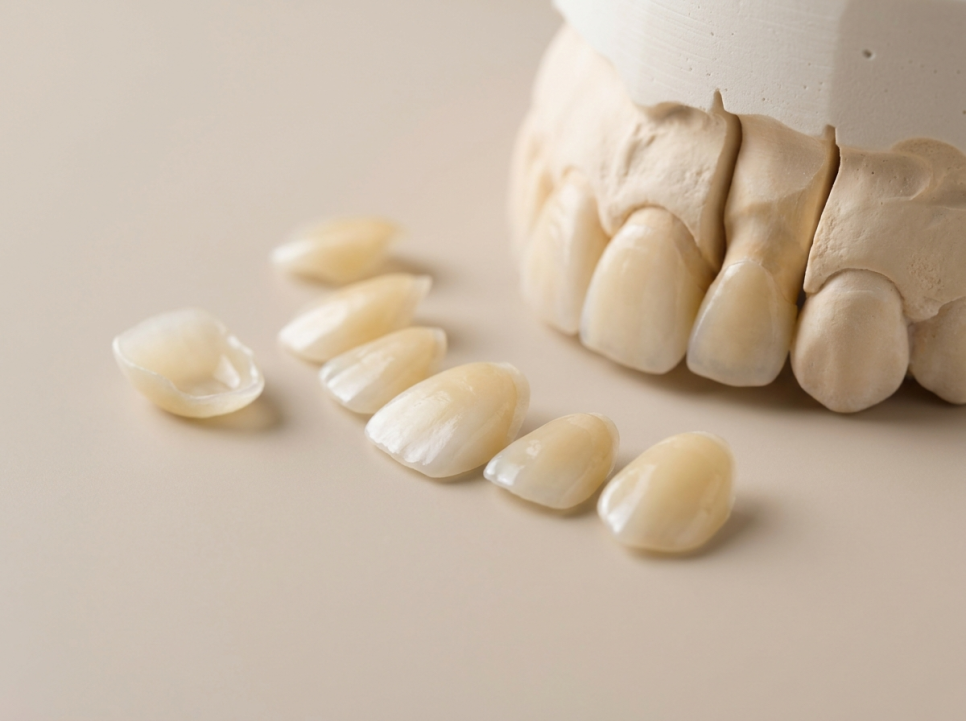
Veneers are a method of changing the shape and color of the teeth at once by covering their front surfaces with thin ceramic plates.
You can think of it as placing a porcelain plate thinner than an eggshell on the front of the tooth, much like applying gel nails over fingernails.
They generally have high color stability, and their smooth surface tends to remain intact for a long time. Even for people who frequently drink coffee, black tea, or wine, the color does not change easily, so their expected lifespan is relatively long.
A major advantage is that the space between the front teeth, along with their color, shape, and length, can be organized all at once.
These days, minimally invasive
no-prep veneers are possible,
so many people choose them
with less concern than before.
However, if the teeth themselves are significantly out of position, it is difficult to achieve a natural result by simply covering the surfaces. In such cases, the more stable sequence is to first correct the tooth positions with orthodontics and then refine the color and shape with veneers.
Comparing the three methods at a glance
The differences are easy to see in a table.
| Method | Degree of tooth preservation | Treatment period |
|---|
| Orthodontics | Most conservative | Several months to 2 years or longer |
| Composite resin bonding | Conservative (addition only) | Completed in one day |
| Veneers | Conservative (no-prep option available) | 2–3 appointments |
If the problem lies in the position of the teeth themselves—that is, if rotations or protrusion are also present—it is difficult to resolve the underlying issue by simply covering the surfaces. In these cases, orthodontics is considered first.
If you want to organize the color and shape as well, veneers may also be considered. If the gap is very small and you want to see results immediately within a short period, composite resin bonding may be one of the options.
How much does everyday life actually change during treatment?

Regardless of the method, you will need a short adjustment period during the first few days.
When you begin orthodontic treatment, the “s” and “d” sounds may sound awkward for the first one to two weeks. As your tongue becomes accustomed to the new appliance, this usually settles within two weeks.
Immediately after composite resin bonding, your teeth may feel slightly thicker along the sides, and the sensation of something being present when touched with the tongue may last for several days. If you move hard foods toward the side teeth when eating, you can generally get through this period without major discomfort.
After veneers, you may briefly experience sensitivity when drinking cold beverages. It usually subsides within one to two weeks, but starting with lukewarm water during that period can make adjustment easier.
With any treatment, you may feel
some awkwardness for about the first two weeks.
Once that period passes,
daily life generally returns almost completely to normal.
To prevent the teeth from separating again after treatment, one thing must be addressed first
There is one common factor in cases where the same space opens again after treatment: the habit of pushing the inside of the front teeth with the tongue. If this small force is repeated unconsciously hundreds of times each day, the space that was closed can gradually reopen.

Here is a summary of the average lifespan by treatment method.
-
Composite resin bonding: Approximately 3–4 years (repeat treatment is common in cases of discoloration or detachment)
-
Veneers: Approximately 5–10 years (they may last longer depending on maintenance)
-
Orthodontics: The most stable over the long term when retainers are worn consistently.
In particular, after orthodontic treatment, consistently wearing retainers at night is essential. Correcting tongue habits at the same time can also greatly reduce the risk of relapse.
Which option is chosen in which situations?
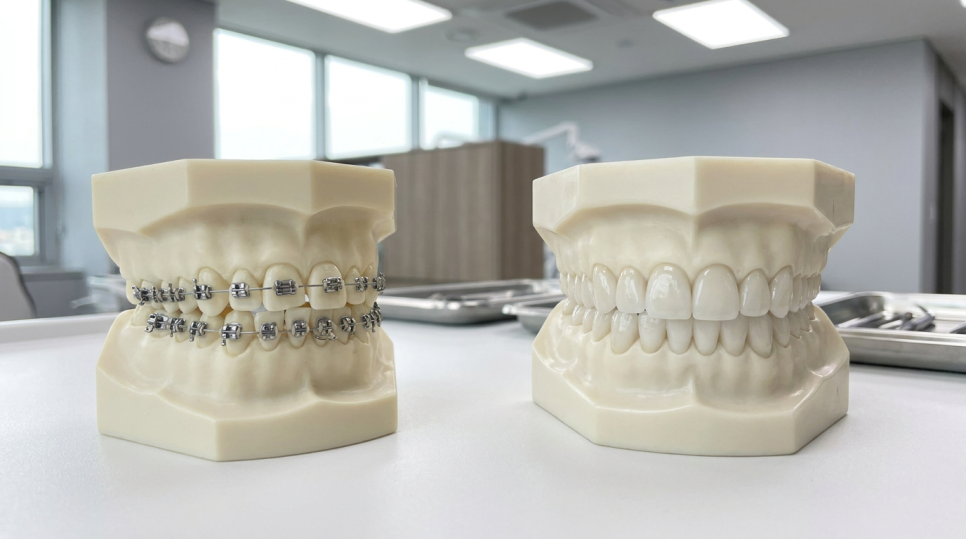
These are the three methods used to treat gaps between the front teeth. As with everything in life, each method has its advantages and disadvantages, so it is a good idea to visit several dental clinics, hear their opinions, consider your own situation, and then make a decision.
However, there is one thing that is clear: the longer you delay, the more you stand to lose, so I hope you will not put off visiting the dentist. ^^
This has been 세라믹치과.