I know you understand that you need an implant, but the moment you heard the phrase “a screw is inserted into the jawbone,” you may have stopped yourself from making a decision. Because it sounds painful.
Many people are uncomfortable with the empty space, but put off making a decision because they are afraid of the pain.
You may even wish someone beside you would say just once:
> “It’s actually not as bad as you think.”
It is natural to feel afraid.
Feeling that it must hurt to have something inserted into the bone is an entirely natural reaction.
So rather than simply reassuring you that the pain is “nothing to worry about,” this article will calmly examine when and how it hurts, breaking it down by stage.
Vague fear becomes much easier to manage once you understand what is behind it.

Breaking down “it sounds painful” by timing
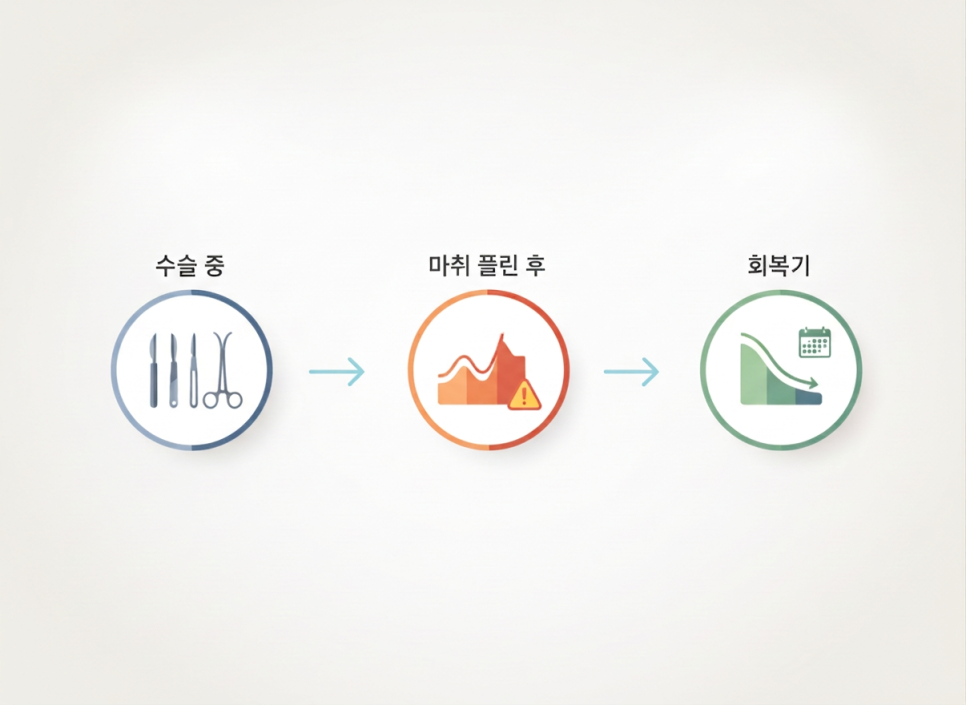
When we say, “I heard implants are painful,” we are actually lumping together three different moments. Treating them as one makes the whole process feel more frightening. When separated, they look like this.
| Stage | What happens |
|---|
| ① During surgery | The procedure itself: making the gum incision, placing the implant, and closing the site with sutures |
| ② After the anesthesia wears off | The period when the procedure is over, the anesthesia fades, and sensation returns |
| ③ Recovery period | The days to weeks during which swelling and pain gradually subside |
For many people, the most frightening part is stage ①—the moment they are undergoing surgery. Interestingly, however, this is known to be the least painful of the three stages in practice. Let’s start by addressing the part that feels most frightening.
The most frightening part, “during surgery,” is actually the least painful
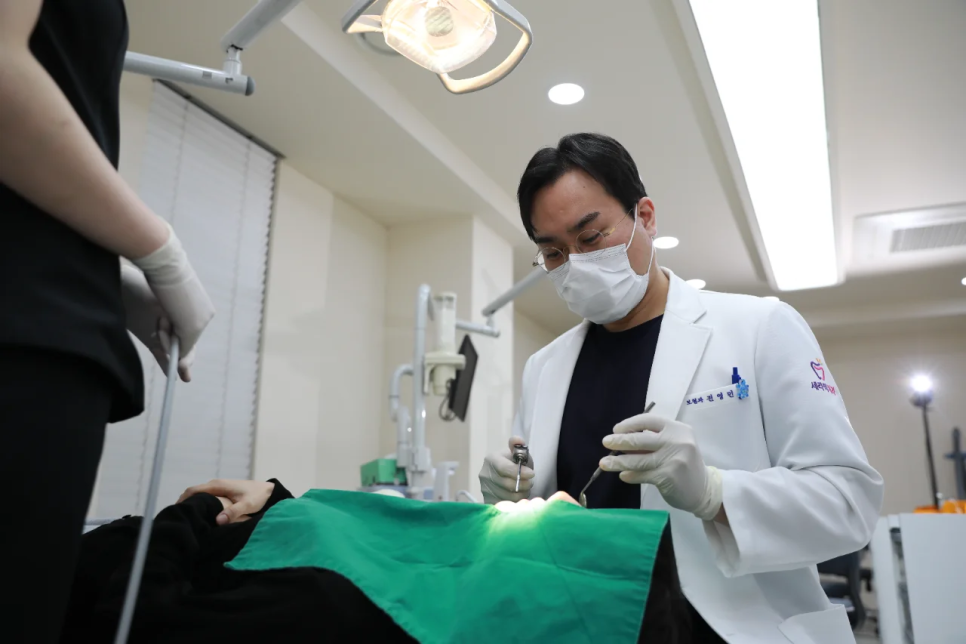
Here is the conclusion first.
Implant procedures are performed after local anesthesia, with the
gum incision, implant placement, and suturing
all carried out while the area is anesthetized.
In other words, the entire process of placing the implant takes place under anesthesia.
Therefore, pain is generally barely felt during the procedure. (Medical information from Seoul Asan Medical Center and Seoul National University Hospital)
You may vividly imagine feeling a drill touching the bone, but in reality, the procedure is performed while that sensation is blocked.
The scene that makes people most afraid is, in terms of pain, actually the mildest part.
So when does the real pain come? Right after this.
The real pain comes after the anesthesia wears off—but it is pain with “an end in sight”

To be honest, I will not say that there is no pain at all. If I made that assertion, it might be even harder for you to believe.
Once the anesthesia wears off, pain appears as the area that was incised and sutured begins to swell.
However, this is generally known to be manageable with prescribed medication.
The key point is that this is not vaguely “horrible pain,” but pain that can be anticipated and managed.
More specifically, it looks like this.
| Category | Course (based on medical information from Seoul National University Hospital) |
|---|
| Pain | Moderate pain is common during the first 24–48 hours after surgery and can be controlled with medication |
| Swelling (edema) | A normal response; it peaks within 48 hours and then gradually decreases |
| Pain relief | It is generally known to lessen within 1–2 weeks |
| Helpful care | Cold compresses can help relieve pain and swelling |
What is important here is that these figures mean the pain is tolerable and has an end in sight.
Swelling usually peaks around the second day and then subsides, while the pain also tends to ease within one to two weeks.
It is not vague suffering with no beginning or end, but pain whose curve has a foreseeable endpoint.
However, there is one thing you should be sure to remember.
If your symptoms do not improve and continue
even after taking the prescribed medication,
it is advisable to visit the hospital for an evaluation.
Most people follow the expected course, but knowing what to do when there are signs that deviate from that course is important.
That is how you can feel less shaken when facing the pain.
Rather than becoming afraid first, it is quicker to find out, “How much might it hurt in my case?”
If you have read this far, the vague fear you felt at the beginning may have become a little clearer. To summarize:
The most frightening part, during surgery, is known to cause little pain thanks to anesthesia. The real pain comes after the anesthesia wears off, but it can be controlled with medication and generally subsides within one to two weeks, so it is pain with an end in sight. Ultimately, the degree of pain differs from person to person and depends on your individual condition.
Dental pain is frightening for everyone. But compared with simply thinking vaguely that it is scary, understanding what to expect may make the emotional burden feel a little lighter. This is not to say that you need to make a decision right away. However, if there is treatment you have been putting off, why not stop by a dentist at least once and have a consultation with an open mind? A consultation does not hurt.