Did the mini-screw placed for your orthodontic treatment come out, prompting you to search urgently and find this post?
Let me give you the conclusion first.
It is not an emergency,
and your orthodontic treatment has not been ruined.
The spot where the screw was may feel a little empty, and you may have been quite startled, but what you need to do tonight is simpler than you might think. I will walk you through it step by step.
Why It Is Not an Emergency
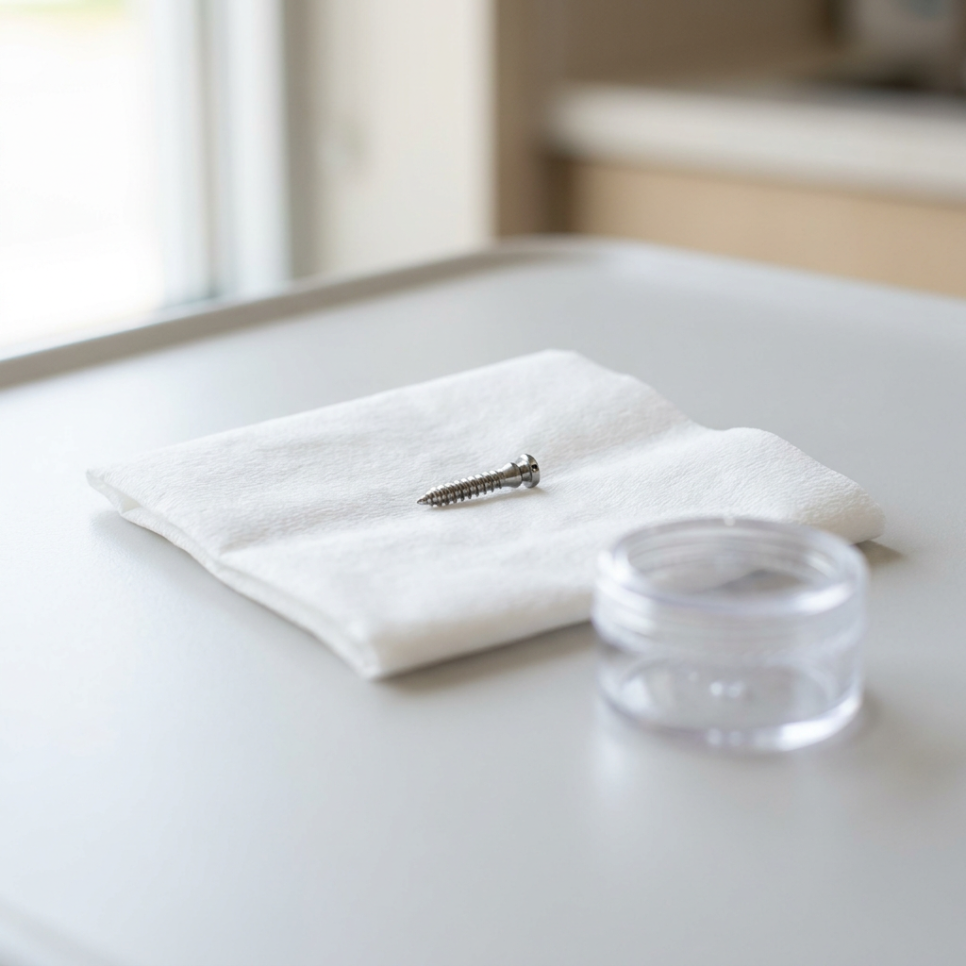
Simply saying “It’s okay” without evidence may not be reassuring. So let’s start with the numbers. The dropout or failure rate of orthodontic mini-screws (TADs) is approximately 13.5% according to a meta-analysis. In other words, about 1 out of every 7 or 8 screws comes out.
In other words, screw loss is common enough in orthodontic treatment to be considered an “expected variable.”
Just as periodically tightening the wire during orthodontic treatment is a normal part of the process, replacing a screw after it comes out is also a routine procedure that orthodontic clinics handle fairly often.
Let’s briefly review what this small screw is designed to do.
A mini-screw acts as a stable support—or “anchorage”—when moving teeth. To pull a tooth in the desired direction, you need a support that is firmly fixed somewhere, and the small screw placed in the jawbone serves that purpose.
There is one more thing to remember. A mini-screw is a temporary auxiliary device that is removed once orthodontic treatment is complete. It is not placed for lifelong use like a dental implant.
The fact that it came out does not mean that your teeth have been damaged or that the orthodontic treatment you have received so far will collapse. Rather than a problem with your teeth, it is closer to saying that a supplementary support has temporarily left its position.
What to Do—and Not Do—Tonight
You do not need to rush to the clinic right away. Instead, please follow these few guidelines.
What to Do
-
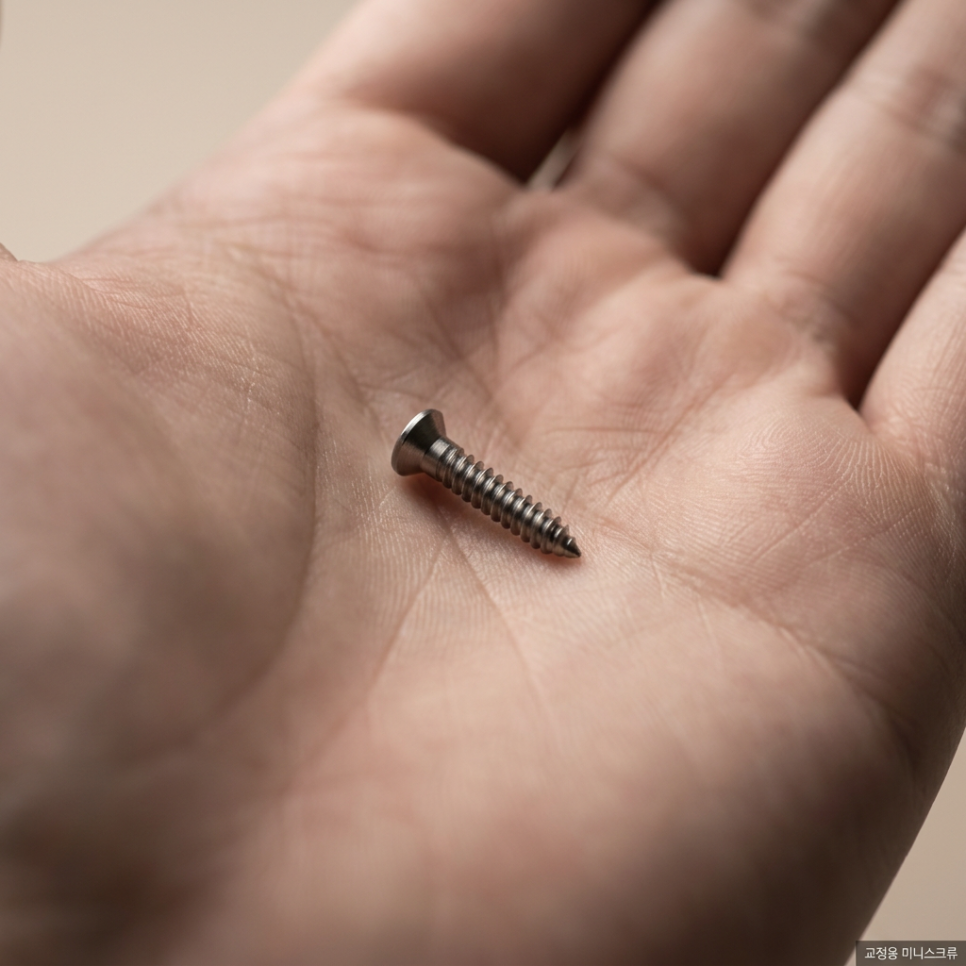
Do not throw away the screw that came out. Store it in a tissue or small container and bring it to your next appointment. It may help with checking its condition.
-
Of course, even if you have already lost it, there is no problem. You do not have to bring it in.
-
Gently rinse the area with lukewarm water or mouthwash. A small amount of blood usually stops fairly quickly.
-
If a wire or elastic was attached to the screw, lightly secure any dangling part with orthodontic wax. Otherwise, it may easily scrape your gums.
You may be worried that the small hole left where the screw came out will remain open.
In most cases, the area where the screw was becomes naturally covered by the gums and heals within a few days. Usually, the tissue fills in without the need for stitches or other treatment. The healing speed may vary depending on the location and the individual, but there is no need to be afraid of the hole itself.
What Not to Do
-
Do not repeatedly touch the hole with your tongue or fingers. It is natural to keep checking it out of curiosity, but this can irritate the area and allow bacteria to enter.
-
Do not try to put the screw back in. Never do this.
What to Eat and How to Brush Your Teeth Tonight
You may eat as usual. However, for about a day, avoid chewing hard or chewy foods on the side where the screw came out. It may be more comfortable to eat foods that cause less irritation, such as porridge or soft side dishes.
Hot, spicy, or salty foods may also cause some stinging in the area, so it is fine to put them off for a day or two. It is also best to be gentle today when sucking hard through a straw or vigorously rinsing your mouth.
Brush your teeth as usual, but gently pass the toothbrush around the area where the screw came out so that it does not make firm contact with it.
Rather than avoiding cleaning the area entirely, gently rinsing and keeping the surrounding area clean may help the gums heal.
What If It Is Only Loose and Has Not Come Out Yet?
Some of you may be reading this while the screw is loose but has not completely come out. A loose screw does not necessarily mean that the situation is more dangerous, so you can start by taking a deep breath.
There is one thing to remember: Do not twist or pull out the loose screw with your hand or tongue.
If you remove it in advance because it seems likely to come out anyway, you may cause an unnecessary wound in the gums. If a wire or elastic is attached, the entire appliance may become loose and dangle.
If it is catching on your lips or cheek and feels uncomfortable, cover it with orthodontic wax and try to eat on the opposite side. Having it removed at the dental clinic is the safest option.
What If You Think You Swallowed It?
If it came out while you were eating, it can be difficult to tell whether you swallowed it. Fortunately, research reports indicate that small swallowed orthodontic appliances usually pass safely through the digestive tract, so you generally do not need to worry.
There is an exception, which I will explain below.
Contact the Clinic Immediately in These Cases
It would be irresponsible to simply reassure you without explaining the exceptions. Be sure to distinguish these situations.
If you may have swallowed the screw and,
-
your coughing does not stop immediately afterward,
-
you have difficulty breathing, or
-
you hear a wheezing sound,
the screw may have entered your airway through aspiration, so you must go to the emergency room immediately.
In addition, if any of the following occurs, it is best to contact your dental clinic immediately rather than waiting until your next appointment.
-
Bleeding does not stop even after applying pressure.
-
Pain or swelling becomes worse over time.
-
Pus or severe inflammation appears in the gums around the area where the screw came out.
If you do not have any of these symptoms, you can sleep comfortably tonight.
Why Do Screws Come Out? It May Not Be Because You Brushed Incorrectly
Many people blame themselves, wondering, “Did I brush too hard?” or “Did it happen because I ate something hard?”
Oral hygiene can certainly have an effect, but studies show that the location where the screw is placed and the condition of the bone have a much greater influence.
Here are the reported figures for how failure rates differ by placement site.
| Placement site | Reported failure rate |
|---|
| Midline of the palate | Approximately 1.3% |
| Side of the palate | Approximately 4.8–5.5% |
| Buccal side (gum toward the cheek) | Approximately 9–16% |
This means that even with the same type of screw, the failure rate can differ by nearly tenfold depending on where it is placed.
It has also been reported that the risk of failure is approximately 8.7 times higher when the screw comes into close contact with a tooth root. The type of gum tissue—whether keratinized gingiva is present—and smoking are also known significant risk factors. In contrast, the effects of the patient’s age and screw thickness are reportedly minor.
To summarize:
Screw loss is often due not to anything the patient did wrong,
but to placement in an area with thin bone
or to anatomical conditions.
You do not need to blame yourself.
However, if you smoke, remember that reducing smoking during this period may be helpful.
What Will Happen at Your Next Appointment?
You may also be worried about your next visit, so here is what to expect. Usually, one of the following options is chosen.
| Situation | Typical course of action |
|---|
| The screw is still needed | Reinsert it in the same spot or slightly to the side after the gums have stabilized |
| A site with better bone conditions is available | Place it in a different location |
| The screw’s role is nearly complete | Continue orthodontic treatment without replacing it |
Which option is chosen depends on your current stage of orthodontic treatment and the condition of your gums and bone, so there is no need to worry in advance about all the possible scenarios.
Reinsertion is performed under local anesthesia, and the procedure itself is usually relatively short.
And regarding what you are probably most curious about: reports indicate that a screw coming out once often does not have a significant effect on the overall duration or outcome of orthodontic treatment.
The cost of reinsertion varies depending on the terms of your initial agreement and the dental clinic, so the most accurate approach is to ask your clinic directly.
In Closing
To summarize in one line what you should do tonight:
Keep the screw,
Gently rinse the area,
Do not touch it,
and contact your dental clinic on the next business day.
As long as you do not have any of the emergency signs mentioned above—coughing or difficulty breathing, bleeding that does not stop, or worsening pain—there is nothing more you need to do tonight.
During orthodontic treatment, various small and significant issues can occur besides screw loss, such as a wire poking you or a bracket coming off. I plan to organize step-by-step guidance for handling those situations as well, so you can refer back to it when needed.
You must have been very surprised today. I hope you have a restful night.