Some people postpone orthodontic treatment because of military service, while others hurry to start because of it.
Interestingly, both choices can be right.
Of course, it is not theoretically impossible in either case. However, for some people, now may be the last suitable time to start, while for others, it may be difficult to recommend starting without reservation.
There are three criteria that determine the difference.

Once an enlistment date is set, two calculations begin running through your mind at the same time.
“Since nearly two years will pass during military service anyway,
wouldn’t it be beneficial to overlap that time with the orthodontic treatment period?”
“If I start treatment but cannot visit the dentist midway through,
won’t I lose both my teeth and my money?”
Neither of these is an unreasonable concern. Both are rational calculations. That is why making a decision becomes even more difficult.
Ask people around you, and you will hear different answers. Some will tell you to start unconditionally before enlistment, while others will say to wait until after discharge. Both were probably right in their own situations. The problem is that you cannot know whether the same advice is right for you.
In this post, I will go through the three criteria that determine the decision one by one. By the end, you should at least have a clear idea of “what you need to check.”
Criterion ① Time Remaining Until Enlistment

The total duration of orthodontic treatment for adults is usually around 16–30 months. Of course, this is an average, and the actual period can be shorter or longer depending on the condition of the teeth, so there is considerable individual variation.
Calculating based on the enlistment date gives you a general sense of the timing. Since the service period for the Army is approximately one year and six months, adding the preparation period before enlistment and the period immediately after discharge makes it appear to roughly overlap with the total treatment period. This is why people arrive at the calculation that “overlapping the two is beneficial.” However, conditions are necessary for that calculation to hold.
The important point here is not the “total duration.” The real key is how far you can progress before enlistment.
Orthodontic treatment has different characteristics at each stage. In the early stage, major and labor-intensive procedures such as extractions, appliance placement, and overall alignment are concentrated. In the middle stage, the spaces are often closed, while the later stage involves increasingly detailed adjustments.
Patients also tend to experience greater discomfort during the early stage, and unexpected situations such as appliance breakage or detachment occur more frequently. As treatment progresses, tooth alignment improves and patients adapt to eating with the appliance, so problems such as appliance detachment often become less frequent.
In other words, if you have more than six months before enlistment, you may be able to enlist after passing the period when visits to the dentist are most frequent.
A general summary by the amount of time remaining is as follows.
| Time remaining until enlistment | |
|---|
| 6 months or more | A major advantage is that you can complete the early, trouble-prone phase of treatment before enlistment. |
| Enlistment imminent (within 2–3 months) | In some cases, it may be better not to start—especially if it is expected to be difficult to visit the dentist in the event of an unexpected problem. |
Some people, feeling rushed, look for “fast orthodontic treatment that can be completed before enlistment.” However, tooth movement has biological limits, so it is best to be especially cautious about approaches that promise a specific treatment period.
Criterion ② Tooth Condition — Treatment Difficulty

For example, even if the same “three months” remain, the significance of that period can vary completely depending on the condition of your teeth.
If extractions are necessary, the period requiring intensive early management becomes longer because the process of closing the spaces after extraction is added.
If there are skeletal issues involving the jawbone, the treatment plan itself may be more complex than simple tooth alignment, requiring a longer-term approach.
On the other hand, if the alignment issue is mild, the early stage may be relatively short, leaving more flexibility even with the same amount of time remaining.
The problem, however, is that you cannot assess this level of difficulty simply by looking in the mirror.
Some teeth may look straight on the outside but require extractions upon examination. Conversely, a dental alignment that appears severe may unexpectedly be a simple case. There are also many variables that cannot be seen, such as the position of the wisdom teeth and the condition of the gums and jawbone.
Even when the “time remaining” examined under Criterion ① is the same, the level of difficulty may mean that starting is appropriate for one person while postponing treatment is the right choice for another. In other words, these two criteria should not be viewed separately; they are variables that must be considered together.
Ultimately, “Which situation applies to me?”
is a question no one can answer
without X-rays and an examination.
Criterion ③ Appliance Type and Visit Schedule

The third criterion is the most practical question: “Can you visit the dentist without difficulty during military service?”
Let us first clarify the facts.
The interval between visits for orthodontic adjustments is generally known to be four to six weeks. This schedule is based on the biological rate at which teeth move, so it can be adjusted to some extent, but it is difficult to shorten or extend it freely.
Outpatient visits by active-duty soldiers to civilian medical institutions are possible through authorized outings or overnight leave under the Directive on Petition Leave for Soldiers’ Medical Treatment.
In other words, the common belief that “you cannot visit an orthodontic dentist at all once you enter the military”
is not true.
There are, however, variables.
Outings and overnight leave generally prioritize medical institutions within the local area (overnight leave is limited to areas where same-day treatment is difficult), and the timing may be delayed depending on training schedules or unit circumstances. In other words, “being able to go” and “being able to go on time” are different matters, and the possibility that the four-to-six-week adjustment schedule may become irregular is the real constraint of orthodontic treatment during service.
That is why appliance selection is important.
The adjustment interval and the importance of self-care differ depending on the type of appliance, and some options allow the intervals between visits to be relatively longer. In addition, orthodontic adjustments are generally continued at the dental clinic that placed the appliance, so the distance between your unit and the clinic you have been visiting is another factor to consider in advance.
If you are scheduled to enlist, it is reasonable to reflect these conditions in your choice of appliance and treatment plan from the beginning.
So, What Should You Check First?
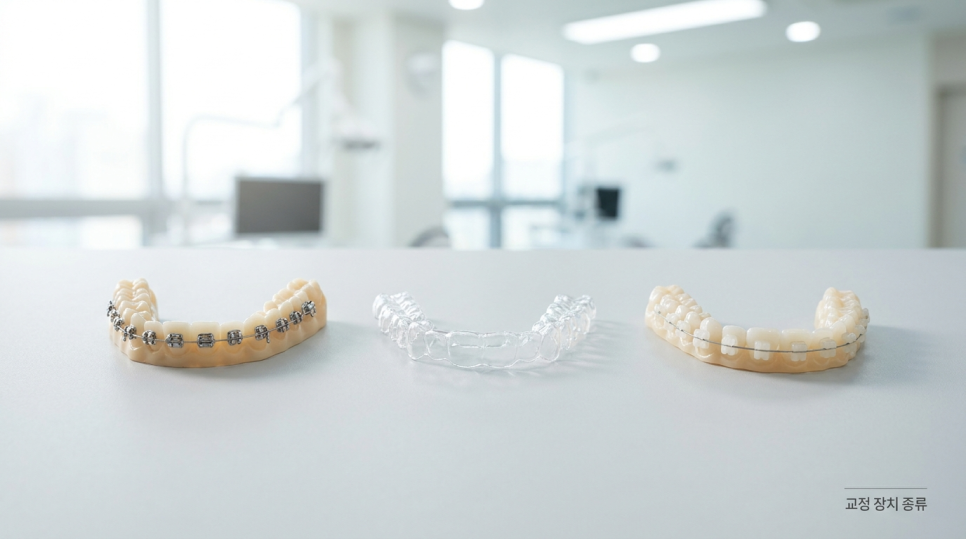
The answers produced by the combination of the three criteria discussed so far—① time remaining until enlistment, ② tooth condition, and ③ appliance type and visit schedule—cannot be determined completely just by reading this post. This is something that can only be confirmed through an examination.
If you know your scheduled enlistment date, you can use an orthodontic consultation and examination to plan together whether to start now based on that date or postpone treatment until after discharge.
Even if you are told that “it would be better not to start right now,” that answer itself is information that can protect both your money and your teeth. Starting blindly or giving up unconditionally is not the answer.
Appendix — How to Handle Orthodontic Emergencies During Military Service
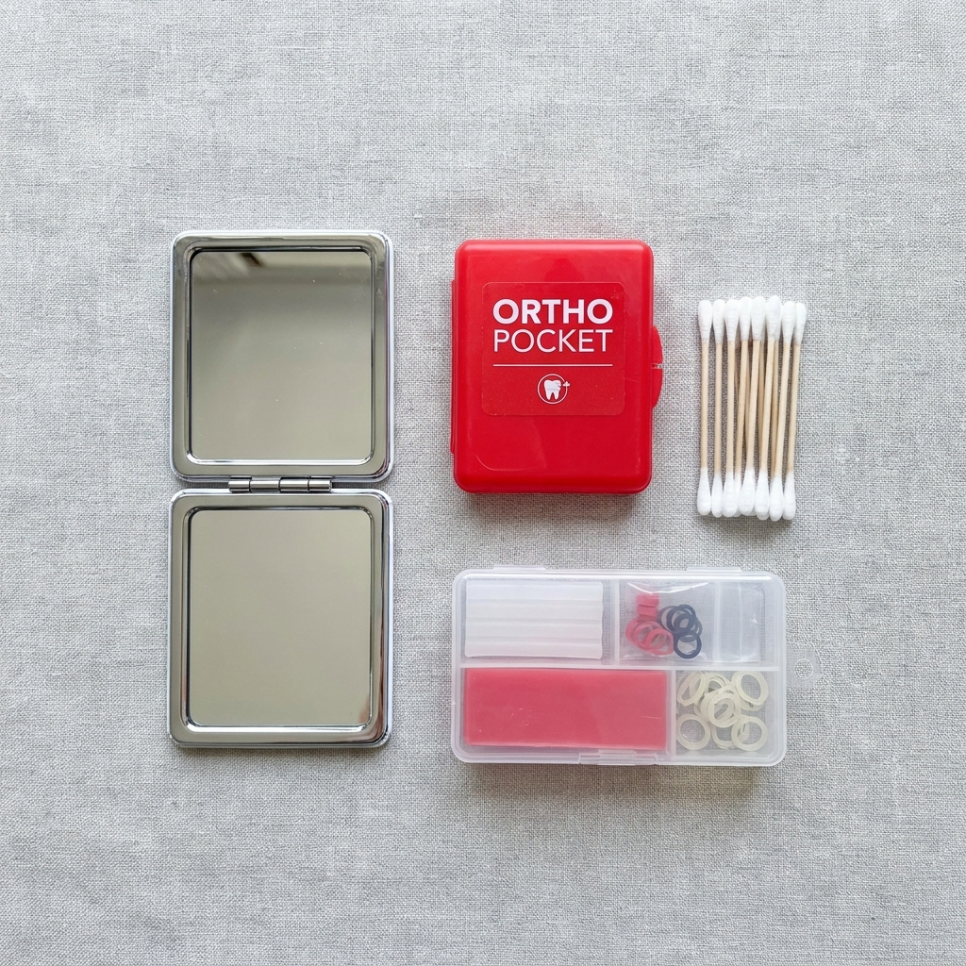
For those enlisting while already undergoing orthodontic treatment, here is a summary of how to respond to common situations during service.
| Situation | What to do |
|---|
| When the end of a wire pokes your cheek or tongue | Mold a small amount of orthodontic wax and cover the area causing the irritation as first aid—bringing plenty of wax before enlistment is recommended. |
| When pain or inflammation occurs | Receive an initial examination at the unit medical facility, and if necessary, obtain civilian dental treatment through authorized outing or overnight leave. |
| When a bracket comes off | It is often not an immediate emergency—keep the detached appliance and have it reattached during your next outing or leave. |
| When it is time for a regular adjustment | Contact the dental clinic in advance and coordinate the appointment as soon as your leave or outing schedule is set. |
One more point: during orthodontic treatment, food easily gets caught around the appliance, so it is more important than you might expect to bring enough interdental brushes and an orthodontic toothbrush. In many cases, a breakdown in oral hygiene can lead to a bigger problem than simply missing an adjustment on time.
Finally, to emphasize once again, the duration and method of orthodontic treatment vary depending on each person’s tooth condition. This post is intended to provide general information, and an accurate decision suited to your situation should be confirmed through an orthodontic examination and consultation.