If you have ever practiced smiling with your mouth closed in front of a mirror, you have probably seriously considered orthodontic treatment at least once.
But when you actually start searching, you somehow hesitate. You want to correct your teeth, but when you picture “what I will look like during treatment,” you end up putting it off again.
That is even more true if you have to meet people every day. The more often you have presentations, meetings, and occasions where you smile and greet others, the more burdensome it feels to spend “several years with something visible inside your mouth.”
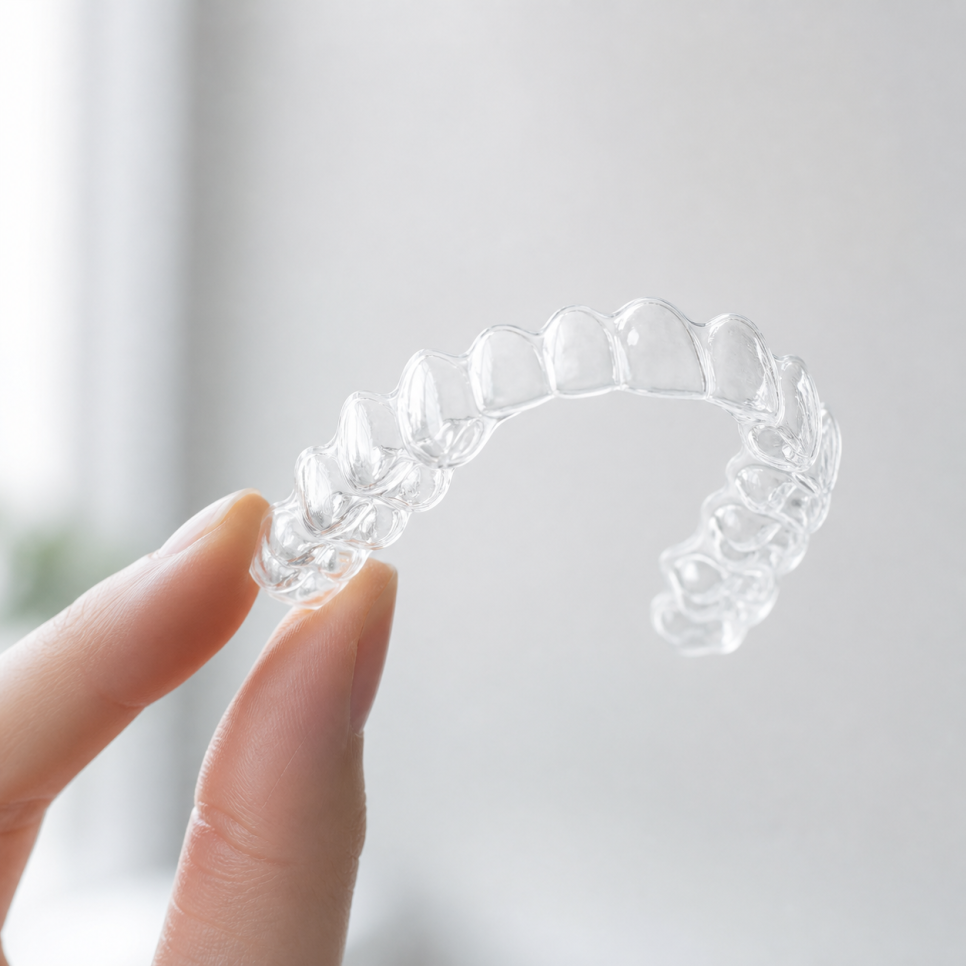
I want to correct my teeth, but I worry even more about what I will look like during treatment
In fact, the core of this concern is a little different from what you might expect.
It is not that you are afraid of orthodontic treatment. You clearly do want to change your teeth. You are simply more worried about how you will look while going through the process.
“The result will probably be good. But what am I supposed to do about the years in between?”
Many people have kept putting it off, thinking, “later” or “when I have more time,” because they get stuck on this thought.
This contradiction runs even deeper for people whose jobs involve frequent interaction with others. If your appearance directly affects the impression you make, the very fact that orthodontic appliances are visible can feel like part of your work that you have to worry about.
So putting it off was not necessarily laziness. In fact, it may have been closer to being cautious.
Change the question—from “Should I do it?” to “Is there a way to make it less noticeable?”

That is why it may be helpful to slightly change the direction of your thinking.
Many people spend years debating whether they should get orthodontic treatment. But often, that is not the question they really want to ask.
The real question is this:
“In my case, is there a way to make the treatment less noticeable?”
These are completely different concerns, and the paths to finding an answer are different too.
At this point, most people naturally arrive at the same expectation: “Clear aligners are not noticeable, so maybe I should choose those?”
“There is no simple answer that says ‘if it is clear, it will not be visible’”—the standard is your tooth alignment
There is one point that needs to be addressed here.
Clear aligners are not a universal solution that works for everyone.
According to medical information from Seoul National University Hospital, clear aligners are known to be effective for relatively mild malocclusion, such as slightly crooked teeth, small spaces between teeth, or mild relapse after orthodontic treatment.
On the other hand, it explains that other orthodontic treatments may be needed when the teeth need to be moved significantly, or in cases involving severe crowding, pronounced protrusion, large spaces in the front teeth, or skeletal problems.
To summarize:
| Which determines the treatment method? | Common expectation | Reality |
|---|
| The method determines the person | “Clear aligners are OK for everyone” | ✕ |
| The teeth determine the method | There is a method suited to the condition of my teeth | ○ |
In other words, the method does not choose the person; your teeth determine the method.
That is why someone else’s review may not provide the answer for you. Even if both are “clear aligner reviews,” the results and process can differ if that person’s teeth are different from yours.
In addition, orthodontic treatment is not determined by looking only at the visible alignment of the teeth. It is known that a treatment plan is developed only after checking the tooth roots and jawbone, and, if necessary, the condition of the temporomandibular joints, through X-rays, photographs, and dental impressions.
Ultimately, this is an area where the answer can only be narrowed down by looking directly inside your mouth.
All you need is confirmation, not a major decision
So what you need right now is not a major decision.
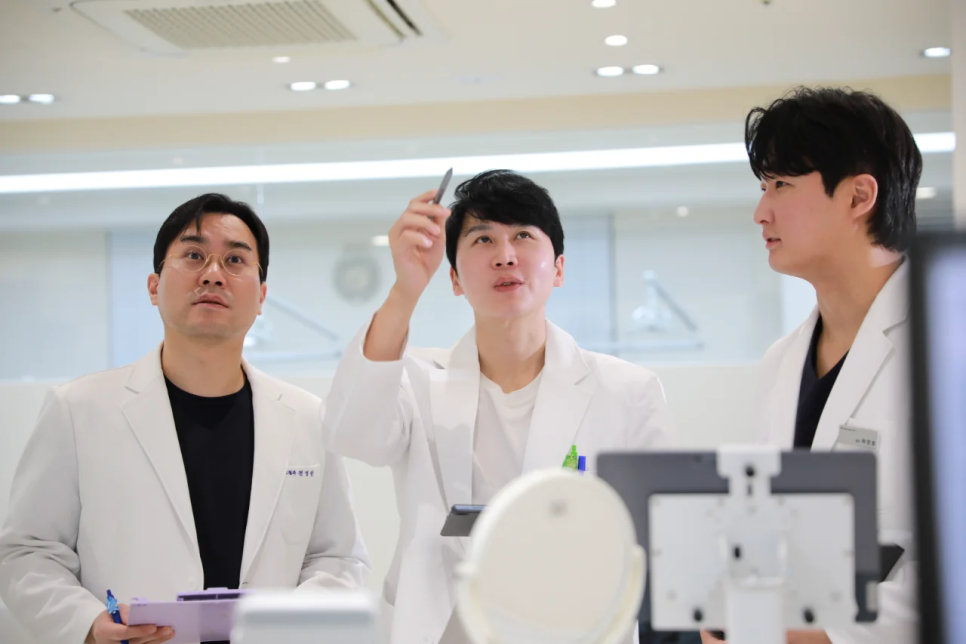
Seoul National University Hospital also advises that, because clear aligners are not suitable for every patient, sufficient consultation is needed beforehand to determine whether the treatment is possible in a particular case. In other words, checking in advance can help reduce the time spent struggling with a method that does not suit your teeth.
So for now, it is enough to take a small step—not “I am going to start orthodontic treatment immediately,” but “I will check what options are available for my teeth.”
These criteria may be helpful when choosing where to get a consultation:
-
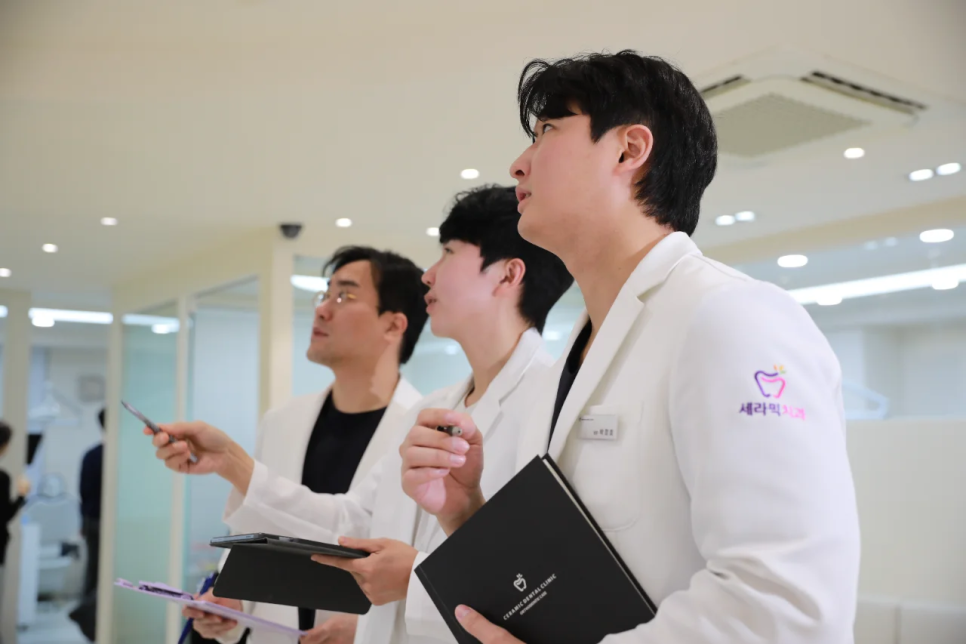
Rather than relying on the judgment of just one doctor who makes the diagnosis, you may feel more reassured at a place where several doctors review your case together.
-
Orthodontic treatment is something you undergo together for at least a year, and sometimes several years. A place that can manage your treatment over the long term may feel more reassuring than one that ends its involvement after a single visit.
-
Since you will need to visit frequently, it is also practically important to consider whether the location fits into your everyday routine.
Keeping just these three points in mind can significantly narrow down where to go for an evaluation.
You have probably held on to the desire to correct your teeth for a long time already. Instead of pushing that feeling into a decision, start by checking “what is possible in my case.” That is enough to get started.
※ This article is intended to provide general information about orthodontic treatment. The appropriate treatment method and results may vary depending on the individual’s dental condition. Please confirm an accurate diagnosis through consultation with a medical professional.