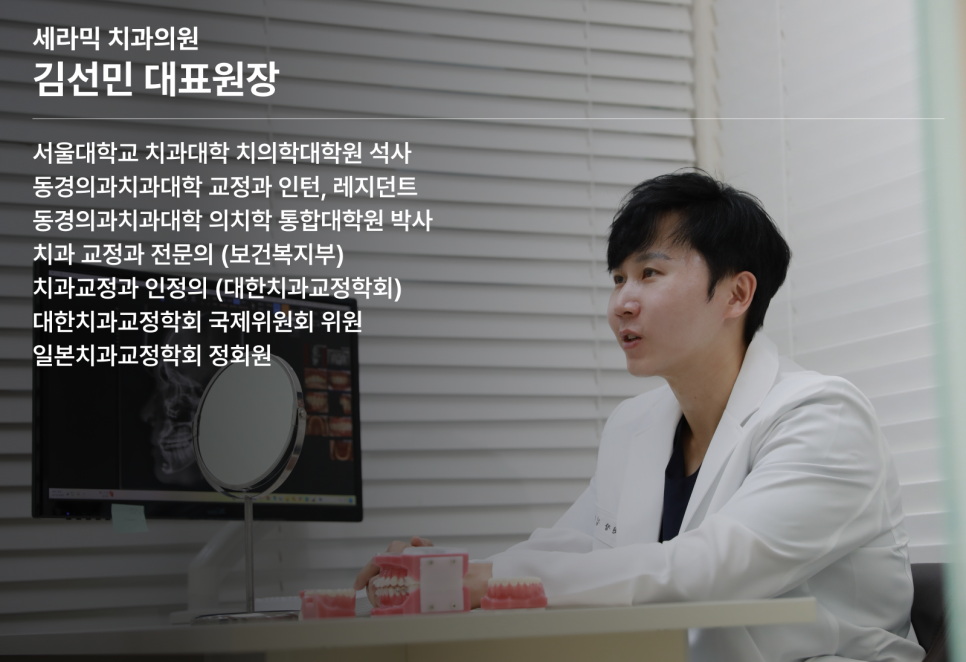
"Is there a way to straighten my teeth without it being visible?"
This is the question people in their 40s who are considering orthodontic treatment search for most often. But the answer to this question is actually already clear. There are several ways to make treatment less noticeable.
The real point of division comes next. Many people stop because of that one scene: wires flashing when they open their mouths during a client meeting or an executive meeting. It is not that they have been unable to make up their minds; they have stopped because they have not been able to resolve one question about the available options.
So the question you should ask is this: "Among those less visible options, which one is right for the condition of my teeth?" From this point on, searching alone cannot provide the answer. Quite a few people choose a method first without understanding this difference, only to make a decision that is difficult to reverse later.
Orthodontic treatment in your 40s is no longer unusual
First, let us put one concern at ease.
You may have wondered at least once while looking at a search box, "Isn't it too late at my age?" However, data from the Korean Association of Orthodontists shows that the trend is changing.
Between 2010 and 2017, the proportion of orthodontic patients in their teens and 20s decreased, while the proportion of patients in their 30s and 40s increased by approximately 0.82 percentage points, and the proportion of those in their 50s and older also showed an upward trend. This means that orthodontic treatment among middle-aged and older adults is becoming a broader trend rather than an exceptional choice.
"Orthodontic treatment is only for children,"
That is no longer true
Adult orthodontic treatment is not closely related to age itself. However, because jaw growth has already finished, it is known that treatment plans tailored to each individual’s circumstances are needed, unlike for children who are still growing. That is why the real question for people in their 40s is not "Can it be done?" but "How should it be done?"
The case determines which “less visible option” is appropriate
This is the key point.
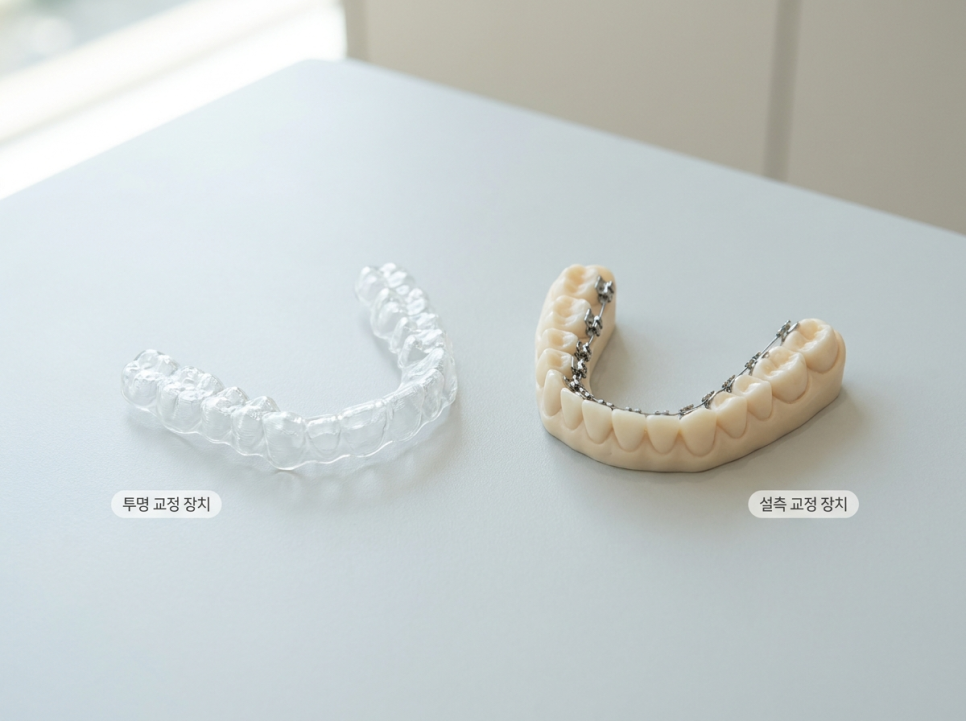
There are less noticeable methods, such as clear aligners and lingual orthodontics. However, there is a common misconception: people try to choose "which method is best" first.
The order should be reversed. The method does not choose the case; the case determines the method.
| What needs to be considered | Criteria for evaluation |
|---|
| The direction and distance the teeth need to move | The appropriate method differs depending on whether the teeth require simple directional movement or more complex movement |
| The complexity of the alignment | It is known that conventional clear-aligner systems have limitations in the range of cases they can treat |
| Lifestyle patterns | Some people are better suited to removable options, while others are better suited to fixed options |
In practice, clear-aligner systems such as Invisalign are not suitable for every orthodontic situation. Manufacturer information and clinical materials commonly state that another method may be necessary depending on the case, making consultation with a dental professional essential.
Therefore, if you begin by deciding, "Clear aligners must be right for my profession," you may end up choosing an option that is not suitable for your particular alignment.
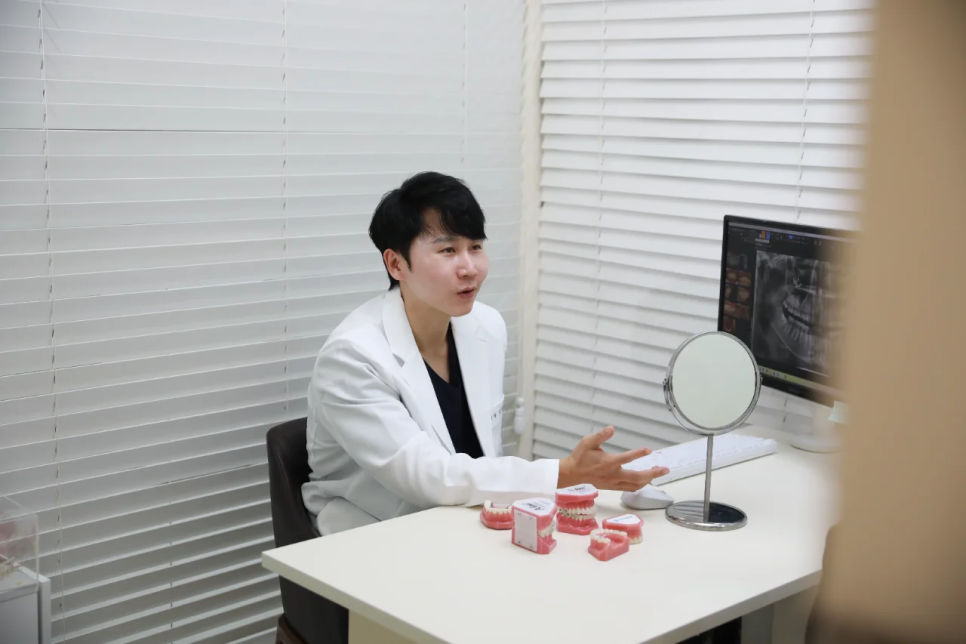
There are too many variables to leave this judgment to just one person’s perspective. This is why having your case reviewed at a clinic where multiple clinicians examine the diagnosis together can help reduce errors in evaluating the case.
In your 40s, visibility is not the only variable—your gums and bone matter too
If you have read this far, there is one more variable that needs to be addressed.
So far, the focus has been on whether treatment is visible from the outside. However, in orthodontic treatment in your 40s, there is another, more decisive variable that influences the method and treatment duration: the condition of your gums and alveolar bone, the bone that supports your teeth.
According to data from the Korean Association of Orthodontists:
-
If excessive force is applied to the teeth during orthodontic treatment, the alveolar bone may be resorbed, and once resorbed, it does not recover.
-
If gum recession occurs after orthodontic treatment, it is also difficult to reverse.
-
For this reason, they advise that bone density and periodontal health should be checked before treatment begins.
This is not written to frighten you. Quite the opposite.
All of these variables
can be identified in advance,
and can be managed in consultation with
your dental professionals.
In other words, although searching on your own cannot provide the answer, these are areas you can adequately prepare for by checking them in advance during the diagnostic process. You cannot determine the condition of your gums or the amount of bone supporting your teeth from beyond a screen. Even among people in their 40s, these factors differ from person to person, and those differences change which methods are possible and how long treatment takes.
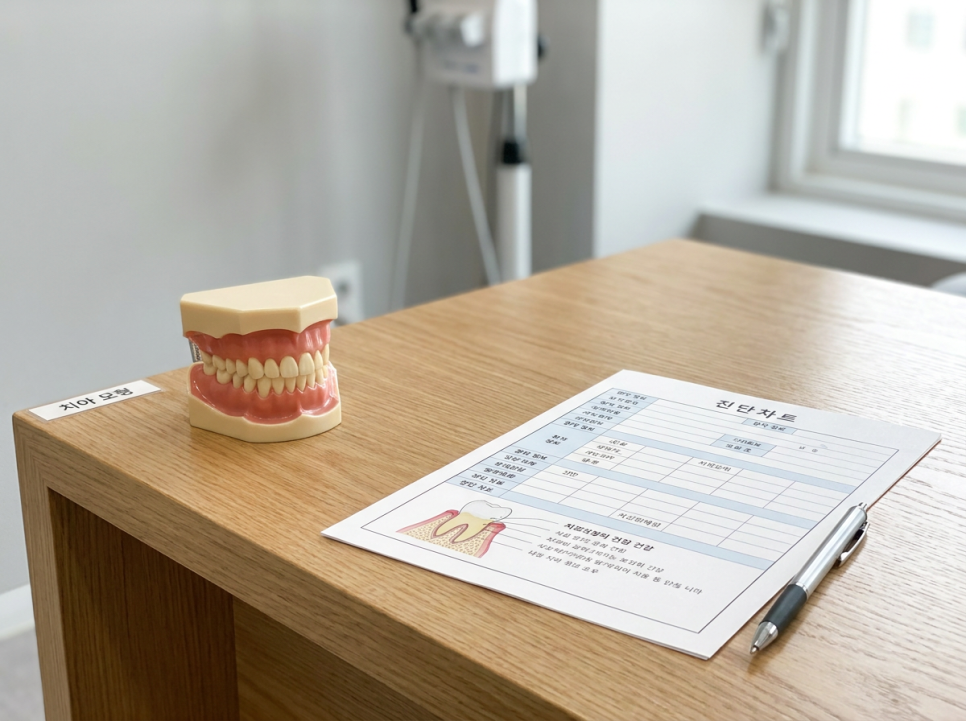
The exact method and duration become clear only after examining your mouth
To sum up:
Are there ways to make orthodontic treatment less visible? Yes, there are. But determining which one is right for you requires examining the alignment of your teeth, your gums, and the condition of the supporting bone. The same applies to how long treatment will take. The orthodontic association also advises that the appropriate timing and method of orthodontic treatment differ from person to person and should be determined after a specialist’s diagnosis.
Therefore, the most realistic next step at this stage is not to decide on your own "which method to use," but to arrange a consultation to first find out "what is right for my case and how long it will take."
One more thing: orthodontic treatment is something you undergo together with your dental team for at least one year, and sometimes more than two years. That is why, just as important as the initial diagnosis, is considering whether the clinic can manage your treatment according to the same standards through to the end. If the standards change midway, it can be difficult to track the changes consistently during that period.
If you have been hesitating because of that one scene during a meeting, your next step is not to strengthen your resolve further but to have the condition of your mouth checked. From there, both the method and the duration will finally begin to appear as specific figures.