You may have found yourself looking into veneers while examining your front teeth in the mirror.
But perhaps you paused at the explanation that “about 0.5 mm of the tooth is shaved down and ceramic is bonded to it.” You may not be happy with the color or shape, but grinding down an otherwise healthy natural tooth can feel wasteful and frightening.
That is probably why you deliberately added the term “no-prep” to your search.
First of all, that feeling is not misplaced.
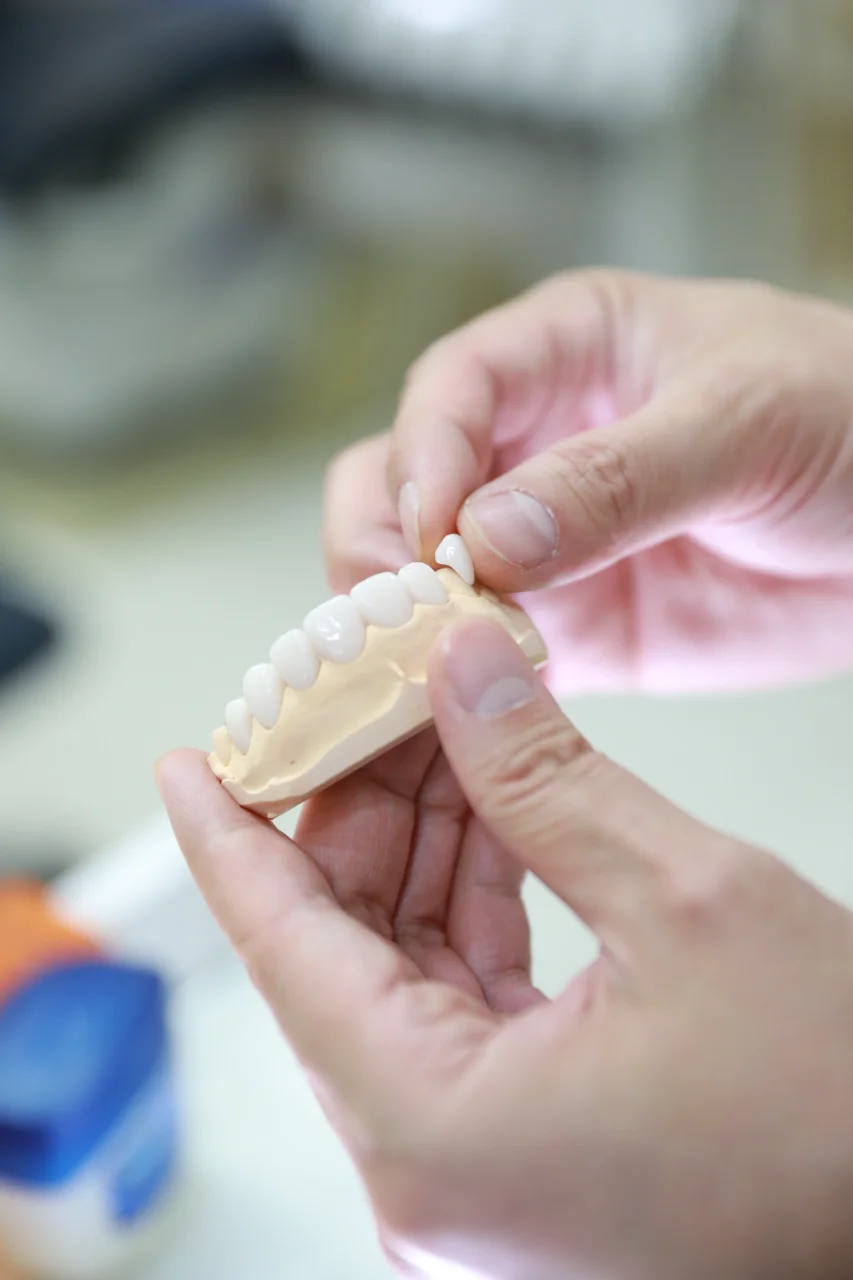
“Shaving down a healthy tooth feels wasteful” — That instinct is not misplaced
Conventional veneers involve shaving down the outer surface of the tooth—the facial surface of the enamel—and bonding ceramic in its place.
The amount removed is usually about 0.5–1.0 mm. That may sound thin when viewed as a number, but what matters here is not the thickness; it is the fact that the change is irreversible.
Tooth tissue that has been removed does not grow back or recover. Medically, this is described as “irreversible.”
In other words, choosing to shave the tooth is a choice that cannot be undone.
“They say that once you shave it down, there is no going back.”
That vague anxiety was not exaggerated fear. It was an instinct based on an accurate fact. So it is actually natural to hesitate.

What exactly does “no-prep” mean? — The key is that there is “no irreversible damage”
No-prep veneers are a method that omits the shaving step altogether.
Instead of grinding down the tooth, a thin layer of ceramic is bonded over its surface.
When you connect this to the previous section, the difference becomes clear. While conventional veneers remove 0.5–1.0 mm, no-prep veneers omit that removal process.
Because no tooth structure is removed, no irreversible damage is left behind.
| Category | Conventional veneers | No-prep veneers |
|---|
| Tooth reduction | Approximately 0.5–1.0 mm removed | No reduction |
| Reversibility | Removed tooth structure cannot recover (irreversible) | No tissue is removed |
| Thickness over the tooth | Fills the space created by reduction | Sits on the surface |
No-prep veneers avoid the very point you were most concerned about: “irreversibility.”
Not shaving the tooth also means leaving room to change your mind.
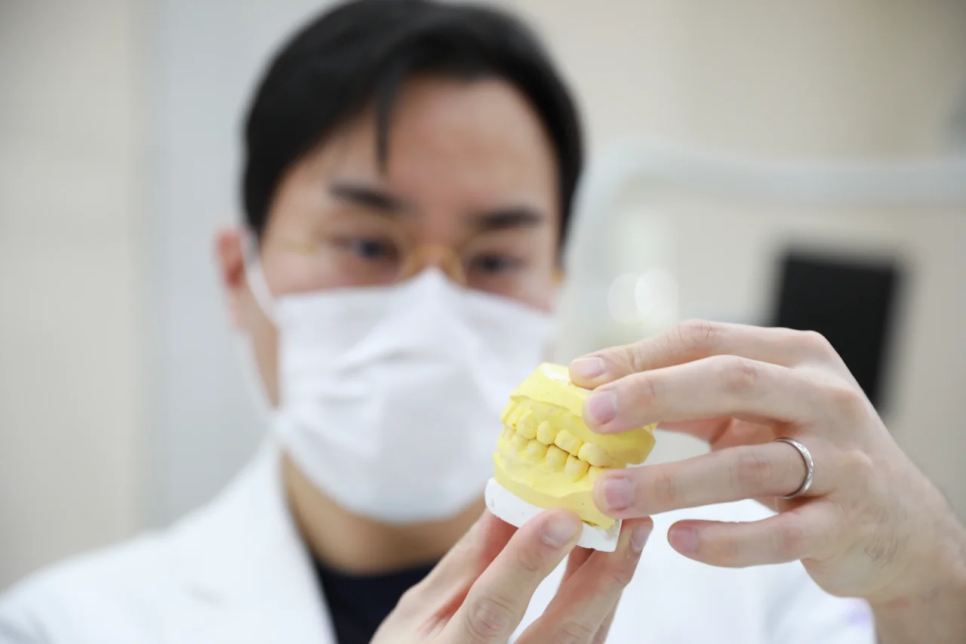
But—no-prep is not the right answer for everyone
Not shaving the tooth also means that its thickness is added directly over the tooth.
Rather than creating space by reducing the tooth and then filling it, this method adds ceramic to the tooth’s original surface.
That is where the issue arises.
According to materials from the Korean Academy of Prosthodontics, not every tooth is suitable for no-prep treatment. In particular, if the teeth protrude or already have sufficient thickness, proceeding with no-prep treatment too aggressively may produce a result that looks thick and unnatural.
If additional thickness is placed on front teeth that already appear to project forward, the mouth may look more protruded or a foreign-body sensation may remain.
On the other hand, there are clearly cases where no-prep veneers are especially well suited.
In cases where enough space is available for the ceramic even without reducing the teeth, an appropriate treatment may provide a natural-looking cosmetic improvement.
In other words, no-prep can be an excellent treatment when you are a suitable candidate, but there are also cases in which reduction is physically unavoidable.
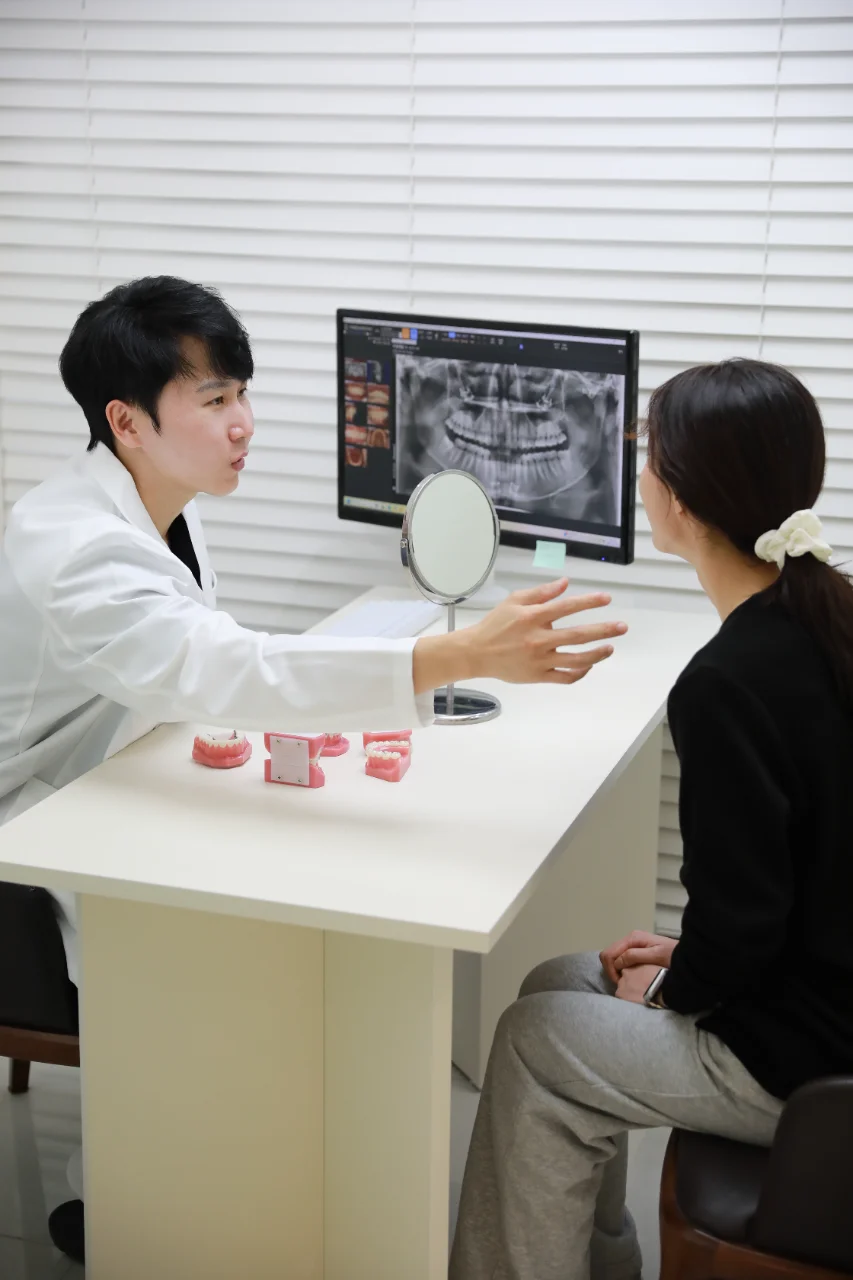
The real question is not “no-prep or not,” but “which option suits my teeth?”
The question you typed into the search bar was probably, “Are no-prep veneers safer?”
But if you have read this far, you can see that the question needs to change.
The real question is this:
“Are my teeth better suited to no-prep treatment,
or would reduction create a more natural result?”
Even when people have the same “concern about their front teeth,” the answer can be completely different depending on tooth size, shape, and the way the upper and lower teeth meet (occlusion).
So rather than saying, “Please give me no-prep veneers,” the first step is to ask, “Please determine which option is right for my teeth.”
If no-prep is truly impossible, consider minimal reduction
There are certainly people for whom no-prep treatment is physically impossible.
However, there have been significant advances in veneer materials and techniques.
It is also true that, compared with the past, veneers can now be placed with much less reduction even when some reduction is needed.
Instead of the 0.5–1 mm described above, only 0.3 mm—or even less—may be reduced very minimally.
In such cases, not only is there less damage to the tooth, but there may also be fewer side effects, such as sensitivity.
However, because the strength of the veneers may inevitably be reduced from a physical standpoint, it is important to choose a provider with sufficient experience and the ability to coordinate care effectively.
If you want veneers but do not want your teeth reduced,
why not find out whether no-prep or minimal-prep treatment is possible for you this time?