For many people in their 20s, the reason they put off orthodontic treatment is not their dental condition.
Pain and cost are often not the top concerns, either. What makes many people turn around after going as far as a consultation is usually one thing: “having to spend one or two years with visible appliances.”
For people in their 20s, whose daily lives include job interviews, workplaces, and dates, that concern is not excessive—it is a perfectly reasonable calculation.
But in modern adult orthodontic treatment, the premise behind that calculation has changed.
That concern has already been addressed as adult orthodontic treatment has become more common
As the number of adult patients increased, one demand naturally grew as well: “Please make it less noticeable.”
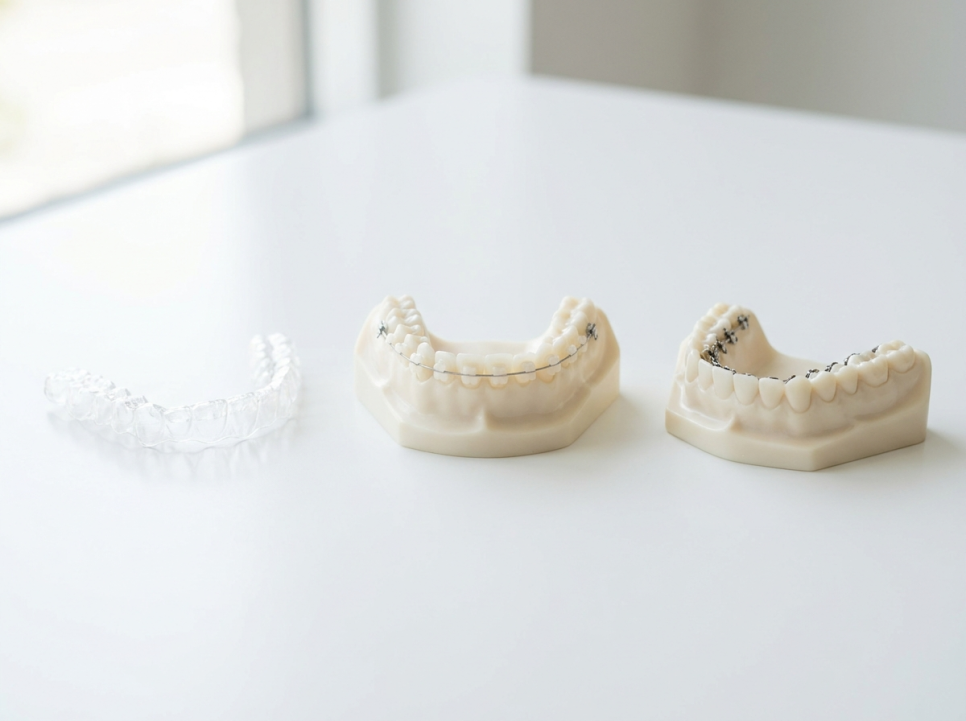
In response, several options have developed, including ceramic brackets similar in color to teeth, lingual appliances attached to the inner surfaces of the teeth, and clear removable appliances.
So if you have been putting treatment off because you “don’t want it to show,” that very reason has been something orthodontics has been working to address for a long time.
Three less noticeable options—which trade-offs does each involve?
This is where we get to the main point. I am intentionally explaining the limitations before the advantages. Descriptions that only say “everything is good” are not helpful when making a decision.
| Type | Visibility | What you have to accept |
|---|
| Ceramic brackets | Less noticeable than metal because they are similar in color to teeth | They are not completely invisible |
| Lingual orthodontics | Attached to the inner surfaces of the teeth and barely visible from the outside | An initial speech-adjustment period and longer appointment times |
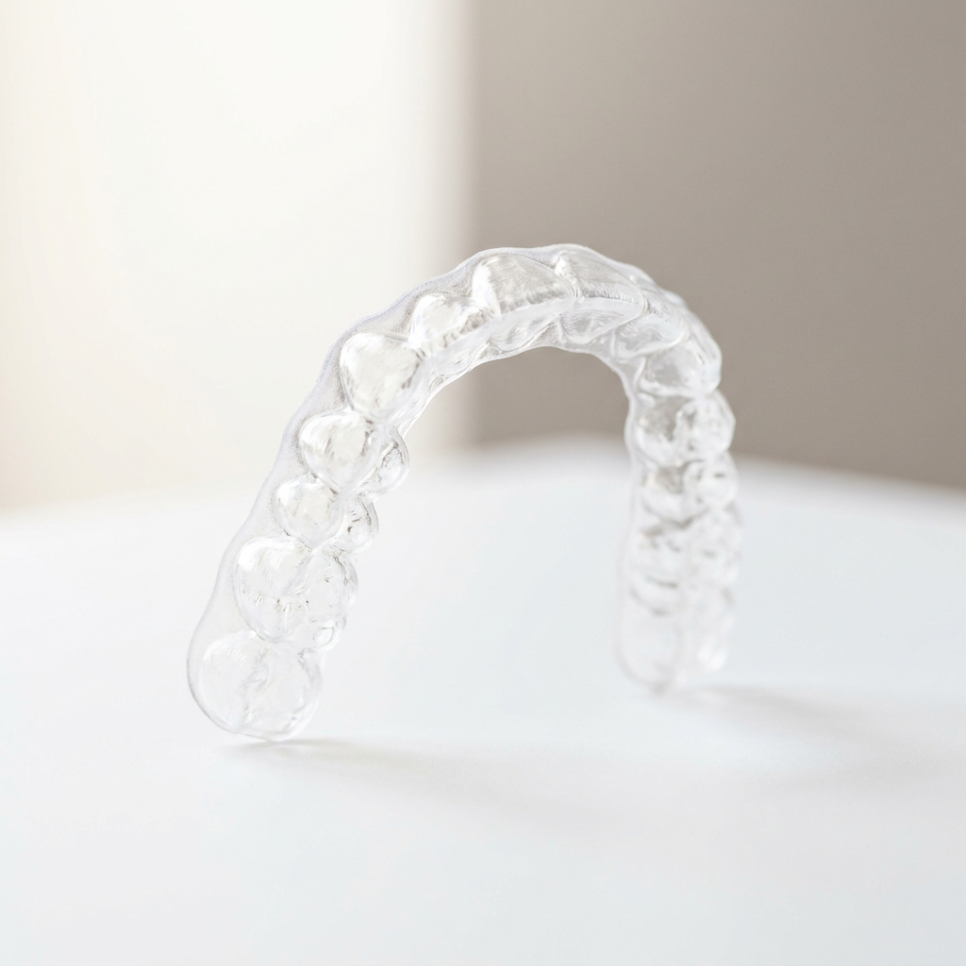
| Clear aligners | Transparent and removable, so they are difficult to notice even up close | You must consistently wear them for 16–21 hours a day |
Let’s go through them one by one.
Ceramic brackets use the same basic fixed orthodontic approach, with the bracket material changed to a tooth-colored one. They are the most familiar option and have a broad range of applications, but the appliances are still on the outside of the teeth. They are “less noticeable,” not “invisible.”
Lingual orthodontics places the appliances on the inner surfaces of the teeth, so they are barely visible from the outside. However, because the appliances sit where the tongue makes contact, studies have reported an initial period of less clear speech. This tends to improve over time, but people whose work involves frequent presentations or consultations should factor the adjustment period into their decision. Because the technique is more difficult, the cost also tends to be higher.
Clear aligners are removable, making eating and brushing convenient. They also typically require less frequent visits, which can make them less burdensome for people who work. But there is a catch.
Being able to take them out whenever you want
also means that no one will stop you
if you are not wearing them.
Studies generally consider it necessary to wear aligners for at least 16–21 hours a day for the teeth to move according to plan. If wearing time falls short, treatment may progress more slowly. However, this is something that can be adjusted with your orthodontic team by checking your progress at each visit, so it is important to discuss your daily routine honestly in advance. In other words, clear aligners are less a “convenient option” than an option where you pay with self-management.
And there is one more point. Because clear aligners have limitations on the extent of tooth movement, they may not be suitable for cases involving severe malocclusion, tooth extraction, or skeletal problems.
The treatment period varies by case for all three options, but orthodontic treatment for malocclusion is generally described as taking about one to three years. Rather than fixing the period in advance, the most accurate estimate is the one you receive after an examination, based on your specific case.
But this is not a choice you can make just by reading about it
After reading this far, it is natural to reach a conclusion like this:
“I have to work and maintain a social life, so clear aligners are for me.”
But the order is backwards. Choosing an appliance is a matter of diagnosis before it is a matter of preference or budget.
Even when the description is simply “crooked front teeth,” the causes can vary. Medical information from Seoul National University Hospital lists heredity, an imbalance between the size of the teeth and jaws, disharmony in the growth of the upper and lower jaws, and supernumerary or missing teeth among the causes of malocclusion. When the cause differs, the amount and direction of tooth movement required also differ, which changes the range of appliances that can be used.
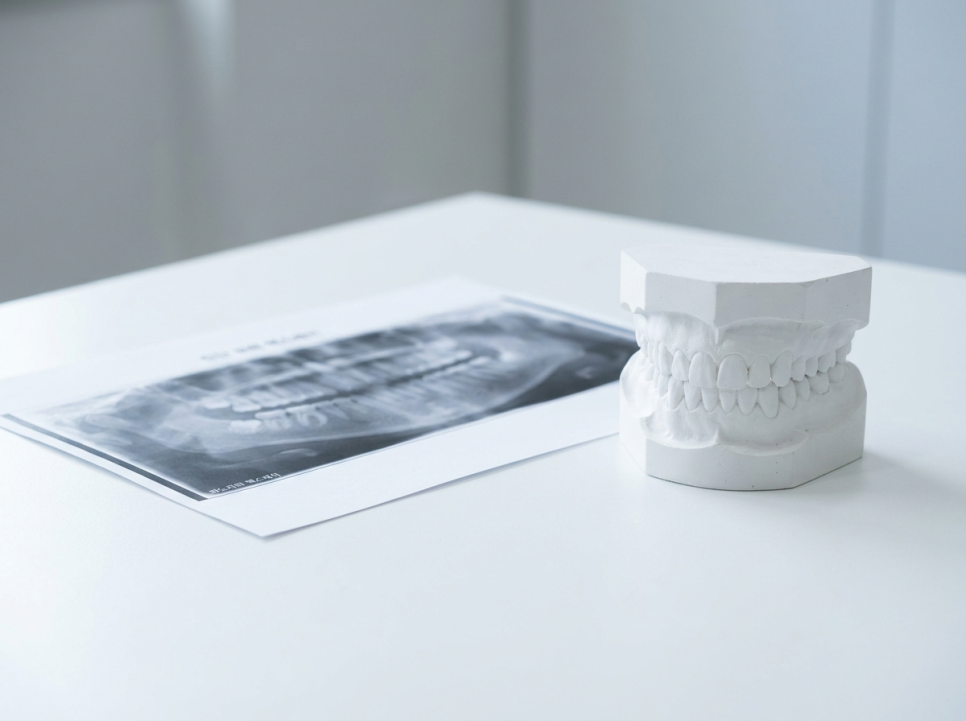
That is why an orthodontic diagnosis does not end with a visual examination. Panoramic X-rays, frontal and lateral cephalometric X-rays for analyzing the jaw structure, photographs of the face and teeth, and dental models are used for evaluation. The treatment approach itself can differ depending on whether a skeletal problem is present.
The Korean Association of Orthodontists also officially emphasizes the importance of an “accurate diagnosis” when it comes to clear orthodontic appliances.
To summarize: reading can tell you “what options are available.” The examination results determine “which options are available for me.” The fact that the appliance you want and the appliance you can use may be different—that is the real starting point when looking into orthodontic treatment.
What should you look for when choosing a clinic for one to three years of treatment?
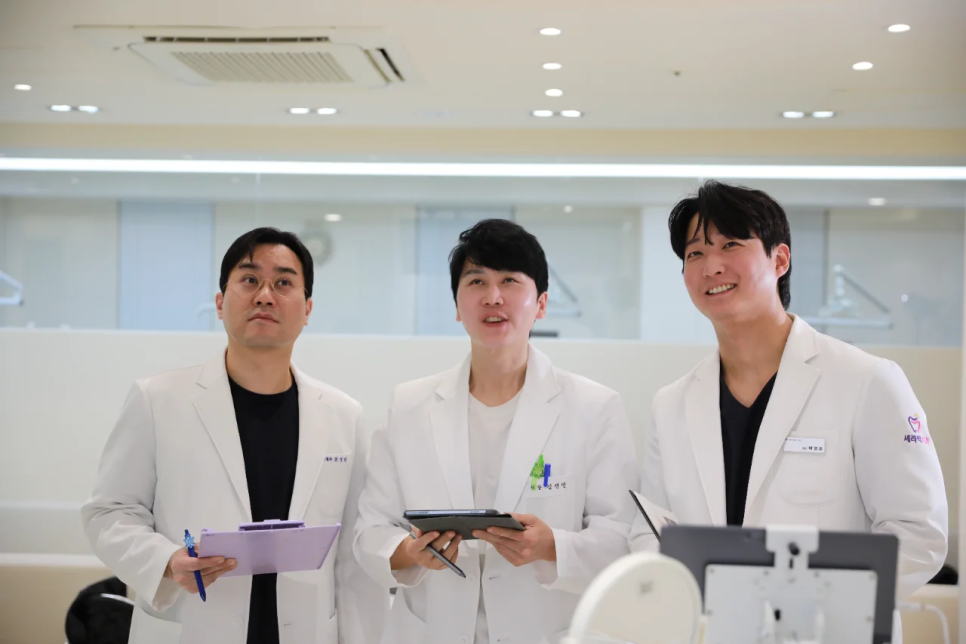
If an examination is necessary, the next question is where to get it. Once orthodontic treatment begins, you may visit the clinic for one to three years, and maintenance continues even after the appliances are removed. That makes it important to choose a clinic carefully.
Here are some things worth checking.
| What to check | Why it matters |
|---|
| Whether there is an orthodontic specialist | Orthodontics is a separate dental specialty overseen by the Ministry of Health and Welfare. It is a qualification earned through training and a certification examination |
| The system for reviewing diagnoses | Whether the structure allows multiple medical professionals to review the case together rather than relying on one person’s judgment alone |
| Distance from your daily routine | Regular visits are needed for one to three years, so location can matter more than you might expect |
| Post-treatment care | Treatment does not end on the day the appliances are removed, so check whether ongoing retention care is available |
The first item is especially worth knowing about. Orthodontics is one of the dental specialties for dentist specialists overseen by the Ministry of Health and Welfare, and the purpose of this system is to guarantee patients’ right to make informed healthcare choices. Asking whether the doctor providing your consultation and diagnosis holds specialist qualifications in orthodontics is not rude; it is a right guaranteed by the system.
Finally, let me lower one barrier to getting started.
Having a detailed examination and consultation does not mean you have decided to begin orthodontic treatment. It means getting a map of your situation: what type of case your teeth present, which appliances may be possible and which may be difficult, and what treatment period to expect.
If you have been repeating the same searches for months, it may be faster to learn the actual condition of your teeth than to keep changing your search terms. You need a map to decide properly whether to keep postponing treatment or begin!