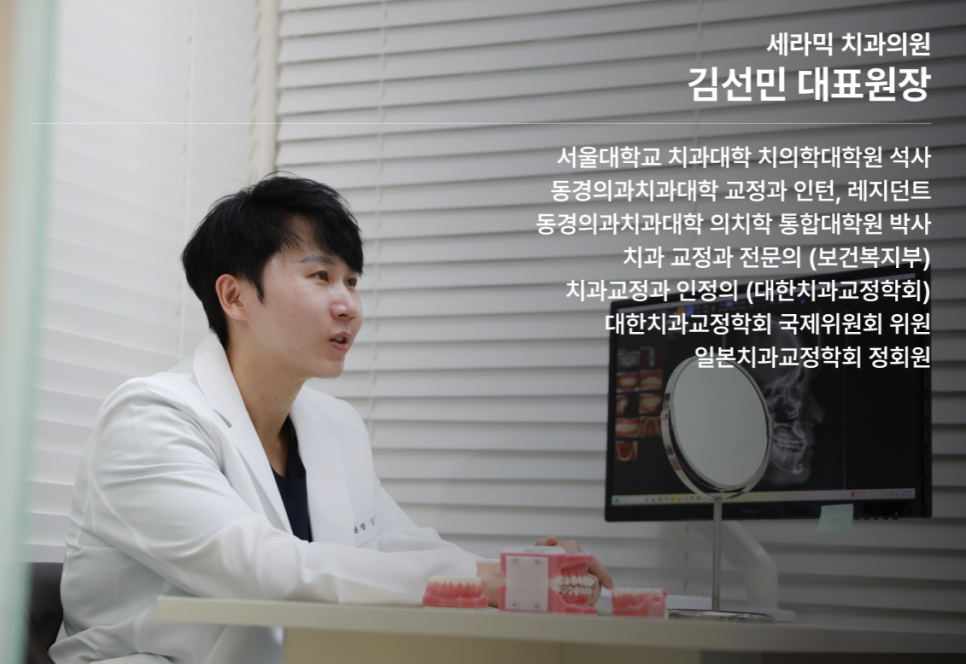
Hello. I am Kim Sun-min, the director of Hakdong Station Ceramic Dental Clinic.
Today, I would like to introduce the orthodontic treatment case of a 57-year-old female patient. I will show you in detail how a patient who said, “I have never smiled brightly because of my front teeth,” regained her confidence through orthodontic treatment. This case demonstrates that orthodontic treatment is also sufficiently possible for patients in their 50s and older.
A Woman in Her 50s Who Could Not Smile Because Her Front Teeth Had Been a Lifelong Source of Self-Consciousness
This patient was a woman in her 50s who said that her front teeth had been a source of self-consciousness throughout her life. She would often consciously cover her mouth whenever she smiled and said that she could never laugh openly.
Her main concerns were as follows:
-
Tartar repeatedly forming behind the front teeth
-
A sensation that the front teeth were hitting each other and becoming loose
-
Above all, a strong wish to “smile brightly with my front teeth”
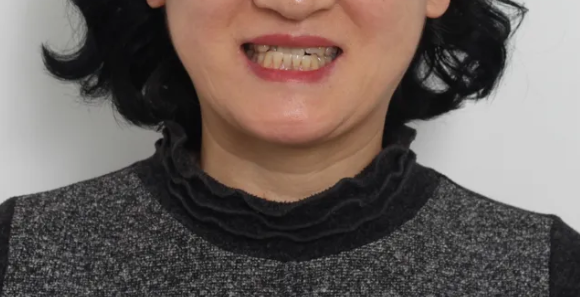
Before-treatment smile: She appears unable to smile fully.
As you can see in the photograph, very little of the upper teeth is visible when she smiles, and the left-right asymmetry is noticeable. Since this type of smile can also affect a person’s overall image, it was easy to understand the patient’s concerns.
Diagnosis: Anterior Crossbite
Detailed examination showed that the patient’s main problem was an anterior crossbite. Normally, the upper teeth should be positioned outside the lower teeth, but in this patient, the upper teeth were trapped behind the lower teeth.
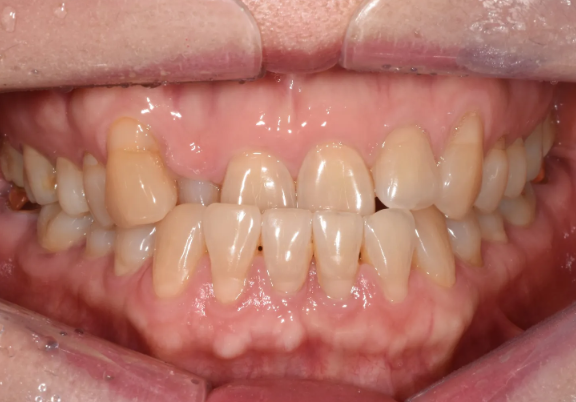
The front teeth are biting in reverse and do not appear aesthetically pleasing.
However, in this patient, the molars were fitting together well. In many cases, the reason the upper front teeth are positioned this far back is that the entire upper dental arch, including the molars, is located farther back. In this patient, however, only the front teeth were positioned toward the back.
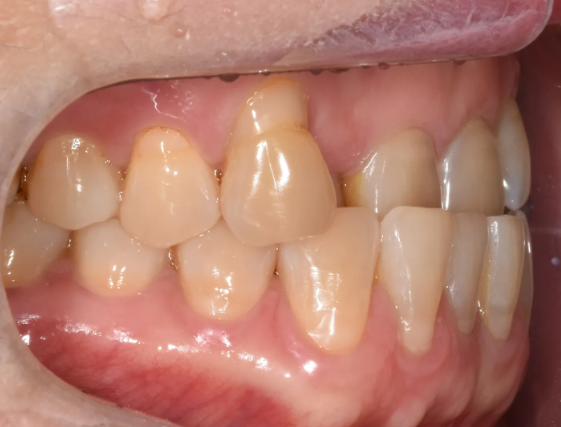
The molars are fitting together well.
The occlusal view makes it clearer how this developed. As you can see, the indicated front teeth are positioned completely one tooth behind.
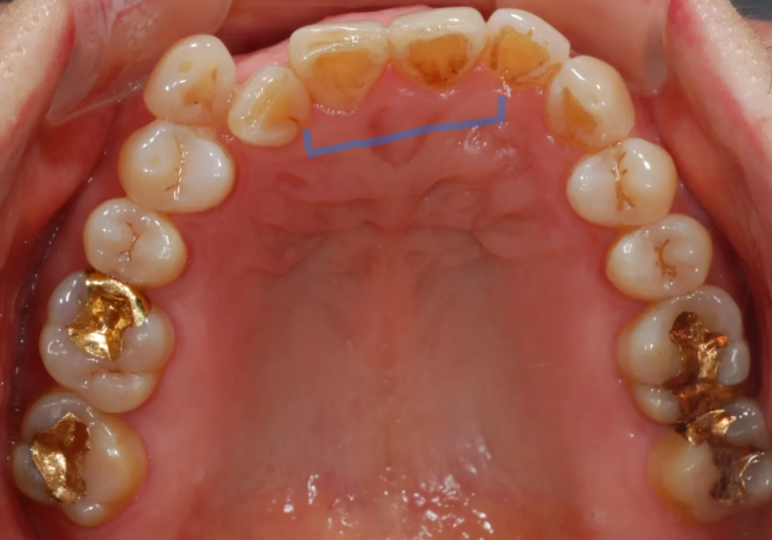
The diagnosis can be summarized as follows:
| Item | Findings |
|---|
| Front-tooth occlusion | Anterior crossbite — the upper teeth are positioned inside the lower teeth |
| Lower-jaw tendency | Protrusive tendency with left-right asymmetry |
| Molar relationship | Relatively stable (no major problems) |
Special Considerations for Orthodontic Treatment in Patients in Their 50s
When providing orthodontic treatment for patients in their 50s and older, there are several differences from treatment for younger patients that require special attention. I will explain the factors we considered most important.
First, we try not to reduce the volume of the teeth. If the teeth are moved too far backward during orthodontic treatment, lip support may be lost, which can cause wrinkles around the mouth. Since this can contribute to an aged appearance, treatment for patients in their 50s and older is designed to maintain lip volume.
Second, we carefully manage the gums (periodontal tissues). Patients in their 50s and older have a higher risk of periodontal disease, so regular scaling should be performed alongside orthodontic treatment. Tooth movement may be slower than in younger patients because bone metabolism decreases, but gum health is managed as the top priority.
Third, we try to shorten the treatment period as much as possible. Whenever possible, we try to remove the appliances from at least one arch first, because wearing appliances for a long period can be burdensome for the patient.
Treatment Plan: Regaining Confidence with Non-Extraction Orthodontic Treatment
Based on the comprehensive diagnosis, we established the following treatment plan.
| Item | Details |
|---|
| Extractions | None (the molar relationship was favorable, and maintaining lip support was necessary) |
| Treatment sequence | Attach lower brackets → place the bite plate → attach upper brackets |
| Role of the bite plate | Blocks front-tooth interference → facilitates correcting the crossbite |
| Additional treatment | Manage spaces between the teeth after alignment through interproximal reduction (IPR) |
| Estimated duration | Approximately 15–18 months |
There were two main reasons for choosing non-extraction treatment. First, the molar relationship was favorable, so there was no need to extract teeth. Second, as mentioned above, maintaining lip support was intended to help prevent an aged appearance.
Treatment Process: Placing the Brackets and the Role of the Bite Plate
The most important appliance in this treatment was a fixed posterior bite plate. To understand the process of correcting the crossbite, it is important to understand the role of this bite plate.
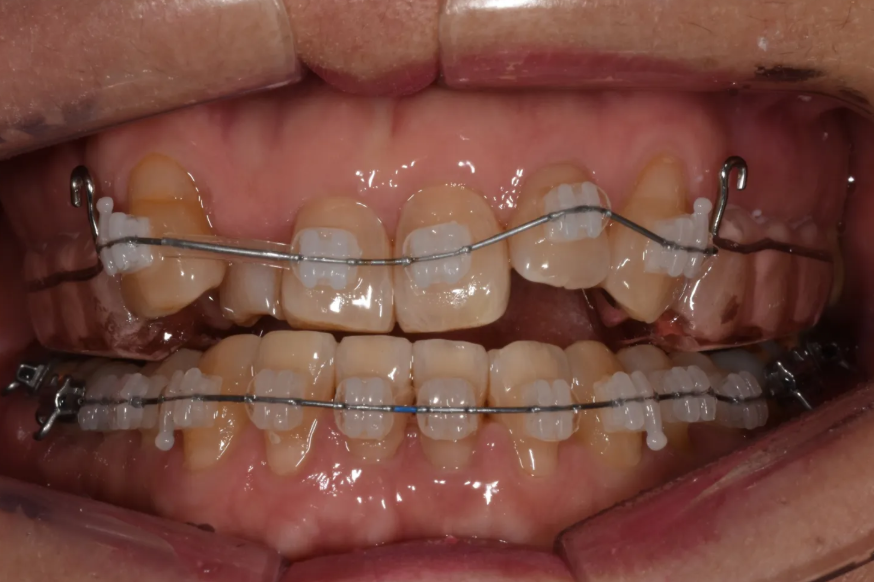
The front teeth begin to be moved forward after the brackets are attached.
Ceramic brackets were attached to the upper and lower teeth, and treatment began with a light wire to start aligning the teeth. However, there is a problem at this stage. Even if the upper teeth are moved outward, the lower teeth block them from passing over.
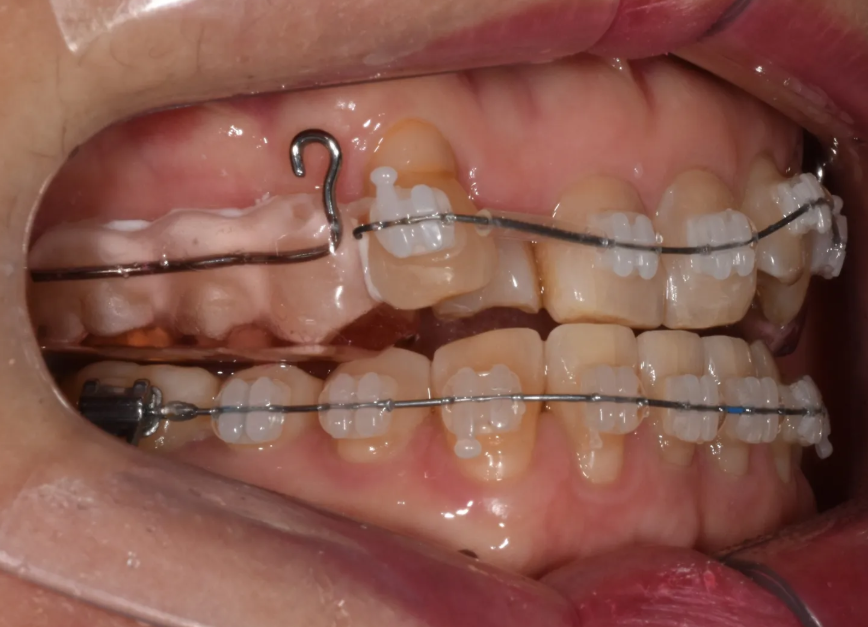
Bite plate placed — blocks interference so that the front teeth can pass over.
This is where the bite plate is used. When acrylic blocks are attached to the molar areas so that the upper and lower molars contact first, the front teeth are separated from each other. Once space is created between the front teeth, the upper front teeth can move freely outward.
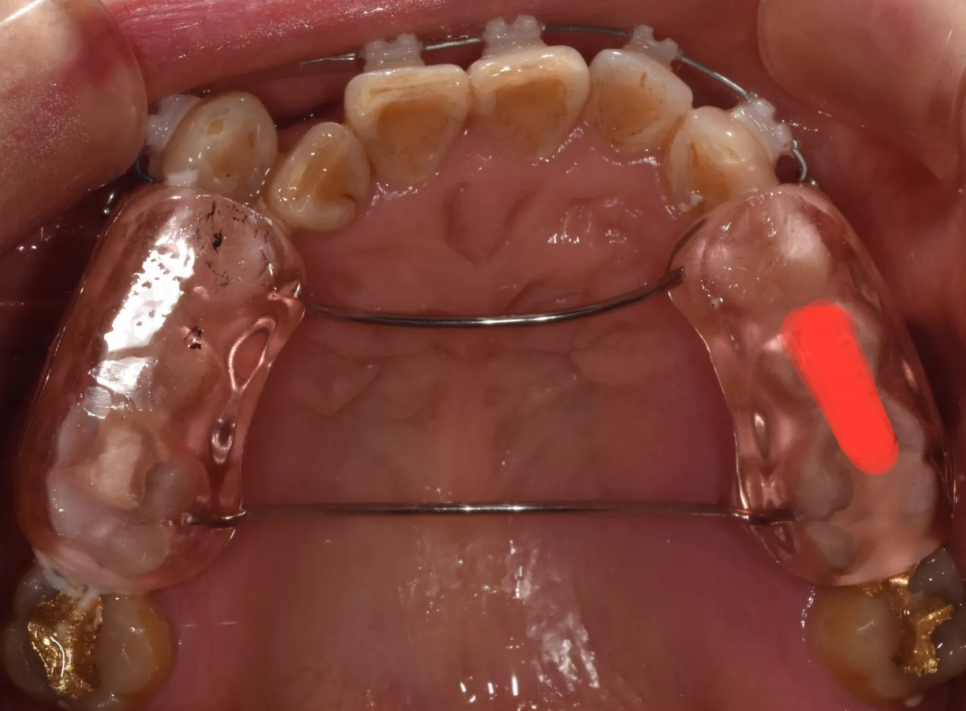
Top of the bite plate — acrylic blocks are present on both molars and secured with a wire running across them.
By using the bite plate together with the wire, the front teeth were able to move over into the position shown below.
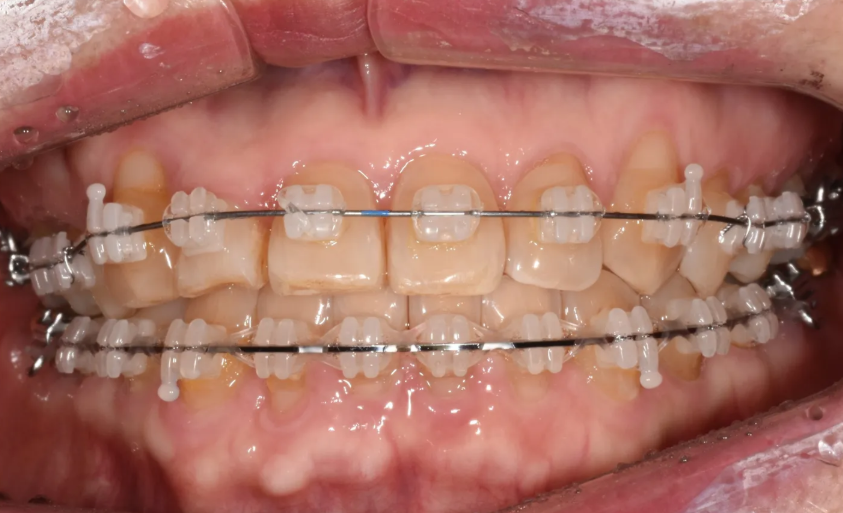
The crossbite has been corrected, and the upper teeth are naturally visible.
Treatment Results: Correction of the Crossbite and Completion of an Attractive Smile Line
As a result of the treatment, we were able to create a well-aligned dentition that looked attractive from both the front and the side. The total treatment time was approximately one and a half years.
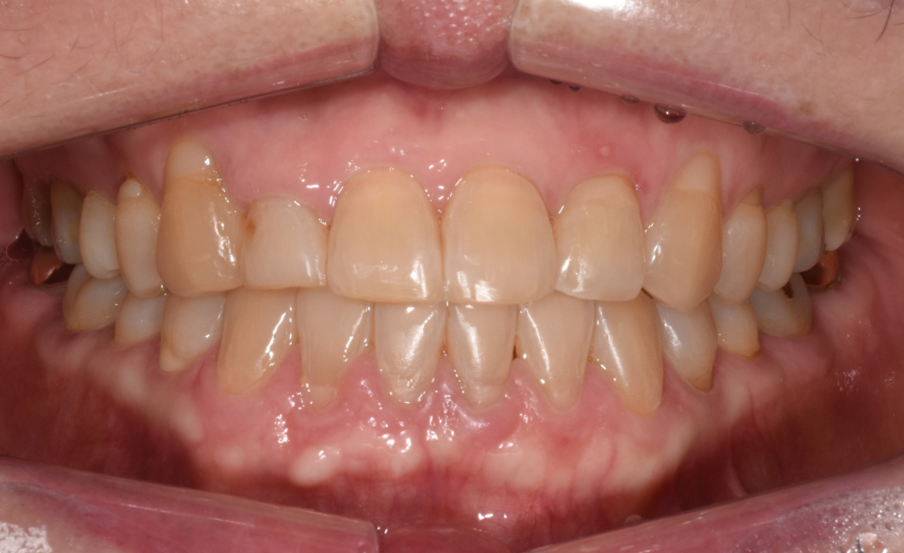
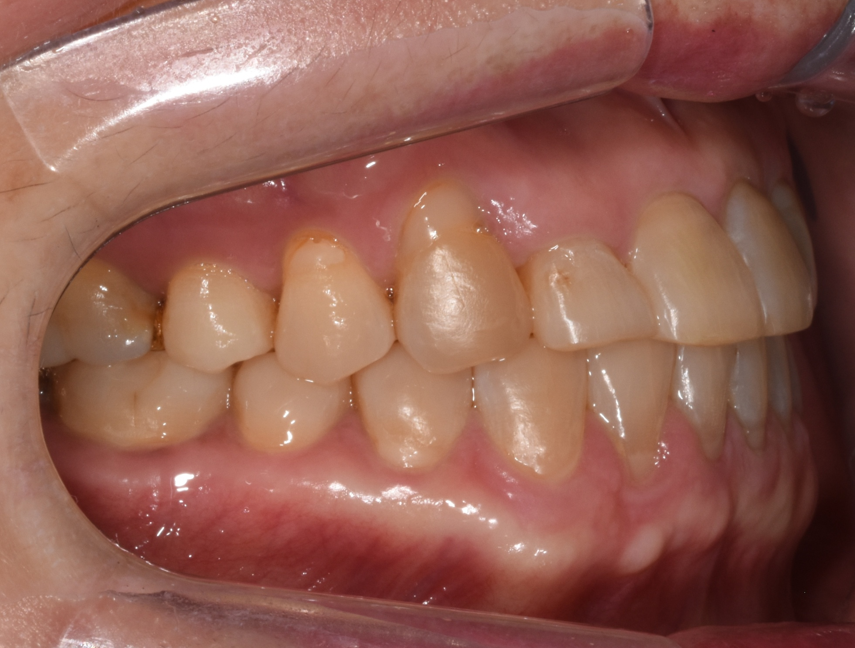
Before-and-After Comparison
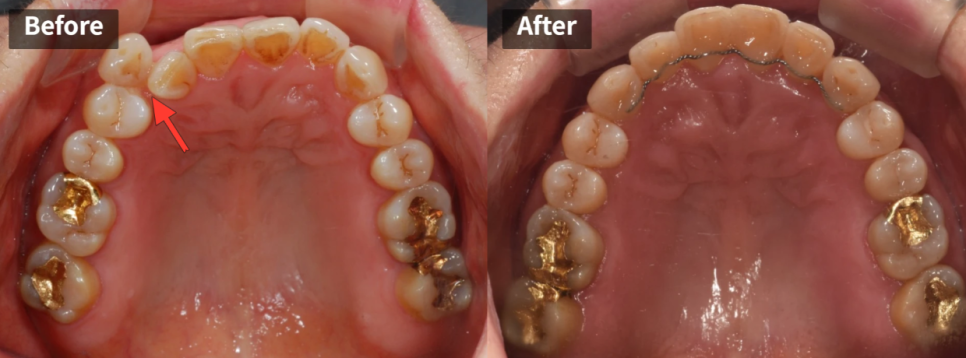
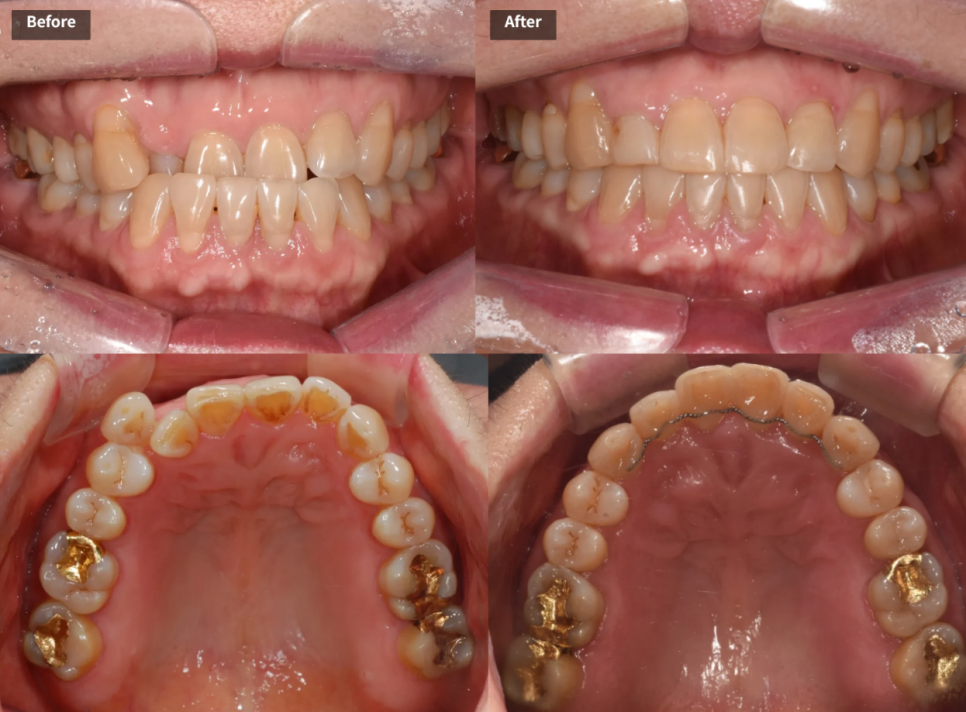
Comparing the before-and-after photographs, it is clear that the alignment of the teeth became more aesthetically pleasing. Another benefit was that even the area indicated by the arrow—where the teeth had been so overlapped that brushing had been nearly impossible—could be maintained in a healthier condition. Since the gums are especially vulnerable in middle age, this type of treatment may also increase the longevity of the teeth.
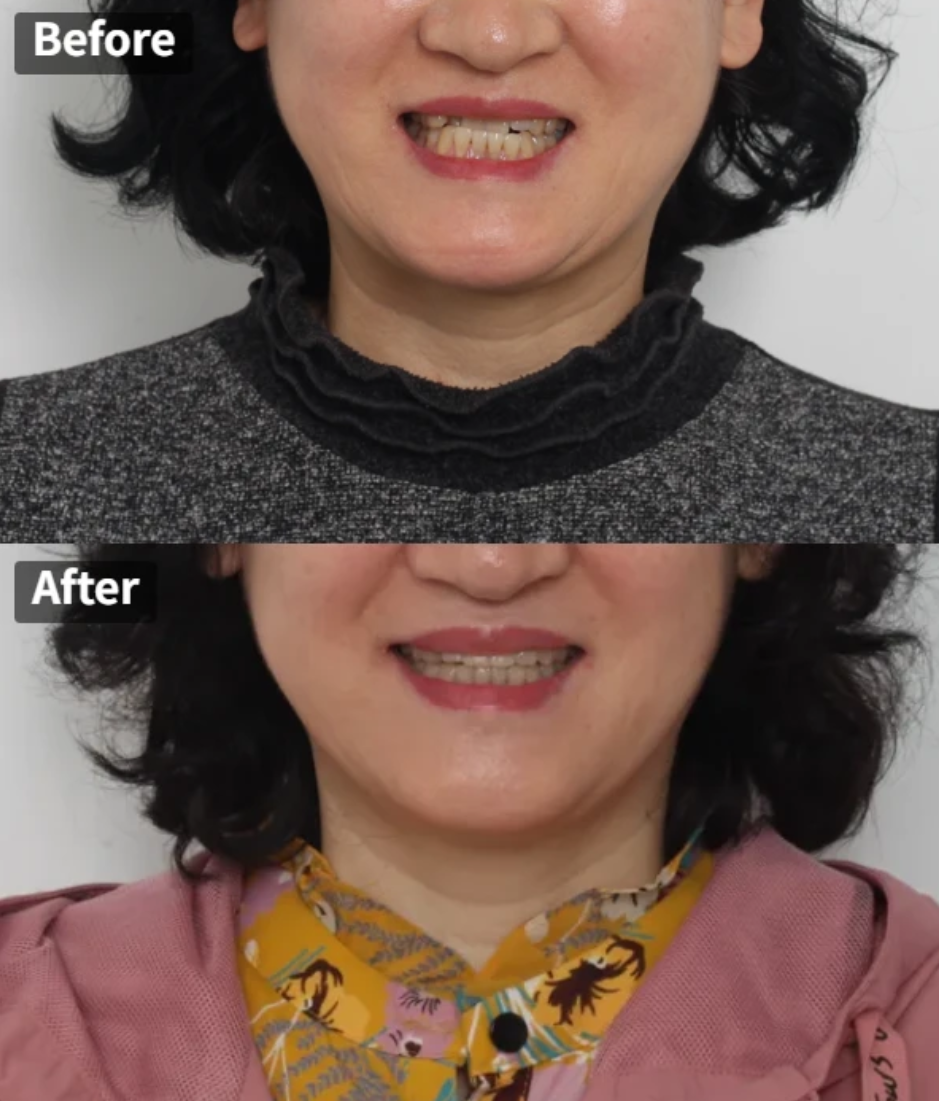
But the most rewarding change was the change in the smile. You can see the difference between the two photographs at a glance. Before treatment, she had an awkward smile with only the corners of her mouth slightly raised. After treatment, she is smiling brightly, with her upper teeth naturally visible. I remember the patient’s own words:
> “Because I kept smiling because I wanted to show them,
>
> I gradually began to smile brightly out of habit.”
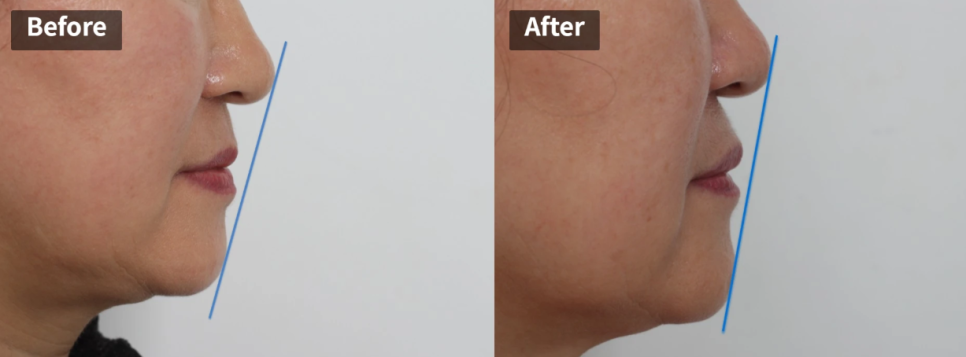
The change is also visible in the side profile. As the upper teeth moved into their normal position, they provided appropriate support for the lips, naturally improving the harmony of the nose, lips, and chin.
Conclusion: Age Is Just a Number
What I would like to emphasize through this case is that orthodontic treatment is sufficiently possible for patients over 50 when there is an appropriate diagnosis and treatment plan.
The key points of this treatment are as follows:
-
✅ Periodontal care: Proceed with orthodontic treatment while prioritizing gum health
-
✅ Maintaining lip support: Help prevent an aged appearance by avoiding excessive tooth movement
-
✅ Minimal treatment period: Minimize the patient’s discomfort
-
✅ Orthodontic treatment alone, without surgery: Correct the crossbite and restore aesthetics
The patient is currently wearing retainers and maintaining her beautiful smile well.
I hope this case offers a small source of hope to those who have been unable to smile throughout their lives because of self-consciousness about their front teeth, and to those who gave up because they thought orthodontic treatment was not possible at an older age. Age is just a number. What matters is an accurate diagnosis and a carefully planned treatment suited to the patient’s condition.
Thank you.