Whether it is okay to start orthodontic treatment after your enlistment date has been set ultimately depends on two things: the number of months remaining and the condition of your teeth.
However, there is something strange when you search for “orthodontic treatment for military personnel.” Stories saying people were glad they started before enlistment appear alongside stories about struggling to manage their appliances during service. Why do people reach completely opposite conclusions about the same choice? Let’s start with that question today.

Success Stories and Difficult Experiences Are Both Real — The Conditions Were Simply Different
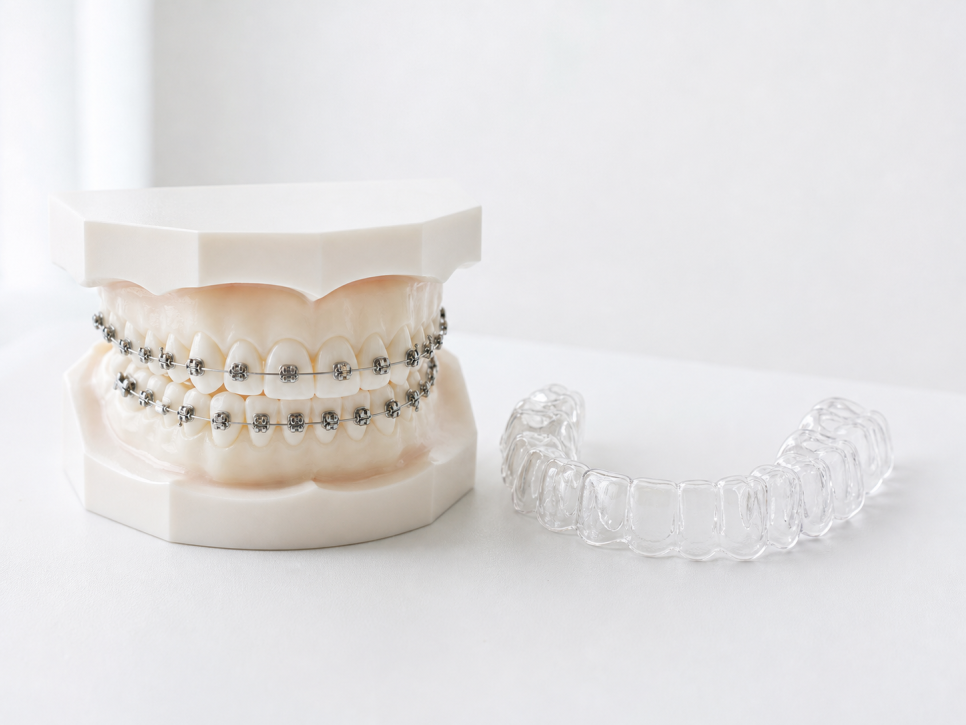
The total duration of orthodontic treatment is generally between 18 and 30 months. Depending on the individual’s condition, it may be shorter or longer. Under the current military service system of the Ministry of National Defense, the Army service period is 18 months (as of 2026).
In other words, the lower end of the orthodontic treatment period almost overlaps with the military service period. For people in their early twenties who want orthodontic treatment, military service and treatment are structured to overlap in some way. If treatment starts before enlistment, the middle of treatment overlaps with service; if it is postponed until after discharge, the start of treatment is delayed by that amount. Whichever option you choose, the overlap itself cannot be avoided.
People with different amounts of time remaining before enlistment, different levels of difficulty in moving their teeth, different types of appliances, and different conditions at their duty stations were each describing their own results. So the question to ask is less “Can I do it?” and closer to “Which set of conditions applies to me?”
The Different Possibilities Depending on the Time Remaining Before Enlistment
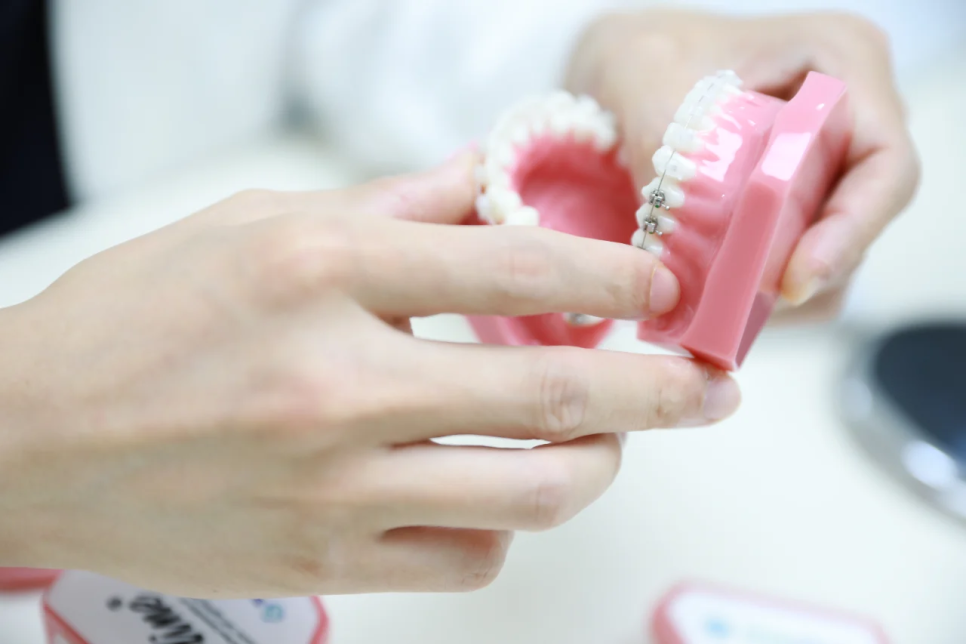
To assess the conditions, let’s first look at the timing structure of orthodontic treatment. Orthodontic treatment uses the biological response through which teeth move little by little, so appointments for adjustments generally continue at intervals of four to six weeks.
Therefore, it is important to consider how much time will be available during military service.
| Category | Details |
|---|
| Annual leave (regular leave) | Under the current standards, 24 days for the Army and Marine Corps, 27 days for the Navy, and 28 days for the Air Force; leave may be used in separate periods |
| Leave or overnight leave for medical appointments | Under the “Directive on Petition Leave and Other Matters for Medical Treatment of Service Members,” a unit commander may authorize leave or overnight leave for outpatient treatment at a civilian medical institution |
In fact, under the system, dental appointments during service are not completely prohibited. However, in practice, being able to leave when you need to is not the same as simply having military leave available. It is realistically difficult to maintain a strict four-to-six-week schedule throughout the entire service period.
Considering these two points leads to the following conclusions.
| Situation | Assessment | Reason |
|---|
| Enough time before enlistment for the initial movement of the teeth | Worth considering starting treatment | There may be room to continue with a plan that allows somewhat longer adjustment intervals during service |
| Enlistment shortly after the appliances are placed | May be too demanding | The initial period requiring the most hands-on care directly overlaps with recruit training and assignment to the permanent unit |
Of course, this is not fundamentally impossible. Some people enlist immediately after having their appliances placed and still complete treatment successfully. However, the difficulties a patient experiences are clearly different when there are even two or three months available compared with when there is no time at all.
The Final Variable Can Only Be Determined by Examining Your Mouth

You already know how many months remain before enlistment. The other half of the information needed for a decision is the condition of your teeth, and no one can know that without a diagnosis.
For example, orthodontic treatment that requires extractions tends to take longer than treatment without extractions. The expected treatment period can change based on whether extractions are needed, but that decision cannot be made before an examination. Creating a treatment plan also takes time. Depending on the medical institution, producing and analyzing detailed examination materials such as radiographs, intraoral photographs, and dental models may take around two weeks. If you rush just before enlistment, you may not even have enough time for this preparation, so it is a schedule that needs to be checked in advance.
For orthodontic treatment affected by an enlistment schedule, accurate prediction of the treatment period is much more important than usual. Therefore, when looking into clinics, it is helpful to check the following points.
-
Since tooth movement and treatment-period prediction are key, does a specialist in orthodontics personally perform the diagnosis?
-
Since treatment may continue over a long period, including a gap during service and its resumption after discharge, does the clinic have a system for managing the gap and maintaining continuity of treatment?
-
Since treatment may take several years, does the clinic explain the treatment plan with a long-term relationship in mind during the consultation?
These are criteria that can be applied regardless of which clinic you choose.
Planning Orthodontic Treatment Around Your Enlistment Schedule
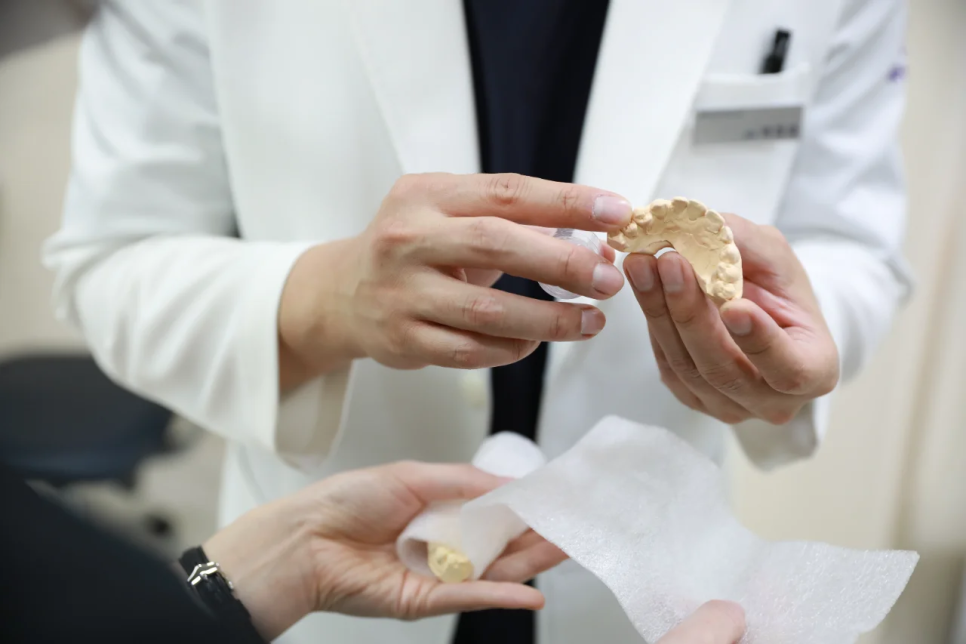
Ultimately, the answer to planning orthodontic treatment for military personnel depends on the number of months remaining, the condition of your teeth, and your own willingness to follow through. If you can get through the challenging initial phase before enlistment, it is worth considering starting treatment. If you do not have enough time, it is also perfectly reasonable to complete only the examination and treatment plan for now.
If your enlistment date has been set, count the months remaining and consider having your dental condition assessed through a detailed examination at a nearby orthodontic clinic. Knowing your condition before enlistment is itself the beginning of a plan, and whatever conclusion you reach, confirming it before you leave will be the choice that leaves you with fewer regrets two years from now.