You simply went to the dentist for a checkup, but while looking at the panoramic image, the doctor suddenly paused and said:
“Here—this tooth was originally missing.”
It was a spot that had never hurt and where you had no memory of losing a tooth, yet you were told that the permanent tooth had been absent since birth. Then, the choices were presented right away: Should you have an implant placed, or should the space be closed with orthodontic treatment? Your mouth, which had seemed perfectly fine until yesterday, suddenly became a problem that required a decision—all because of a single image.
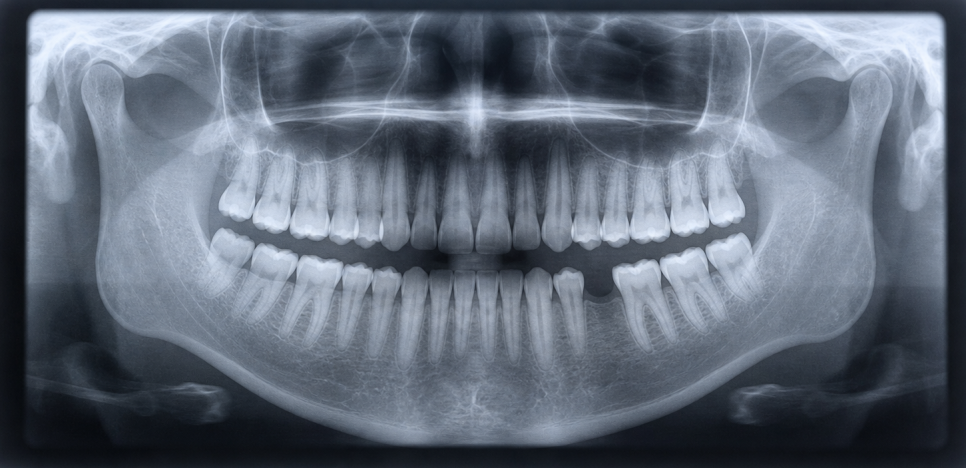
“A tooth that was originally missing” is more common than you might think

Let’s start with the reassuring part. When a permanent tooth is absent from birth, excluding wisdom teeth, it is called congenital tooth agenesis. Reports combining epidemiological studies from several countries show that, although the rates vary among study groups, it generally occurs in about 2–7 out of 100 people. It is more common than you might think—there may be one or two people with it in a single class.
The locations where it is frequently found are also fairly consistent.
-
The mandibular second premolars
-
The maxillary lateral incisors (the teeth immediately next to the front teeth)
-
In rare cases, several teeth may be missing at once
The issue is not the missing tooth itself, but what comes next. Some dentists recommend implants, while some articles say that the space can be closed with orthodontic treatment. Which advice is correct? Let’s go through the factors that determine the decision, one by one.
Why different dentists give different answers—It is not that one is wrong; they are looking at it from different perspectives
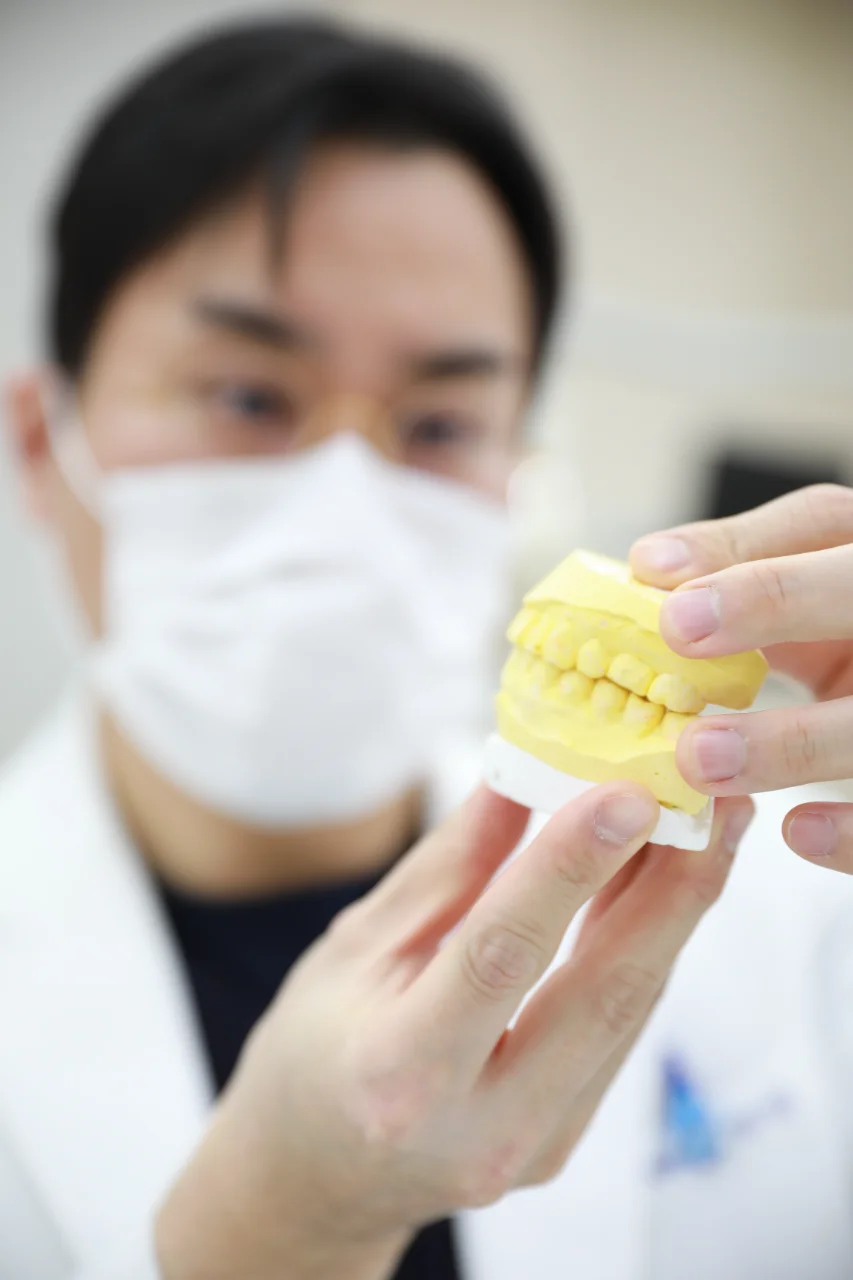
To explain the source of the confusion, the two answers address different questions.
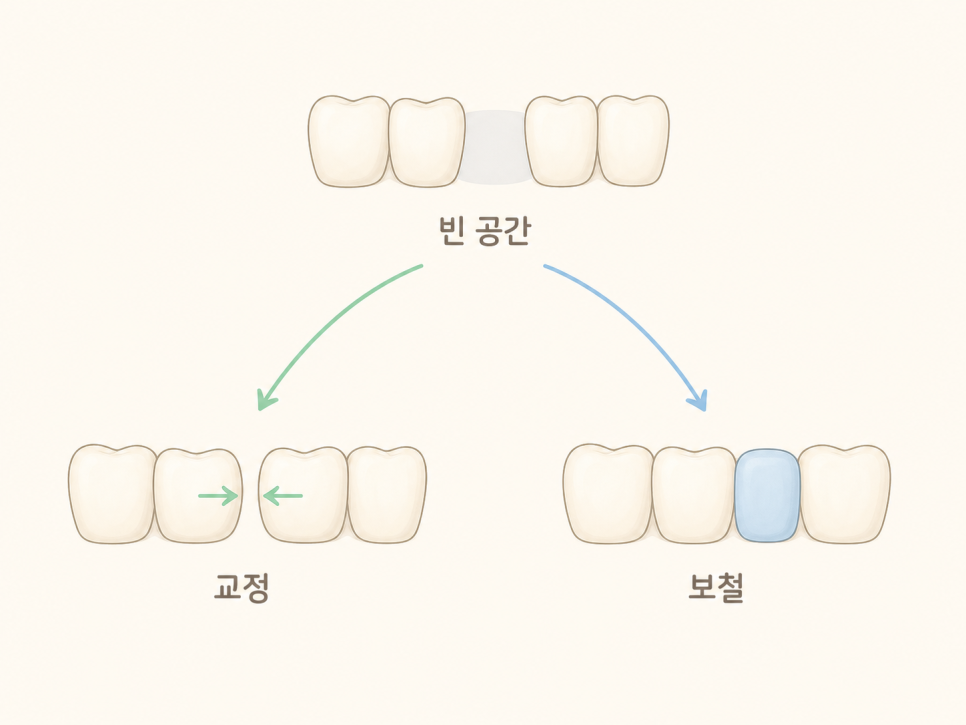
Recommending an implant is a prosthodontic approach. It leaves the empty space as it is and fills it with an artificial tooth. Recommending orthodontic treatment is an orthodontic approach: it moves your own teeth to eliminate the space itself. It may be easier to understand as gradually moving the neighboring teeth to fill the gap.
In orthodontic consultations, it is common to compare these two options side by side from the beginning. Their differences are clear, however. Prosthodontic treatment involves introducing a new artificial structure, while orthodontic treatment resolves the issue using only your own teeth.
So what determines which option is right for you?
When the space can be closed with orthodontics vs. when an implant is appropriate
The answer depends on the conditions inside your mouth. The factors actually checked during diagnosis are easier to understand when presented in a table.
| Condition | More favorable for orthodontic space closure | More favorable for an implant or other prosthodontic treatment |
|---|
| Available space in the dental arch | A dental arch that originally required orthodontic treatment because of insufficient space | A well-aligned dental arch with adequate space apart from the missing-tooth area |
| Occlusal relationship | A tendency toward Class II malocclusion | Class I or Class III occlusal relationship |
| Pattern of missing teeth | Missing teeth on both sides symmetrically | A single missing tooth on one side with a stable alignment |
| When a tooth next to a front tooth is missing | The canine’s size, shape, and color are suitable for substitution | Replacing the missing tooth with the canine would look unnatural |
If the dental arch was already being considered for orthodontic treatment because of crowding, the balance tends to favor closing the space. If the teeth are well aligned except for the gap, prosthodontic treatment tends to be favored.
What about the outcomes of the two options? Reports indicate that cases completed through space closure had favorable long-term gum-health indicators. This is because the area filled with your own tooth retains its periodontal ligament. By contrast, an implant does not have a periodontal ligament, so it cannot adapt with the subtle movements of a natural tooth. Over time, a height difference may develop between the implant and neighboring teeth, and the artificial tooth may need adjustment or replacement. For this reason, the choice is best determined not by which option is superior, but by which conditions apply to your mouth.
Parents who have learned that their child has a missing tooth should consider one more point.
An implant is like a screw fixed into the jawbone, so it cannot move along with a growing jaw. For this reason, it is generally understood that implants should be placed after jaw growth is complete.
Whether growth is complete is difficult to determine based on chronological age alone; it is assessed through growth evaluations such as skeletal maturity, which indicates how much the bones have developed. Therefore, if the patient is an adolescent, it is difficult simply to postpone the decision by saying, “We’ll place the implant when they become an adult.” An intermediate plan is needed to determine whether the space should be closed or maintained until adulthood, and this planning falls within the scope of orthodontic decision-making.
The problem is that you cannot check these conditions on your own
When you examine each item in the table, they have something in common. What class the bite is, how much space is available, whether the neighboring teeth can be moved, and whether growth is complete—none of these can be checked by looking in a mirror.
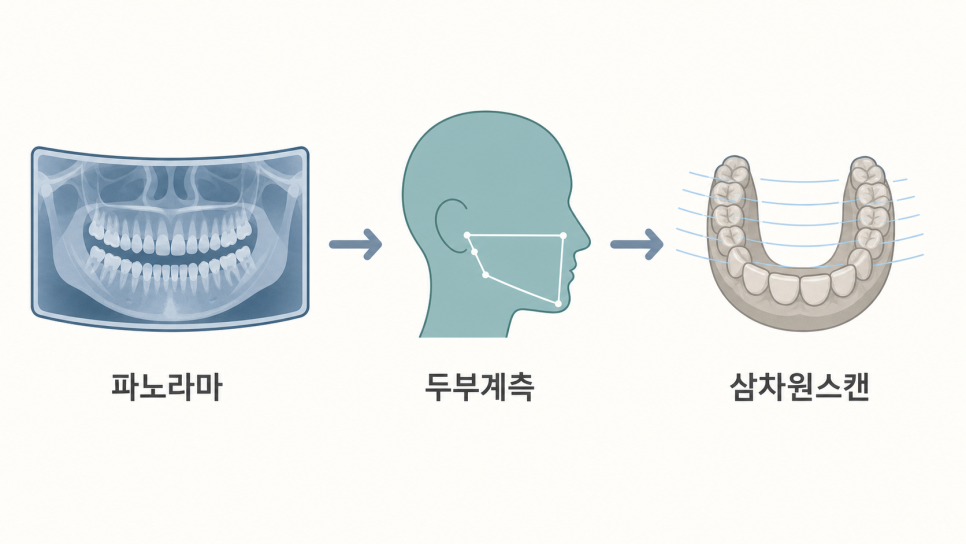
These conditions can be confirmed only by combining the findings from a detailed evaluation performed before orthodontic treatment.
-
Panoramic X-ray: Checking the location of the missing tooth and the condition of the tooth roots
-
Lateral cephalometric X-ray (a side-view image used to measure the facial bones): Evaluating the occlusal relationship and growth
-
CT scan and oral scan, when necessary: Three-dimensional analysis of the available space and bone condition
For this reason, it is advisable to undergo a diagnostic process that compares orthodontic and prosthodontic solutions side by side. Consulting a clinician who provides orthodontic evaluations allows you to check the conditions for both options at once.
There is also a reason not to put off the evaluation. If the space left by a missing tooth remains empty for a long time, the neighboring teeth may tilt toward the gap and the opposing tooth may over-erupt. Later, regardless of which treatment you choose, the preparation process may become longer. You can take your time deciding, but it is better not to delay the diagnosis.
Before making a decision, you can start by getting it checked
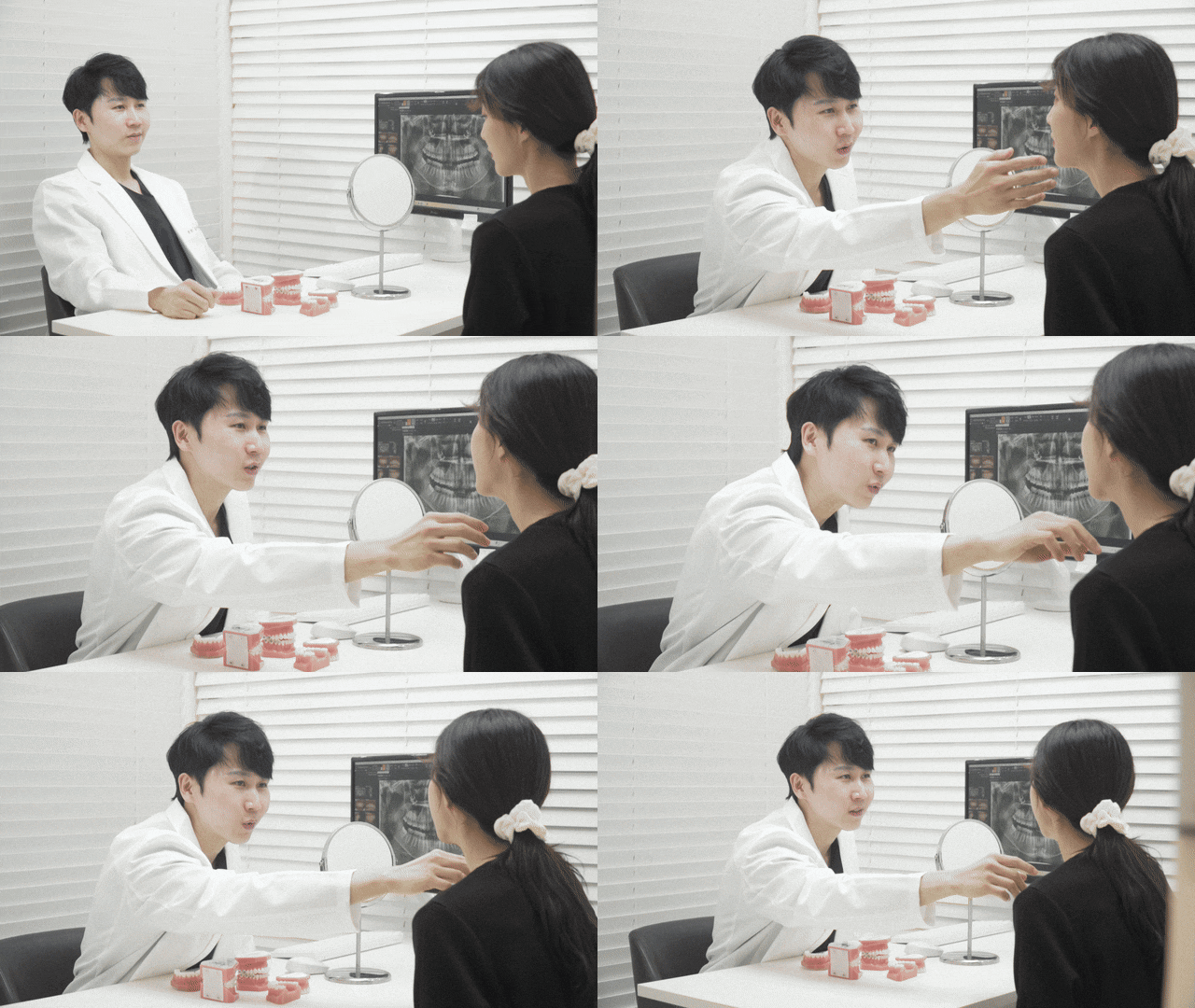
There is no need to rush into a decision. Getting the necessary information, however, is a separate matter. If the detailed evaluation shows that prosthodontic treatment is the appropriate option, you can choose that path. What matters is understanding your own conditions and making the decision yourself.
Bringing together the criteria discussed so far, the key questions are these: Did the dental arch originally require orthodontic treatment? What is the occlusal classification? Is the missing-tooth pattern symmetrical? And has growth been completed? These four factors are the major points that determine whether the space should be closed orthodontically or filled with a prosthesis. In particular, when the conditions are favorable for orthodontic closure, it is an option worth considering because the treatment can be completed using only your own teeth, without an artificial structure.
It may be a decision about a single tooth, but the result stays with you for decades. Before finalizing an implant, first have a detailed evaluation at a nearby orthodontic clinic to determine whether the space left by your missing tooth can be closed with orthodontic treatment. That one check may make your future choices much easier than you expect.