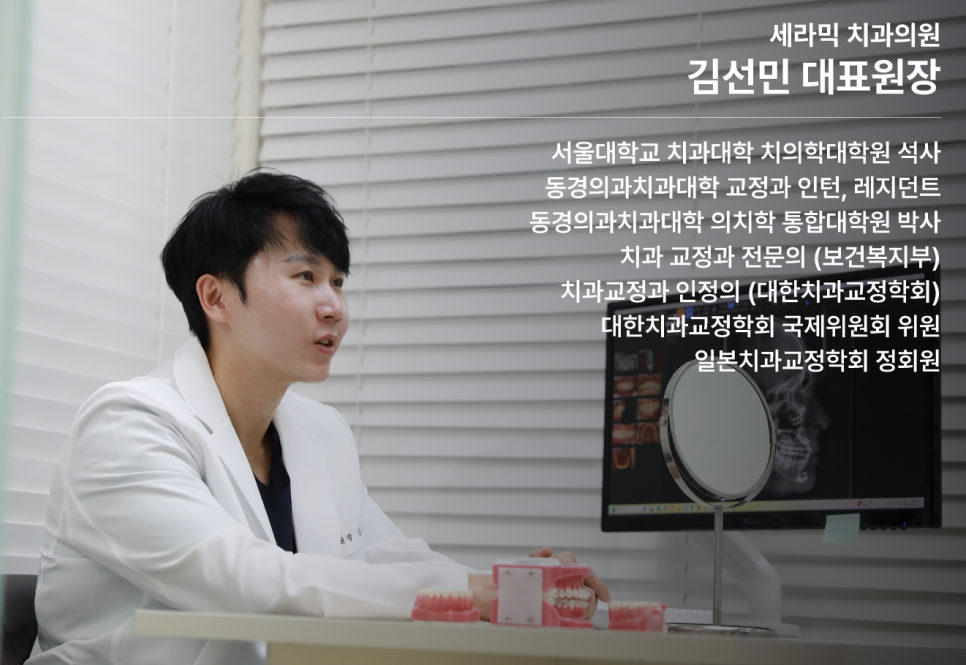
Hello. I am Sunmin Kim, the director of Ceramic Dental Clinic near Hakdong Station. Today, I would like to introduce a case in which black triangles that had not been resolved even after two rounds of orthodontic treatment were improved with veneers.
Many people are concerned about black spaces remaining between their front teeth even after orthodontic treatment. In this post, I will explain in detail the entire process, from the causes of black triangles to treatment with veneers and color matching.
Patient’s Concerns
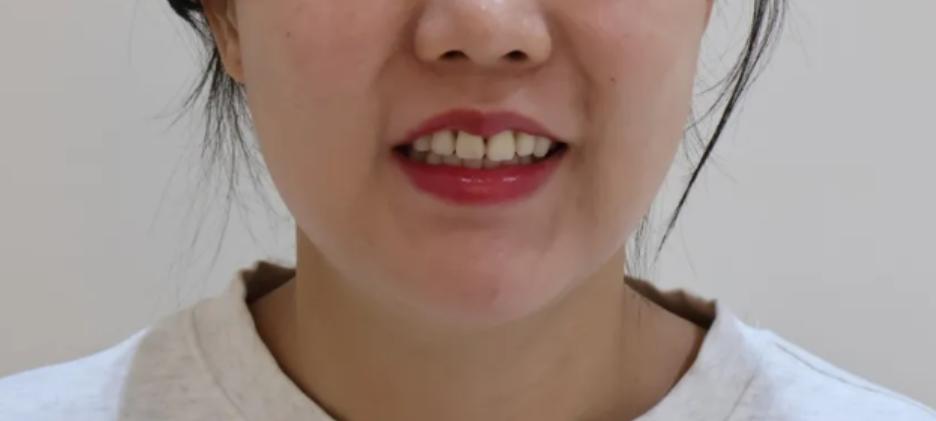
This patient was a woman in her early 30s, and her primary concern was the black triangular space visible between her front teeth. Although she had undergone orthodontic treatment twice to resolve the issue, the black triangles had not improved sufficiently.
She was also dissatisfied with the shape of her teeth, which appeared short and wide, and hoped to achieve a longer, more refined appearance. She also had clear preferences regarding color: “I want to remove the yellowish tone, but I don’t want my teeth to be made so white that they do not suit my age.” She wanted the delicate balance of a natural yet bright appearance.
After receiving comparative consultations with another well-known veneer clinic in Gangnam, she decided to proceed at our clinic, saying that she found our explanation of the treatment plan more convincing.
What Are Black Triangles? — Causes and Treatment Options
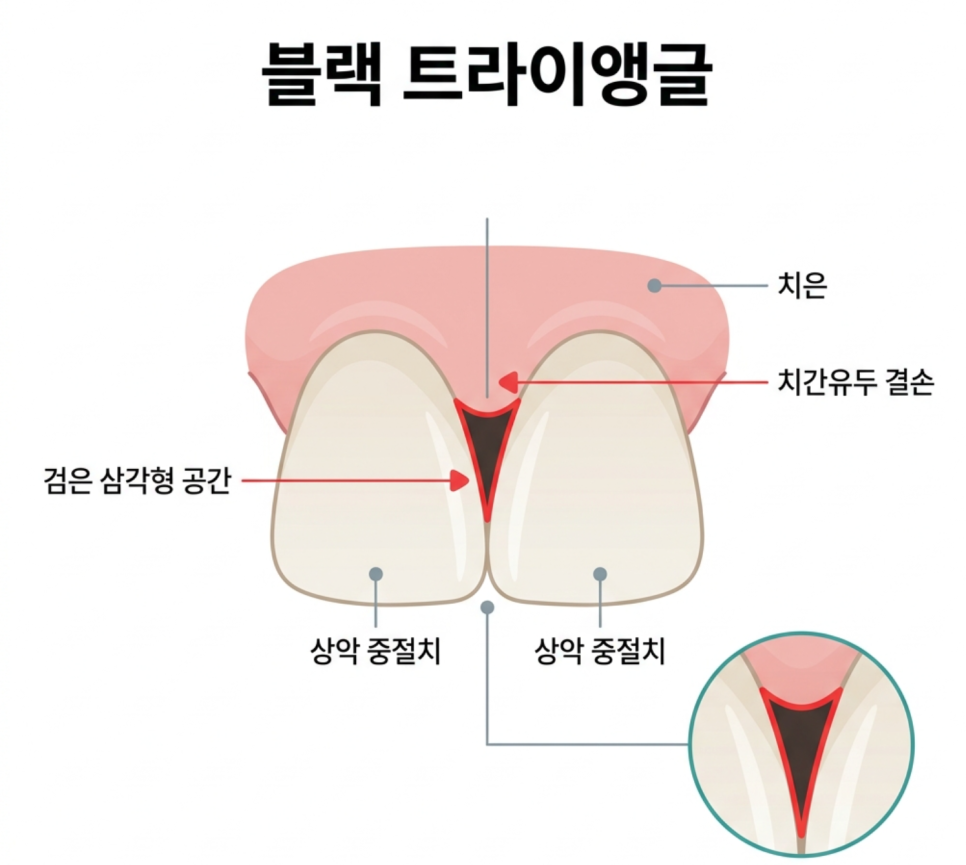
A black triangle is a black, triangular-shaped empty space that occurs when the gum between the teeth, known as the interdental papilla, does not completely fill the space. Many people find these spaces aesthetically concerning because they are visible when smiling or speaking.
There are various causes of black triangles:
| Cause | Explanation |
|---|
| Periodontal disease | The gums recede as the supporting bone is lost |
| Bone loss after orthodontics | Some bone may be resorbed during orthodontic treatment |
| Tooth shape | More likely to occur with triangular-shaped teeth |
| Age-related changes | Natural gum recession |
An orthodontic treatment option is to perform interproximal reduction, which involves slightly reshaping the sides of the teeth, and then bring the teeth together to close the space. If the distance from the contact point between the teeth to the supporting bone is reduced to within 5 mm, the gums may naturally fill in the space through a “squeezing” effect.
However, in this patient’s case, it appeared that interproximal reduction had not been performed even though she had undergone orthodontic treatment twice. As a result, the black triangles remained, and veneers were selected as a prosthetic treatment option. The approach was to widen the tooth shapes with veneers and visually close the black triangles.
Initial Examination — Evaluation of Tooth Condition
An analysis of the initial intraoral photographs revealed several issues occurring together.
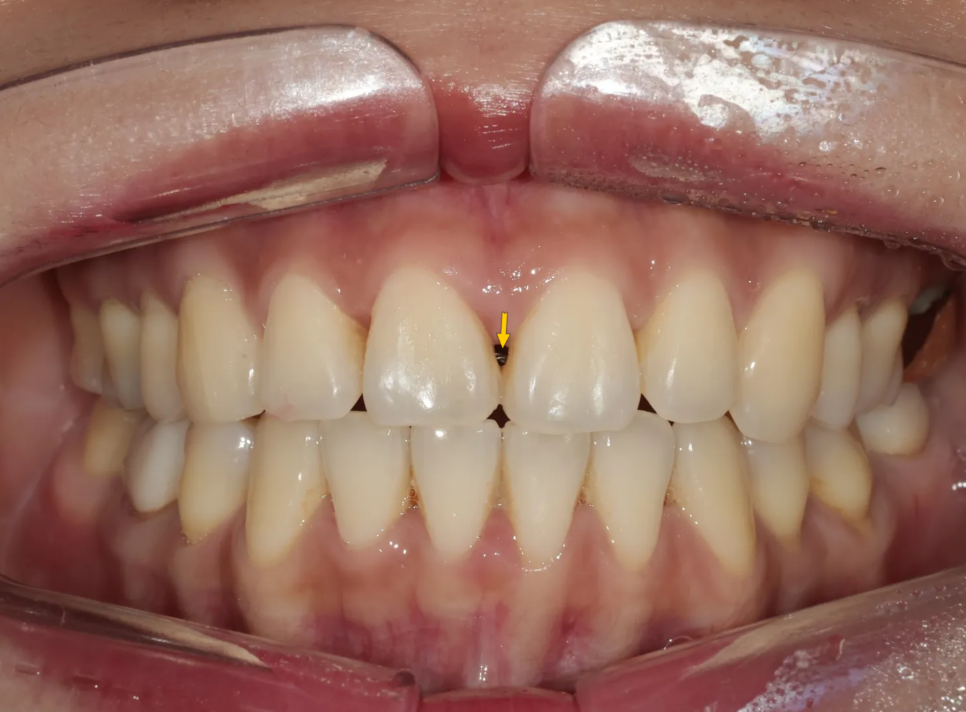
Black triangles between the front teeth and the orthodontic retainer wire are visible
| Item | Condition |
|---|
| Black triangles | Clearly visible between the upper front teeth, with the retainer wire exposed |
| Tooth shape | Short and wide, lacking a refined, modern appearance |
| Bite | Anterior open bite, with the tongue protruding through the space |
| Canine symmetry | The left and right canines were different in length |
| Color | An overall yellowish tone with uneven shading |
It was particularly important that the front teeth did not make contact, resulting in an open bite. In this situation, it is possible to lengthen the teeth, but the bite must be adjusted carefully so that the lengthened teeth do not collide with the lower teeth. Otherwise, the veneers may become detached or fracture.
Based on this comprehensive analysis, we developed a treatment plan using veneers on the upper front teeth to address the shape, color, and black triangles at the same time.
Treatment Planning — Design Considerations
Veneers are not simply thin shells attached to the teeth. The shape, proportions, color, and bite must all be designed comprehensively to achieve a result that satisfies the patient.
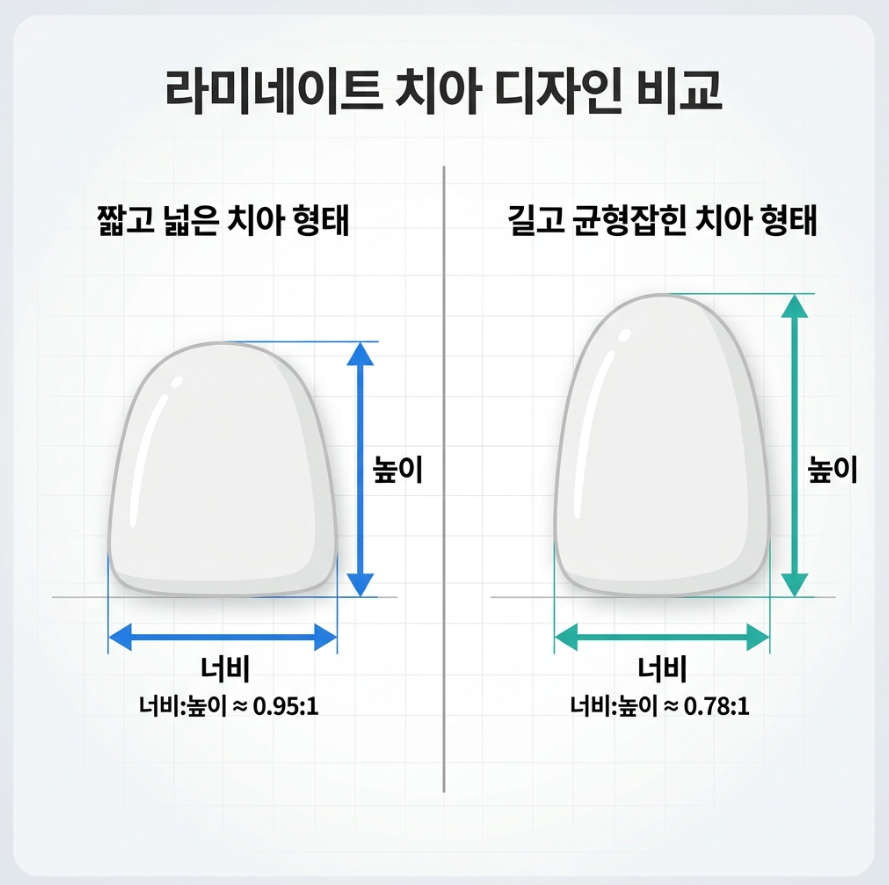
The key design considerations for this patient were as follows:
Shape Design
The design focused on improving the proportions by increasing the length from the existing short and wide shape. The length-to-width ratio of the teeth was reset to approximately 75–80% to create the modern, refined appearance the patient wanted.
Bite Management
The most important point to consider when extending the length is interference with the lower teeth. If the veneers collide with the lower teeth after placement, they may become detached or fracture, so we established a detailed bite-adjustment plan in advance.
Canine Treatment Strategy
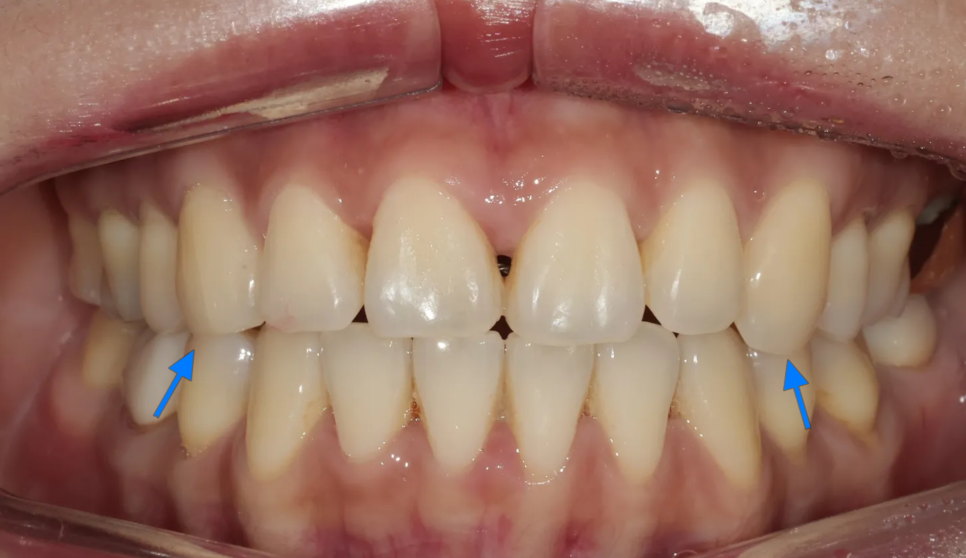
If you look closely at the photograph again, you can see that the left and right canines differ considerably in length. Determining how to balance them was the key issue.
| Tooth | Strategy | Reason |
|---|
| Right canine | Slightly increase the length to restore its original cusp shape | Natural restoration of the tooth’s shape |
| Left canine | Adjust with minimal reduction | Excessive reduction could cause sensitivity and increase the risk of requiring a crown |
Ultimately, we chose a compromise between the left and right sides to achieve a sense of symmetry while preserving as much tooth structure as possible. Excessive reduction simply to match one side can instead lead to the need for more extensive treatment.
Color Plan
The goal was to remove the yellowish tone while achieving a bright yet natural shade that suited the patient’s age and skin tone. We gave top priority to her wish that “the teeth should not stand out too much on their own.”
Color Selection Process — Customized for the Patient
Color is a very important factor with veneers. Even veneers of the same shade can look completely different depending on the lighting, and each person has a different idea of their ideal tooth color.
At our clinic, we allow approximately 20 minutes for color assessment. We carefully check the shade under various lighting conditions:
-
Bathroom lighting (fluorescent lighting)
-
Waiting room lighting (typical indoor lighting)
-
Natural light (the most accurate way to assess the color)
Color matching also involves more than simply selecting the shade of the veneers themselves:
| Consideration | Explanation |
|---|
| Inherent veneer color | The color and translucency of the ceramic itself |
| Patient’s natural tooth color | The shade may vary from one tooth to another |
| Skin tone | Different shades may be more suitable depending on cool or warm undertones |
| Cement color | Fine adjustments can be made using cements in various shades |
Our approach is to customize the result by using different cement shades for each individual tooth. This helps create a uniform yet natural tone across all the teeth.
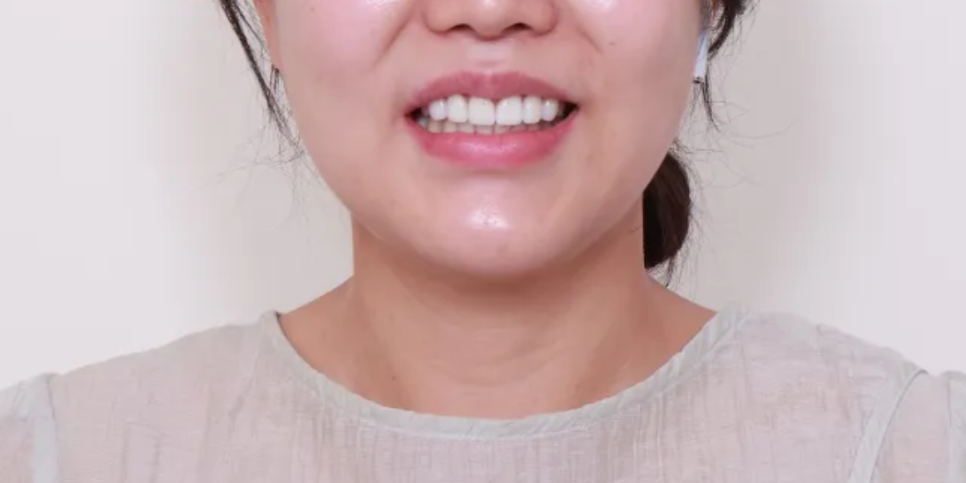
After checking the color, the patient was very satisfied, saying, “I think the color turned out beautifully!” We were able to complete the placement in a positive atmosphere.
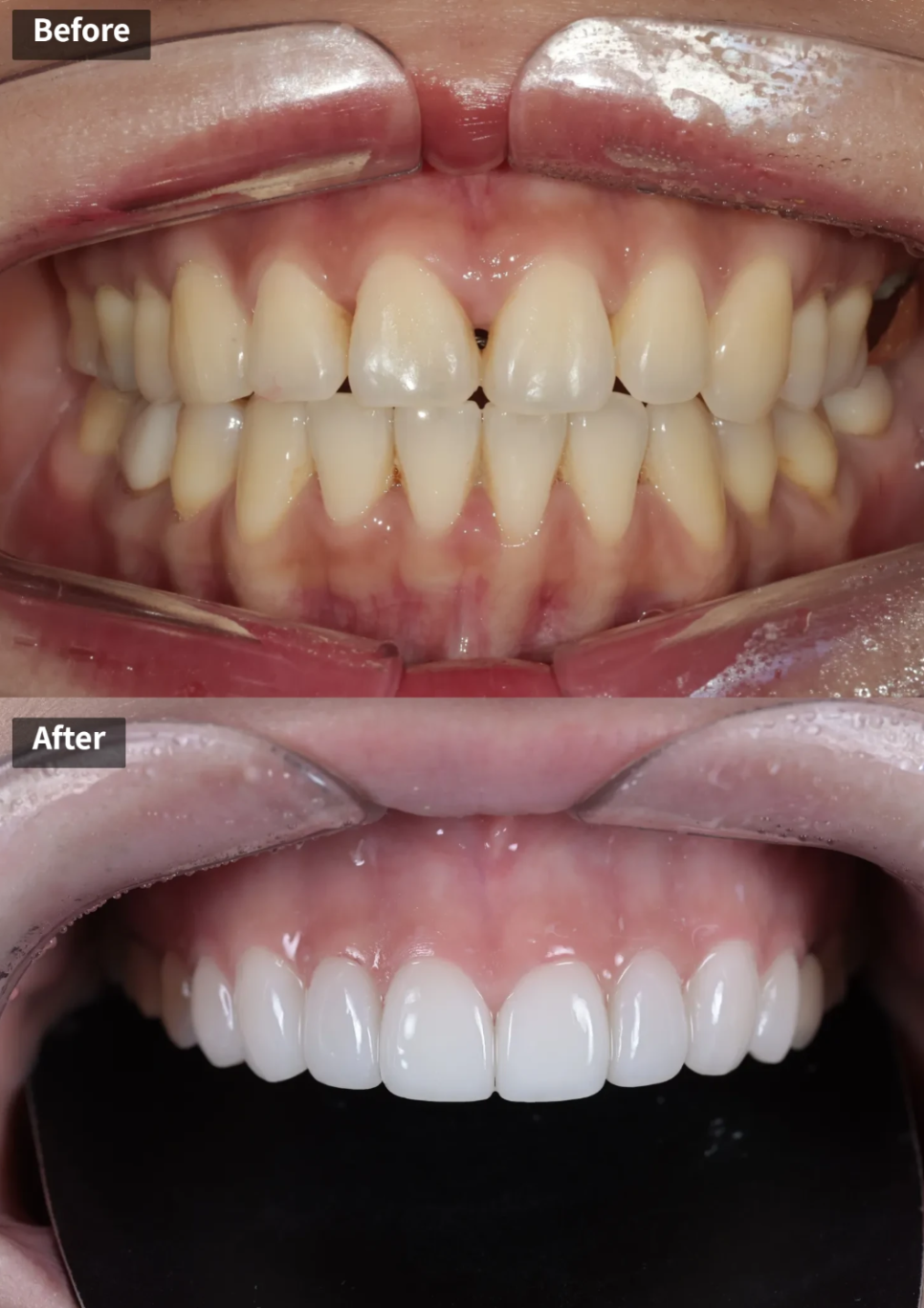
Final Results — Before & After
Here is the final result after completing the entire process.
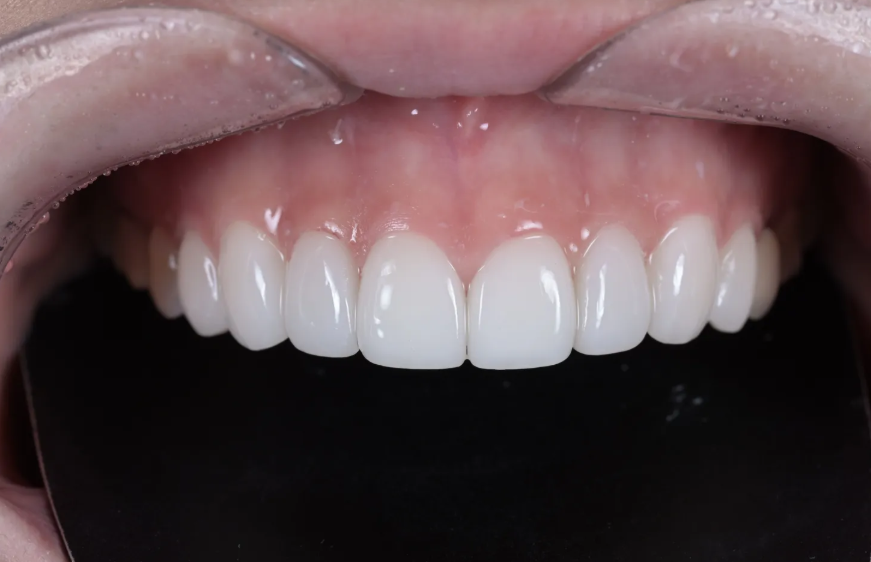
The black triangles disappeared, and the shape and color were naturally improved
The improvements are summarized in the table below:
| Item | Before | After |
|---|
| Black triangles | Black spaces between the front teeth | Completely closed |
| Tooth shape | Short and wide appearance | Longer, more refined proportions |
| Color | Yellowish tone with uneven shading | Bright, uniform, natural tone |
| Canine symmetry | Difference in length between the left and right sides | A sense of symmetry achieved through compromise |
The black triangles that had not been resolved even after two rounds of orthodontic treatment were neatly eliminated with veneers. At the same time, the shape and color of the teeth were improved, creating an overall natural and harmonious smile.
Key Points to Consider When Getting Veneers
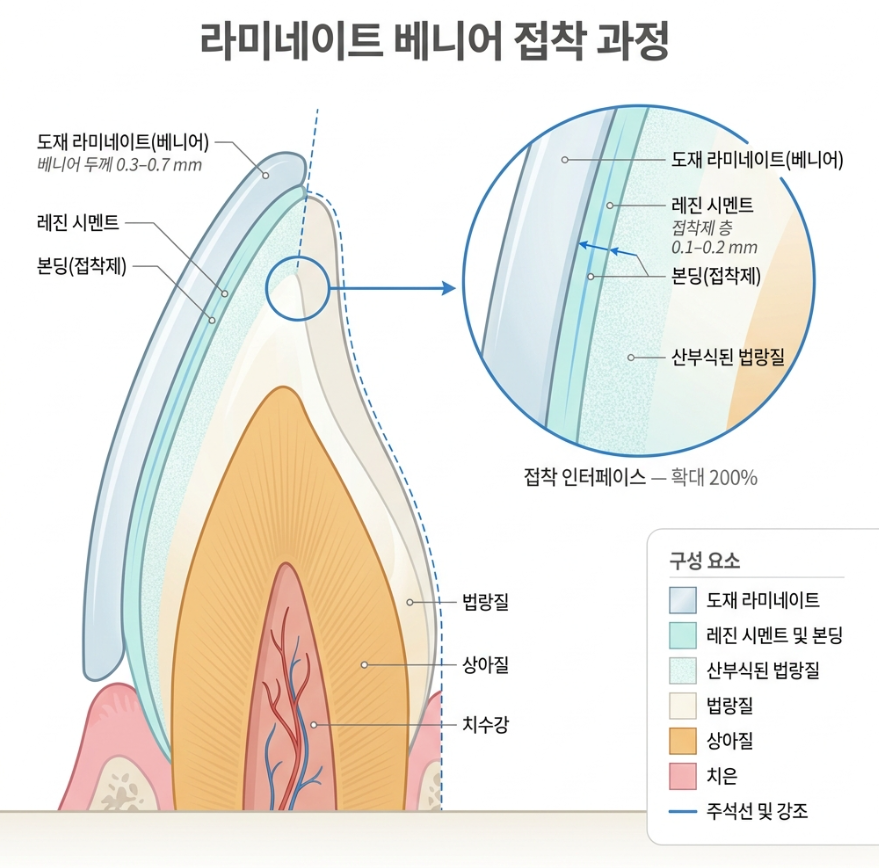
Veneers are not simply attached;
they require comprehensive treatment planning
Here are the key points to consider during veneer treatment, based on this case:
- Comprehensive planning is essential
The plan must consider not only color but also shape, proportions, and bite. If any one of these elements is overlooked, it can be difficult to achieve a satisfying result.
- Bite interference must be checked
Especially when lengthening the teeth of a patient with an open bite, it is essential to check whether the teeth will contact the lower teeth. Overlooking this may lead to veneer fracture or detachment.
- A compromise is preferable to excessive reduction
When there is asymmetry between the left and right sides, excessive reduction to match one side perfectly can cause sensitivity or lead to the need for more extensive treatment, such as crowns. In the long term, it is preferable to preserve as much tooth structure as possible while balancing both sides.
- Color should be checked under various lighting conditions
If the color is checked under only one type of lighting, it may look different in everyday life. The result can be made more precise by checking it under multiple lighting conditions and customizing the cement shade as well.
- There are options for black triangles that orthodontics could not resolve
Even when black triangles remain because of the limitations of orthodontic treatment, veneers can provide significant aesthetic improvement. Rather than giving up, we recommend receiving a consultation.
Conclusion
Today, I introduced the case of a patient who had been concerned for a long time about black triangles that had not been resolved even after multiple rounds of orthodontic treatment, but who regained a natural and bright smile through veneers.
Veneers are not simply an aesthetic treatment. They are a comprehensive treatment that considers the shape, proportions, color, and bite of the teeth, as well as their harmony with the patient’s face. For this reason, I believe that thorough analysis and planning, along with detailed customization, make a difference in the final result.
If you are concerned about black triangles or the shape or color of your teeth, please consider a consultation to find the most suitable option for you. Thank you.
This has been Sunmin Kim, director of Ceramic Dental Clinic.