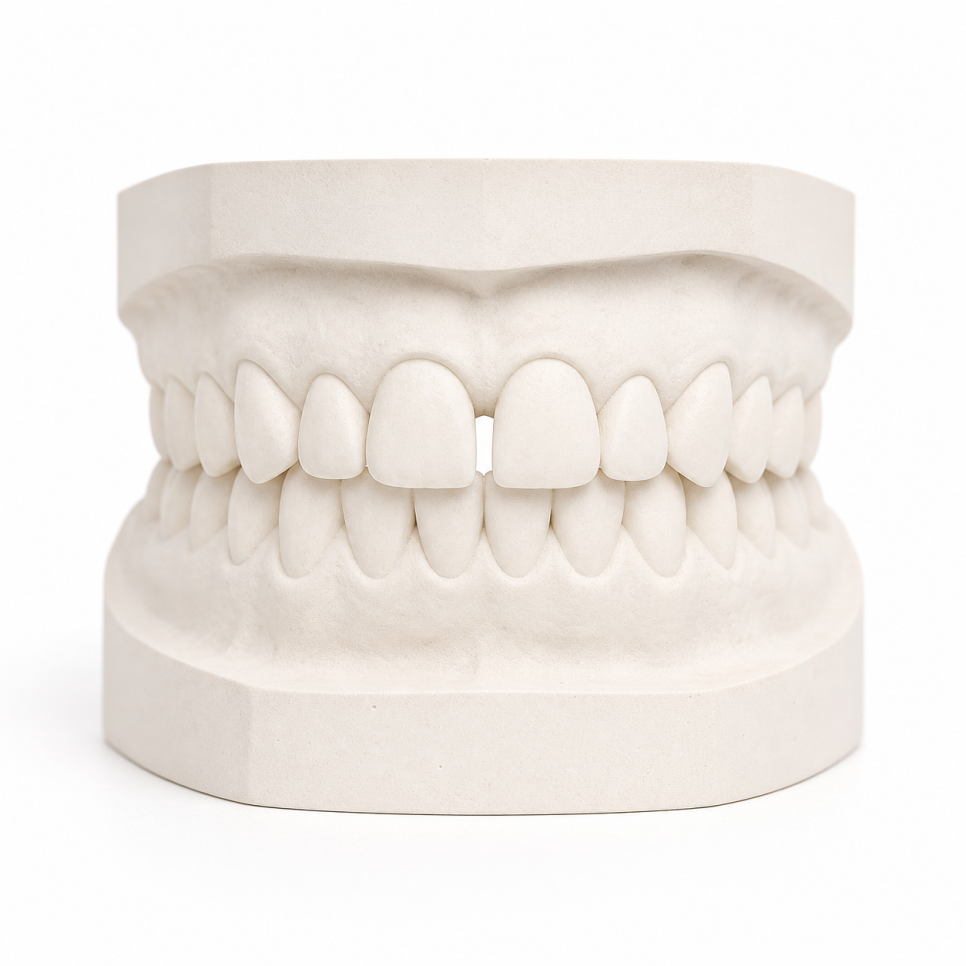
People who have consulted a dentist about gaps between their front teeth are often confused. This is because the treatment recommended can vary somewhat from one clinic to another.
One clinic may recommend veneers, while another suggests orthodontic treatment. From the patient's perspective, this can lead to the question, “Which opinion is actually right?” and cause them to postpone making a decision.
However, there is usually a reason why the diagnoses differ between clinics. Today, I will explain why this happens and clearly summarize the criteria for determining when partial orthodontic treatment is possible and when it is not.
Why Diagnoses Differ Between Clinics
First, I want to emphasize that being confused does not mean you have failed to look for enough information or that you are uninformed.
Gaps between the front teeth, known in dentistry as a diastema, do not develop from just one cause.
Because there are many possible causes, veneers may be suitable for some people, while others may genuinely need orthodontic treatment. Each clinic may tend to explain cases based on the types of cases the dentist commonly treats or on their treatment philosophy. As a result, the explanations can naturally sound contradictory to patients.
Therefore, before choosing a treatment, I recommend changing the order in which you approach the decision.
What to Examine Before the Treatment Method — Why Did the Gap Form?

In textbooks, the causes of a diastema are generally divided into five categories.
| Cause | What it means |
|---|
| High attachment of the upper labial frenulum | The ligament inside the upper lip extends down and attaches near the space between the front teeth, creating a gap |
| Tooth-size discrepancy (peg-shaped or undersized teeth) | The surrounding teeth are small, leaving space overall |
| Mesiodens | An extra tooth is hidden near the roots of the front teeth |
| Habits | Oral habits such as tongue thrusting or thumb-sucking |
| Periodontal problems | The teeth become displaced as the gum and supporting tissues weaken |
There is one key point you should remember.
Ideal treatment
is not limited to closing the gap;
it also manages
the cause of the gap.
Even if the gap is 3 mm in both cases, different causes require completely different treatment sequences, methods, and maintenance approaches. Ultimately, the answer to “Can this be treated with partial orthodontics?” depends less on the size of the gap than on its actual cause.
When Partial Orthodontic Treatment Is Possible vs. Difficult

So, in what situations can partial orthodontic treatment be considered? It is generally possible when the following conditions are met.
-
The gap is limited to the front teeth
-
There are no major problems with the way the upper and lower teeth meet (occlusion)
-
There are no structural causes such as periodontal disease or an extra tooth
When these conditions are met, moving only a few front teeth with partial orthodontic treatment may lead to positive changes within a relatively short period.
On the other hand, there are clearly cases that are difficult to resolve with partial orthodontic treatment alone.
Typical examples include gaps caused by problematic habits or the labial frenulum. If the gap is simply forced closed while the cause remains, it is highly likely to reopen eventually. In particular, when the labial frenulum is involved, determining whether to remove it before or after orthodontic treatment is itself an important part of the diagnostic process.
Special care is also needed when the front teeth gradually become spaced after adulthood. This may be pathological tooth movement caused by weakened supporting tissues due to periodontal disease. In such cases, periodontal treatment must come first rather than starting orthodontic treatment without further consideration. If the sequence is reversed, the process of moving the teeth itself may place significant stress on the gums.
If the overall occlusion is complex, moving only the front teeth could disrupt the way the upper and lower teeth meet. In such cases, planning comprehensive orthodontic treatment is much safer.
Regardless of the method chosen, treatment for gaps between the front teeth should include post-treatment care with retainers. Treatment is not complete when the gap is merely “closed”; maintaining the result afterward is also part of proper treatment.
Although I Am an Orthodontist, Veneers Are the Right Choice for Some People
As a specialist in orthodontics, this may sound somewhat unexpected, but for some people with gaps between their front teeth, restorative treatment such as veneers may be more reasonable than orthodontic treatment.
The key criterion is the teeth's natural size. In dentistry, there is a concept called a Bolton discrepancy, which refers to a mismatch in the size ratio between the upper and lower teeth.
| Condition | Reasonable approach |
|---|
| The teeth are normal in size, but their positions have created a gap | Use orthodontic treatment to bring the teeth into proper alignment |
| The teeth themselves are small, leaving excess space | Use restorative treatment, such as veneers, to compensate for their size and shape |
If the problem is the position of the teeth, orthodontic treatment that properly aligns them from the roots is the fundamental solution. On the other hand, if space remains because the teeth are naturally small, compensating for their size and proportions with veneers may look more natural. The principle is similar to applying a nail tip to a fingernail. Recently, no-prep techniques that do not require reshaping the teeth have also become possible, reducing the burden associated with tooth damage.
For this reason, I recommend veneers instead of unnecessarily extensive orthodontic treatment for people with undersized teeth. Being able to comprehensively assess both orthodontic treatment for gaps between the front teeth and esthetic restorative treatment makes it easier to choose an approach suited to the patient's condition from the beginning.
One Important Caution — It Is Difficult to Assess Your Condition Yourself
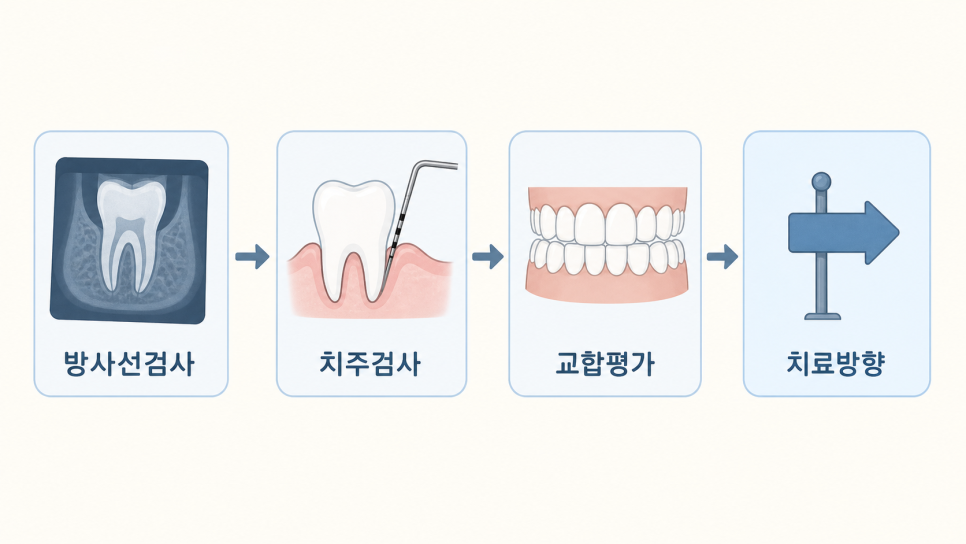
As you read this, you may have wondered, “Which type of case applies to my front teeth?” However, to be honest, there are limits to accurately diagnosing your own condition based on written information alone.
-
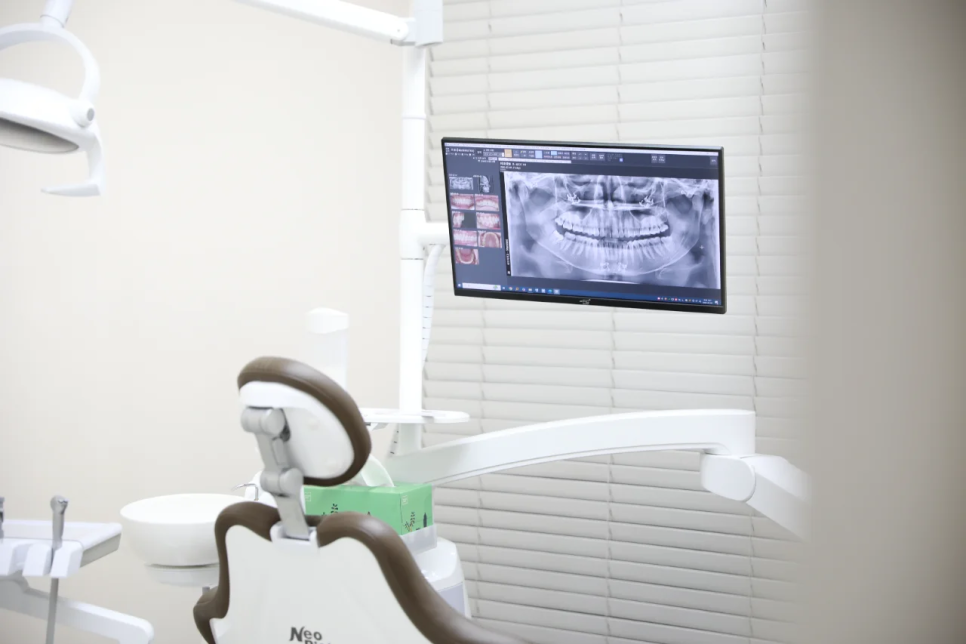
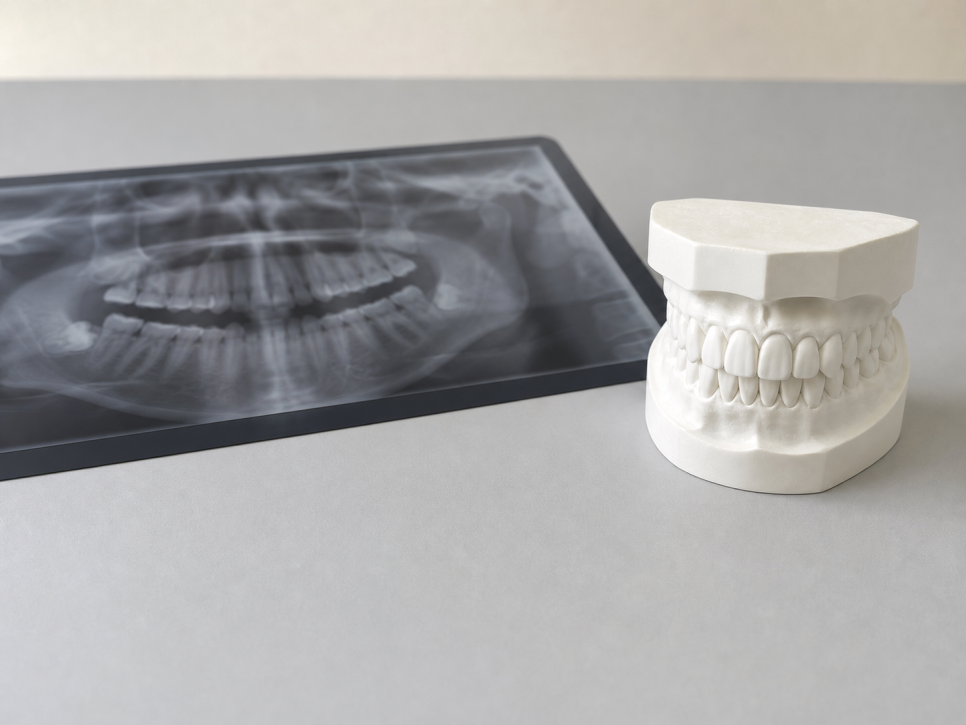
A mesiodens is hidden inside the jawbone, so it cannot be seen in a mirror and can be identified only through radiographic examination.
-
Professional periodontal examination is essential to determine whether gum health is the underlying cause.
-
The relationship with the overall occlusion and the timing of labial frenulum removal are specialized matters that must be determined after comprehensively assessing the balance of the entire mouth.
Ultimately, the most accurate answer to “Will partial orthodontic treatment be sufficient?” can be known only after a dentist's examination and diagnosis. This principle applies regardless of which dental clinic you visit.
It Is Not Too Late to Decide After Confirming the Situation Accurately

Let us summarize the criteria explained above.
When the gap is localized and the cause is simple, partial orthodontic treatment may be considered. If the space is caused by small teeth, veneers may be considered. If a periodontal problem is the underlying cause, periodontal treatment should be considered first.
The guide that helps determine the appropriate direction is a dentist's examination and diagnosis. When seeking a consultation, it is helpful to ask carefully whether the diagnosis and clinical opinion were provided by a specialist in orthodontics, and whether maintenance after closing the gap has been properly incorporated into the treatment plan. With a diastema, maintaining the result is just as important as closing the gap itself.
At 세라믹치과, located near Hakdong Station, three clinic directors, including a specialist in orthodontics, work together to provide comprehensive diagnoses for orthodontic and esthetic restorative treatment.
If you are currently considering orthodontic treatment because of gaps between your front teeth, the first thing you need is not to choose a treatment method. It is to determine exactly why your front teeth have become spaced.
First, visit a nearby dental clinic and accurately identify the cause through radiographic and periodontal examinations. It is not too late to decide on the specific treatment direction afterward.