If you have visited two or three orthodontic clinics in Gangnam for consultations, you have probably found yourself facing a similar dilemma.
One clinic says tooth extraction is necessary, while another says it can be done without extraction. The estimated treatment time and cost can also vary widely.
It is not unusual to feel more overwhelmed rather than reassured as you receive more consultations, wondering which opinion you should follow.
Three consultations, three different answers

When considering orthodontic treatment, the advice people commonly hear is, “Get consultations at least two or three places.”
So you make time in your busy schedule and go on a tour of dental clinics. But once you return, the answers are all different.
“Your teeth can be treated without extraction at this level.”
“Extraction will produce a more attractive result.”
“Let’s finish quickly and simply with partial orthodontic treatment.”
You have only one set of teeth, yet every clinic says something different. It can even make you quietly wonder whether something is wrong.
But that is not necessarily the case. There are structural reasons why diagnoses may differ.
Why do diagnoses differ? — Orthodontic treatment allows considerable discretion in its ‘design’
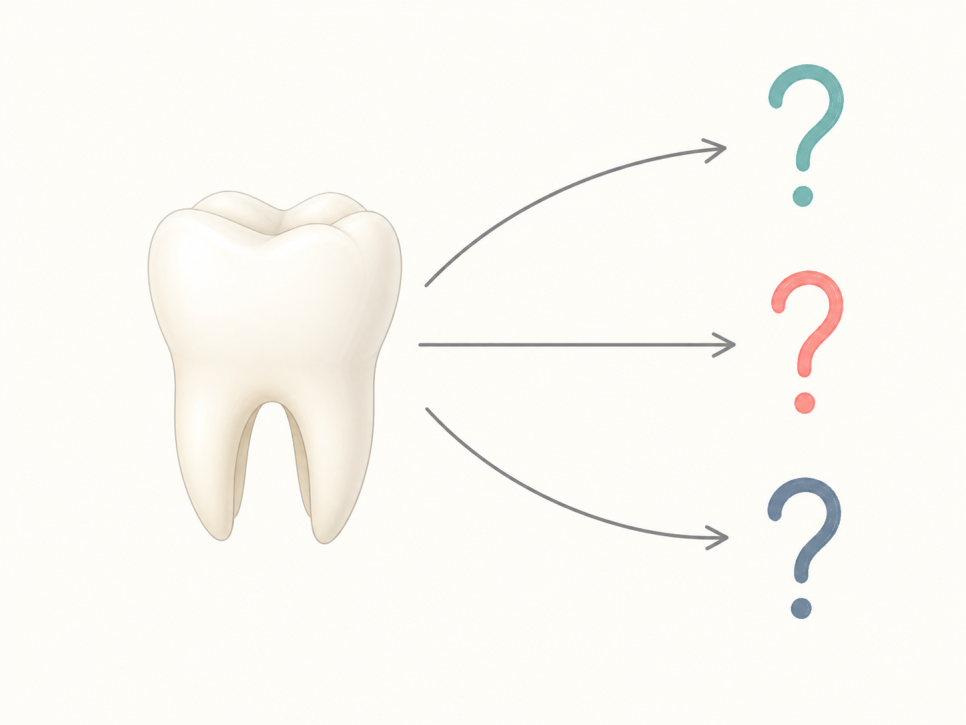
The answer is relatively clear for cavity treatment. Remove the decayed area and fill it appropriately, and the treatment is complete.
Orthodontic treatment is somewhat different. It involves the ‘design’ of a treatment plan that anticipates the paths along which the teeth will move over the next several years.
Even when looking at the same tooth alignment, there are many factors to consider.
-
Where and how will space be created? (Extraction vs. non-extraction)
-
Which appliance will be used to move the teeth?
-
How extensively should treatment involve the gums, jawbone, or skeletal structure?
A dentist’s individual training background and diagnostic philosophy are deeply reflected in these major decisions. This is the decisive reason treatment plans can differ from clinic to clinic.
The biggest problem is that choosing this type of treatment, which allows considerable professional discretion, without having clear personal criteria can easily lead to disputes.
In fact, an analysis of dental-orthodontic-related damage reports received by the Korea Consumer Agency found that disputes over costs accounted for the largest share, at 37.7%. Although this figure may vary slightly depending on when the survey was conducted, it can be understood to mean that many conflicts arose because the results patients initially expected did not align with the dentist’s treatment standards, rather than because of clinical failure of the treatment itself.
So what should you examine first to reduce the diagnostic differences that vary so widely between clinics and make a safer choice?
What to check: an ‘orthodontic specialist’
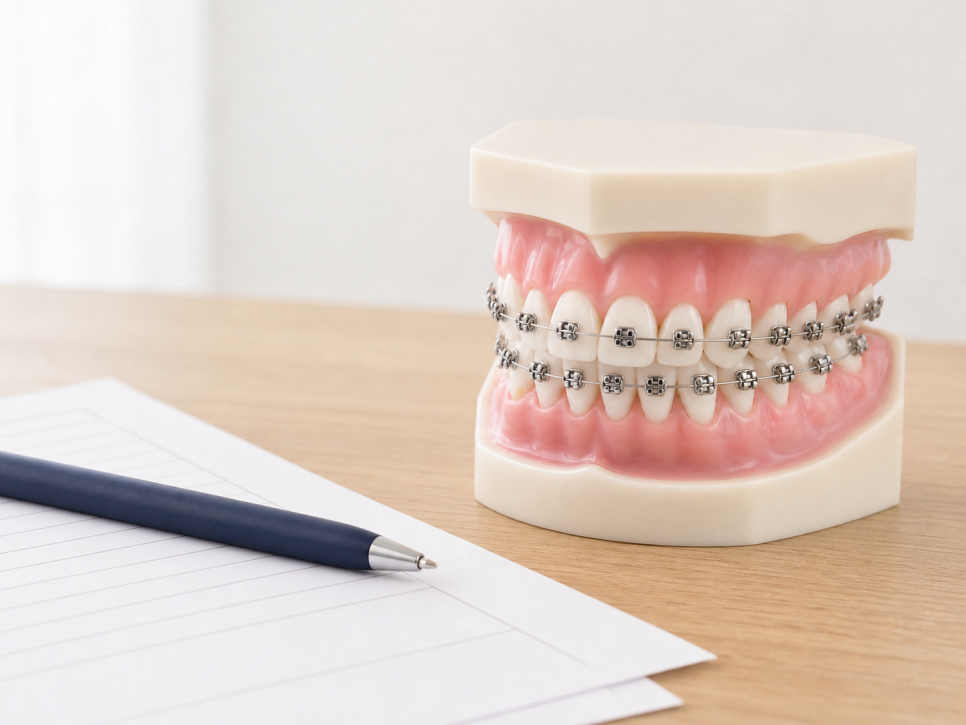
The easiest and most objective criterion for us to verify is whether the dentist is qualified as an orthodontic specialist.
Some people occasionally regard ‘orthodontic specialist’ as nothing more than a polished phrase used to promote a clinic, but it is an official qualification strictly recognized by the government under law.
Under the Presidential Decree titled the “Regulations on the Training and Recognition of Qualifications of Dental Specialists,” orthodontics is one of the 11 legally designated dental specialties currently specified.
| Category | Details |
|---|
| Training process | One year of internship + three years of residency under current regulations (four additional years of training in total) |
| Qualification | Recognition by the Minister of Health and Welfare after passing the national qualification examination |
| Number of specialists | Approximately 1,475 as reported in 2021, representing about 4% of all dentists |
In simple terms, even after earning a dental license, only those who undergo an additional four years of in-depth training exclusively in orthodontics and pass a demanding national examination become orthodontic specialists. The number may have increased slightly since the 2021 announcement, but the fact remains that they are a small minority, accounting for only a single-digit percentage of all dentists.
Even in the Gangnam market, where numerous dental clinics are concentrated, finding an orthodontic specialist may not be as easy as you might expect.
Fortunately, checking the qualification is very simple. Visit the Korean Association of Orthodontists website and use the “Find an Orthodontist” menu to search easily by region, clinic name, or dentist’s name.
One additional point: an ‘accredited member’ designated by an academic association and a ‘specialist’ certified by the government are distinctly different. Rather than simply scanning the impressive credentials listed in a profile, carefully check whether the qualification is stated precisely as ‘orthodontic specialist.’
Once you have confirmed the dentist’s qualifications, check two more things during the actual consultation. These will give you a much stronger basis for making your own decision.
-
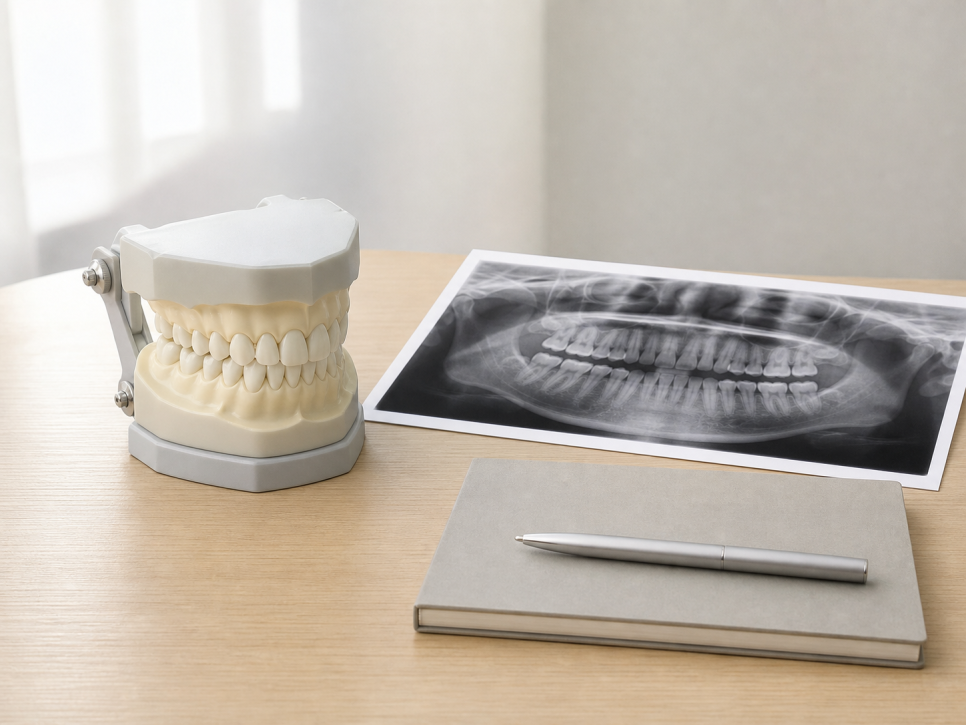
Do they show and explain the materials supporting the diagnosis—such as X-rays, measurements, and analysis results—instead of explaining everything only verbally?
-
Do they include the long-term management period for retainers in the overall treatment plan, rather than treating the day the appliances are removed as the end of treatment?
One more criterion: a structure in which the diagnosis is not made by one person alone
If confirming specialist qualifications is the first step, the next thing to examine is the internal structure through which the clinic arrives at its diagnoses.
As emphasized repeatedly above, orthodontics is a field in which the scope for treatment-planning discretion can vary considerably from dentist to dentist. Accordingly, a clinic with a collaborative consultation system—where several dentists discuss cases together and cross-check their diagnoses—is much safer than one that hastily finalizes a plan based on the intuition or sole judgment of a single director. This is because it can effectively reduce diagnostic differences that might otherwise become one-sided.
There is another fact you should not overlook. Orthodontic treatment is not a simple procedure that ends the moment appliances are attached to and removed from the teeth. When the retainer-management stage is taken into account, the relationship between the clinic and the patient needs to continue closely for several years.
Therefore, you should determine whether the clinic provides thorough care with a long-term relationship in mind from the outset. When you visit a dental clinic, ask, “How is care managed after the orthodontic appliances are removed?” How specific and systematic the answer is can provide a useful clue.
At this point, I will summarize the key checklist so that you can use it right away during your remaining consultation visits.
| Item to check | How to check it |
|---|
| Orthodontic specialist qualification | Search directly through the Korean Association of Orthodontists’ “Find an Orthodontist” service |
| Explanation of diagnostic grounds | Check whether they show you the X-rays, materials, and measurements and explain them clearly |
| Diagnostic cross-checking structure | Check whether several dentists collaborate rather than having one person handle the case alone |
| Post-treatment plan | Check whether they provide a systematic explanation covering retainer management after appliance removal |
You may bring the results of consultations you have already received
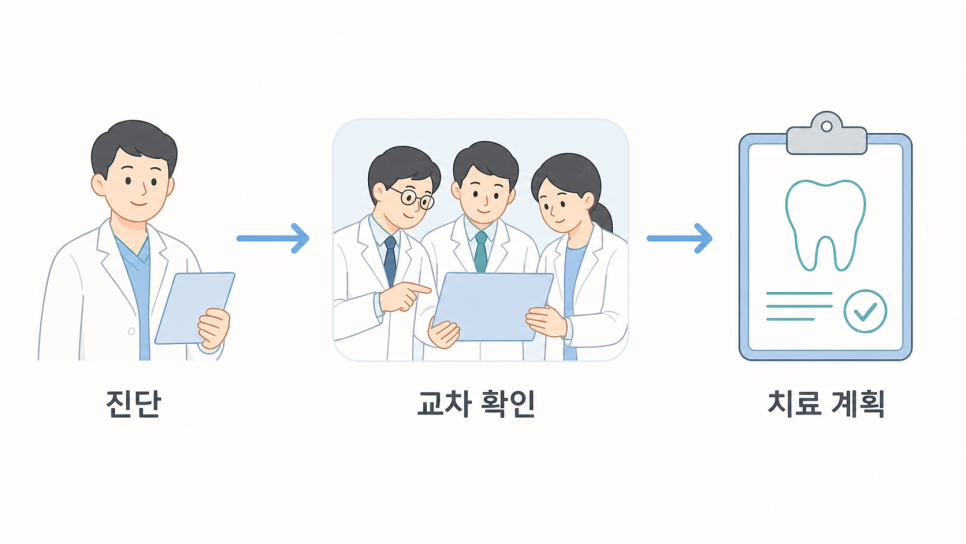
If you already have consultation results from another dental clinic you visited, there is no need to hide them. Feel free to bring them with you.
“Another clinic strongly recommended extraction.
Why exactly did they make that diagnosis?”
It is completely fine to be open and ask questions. Placing the objective materials side by side, calmly explaining why the diagnoses differed between dentists, and resolving your questions are also important responsibilities of an orthodontic consultation.
Reading this article does not mean you have to choose a dental clinic today. However, when you feel overwhelmed about what to choose among the many dental clinics in Gangnam, I wanted to place at least a small compass in your hands. Even if you do not choose our clinic, please be sure to take these four criteria with you when you walk into a consultation room: specialist qualifications, the basis for the diagnosis, a collaborative consultation system, and a long-term post-treatment plan.
With these criteria, you will surely be able to find the right dental clinic for you with a much clearer perspective than before.