When you search for “underbite correction,” surprisingly, the results are flooded with discussions of double-jaw surgery.
After reading about surgical experiences, recovery periods, and the considerable costs involved, you may feel even more overwhelmed than when you began searching.
Some articles say that orthodontic treatment alone is sufficient, while others claim that treatment is impossible without surgery.
So who is right?
The conclusion is that both sides may be right.
That is because there are cases in which improvement can be expected with orthodontic treatment alone, as well as cases in which surgery should also be considered. Let’s take a step-by-step look at how to distinguish between these two situations and how to accurately assess your condition.
Why articles give different answers — An underbite is not a single condition
The reason conclusions differ online is not necessarily that someone has posted incorrect information. Rather, the cases each person experienced may have been completely different.
According to the medical information provided by Seoul National University Hospital, an underbite refers to a condition in which the lower teeth bite outside the upper teeth. In a normal bite, the upper front teeth should slightly overlap the lower front teeth, but in this condition, that relationship is reversed.
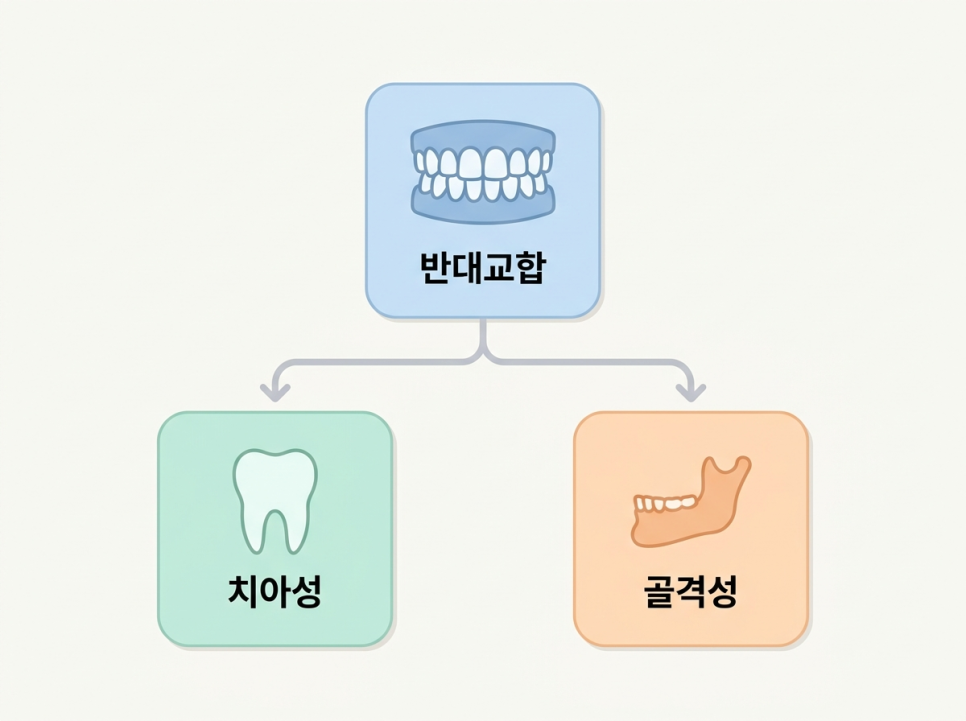
Even when the bite is “reversed” in the same way, it can generally be divided into two categories depending on the cause.
| Category | Cause | Treatment approach |
|---|
| Dental underbite | The jawbones are within the normal range, but the arrangement or angulation of the teeth is the issue | Addressed with orthodontic treatment |
| Skeletal underbite | A growth discrepancy in the upper and lower jawbones themselves | Orthodontic treatment alone or orthodontic treatment combined with surgery, depending on the severity |
In other words, accounts saying that the problem was “resolved with orthodontic treatment alone” most likely involved a dental underbite or a skeletal underbite with a very mild jaw discrepancy. Conversely, posts saying that “surgery was unavoidable” likely involved a case with a significant skeletal problem.
Ultimately, treatment experiences differ so dramatically because each person’s teeth and jawbones are different.
For reference, the Korean Academy of Orthodontics explains that the purpose of orthodontic treatment is not limited to improving appearance; it also includes improving functions such as chewing and speech. This means that treating an underbite is an important issue that goes beyond simply addressing concerns about appearance.
Clues that may help you get an idea of which type you have
So which category do your teeth fall into?
Although it cannot be determined with certainty, there are some points you can observe in the mirror for a rough reference.
-
Only some of the front teeth bite in reverse, and your jaw does not appear significantly protruded in profile → A problem with tooth alignment or coordination may be considered first.
-
The reverse bite extends broadly from the front teeth to the molars, and the lower jaw clearly appears prominent in profile → A discrepancy in the jawbones themselves is more likely to be the cause.
However, there is an important point to keep in mind.
You cannot determine whether a condition is dental or skeletal based solely on your outward appearance in the mirror.
Even if two cases look similar to the naked eye, their actual bone structures and underlying proportions may be completely different.
That does not mean you need to worry based on your own guesses. There are objective examination methods that can accurately determine which type of case you have. Before discussing those methods, let’s address the concern that many people researching underbites have first.
Not every skeletal underbite requires surgery

Many people assume that “if there is a problem with the bones, double-jaw surgery is automatically necessary,” but the actual treatment criteria are much more nuanced.
The medical information provided by Seoul National University Hospital specifies that combined orthognathic surgery and orthodontic treatment are indicated when the skeletal discrepancy is severe.
In other words, if the skeletal discrepancy is mild, it may be possible to sufficiently attempt to correct the bite through tooth movement alone, using camouflage orthodontic treatment.
However, clinical records in the field of orthodontics also point to an important consideration.
Even when the same Class III malocclusion, including underbite-type cases, is treated with orthodontic treatment alone, some cases maintain stable results, while others experience relapse and eventually require surgery after growth has ended.
The success of camouflage orthodontic treatment depends less on how hard the patient “works at orthodontic treatment” and more on whether the clinician accurately determines from the outset whether the case is suitable for camouflage treatment.
If the discrepancy is severe but the tooth angulations are forcibly adjusted, there is a significant risk of returning to the starting point despite investing considerable time and money.
Therefore, regardless of whether surgery is needed, the initial orthodontic treatment design—which determines how and how far the teeth will be moved—plays a decisive role in the overall success of underbite treatment. Even in cases where surgery is essential, how the teeth are aligned before and after surgery is a key factor determining the quality of the final result.
Ultimately, examinations—not visual guesses—determine the difference
So how can you determine whether yours is a “case treatable with orthodontic treatment alone” or a “case requiring surgery”?
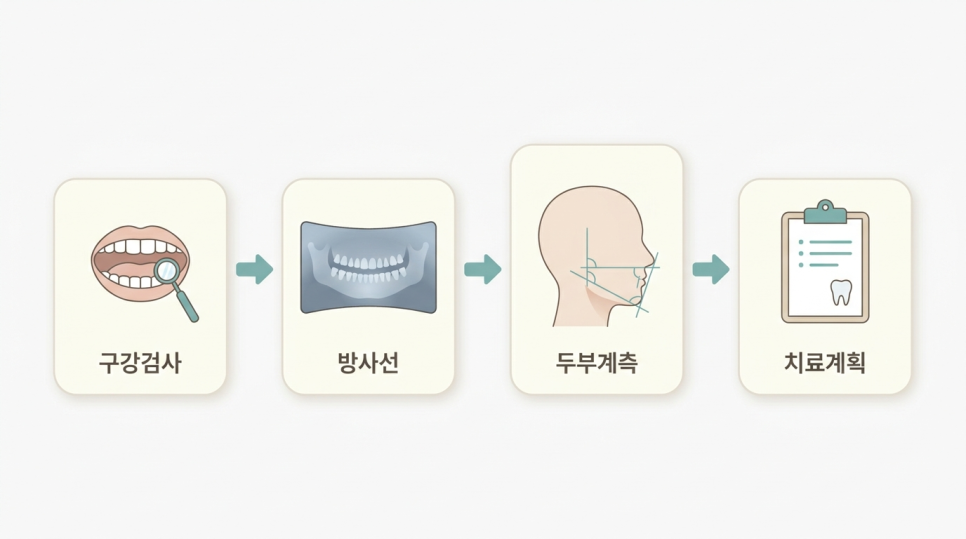
According to the medical information provided by Seoul National University Hospital, the following examinations are primarily used to diagnose an underbite.
| Examination | What it evaluates |
|---|
| Oral examination | Tooth contact and the bite relationship |
| Panoramic radiograph | The overall condition of the teeth and jawbones |
| Lateral and frontal cephalometric radiographs | Analysis of the size and positional relationship of the upper and lower jawbones |
| Facial and dental photographs | Evaluation of the harmony between facial shape and the dentition |
Among these examinations, cephalometric radiographic analysis plays a central role. Even when two underbites look identical, this analysis can objectively show, through numerical measurements, whether the problem lies in the teeth or the bones and, if it is skeletal, how large the discrepancy is.
Therefore, receiving a diagnosis at a clinic equipped with systematic, detailed examination tools—including cephalometric analysis—is the first step toward making the right decision. Of course, examination equipment alone does not guarantee the quality of treatment. What matters far more is how reasonably the clinician develops a plan based on the measurements obtained.
One more point to consider when choosing a clinic is that underbite treatment involves a complex relationship between proper chewing function and the appearance of the front teeth. Treatment can take at least one to two years, and the process is longer if surgery is also performed. Considering retention and maintenance after the appliances are removed, you should carefully determine whether the dental clinic is one you can trust and rely on over the long term.
Before deciding on surgery, start by getting evaluated
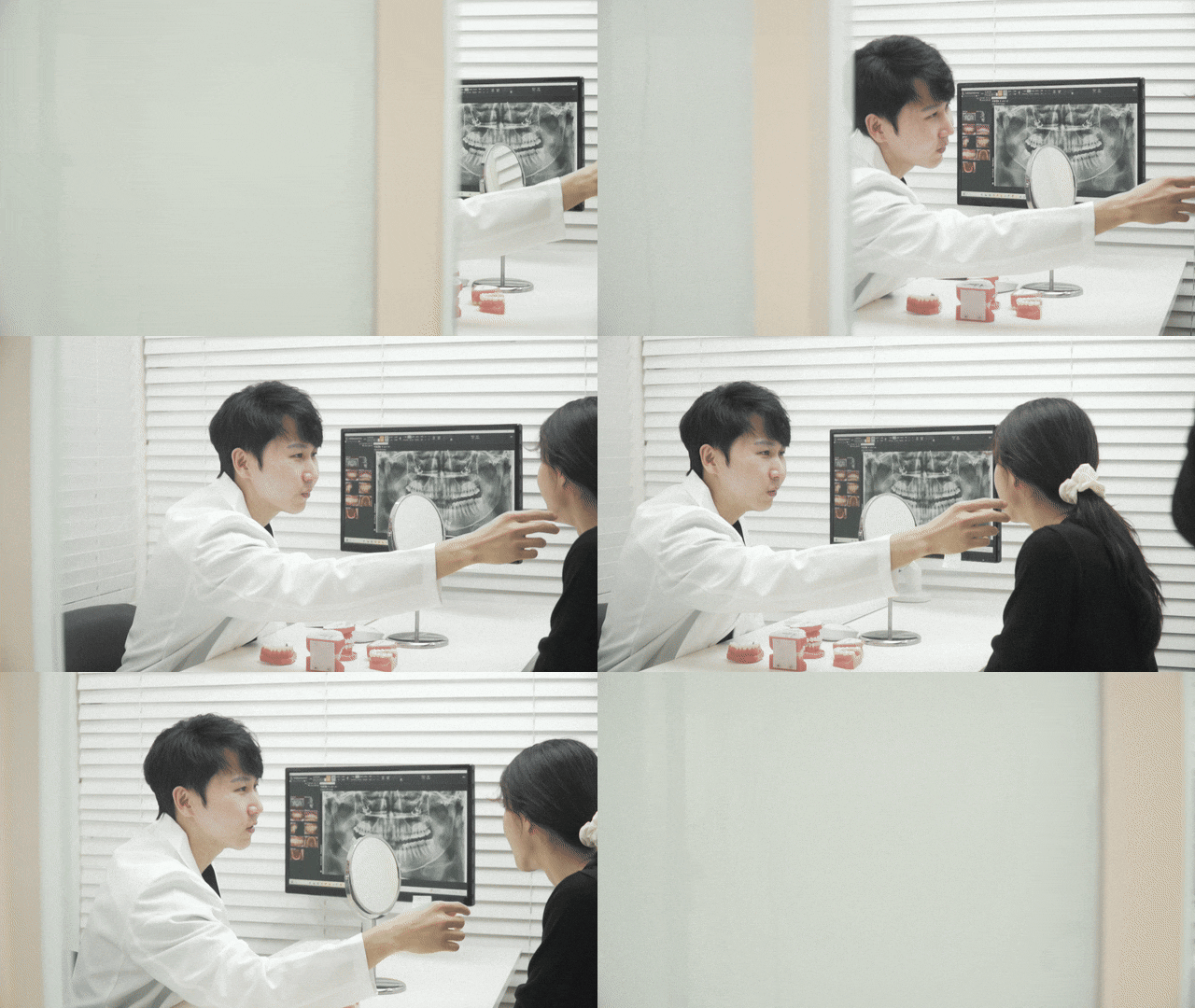
At this stage, you do not need to suffer by trying to decide in your mind whether surgery is necessary.
The first thing to do is determine whether your condition is dental or skeletal and, if it is skeletal, how severe the discrepancy is. The scope of the concerns you need to consider and the scale of treatment can change completely depending on this one result.
The first step in underbite treatment is not deciding on surgery, but accurately identifying your case through cephalometric analysis.
If the problem is dental or the skeletal discrepancy is minor, good results may be expected with orthodontic treatment alone. On the other hand, if the discrepancy is substantial, establishing a clear treatment plan based on surgery from the outset can prevent the trial and error of taking a long detour.
Either way, the starting point is the same. If you have been repeatedly searching online and worrying for months or years, we recommend stopping the speculation and finding a realistic path based on objective examination results.
Whether the cause of your reversed bite lies in your teeth or your bones, the answer is already within your own jawbones. Visiting a nearby orthodontic dental clinic and first undergoing cephalometric analysis may be the most certain and sensible next step.