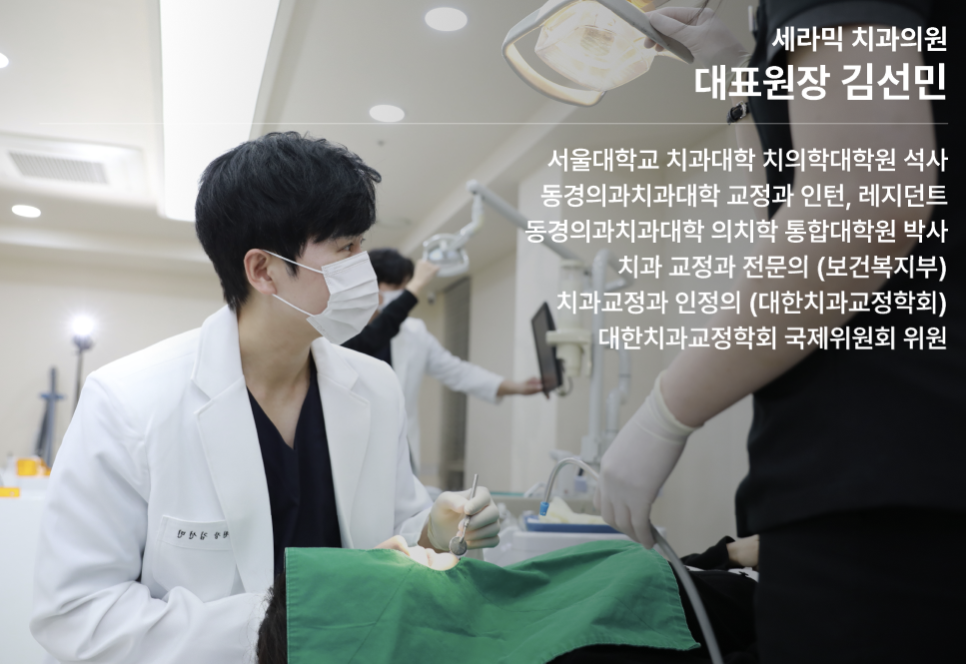
You just had an orthodontic screw come out.
You may have found this post while holding that tiny screw in your palm, or after searching while checking the empty spot with the tip of your tongue. You must have been very startled, but let me give you the conclusion first.
In most cases, an orthodontic screw coming out is not an emergency.
However, there are three things you need to check right now.
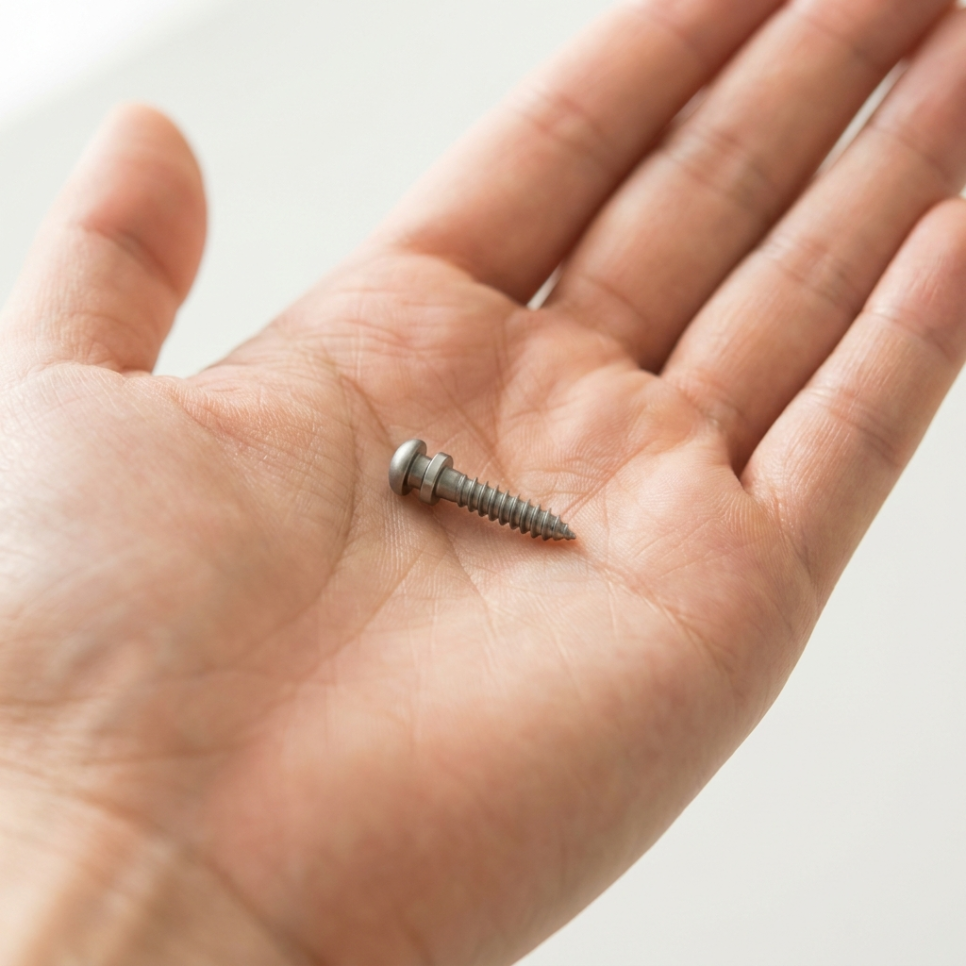
It is more common than you might think
A meta-analysis published by the Papageorgiou research team in an international orthodontic journal in 2012 analyzed 4,987 orthodontic miniscrews and reported a failure rate of approximately 13.5%. Put another way, 8 or 9 out of every 10 screws successfully do their job through to the end, which also means that screw loss is a variable already accounted for to some extent in the treatment plan.
If you wondered, “Did this happen only to me?”
It did not.
It is not the first time your treating doctor has dealt with this, and a screw is simply an auxiliary device that can be placed again. Orthodontic screws have made it possible to correct even difficult tooth movements that once required surgery using orthodontic treatment alone. One small screw coming out does not undermine the value of the entire treatment.
However, there are exceptions that should not simply be dismissed as “nothing to worry about,” so check these three things now.
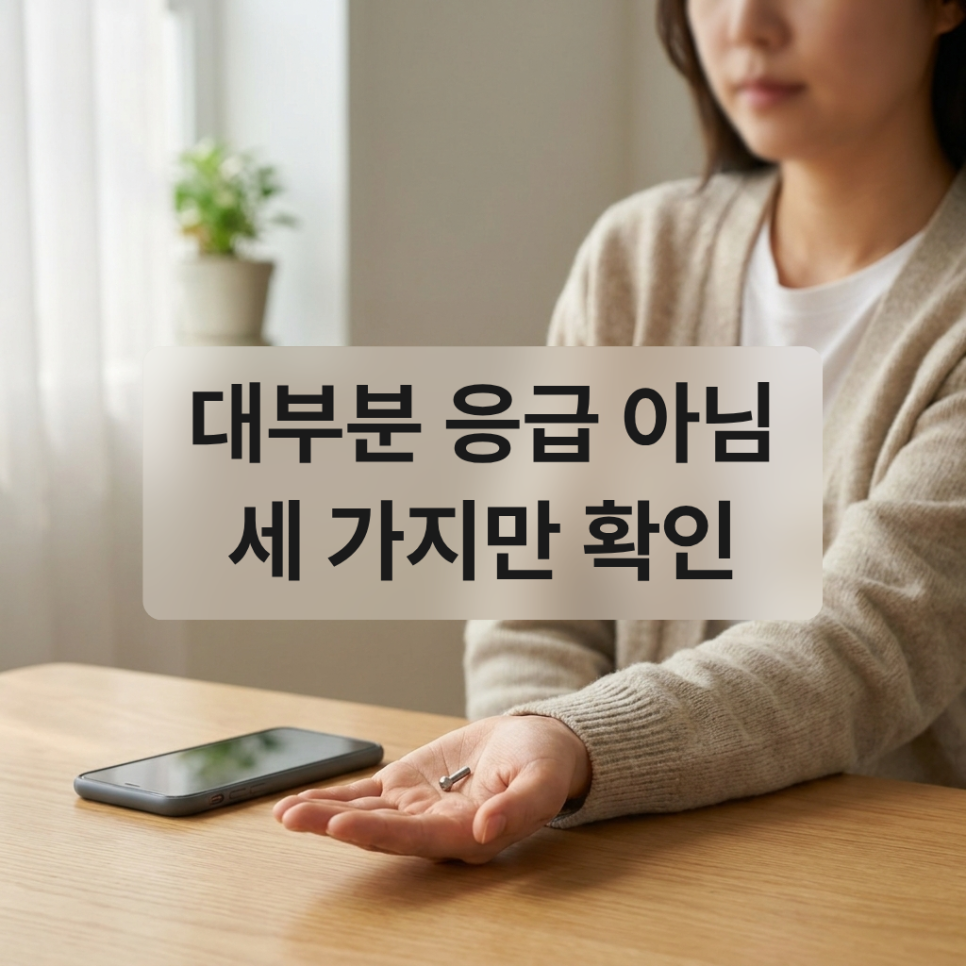
Check these three things now
| Situation | What to check | Response |
|---|
| The screw cannot be found | Whether you are coughing, choking, or feeling something in your throat or chest | If you have symptoms, seek immediate medical evaluation |
| There is bleeding | Whether blood continues to seep through even after applying pressure with gauze | If the bleeding does not stop, contact your treating dental office immediately |
| It is partly hanging on | Whether it is not completely out and is instead dangling | Do not touch it; contact your dental office as soon as possible |
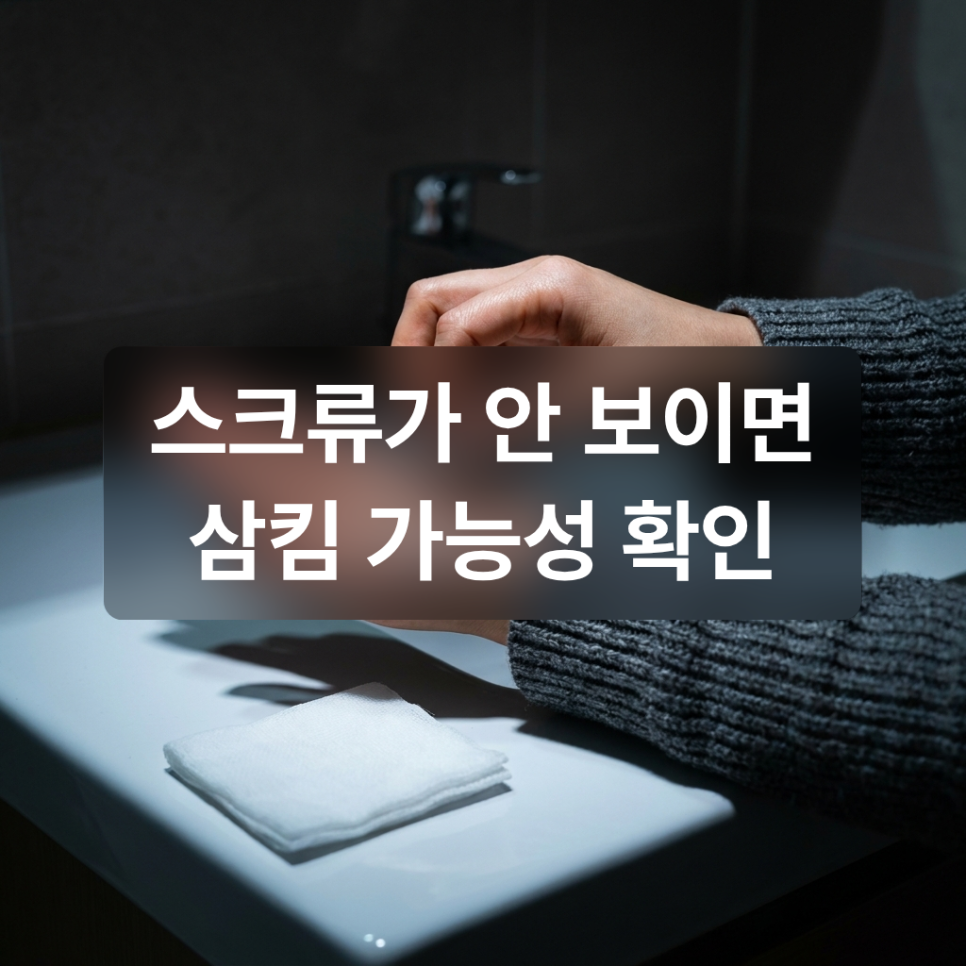
The first point is the most important. If the screw is nowhere to be found, you should consider the possibility that you swallowed it. According to case reports and other literature reviewing incidents involving swallowed dental appliances, most swallowed foreign objects pass through the gastrointestinal tract and are expelled without incident. However, if you are also coughing, choking, or feeling something when you breathe, it may have entered the airway, and you need immediate medical attention.
Bleeding usually stops within a few minutes. If blood continues to come out even after biting down on clean gauze or cotton for about 30 minutes, do not wait—contact your dental office.
If the screw is not completely out but is partly hanging and moving, it is safest to leave it as it is. Do not force it out or push it back in.
Avoid these common mistakes when you are startled
There are several things many people do immediately after a screw comes out, but some of them can actually make the situation worse.
The most common mistake is trying to put the screw back in. A screw that has come out into the mouth is already contaminated. Replacing it is something a dental professional does under sterile conditions, and a new screw is generally used. Pushing it back in at home only increases the risk of infection and can cause unnecessary damage to the gums and bone.
You should also avoid repeatedly touching the empty spot with your tongue or fingers. It is understandable to want to check it, but that spot is now a small wound. The more you touch it, the harder it may be for it to heal, and touching it with your fingers can introduce bacteria.
Do not arbitrarily pull or cut the elastic or appliance that was attached to the screw, either. The screw serves as an anchorage point for the force pulling the teeth—in simple terms, it acts like the stake in a tug-of-war. Manipulating the attached appliance on your own can change the direction of the force, so the general rule is to leave it in place until your treating doctor can examine it, even if it feels bothersome.
How to care for it until your appointment
Now that you have finished the urgent checks, all that remains is caring for the area until you visit the dental office.
Brush the area gently, and it is best to avoid hot, spicy, and hard foods that may irritate it for a few days. If you use mouthwash, do not rinse too forcefully; rinse gently.
There is also one question many people ask:
“Do I need to bring the screw that came out?”
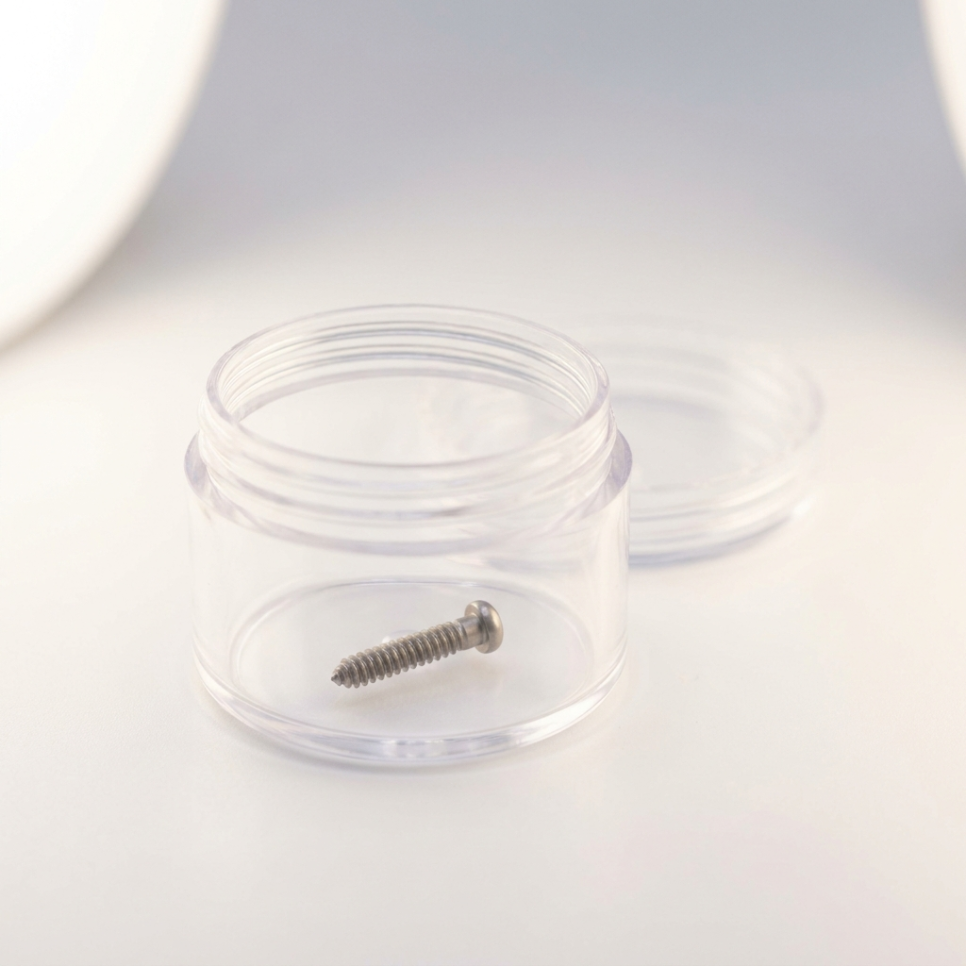
The answer is no, it is not required. A dislodged screw is not reused, so treatment will not be affected if you do not have it. However, it may help identify which type of screw it was, so if you still have it, you may place it in a small container and bring it with you.
One more thing: if you have the screw replaced, it is helpful to know in advance how to care for it afterward. Several clinical reports have observed that the initial period of approximately one week after placement is the most sensitive time for the screw to settle into the bone. If you take care around the area during this one week after it is placed again, you can considerably reduce the likelihood of repeated orthodontic screw loss.
Will my orthodontic treatment go backward if I cannot go in for a few days?
This is what people are most concerned about when it is the weekend or they cannot visit immediately because of their schedule.
In general, a gap of a few days is not known to have a major effect on tooth movement in many cases. Teeth move gradually within the bone, so they do not shift back that quickly. Replacing the screw is also often completed in a short time after administering an anesthetic.
There is one more thing I would like to emphasize. When a screw comes out, it is easy to blame yourself and think, “Did I fail to take proper care of it?” However, research tells a somewhat different story. Literature reviews, including the meta-analysis mentioned earlier, have not found a clear association between screw failure and sex or age. Instead, failure was more closely related to anatomical factors such as the placement site.
| Factor | Association with failure |
|---|
| Sex and age | No clear association observed |
| Placement site | The center of the hard palate is the most stable |
| Contact with a tooth root | The risk increases severalfold when it touches a tooth root |
In other words, the result can vary considerably depending on where in the bone the screw was placed, even in the same person. Of course, maintaining good oral hygiene remains important, but orthodontic screw loss does not necessarily mean that you failed to care for it properly. In many cases, placing it again in a different location allows it to remain more stable.
The most accurate decision comes from your treating doctor
Coughing or a foreign-body sensation, bleeding that will not stop, or a screw that is partly hanging on. If none of these three situations applies, you do not need to go to the emergency room tonight.
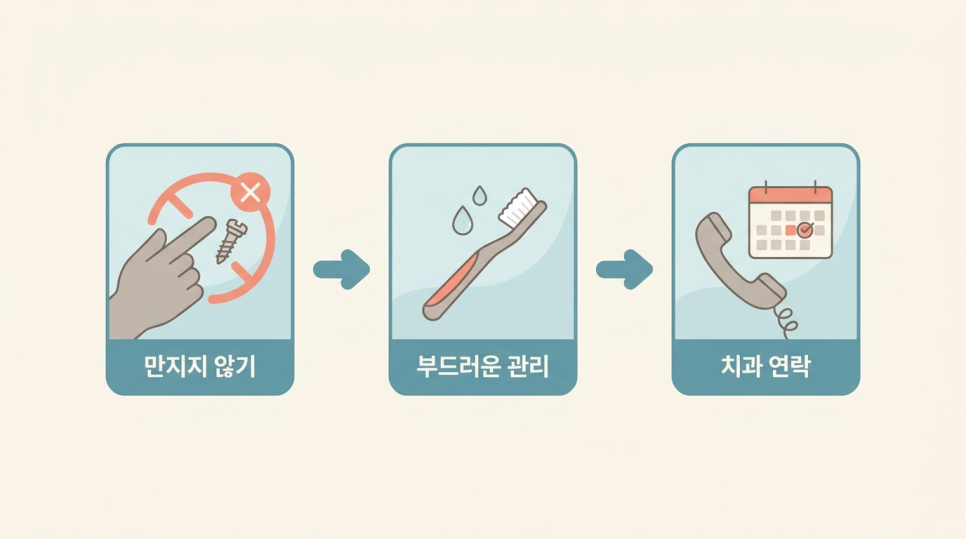
Do not put the screw back in or touch the area. Care for it gently and contact your treating dental office on the next business day. Whether it should be placed again in the same spot, moved to a different location, or replaced after the gums have healed depends on your individual bone quality and the stage of your orthodontic treatment. This is why the doctor who has followed your treatment from the beginning is best able to make this decision.
Getting through unexpected situations like this is also part of orthodontic treatment. Orthodontic treatment can take as little as one year or as long as several years, gradually addressing the teeth, gums, and chewing function together. The more successfully you get through each small challenge along the way, the more stable the result will be. Orthodontic screw loss is just one of those challenges, so for today, it is enough to calm yourself after the initial surprise and leave a phone call for your treating dental office tomorrow.