When different clinics recommend different procedures, it is easy to suspect that one of them may be providing unnecessary treatment.
However, this is not necessarily the case with aesthetic treatment for the front teeth.
The reason people are often advised to undergo orthodontic treatment while looking into Gangnam laminate veneers is that the two procedures address fundamentally different problems. If your teeth fall near the boundary between the two procedures, the opinions of both clinics may be reasonable.
So, when my front teeth are at this crossroads, what criteria should I use to decide?
Why do clinics give different recommendations?
When looking into laminate veneers, you often encounter confusing situations.
Clinic A may say that laminate veneers are sufficient, while Clinic B may recommend orthodontic treatment first. Even online reviews contain conflicting opinions side by side.
“Which one is right? Isn’t one of them just trying to sell me a procedure?”
This confusion is usually less about the clinic’s integrity and more about differences in how the condition of the teeth is viewed.
Even when looking at the same front teeth, laminate veneers may be the answer when the focus is on “color and shape,” while orthodontic treatment may be the answer when the issue is approached as one of “alignment and bite.”
Therefore, before comparing clinics, the first thing to determine is which category the problem with your front teeth falls into.
The two procedures address different problems from the outset
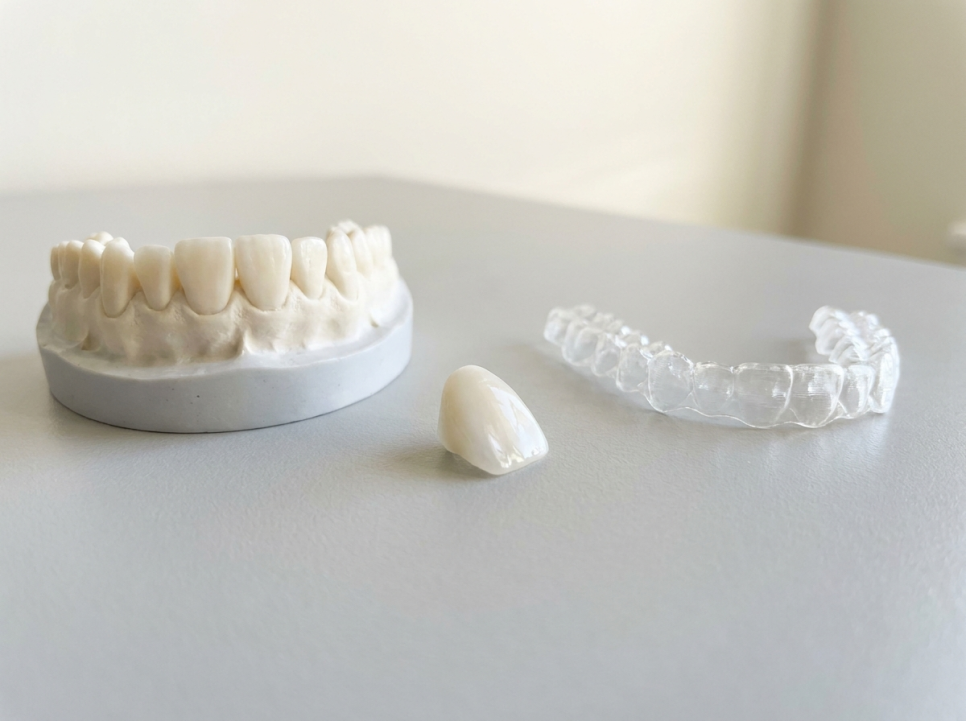
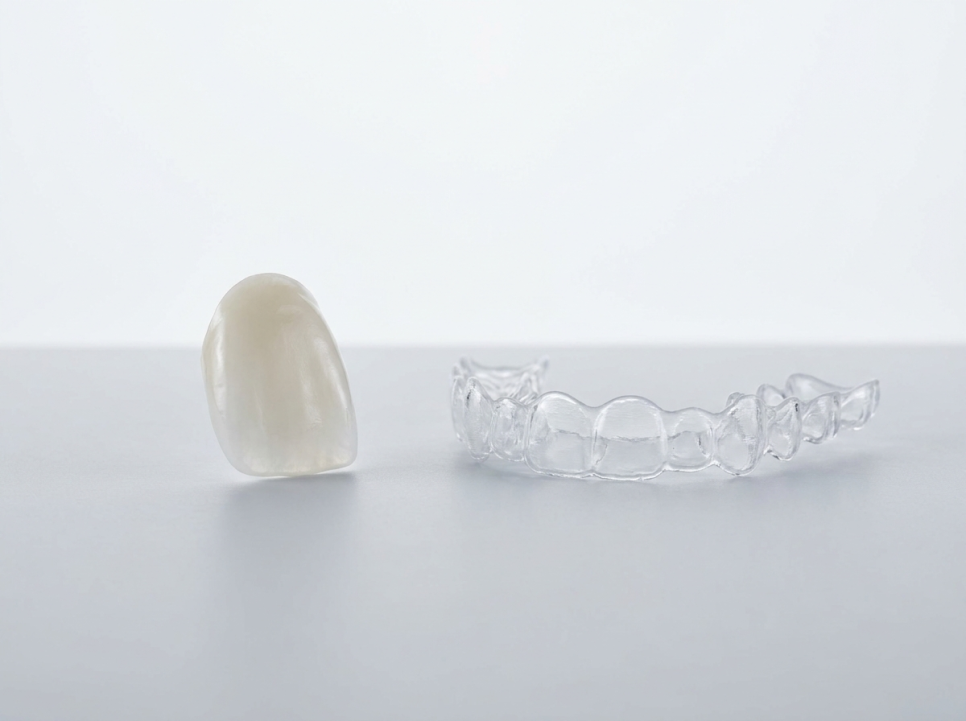
Laminate veneers are a type of prosthetic treatment in which thin porcelain (ceramic) is bonded to the surface of a tooth. It may be easiest to understand them as applying the concept of attaching a nail tip to a fingernail to the teeth.
In other words, this treatment creates a new outer surface for the tooth.
Orthodontic treatment, on the other hand, moves the position of the teeth themselves. When alignment and the way the teeth come together (occlusion) fall outside the normal range, orthodontic treatment corrects them, improving not only the visible appearance but also chewing function. Rather than merely reshaping the exterior, it moves the teeth, including their roots, into the proper position, which makes fundamental improvement possible.
Based on the indications presented by the National Health Information Portal of the Korea Disease Control and Prevention Agency, the two procedures can be distinguished as follows.
| Category | Laminate veneers | Orthodontic treatment |
|---|
| Problems addressed | Color, shape, and surface | Alignment, bite, and protrusion |
| Typical indications | Gaps between front teeth, discoloration, minor positional irregularities, undersized teeth, fractures | Malocclusion, crooked alignment, protrusion |
| Scope of improvement | Primarily aesthetics (appearance) | Aesthetics + chewing function |
| Tooth movement | None | Yes |
The condition “minor,” which is attached to the indications for laminate veneers, is precisely the word that clearly separates the areas of the two procedures.

Which one applies to my case? — The criteria that make the difference
The questions to ask yourself are simpler than you might expect.
The main reason I am unhappy with my front teeth—is it
“color and shape,”
or
“position and alignment”?
If the teeth are dark in color, small, chipped at the edges, or have gaps between the front teeth, moving the teeth will not solve the problem. No matter how neatly orthodontic treatment aligns the teeth, inherent characteristics such as discoloration or undersized teeth will remain. These are the types of cases in which laminate veneers can produce a clean result within a relatively short period.
What about cases in which the teeth are noticeably crooked or severely protruding?
The National Health Information Portal of the Korea Disease Control and Prevention Agency also provides clear guidance on this point.
When the position of the teeth is excessively misaligned,
crowns or orthodontic treatment
are recommended
over laminate veneers.
If the teeth are substantially misaligned and only the outer surfaces are reshaped while leaving bite problems unaddressed, it may be difficult to maintain the result over time. In such cases, it is much more advantageous to undergo orthodontic treatment first to correct both the appearance and chewing function.
Of course, some cases overlap between the two areas. One approach is to first organize the overall alignment with orthodontic treatment and then use laminate veneers to refine the color and detailed shape. Combining the two procedures in stages can maximize the advantages of each treatment, and actual satisfaction is often quite high.
However, remember that there are limits to judging for yourself, based only on a mirror, whether the misalignment of your teeth is “minor” or “excessive.”
Addressing the fear of “shaving down healthy teeth”
If you have considered laminate veneers, you have probably worried at least once about tooth reduction.
The thought of having to alter perfectly healthy teeth can raise concerns:
What if I regret it later?
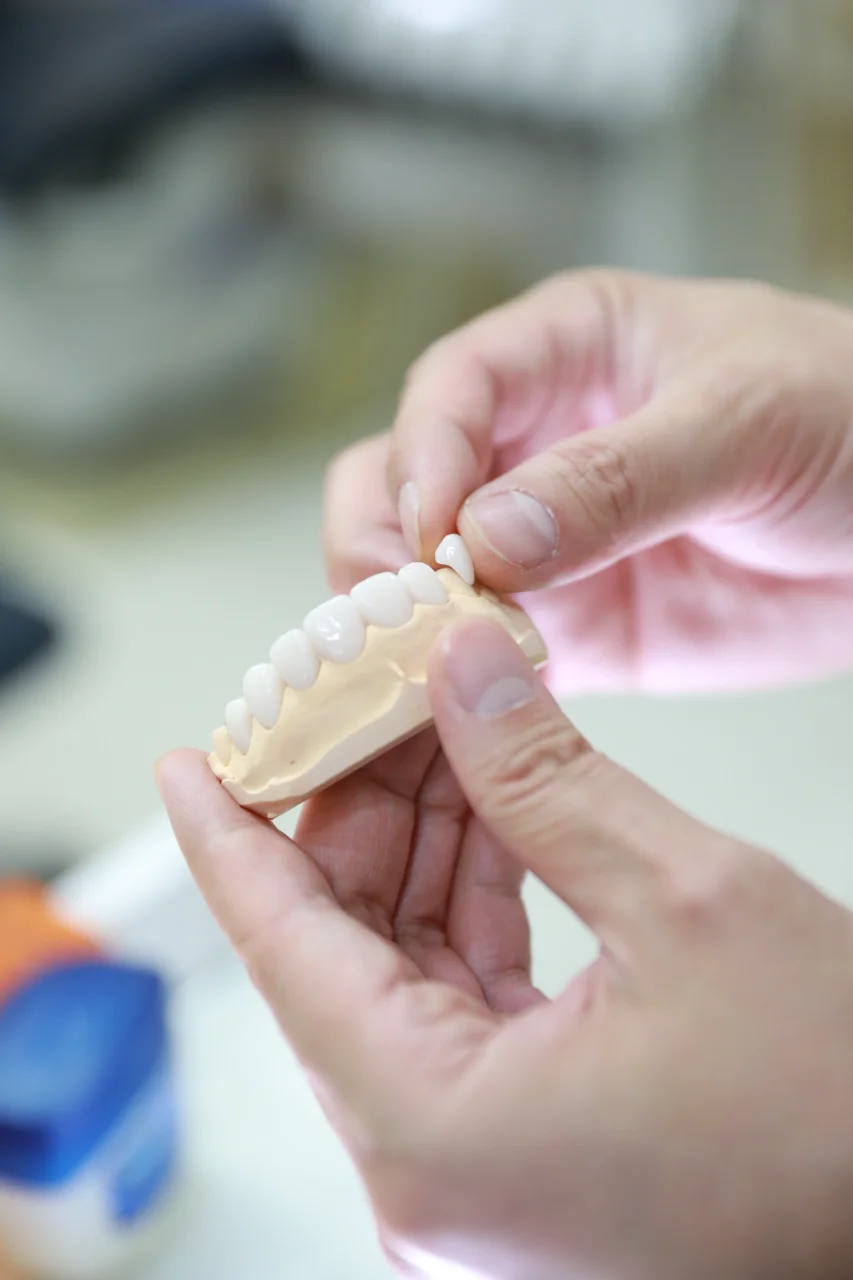
It is natural to feel anxious, but knowing about recent developments in treatment may help you feel a little more reassured. The porcelain used for laminate veneers can now be made thinner than an eggshell, and dental treatment has likewise evolved toward preserving as much of the natural tooth surface as possible.
Today, depending on the condition of the teeth, no-prep laminate veneers, which involve little to no reshaping of the surface, are possible in many cases. These include cases that can primarily be addressed by adding material, such as closing gaps between the teeth or improving the appearance of undersized teeth.
Of course, the no-prep approach is not always possible. However, it can be said that many more cases are suitable for it than in the past.
Therefore, before a Gangnam laminate veneer consultation, rather than rushing into a procedure, getting an accurate diagnosis of which approach is suitable for your teeth is the quickest way to reduce unnecessary concerns.

So what should you check before making a decision?
Ultimately, the key to making a choice is to determine whether the positional irregularity of your front teeth is “minor” or “excessive,” and to understand where the indications for each procedure meet and diverge.
When determining this boundary, you should consider the following factors together, rather than looking only at the visible appearance:
-
How the upper and lower teeth come together (occlusion)
-
The angle of the teeth and the degree of misalignment
-
The health of the teeth themselves, including the enamel
-
The relative proportion of color and shape issues versus alignment issues
These factors cannot be assessed through a simple internet search or advertising copy; they require professional occlusal examination and diagnosis.
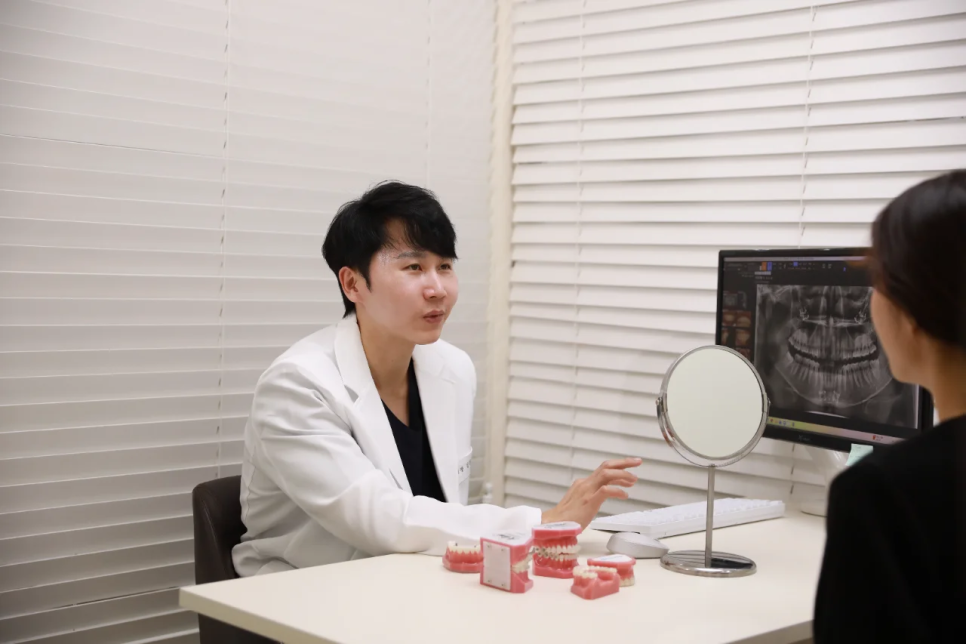
In Korea, there is a specialist system for orthodontics, and the diagnosis of alignment and occlusion is treated as a specialized field requiring separate training. This indicates how detailed and demanding the process of evaluating tooth alignment and the way the teeth come together can be. This is precisely why undergoing an orthodontic assessment at least once is a safe choice when considering aesthetic improvement of the front teeth.
What you need to decide today is not the procedure, but “my case”
It is okay if you do not immediately decide whether to get laminate veneers or orthodontic treatment.
Try changing the order in which you think about it. Rather than deciding on the procedure first and then looking for a clinic, first determine exactly what type of case your front teeth represent.
When you visit a dentist for a diagnosis, asking the following three questions can be a great help in making a thoughtful decision.
-
Is the main issue with my front teeth color and shape, or alignment and occlusion?
-
If I proceed with laminate veneers, is the no-prep approach suitable for my condition?
-
How would the final result differ if I had orthodontic treatment or combined the two procedures?
Because everyone’s dental condition is different, it is perfectly normal for different patients to receive different answers even when they ask the same questions.
If you have been searching for Gangnam laminate veneers and worrying about them for months, try putting down your smartphone for a while this week and visiting a nearby dental clinic. Directly confronting the actual condition of your front teeth through a professional occlusal examination will be a much more certain and clarifying first step.