The right method for Gangnam orthodontic treatment is determined by examination and diagnostic results. If you open a search window on your way home from work, you will find different answers on every tab. Some places recommend clear aligners, some articles recommend lingual orthodontics, and others say ceramic brackets are a safe, standard choice.
It is only natural to feel confused. The reason is that each article uses different criteria for comparison.
So in this article, we will look at which dental conditions each method is best suited to, and use that as the basis for comparison.
Why the more you learn, the more confusing it becomes
When you search for orthodontic methods, you will often find tables that compare them side by side across three categories: aesthetics, cost, and treatment duration. But after looking at about ten of these tables, making a decision can become even more difficult.
The reason is simple. Those tables compare the appliances themselves, but do not explain how each appliance corresponds to the condition of your teeth.
The reason people usually begin considering orthodontic treatment is appearance. However, once the teeth are properly aligned, more surfaces can be reached by the toothbrush, making gum care easier. Chewing forces can also be distributed across multiple teeth instead of being concentrated on just one or two. If the area behind overlapping front teeth is frequently swollen, or if you have developed a habit of chewing only on one side, addressing the alignment can also help with an issue that may persist over time. That is why the first question to establish is: “What is the current condition of my alignment?”
Metal and ceramic brackets
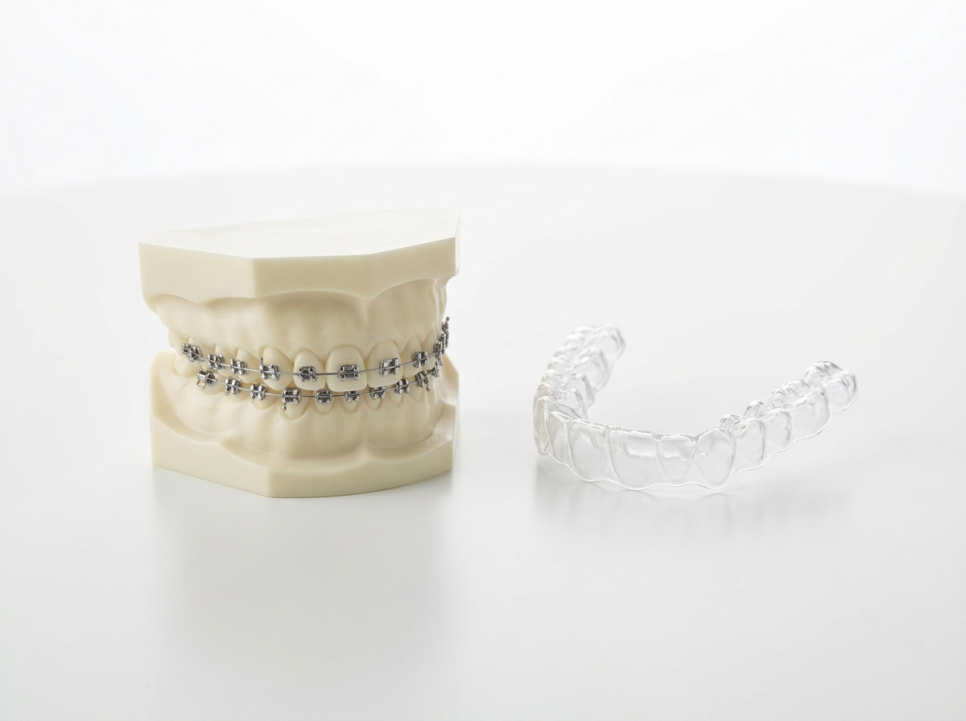
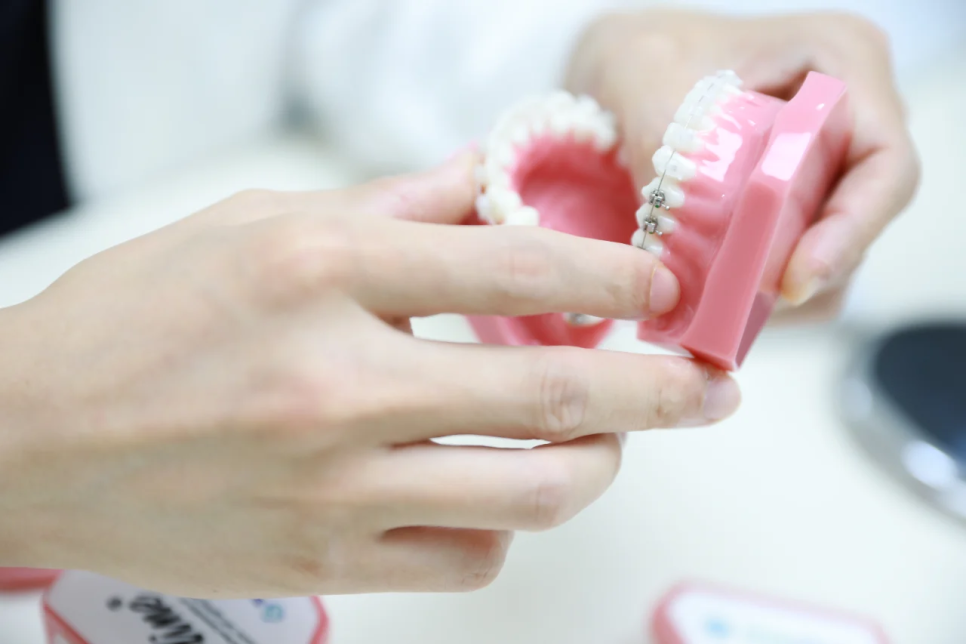
Fixed brackets attached to the outer surfaces of the teeth are the most established basic type of orthodontic appliance. Metal brackets are made of metal, while ceramic brackets are made of a porcelain-like material similar in color to teeth.
The principle of operation makes their strengths clear. A wire inserted into the brackets distributes to the teeth the force created by the wire’s tendency to return to its original shape. In other words, the force of a bent wire trying to straighten is used to move the teeth. This allows detailed control over the inclination and rotation of individual teeth, as well as the direction of their roots, and makes this method broadly useful for treatment plans involving both the front and back teeth. In the classification of orthodontic appliances provided for the general public by the Korean Association of Orthodontists, fixed appliances serve as a reference point within the broader framework that distinguishes appliances by material, attachment location, and whether they are fixed or removable.
So how can the visibility of the appliance be addressed? This is not a matter of changing the structure, but of choosing the material. Ceramic brackets are close to the color of natural teeth and tend to be less noticeable at conversational distance, so even people who frequently meet others can proceed with the same range of adjustment.
Lingual orthodontics
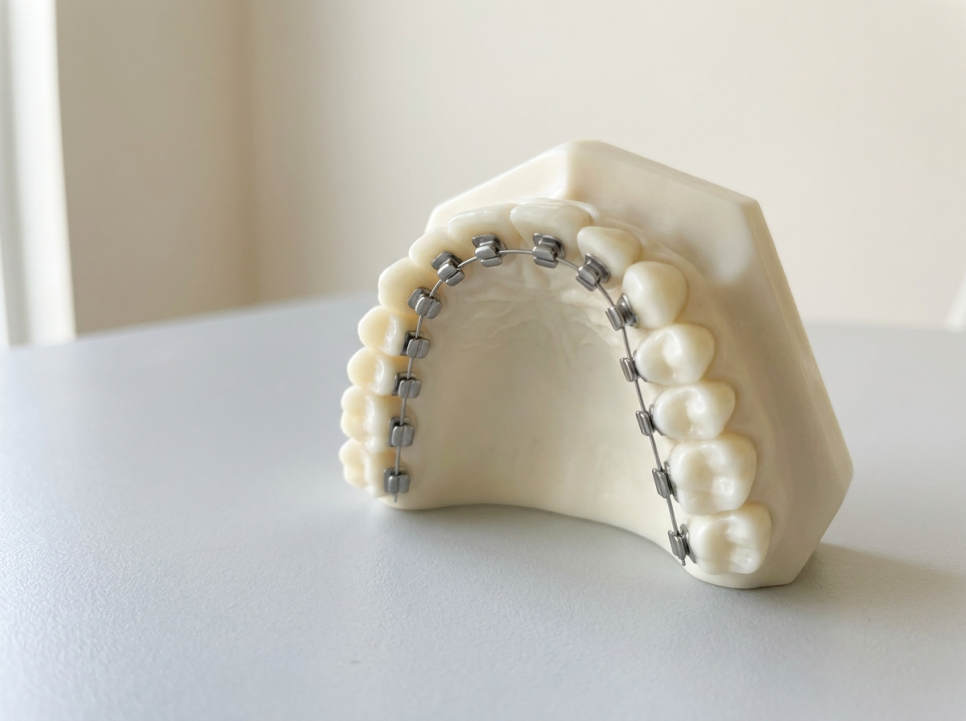
Lingual orthodontics attaches brackets to the inner surfaces of the teeth—the surfaces that come into contact with the tongue. The appliances are barely visible when you smile or speak. People who ask about this method first during a consultation are often those whose work involves frequent interaction with others.
The question that comes up most often concerns pronunciation. Because the appliance is positioned where the tip of the tongue frequently touches, certain sounds may feel awkward during the first few days. The tongue is sensitive to changes in the shape of the mouth, so it needs time to relearn the new position, much like studying a map again. The length of this adjustment period varies from person to person.
Once pronunciation has settled, attention shifts to how the appliance is attached to the inner surfaces. The inner surfaces of the teeth have more varied contours than the outer surfaces, and the available attachment area is smaller, so the attachment positions and wire shape must be precisely designed for each person. This is why diagnostic materials showing your tooth alignment and inner tooth surfaces are needed to understand how this method would be applied in your case.
The biggest disadvantage is its high cost. It generally requires more than twice the cost of conventional ceramic orthodontic treatment. In addition, lingual orthodontics may be difficult for people whose occupations place particularly high importance on pronunciation.
Clear aligners — attractive, but not suitable for everything
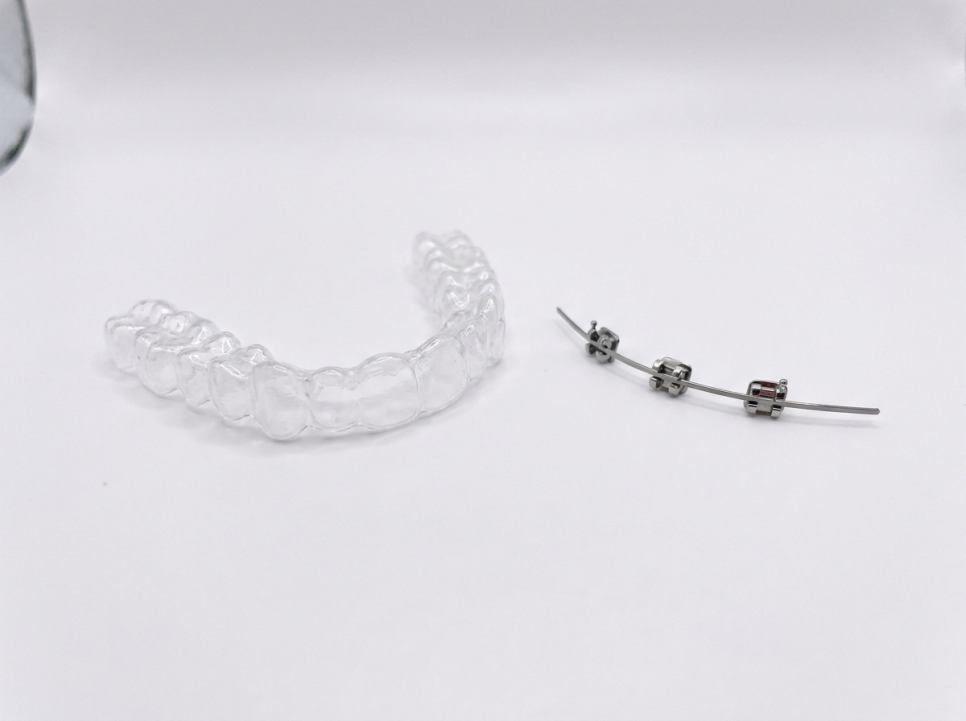
Clear aligners are removable appliances made of thin, transparent trays that can be put in and taken out. You can think of them as transparent film placed over the teeth. Because they can be removed for meals and toothbrushing, they generally create less interference with work life.
Their range of application depends on the diagnosis. Seoul National University Hospital’s medical information on orthodontic treatment explains that clear appliances may be difficult to use on their own in cases involving substantial or complex tooth movement, severely crooked teeth or crowding, skeletal malocclusion, or control of root movement. Actual treatment plans are therefore divided in ways such as the following.
| Dental condition | Treatment direction to consider |
|---|
| When the amount of movement is small and the alignment is relatively gradual | A plan using clear appliances alone may be suitable |
| When rotation or the amount of movement is significant | Attachments may be added, or treatment may be divided between clear and fixed appliances |
| When control of root movement is needed | The range of movement should first be checked using radiographic materials |
Wear time is also directly reflected in the treatment plan. If the trays are left out for extended periods, the planned movement may not occur as intended, and the plan may be adjusted following an additional diagnosis partway through treatment. Just remember that the time the trays are being worn is the treatment time.
The diagnosis comes before the method
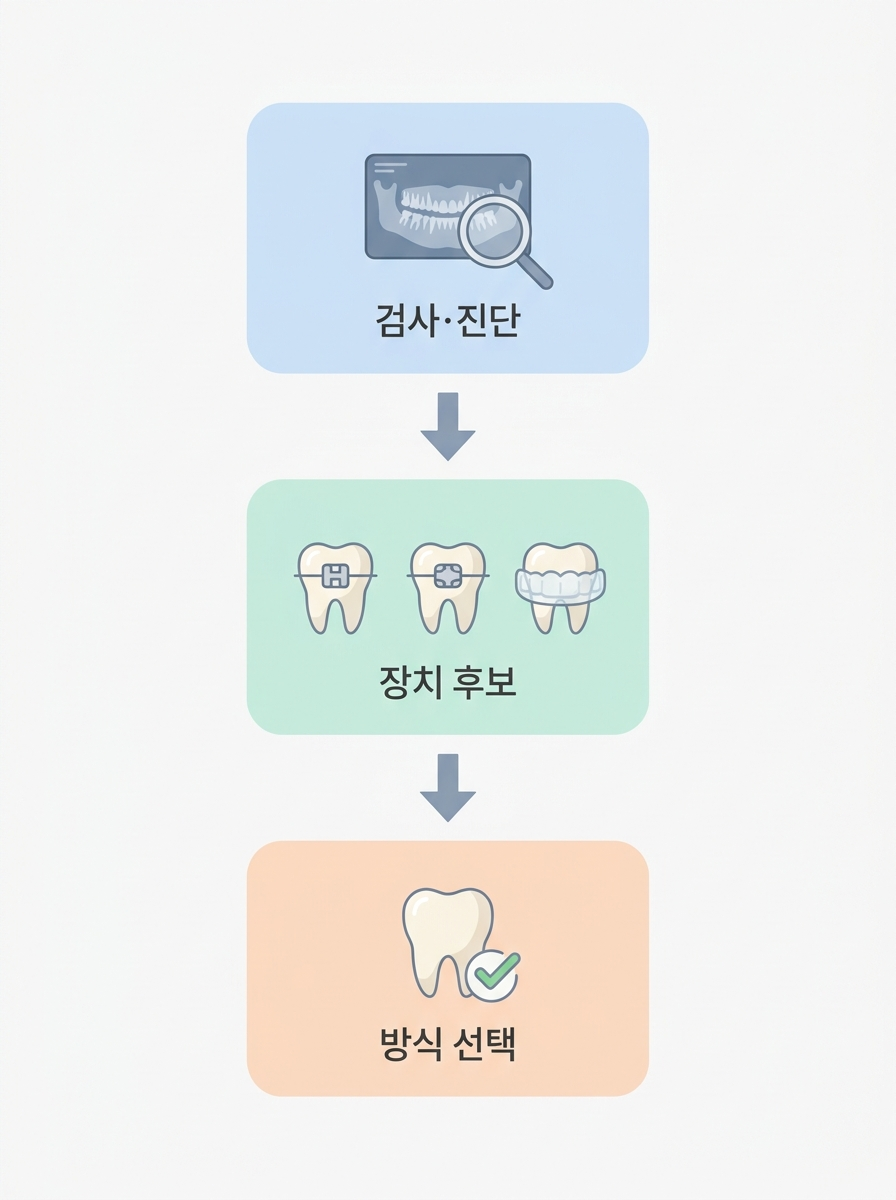
If different clinics recommend different methods during consultations for Gangnam orthodontic treatment, the difference is largely due to their diagnostic perspectives. Whether extractions are needed, what type of malocclusion is present, and the condition of the gums and bone first determine the range of appliances that can be used.
Looking back at the three methods above, the reference points were always the same: how visibility can be controlled, what the inner tooth surfaces are like, and how much movement is required. All of these are conditions determined by the teeth themselves.
Seoul National University Hospital’s medical information on orthodontic treatment also adds the following when explaining clear aligners:
> Whether a case can be treated
>
> requires sufficient consultation with an orthodontist before treatment.
The Korean Association of Orthodontists also recommends a process of making a detailed diagnosis using objective materials such as radiographs during the initial examination and providing a thorough explanation. This is why the answer to “Which method is best?” cannot be found simply through an online search.
So what should you check? — General criteria for making a decision

If the treatment method is determined through diagnosis, the things to check during a consultation should also relate to the diagnosis. Organizing them in advance can make it much easier to follow the explanation.
-
Whether the dentist is a board-certified orthodontic specialist
-
Whether the examination materials are reviewed and explained together with you
-
The basis for why this particular method was considered as an option
Let us expand briefly on the first point. Under the system currently in place, orthodontics is recognized as one of the dental specialties, and specialist certification can be obtained only after completing a separate training program at a designated training institution and passing a qualifying examination. Specific requirements may change as the relevant regulations are revised, so it is helpful to note when you verify them. Certification itself is objective information that can be checked during a consultation.
What you need now is confirmation, not a decision
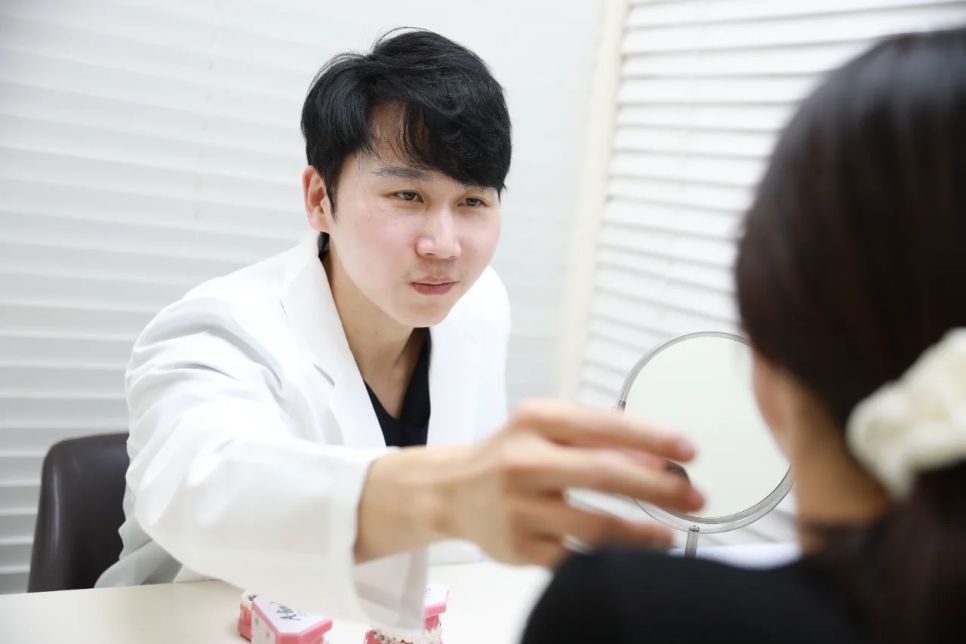
You do not need to decide on a method today. Conditions that influence the method—such as whether extractions are needed, the type of malocclusion, and the condition of the gums—can only be confirmed through an examination.
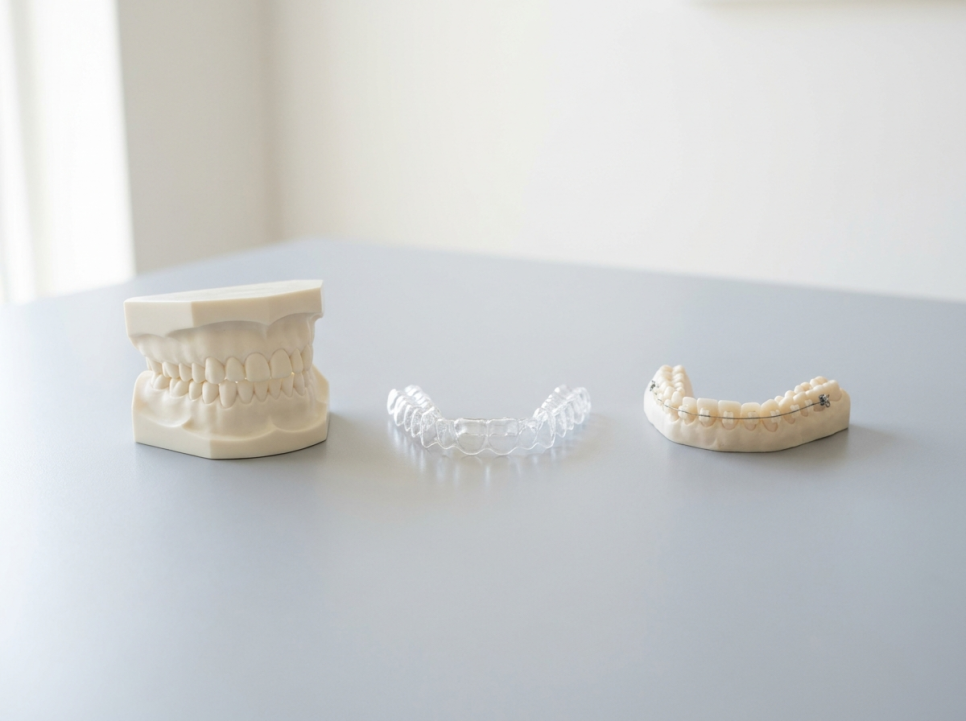
So why not change the order? Start by confirming the condition of your teeth through an examination and consultation with an orthodontist. Once you understand your condition, you can see where your case falls among the adjustment range of brackets, the attachment conditions for lingual appliances, and the applicable range of clear appliances. The information you have gathered while searching for Gangnam orthodontic treatment will become useful from that point on.
Gangnam orthodontic treatment is not a short journey, and it is a treatment whose benefits also include the convenience of ongoing care after the alignment has been improved, so the starting point is important. If you are concerned about your alignment or have developed a habit of chewing only on one side, first consider having an examination, including radiographs, at a nearby dental clinic, and then begin discussing treatment methods based on the results.