The lifespan of a dental implant can vary greatly depending on your usual care habits and your current overall health.
“Once it’s placed, it lasts a lifetime.”
Even after hearing these words in a consultation room at a Nonhyeon Station dental clinic, you may have left with an uneasy feeling. Implant treatment involves a significant investment of time and money, even for a single tooth, so it is natural to wonder whether it can really last a lifetime like your natural teeth.
In fact, that doubt is reasonable.
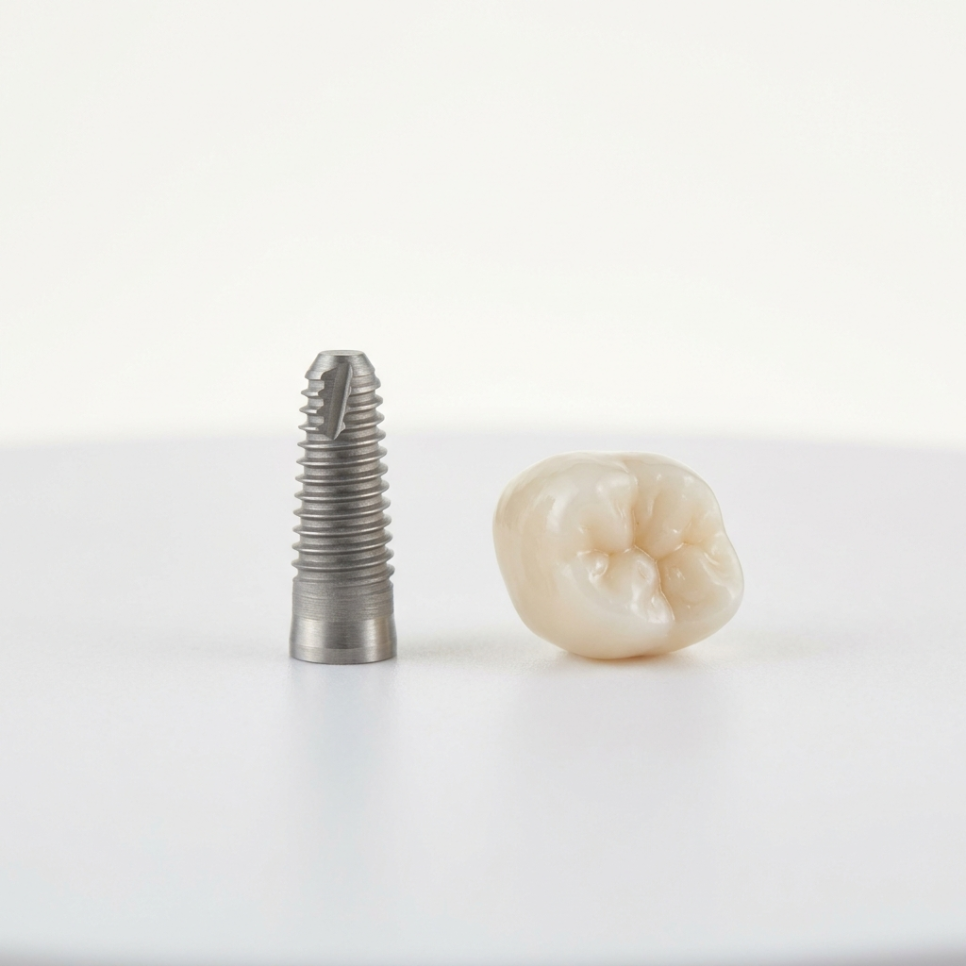
“Lasting a lifetime” is half right and half wrong
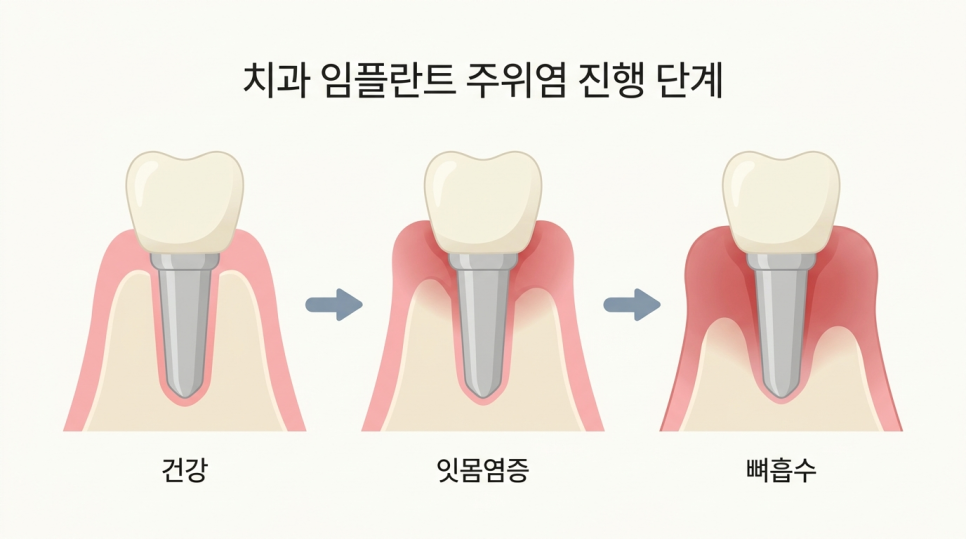
Cavities do not develop in the titanium post that serves as the tooth root. That may sound reassuring, but the absence of cavities does not mean that other diseases cannot occur. Just as gum disease can affect natural teeth, inflammation called peri-implantitis can develop in the gums and bone around an artificial tooth. In addition, once an implant develops a problem, it is much more difficult to preserve and continue using than a natural tooth.
In fact, according to literature published in the Journal of the Korean Dental Association, the prevalence of peri-implant disease has been reported across a fairly broad range, from 16% to as high as 58%. Because the criteria and observation periods differ between studies, it is difficult to compare these figures directly. However, such a wide variation also means that the outcome can change completely depending on the patient’s level of care and whether they consistently receive maintenance treatment. This is closely related to a question commonly asked at dental clinics, including those near Nonhyeon Station.
In other words, the word “lifetime” is closer to an outcome that can only be achieved when thorough conditions are in place.
Why does one person’s implant last 20 years while another’s lasts 5? — ① Care
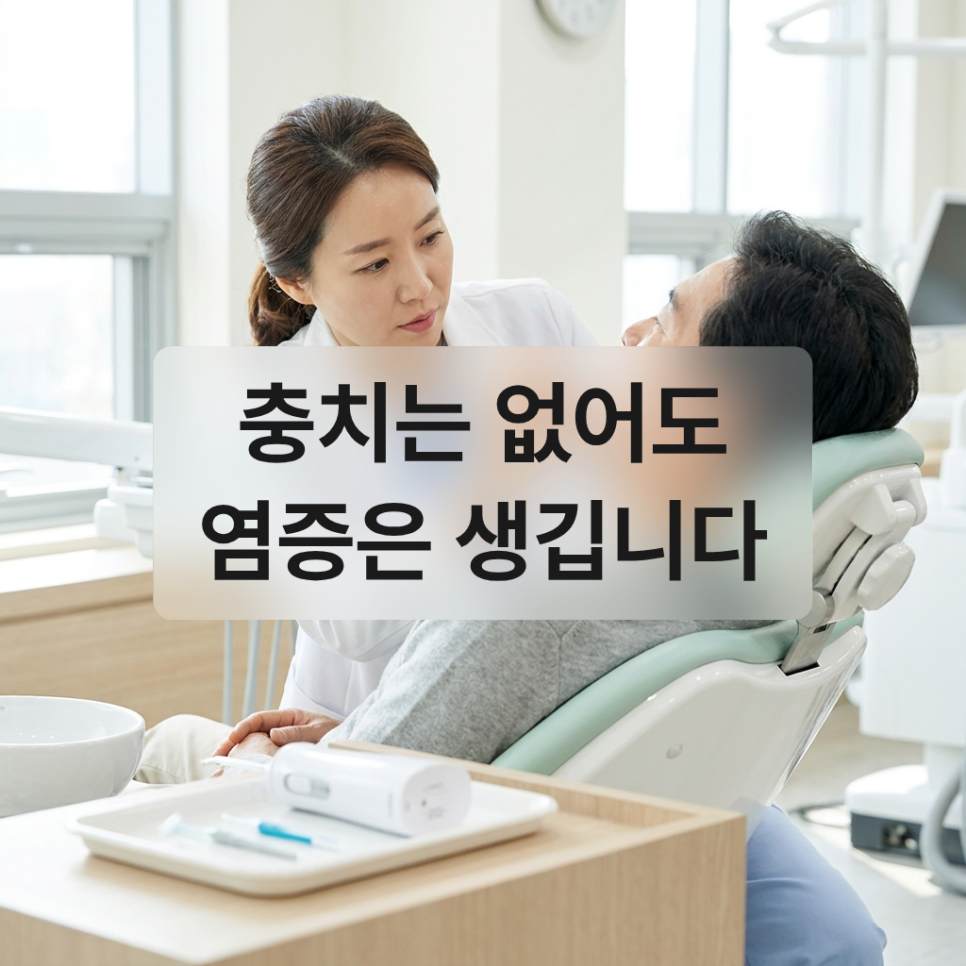
There is a regrettable situation that dental professionals encounter very often. A patient may use an implant comfortably for several years, then visit the clinic one day because it feels slightly loose when chewing. However, when an X-ray is taken, the bone around the gums is often found to have already been significantly lost.
This happens because implants do not have the periodontal ligament, the cushioning and sensory tissue found around natural teeth. When a natural tooth develops a problem, it tends to send early signals such as sensitivity or pain. Implants, however, lack the sensation needed to feel pain, so their warning signals arrive very late. It is like a fire breaking out behind a soundproof wall: by the time smoke begins to escape, the fire may already have spread beyond control.
That is why the following two points are essential for implant care.
| Category | Details | Why it matters |
|---|
| Daily hygiene care | Add interdental brushes and a water flosser to toothbrushing to control the bacterial film | Removes the starting point of peri-implantitis every day |
| Regular checkups | Periodically check the condition of the gums and bone even when there are no symptoms | Since pain appears late, this is a way to detect problems before symptoms occur |
Smoking is another factor that must never be overlooked. According to one study, the implant failure rate was 1.7% among nonsmokers but 4.3% among smokers—approximately 2.5 times higher. Although these figures are provided for reference, it is clear that nicotine interferes with blood flow to the gums and disrupts the process of osseointegration, in which the implant firmly attaches to the bone. Whether at a Nonhyeon Station dental clinic or a neighborhood dental office, there is a clear reason patients are always asked about smoking during their initial consultation and strongly advised to quit before and after the procedure.
② Systemic conditions — The effects of diabetes and osteoporosis
Existing systemic conditions and medications you are taking can also be important factors that completely change the treatment plan.
A report by a research team at Yonsei University Dental Hospital found that when blood sugar was not well controlled, the process of an implant attaching to the bone was hindered and the success rate decreased. In contrast, diabetic patients with well-controlled blood sugar showed high success rates similar to those of people without diabetes.
In other words, diabetes itself is not necessarily the problem; the key question is whether your blood sugar is currently being controlled in a stable manner.
Another type of medication that requires particular attention during dental treatment is osteoporosis medication. If you are taking an antiresorptive drug that prevents bone loss, medication-related osteonecrosis of the jaw can occur, though very rarely, after a tooth extraction or implant surgery. For oral medications, the incidence is very low, at approximately 0.01–0.1%, but the risk also increases as the duration of use becomes longer. Guidelines from the Korean Society for Bone and Mineral Research and the Korean Association of Oral and Maxillofacial Surgeons recommend consultation with an internal medicine specialist regarding a temporary interruption of medication before treatment for people who have taken these medications long-term for more than four years. The appropriate interruption period varies depending on the circumstances, so you must discuss it with your medical professionals.
| Condition | Effect on lifespan | Recommended response |
|---|
| Diabetes (poorly controlled) | Reported to interfere with osseointegration and reduce the success rate | Check blood sugar levels before the procedure |
| Diabetes (well controlled) | Reported success rates similar to those of people without diabetes | Consider proceeding while maintaining good control |
| Use of osteoporosis medication | Risk increases depending on the duration of use | Report the medication and duration of use and consider specialist consultation |
| Smoking | Failure rate reported to be approximately 2.5 times higher | Quit smoking before and after the procedure |
Of course, having a systemic condition does not automatically mean that you cannot receive an implant. The key to treatment is to accurately assess your current health and coordinate care to identify the safest timing and approach.
Health checks before implant placement

Medical information from Seoul National University Hospital also emphasizes the conditions that must be carefully reviewed before treatment for a successful implant procedure.
-
Gum condition: If you already have gum disease, it must be treated first. Placing a post on a foundation where inflammation remains can only shorten the implant’s lifespan from the outset.
-
Amount of jawbone: If the bone is too thin or insufficient, the foundation must be reinforced through preliminary treatment such as bone grafting.
-
Overall health and medications: Blood sugar levels and your history of taking osteoporosis medication, as mentioned above, must be thoroughly incorporated into the treatment plan.
In addition, another factor that greatly influences the implant plan is the alignment and bite of the remaining teeth. If the empty space left by a missing tooth is neglected for a long time, the adjacent teeth may collapse into the space and the opposing teeth may over-erupt, causing the entire dental arch to lose its proper spacing. If an implant is placed forcefully in this condition, there may not be enough room for the artificial tooth, and abnormal concentration of chewing forces may prevent it from lasting.
In such cases, the collapsed teeth should first be uprighted through limited orthodontic treatment to secure the original space. This preliminary process can help ensure a longer implant lifespan. Sometimes, as the space is reorganized, the overall treatment plan may change in a positive direction: fewer implants may be needed than initially expected, or the focus may shift toward preserving the natural teeth for longer.
The important point is that these detailed conditions can never be identified simply by looking in a mirror at home. The amount of jawbone must be assessed through radiographic images, inflammation deep in the gums through a dental examination, and overall health through a thorough medical history. Only then can an appropriate plan be established.
Let us return to the uneasy feeling you had about the phrase “It will last a lifetime,” which we mentioned at the beginning. Your doubt was justified. An implant is a treatment that can be used safely and reliably for a long time only when several demanding conditions are properly met. Therefore, rather than immediately setting a surgery date, it is important to first check your priorities.
-
Whether there is any gum inflammation that must be treated first
-
Whether there is enough jawbone and whether the surrounding teeth have collapsed into the empty space
-
Whether your blood sugar is well controlled and whether you are taking any medication that could affect the procedure
-
Whether there are lifestyle habits, such as smoking, that you need to change immediately

Of course, a dentist cannot predict the exact number of years an implant will last. However, after these four factors have been carefully checked through an examination and consultation at a Nonhyeon Station dental clinic, vague anxiety about “how long my implant will last” can be replaced with a clearer judgment: “Given my current conditions, this is what I need to do.” In particular, correcting a collapsed dental arch first and building a strong foundation is a sensible choice that can substantially extend the implant’s lifespan after treatment. Whichever dental clinic you visit, the sequence of checks required for a successful outcome is essentially the same.
If the space left by a missing tooth has begun to concern you, rather than immediately focusing on having an implant placed, we recommend visiting a nearby dental clinic and calmly having the condition of your gums and bone, as well as the alignment of your remaining teeth, evaluated first.