“Which is better, Invisalign or clear aligners?” This is a question we hear very often during consultations.
However, there is a small misconception hidden in this question. The two are not actually things that can be directly compared.
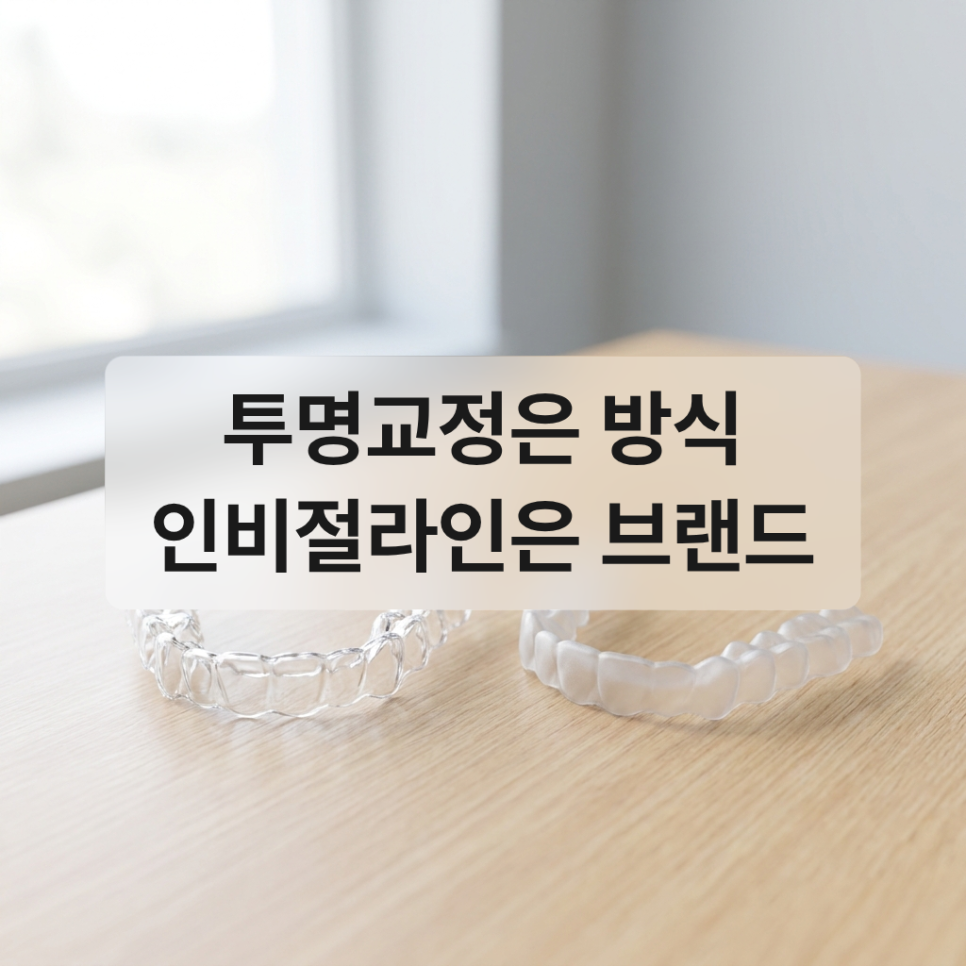
Clear aligners refer to a treatment method, while Invisalign is one of the many brands that use this method.
Once these concepts are clarified, a more practical question arises: If the method is the same, why can estimates differ by nearly twofold from one dental clinic to another?
Let’s take a detailed look at what is factual and where marketing begins.
Why Different Dental Clinics Use Different Names
If you have visited two or more clinics for consultations, you may have encountered a situation like this.
One clinic gives you an estimate saying, “Let’s proceed with Invisalign,” while another says, “Regular clear aligners should be sufficient,” and quotes a much lower price.
Why are they so different when both use transparent appliances?
As mentioned earlier, clear aligners refer to the overall treatment method of moving teeth by replacing transparent plastic appliances in stages. It may help to imagine changing gloves that are slightly different in shape to fit the hand at each stage.
Invisalign is the name of a specific brand from the U.S.-based company Align Technology that uses this method. In addition to Invisalign, various clear-aligner brands are available both domestically and internationally.
Therefore, if two dental clinics near Hakdong Station gave you an “Invisalign estimate” and a “clear-aligner estimate,” respectively, you can understand this as being offered appliances from different brands within the same treatment method.
This leaves one question: If the method is the same, why can costs vary so significantly depending on the brand?
The Reality Behind the Price Difference—and Why That Is Not the Whole Story
There are several reasons Invisalign estimates are relatively higher. These include the scale of clinical data, treatment-planning software, and differences in appliance materials. A comparison is shown below.
| Comparison criterion | Invisalign | Other clear-aligner appliances |
|---|
| Clinical data | Cumulative treatment data from around the world is used to establish treatment plans | The amount of accumulated data varies by brand |
| Treatment planning | The movement process is planned in advance using dedicated software | The availability and precision of in-house planning tools vary by brand |
| Material | Uses a specially developed material (SmartTrack) | Materials vary by brand |
| Cost | Relatively higher | Often relatively lower |
Based on this table alone, it may seem that the most expensive appliance is always the right answer, but that is not necessarily the case.
According to a study by Haouili et al. published in the 2020 American Journal of Orthodontics and Dentofacial Orthopedics (AJO-DO), the accuracy of tooth movement relative to the treatment plan increased when the SmartTrack material developed by Invisalign was used compared with treatment using the previous material. However, the researchers also emphasized that although the appliance material had improved, it was difficult to conclude that the material alone would significantly change orthodontic outcomes.
Other systematic reviews analyzing the clinical outcomes of clear aligners—including research by Rossini et al. published in The Angle Orthodontist in 2015 and by Papadimitriou et al. in Progress in Orthodontics in 2018—reached similar conclusions.
The success of clear-aligner treatment is not determined by appliance performance alone.
The amount of time the patient wears the appliance,
the precision of the treatment plan,
the complexity of the case, and other factors all work together.
Ultimately, by general standards, Invisalign may indeed have some advantages over other brands. However, it would be reasonable to conclude that factors such as the patient’s wear time and the orthodontist’s treatment plan have a greater influence than the choice of company.
The Real Question Is Not “Which Appliance?” but “What Kind of Case Is My Dentition?”
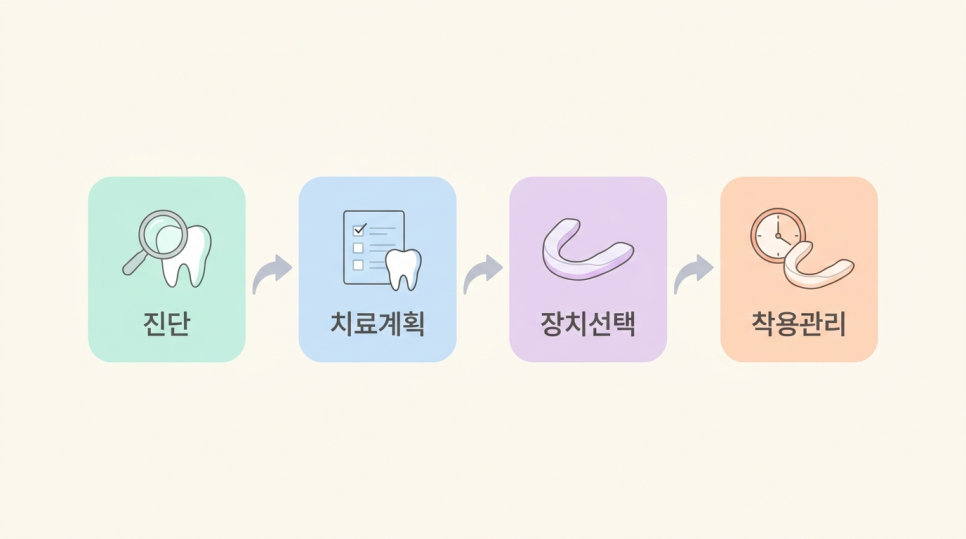
So what should patients use as their basis for making a decision? Rather than comparing appliance specifications alone, it is better to reframe the questions as follows:
Can the condition of my teeth be treated with clear aligners?
If so, how much movement is required?
Another fact commonly identified by the systematic reviews mentioned earlier is that the range of cases treatable with clear aligners has expanded considerably over the past decade or more. Cases requiring extractions have also been treated with clear aligners and continue to be reported. However, there is still variation among studies regarding the extent to which treatment can be carried out predictably.
In particular, if the teeth need to be moved together with their roots or the root angles need to be uprighted, the difficulty of treatment planning increases significantly. The so-called “roller-coaster effect,” in which the front teeth sink inward as though they are collapsing when extraction spaces are closed, is also a phenomenon that has long been noted in orthodontics. Recently, rather than simply dismissing this as a limitation of the appliance, there has been a clear trend toward treating it as a variable that should be predicted and compensated for during the planning stage.
In other words, whether you use the most expensive Invisalign system or a relatively affordable domestic appliance, treatment progress can vary greatly depending on how your case is analyzed and what plan is established.
Even with mild crowding in which the teeth are only slightly misaligned, the quality of the final result can differ noticeably depending on how the molars are positioned and how the upper and lower bite is established. Orthodontic treatment does not end with simply straightening the front teeth to make them look better. Because it is a process of distributing chewing forces evenly and making future gum and dental care easier, the initial planning stage can affect oral health years later.
Therefore, if you are comparing estimates from two clinics, we recommend comparing not only the price difference but also how each clinic diagnosed your teeth and classified your case.
Before Comparing Estimates, Confirm the Case First
If the estimates you received differ substantially, first take some time to carefully review the explanations you heard at each clinic.
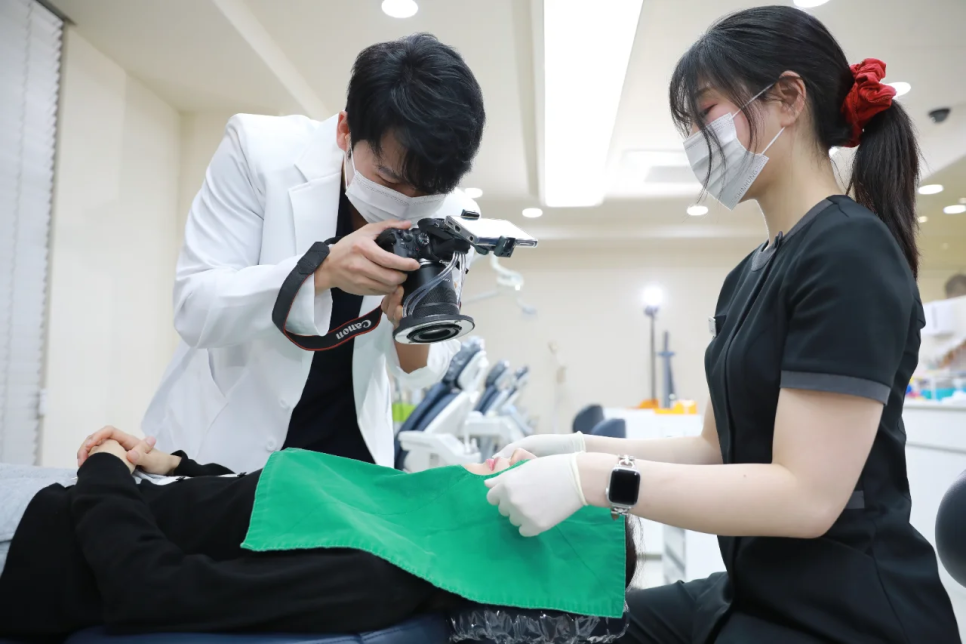
The first step is to check whether the key diagnostic findings differed—for example, whether extractions are necessary, how long treatment is expected to take, and whether the plan involves moving the molars as well. If the diagnoses themselves were different, it is natural for the estimates to differ. Conversely, if the diagnoses were broadly similar but the prices differ significantly, it is a good idea to ask specifically about the appliance brand, the precision of the treatment plan, whether retainers are included, and the scope of follow-up care.
Of course, it is nearly impossible for a person without specialized training to determine their own orthodontic difficulty. The precise position of the tooth roots, the condition of the supporting jawbone, and the way the upper and lower teeth fit together can only be identified through radiographs and detailed examinations. Therefore, an accurate assessment of an individual’s condition must be made by a medical professional.
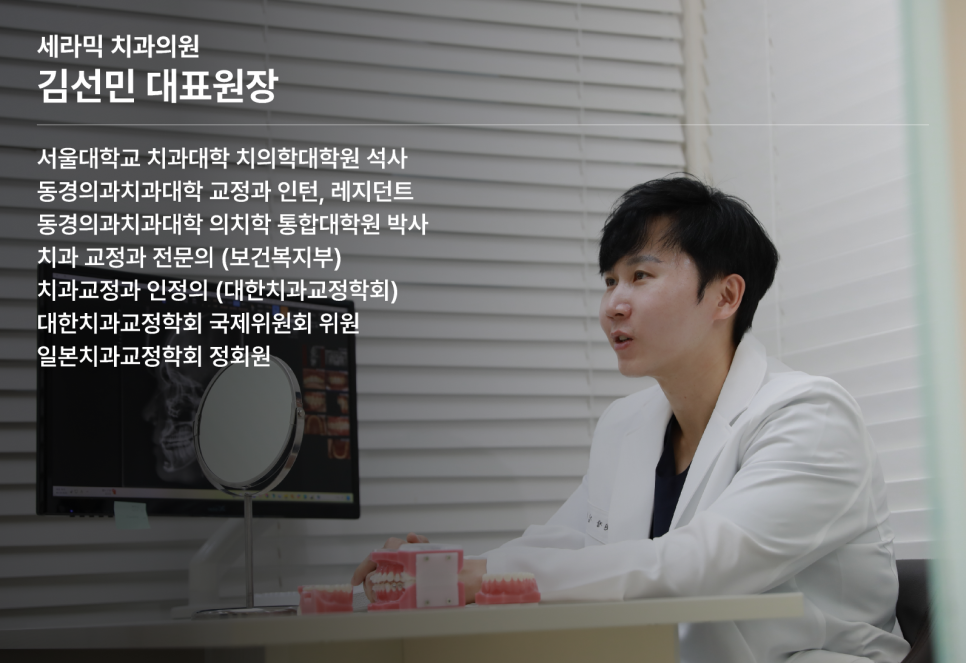
There is an objective indicator that can help you assess the reliability of a treatment plan: certification as a dental specialist in orthodontics.
A dental specialist in orthodontics is a medical professional who, under the “Regulations on the Training and Qualification Recognition of Dental Specialists,” has completed one year of internship and three years of orthodontic residency after graduating from dental school, and has passed the national specialist examination. According to data from the Korean Association of Orthodontists, there were approximately 1,475 such specialists as of 2021, representing about 4% of all dentists at the time. Since new specialists are certified every year, this figure should be used only as a 2021 reference statistic; for the most accurate current status, check the data published by the association.
Even without knowing the name of a specific hospital, you can directly check whether a doctor is a certified specialist by searching by name on the Korean Association of Orthodontists’ website. Searching for the medical professionals at the dental clinics near Hakdong Station that you visited for consultations may also be a useful step.
Orthodontic treatment is a long-term treatment that should be viewed as lasting at least a year once it begins. The effort invested in diagnosis and treatment planning before starting is directly reflected in the bite and ease of maintenance after orthodontic treatment.
The quickest way to find the answer between two estimates is not to keep searching online for appliance names, but to have your case carefully assessed once more. Whether you choose a dental clinic near Hakdong Station or a hospital in another area, find a trustworthy practice, undergo a detailed examination, and listen carefully once again to the explanation of the treatment plan. Once the outline of the treatment you need becomes clear, the choice between Invisalign and another clear-aligner system will naturally follow.