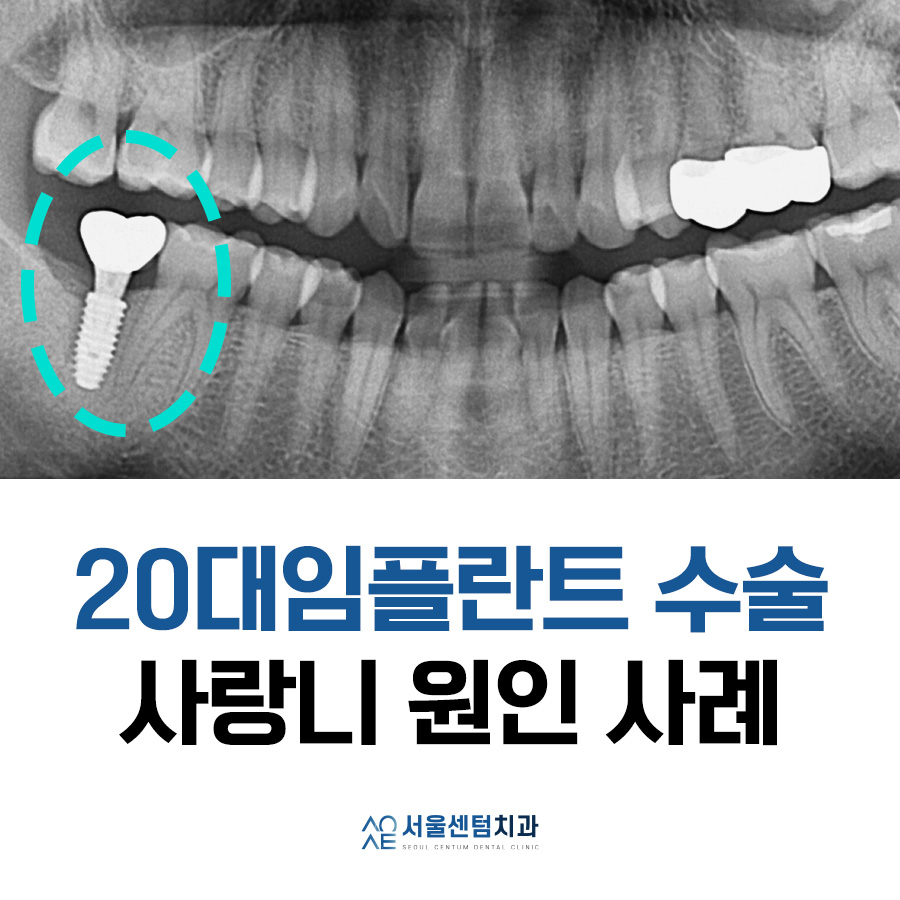
Hello. This is Seoul Centum Dental Clinic.
When people hear “molar implant in your 20s,”
some feel embarrassed and say,
“An implant at such a young age…”
In fact, when we look at the patients who visit our clinic,
we see people from a very wide range of age groups, starting in their 20s.
Since everyone needs treatment for different reasons,
there is absolutely no need to feel ashamed!
The implant case I would like to introduce today
involved a tooth that was damaged by a wisdom tooth,
so the damaged tooth was extracted and an implant was placed.
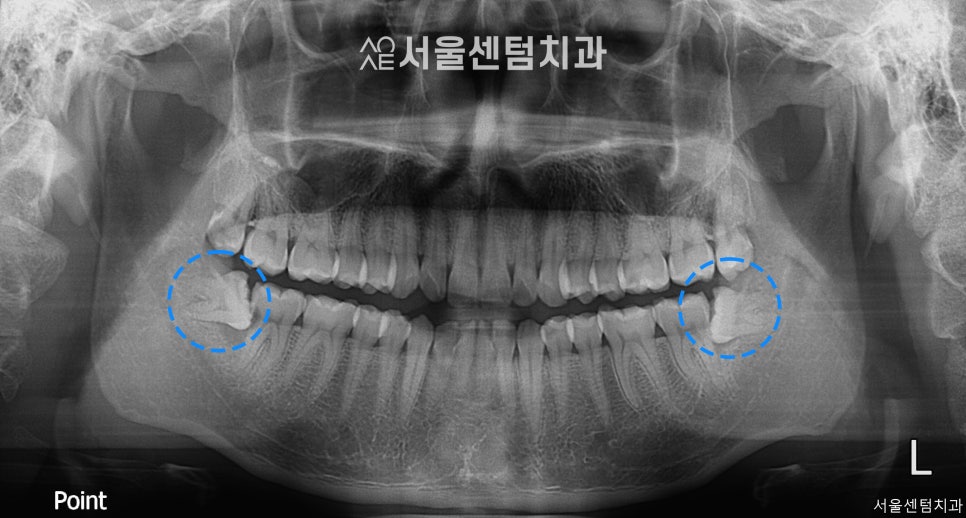
Wisdom teeth do not always need to be extracted.
However, depending on each person’s oral structure and tooth alignment,
there are cases in which extraction is recommended.
If a wisdom tooth has erupted properly, it is generally not a major concern.
However, because it is located at the very back of the mouth,
some people have it extracted because it is difficult to keep clean.
If it has not erupted properly
and may damage the adjacent tooth,
we recommend having it extracted.
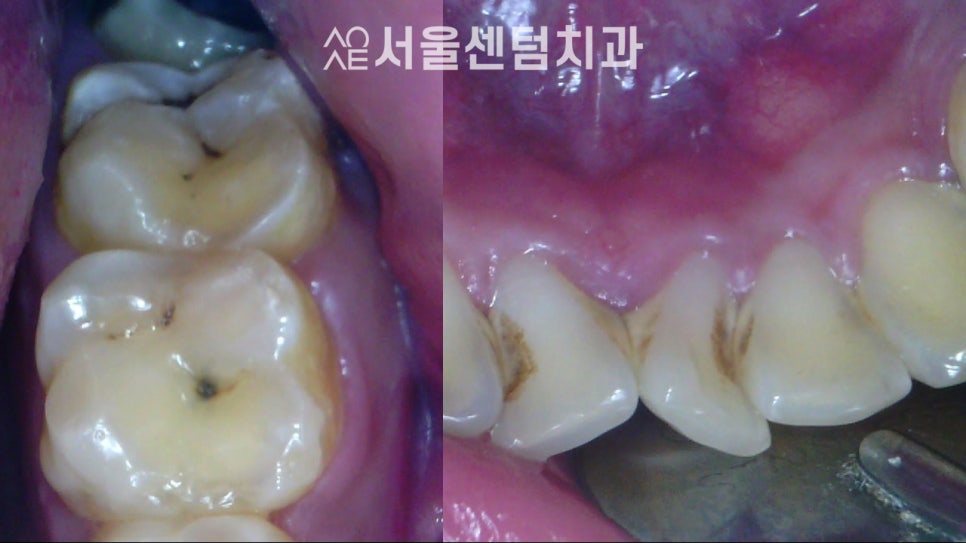
Now, I will show you in detail
a molar implant case caused by a wisdom tooth in a patient in their 20s.
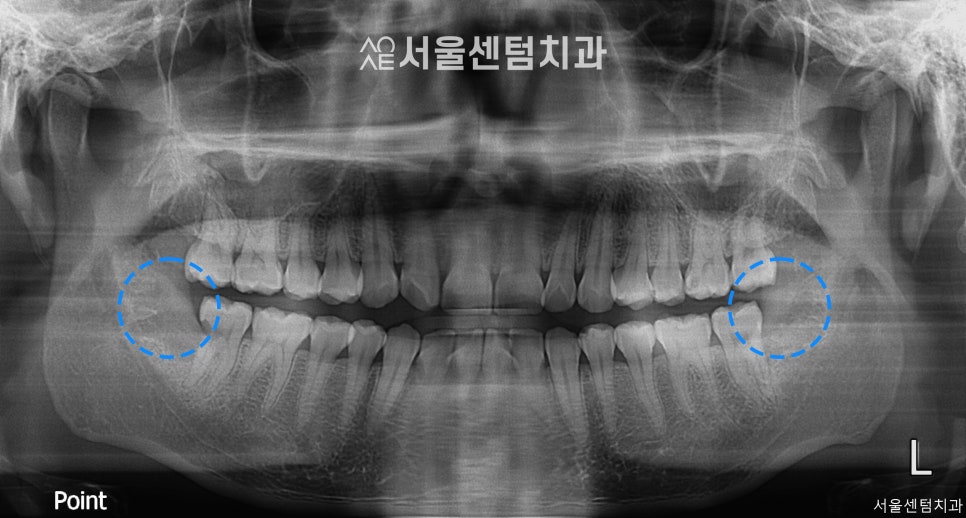
First, regarding the wisdom tooth and the condition of the cavities,
several teeth had active cavities.
There was also a significant amount of tartar,
so it appeared that oral care had been neglected somewhat.
In addition, there appeared to be a possibility that the tooth adjacent to the wisdom tooth could be damaged,
so we decided to extract the wisdom tooth first.
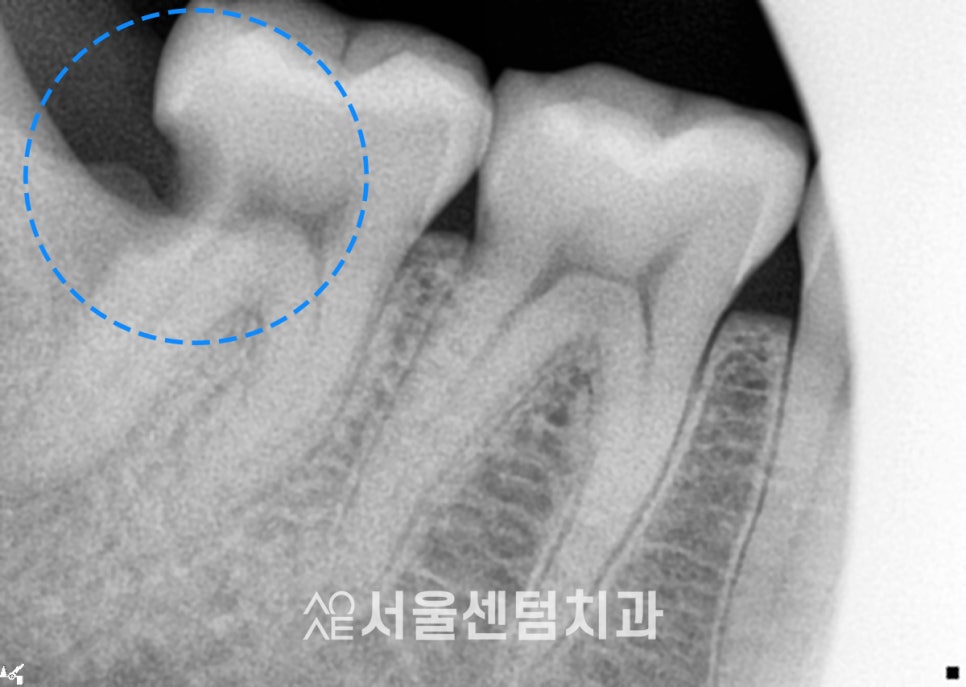
After extracting the wisdom tooth,
we took a periapical X-ray of the rearmost molar on the right,
which had been causing the patient pain.
The indicated area shows that
the tooth had been damaged by the wisdom tooth.
Because the damage was so extensive,
we determined that it would be difficult to preserve the natural tooth.
Therefore, we developed a treatment plan involving
a molar implant for a patient in their 20s.
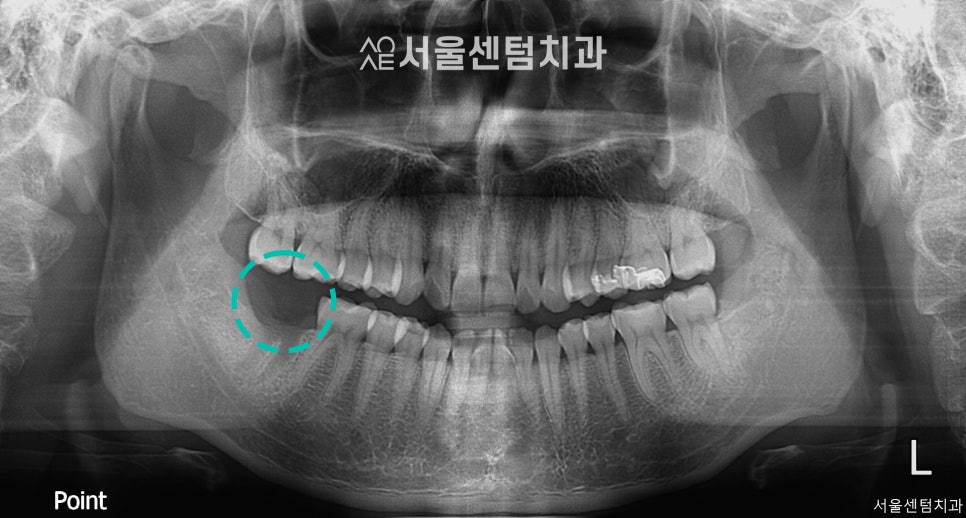
This is an X-ray taken after extracting
the severely damaged lower right molar.
The patient also said that the molar on the left side was painful.
This area appeared likely to require root canal treatment,
so we first provided a soothing treatment.
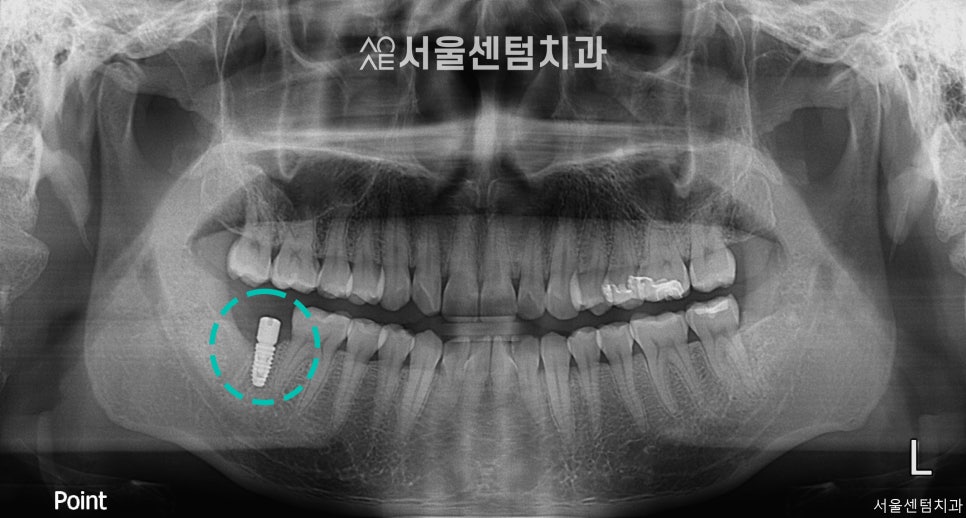
This is an X-ray taken immediately after the implant was placed.
Fortunately, we could confirm that it had been placed properly
in a stable direction.
We decided to continue monitoring it and take the impression
for the implant prosthesis approximately two months later.
Next, while waiting for the impression appointment,
we treated the cavity in the left molar.
Because the cavity extended deeply,
we removed the decay and proceeded with a zirconia crown.
Since the affected area was quite deep,
we also performed a gingivectomy to remove some gum tissue
and crown lengthening to expose more of the tooth structure.
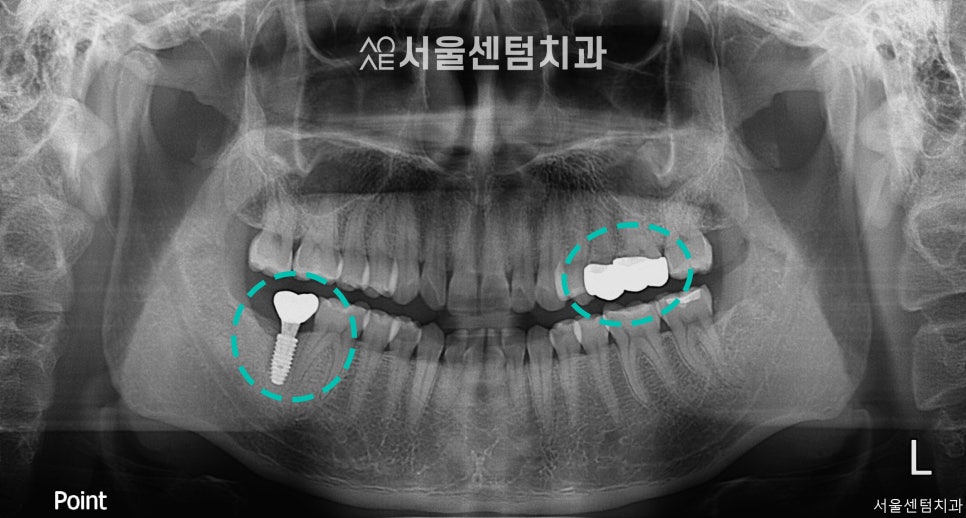
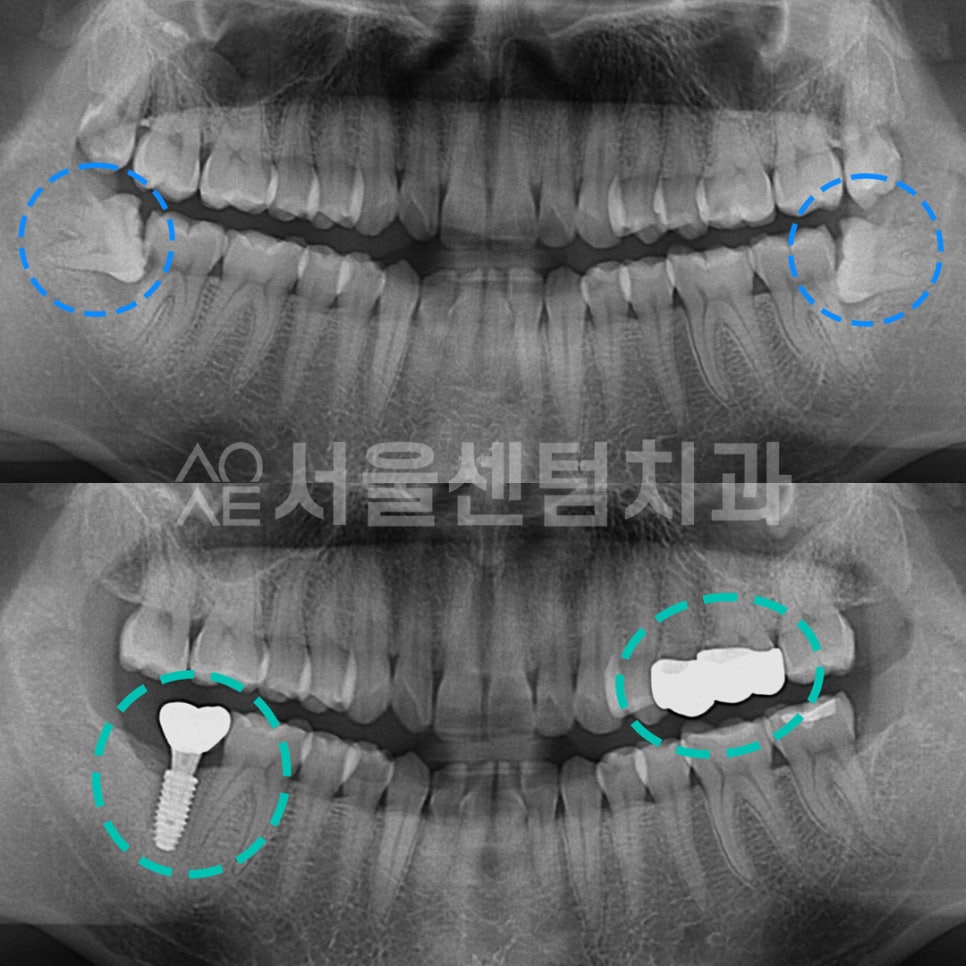
This is how it looked after completing the molar implant
for the patient in their 20s.
The treatment was completed with a stable bite!
We carefully checked the patient at every visit
while carrying out root canal treatment and crown treatment together.
Fortunately, we could also confirm that the zirconia attached to the upper left tooth
had been restored successfully.
After completing the overall treatment,
we are now providing careful support through regular checkups
to help maintain the results.
As in the case explained today,
many people leave their wisdom teeth untreated
because they seem less uncomfortable than expected.
If you visit the dentist only after the pain begins,
you may miss the appropriate treatment window,
and there are occasional cases in which not only the wisdom tooth
but also the adjacent tooth must be extracted.
Therefore, we recommend having your wisdom teeth checked in advance, before they become painful,
or visiting the dentist regularly for procedures such as scaling
and receiving an oral examination.
This concludes the introduction to this case
involving molar implant treatment for a patient in their 20s.
Thank you for reading this long post,
and I will return next time with another story!
This post was written in compliance with the Medical Service Act.
All dental treatments may have side effects, and a thorough consultation with a medical professional is required before treatment.