| Things You Must Check for Sinus Lift Procedure Precautions |
Hello, this is Seoul Centum Dental Clinic.
Have you ever heard the term
sinus lift procedure?
If you have looked into implant surgery a lot,
some of you may have come across it online.
Or, if you visited a dental clinic
and received a consultation,
some of you may be hearing it for the first time.
So today, to help those considering implant surgery,
I will explain in an easy way
what a sinus lift procedure is,
and the precautions to follow after surgery^^
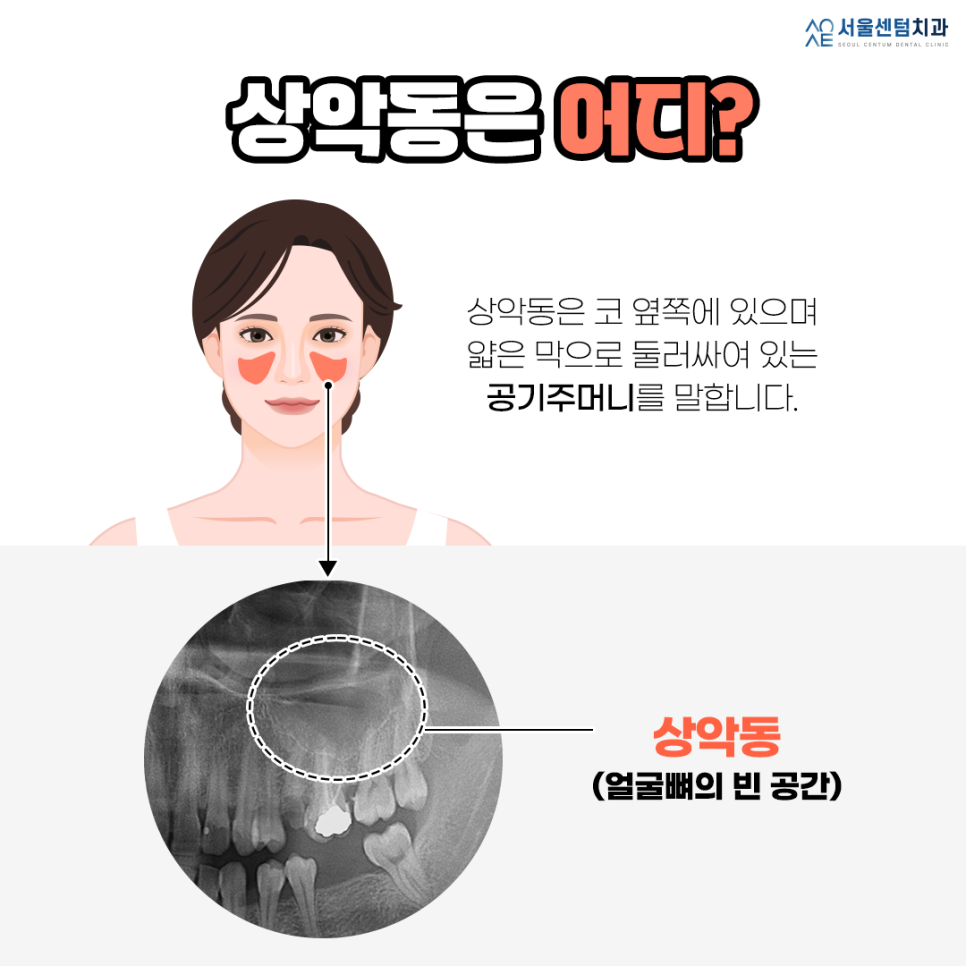
- What is the maxillary sinus?
Dental terms are sometimes used in English as they are,
but many are also written using Chinese characters.
If you are familiar with Chinese characters,
you may have already guessed it roughly~
Usually, the lower jaw is called the mandible, and the upper jaw is called the maxilla.
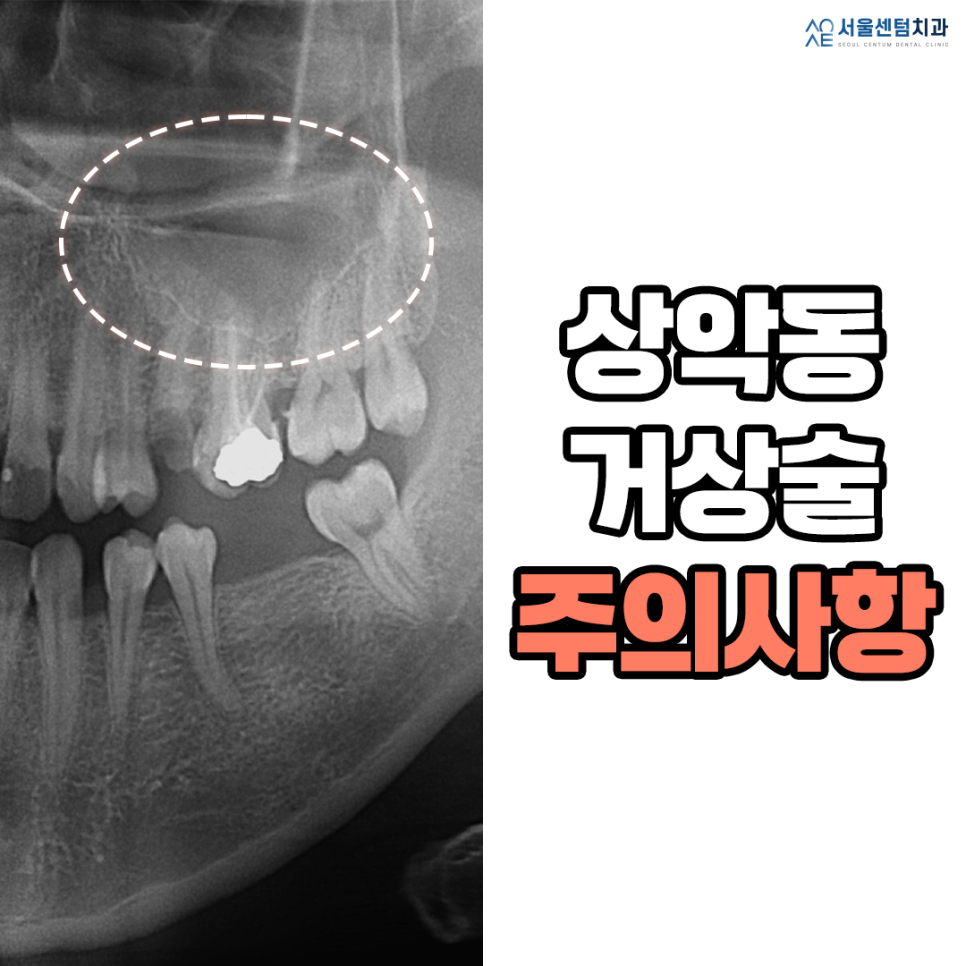
Therefore, the maxillary sinus refers to
a hollow space in the facial bones
located between the side of the nose and the upper teeth.
To explain a little more specifically,
it is an air-filled cavity
surrounded by a thin membrane.
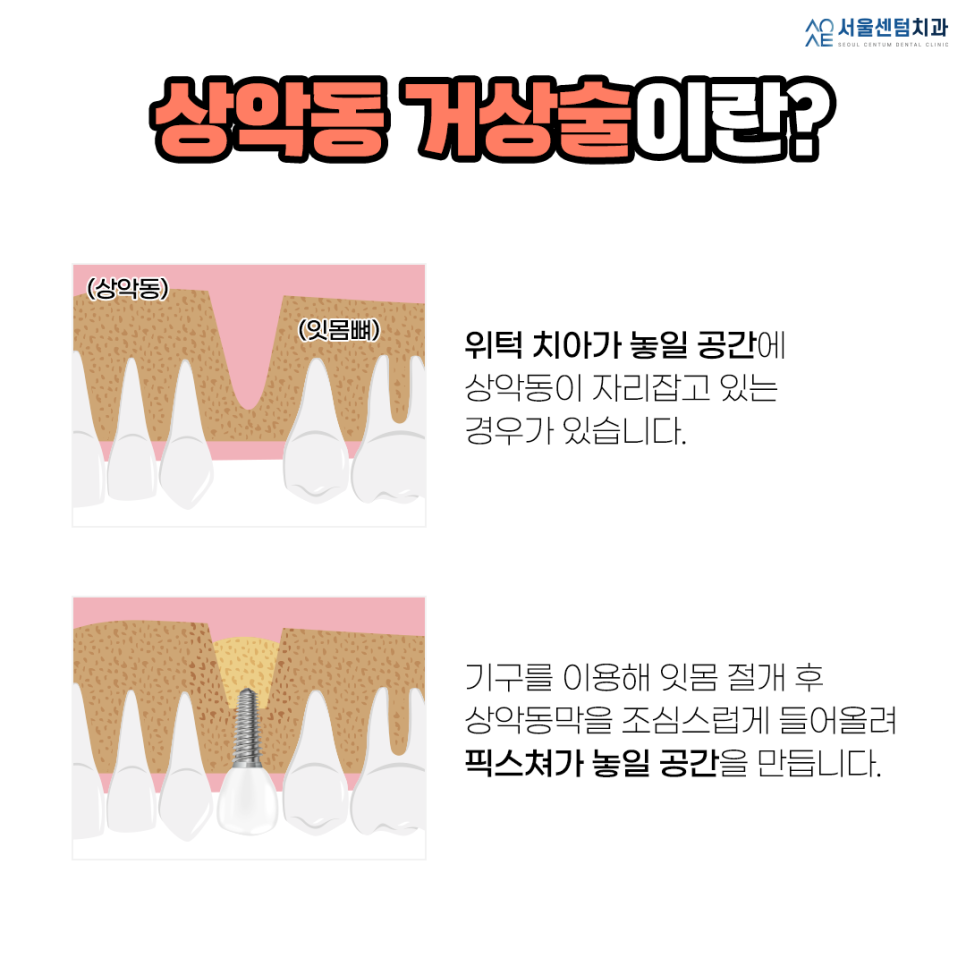
- What is a sinus lift procedure?
Now you know where the maxillary sinus is,
but you may still be wondering what a lift procedure is
and why this surgery is necessary.
In the first stage of implant surgery,
there is a process of placing something called a fixture,
which serves as the root of the tooth,
into the jawbone.
In some cases, the maxillary sinus is located close to the upper jaw teeth.
In such cases, there is not enough space to place the fixture!
So the sinus membrane is carefully lifted
to create space,
and this process is the sinus lift procedure.
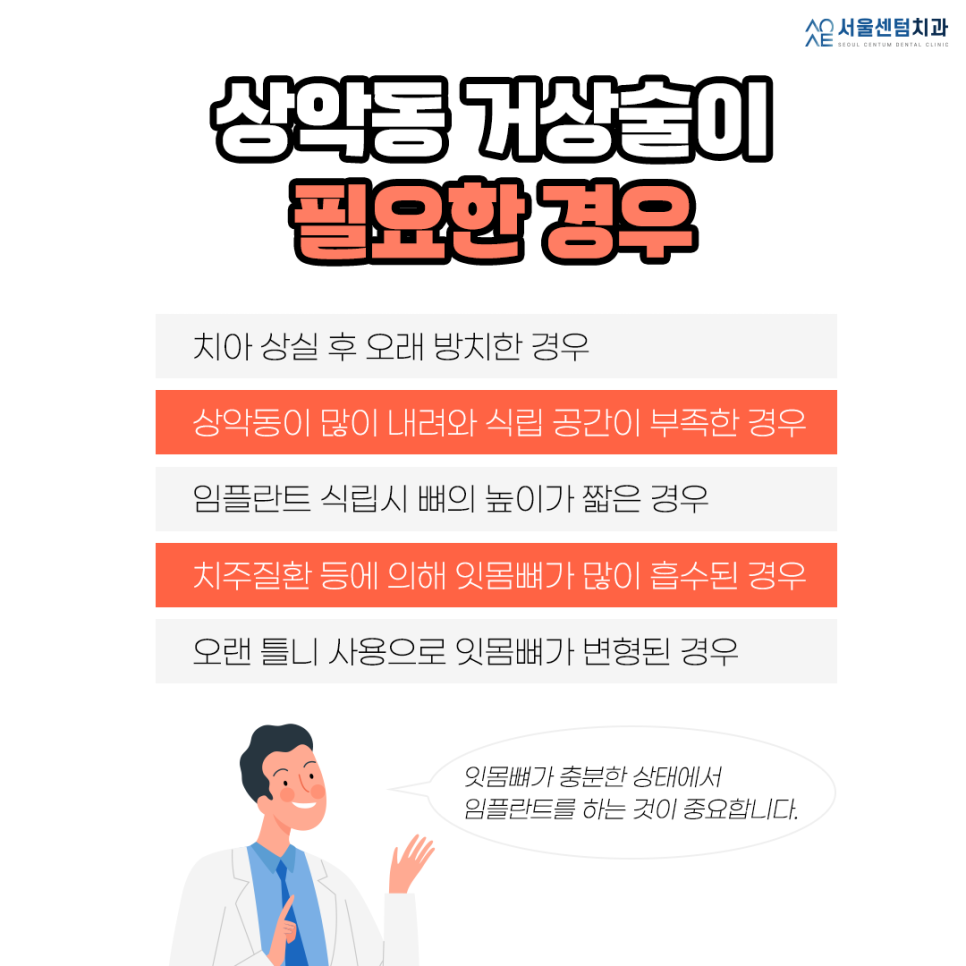
- When a sinus lift procedure is needed
As mentioned briefly above,
it is performed when there is not enough space
to place bone in the maxilla~
To be more specific,
it is performed when a tooth has been extracted and left untreated for a long time,
when the jawbone has been greatly resorbed due to periodontal disease,
or when the jawbone has changed shape after long-term use of dentures,
leaving insufficient space for placement.
In addition to the cases above,
if the maxillary sinus has descended significantly and there is not enough space,
you can think of it as being performed together during implant surgery.
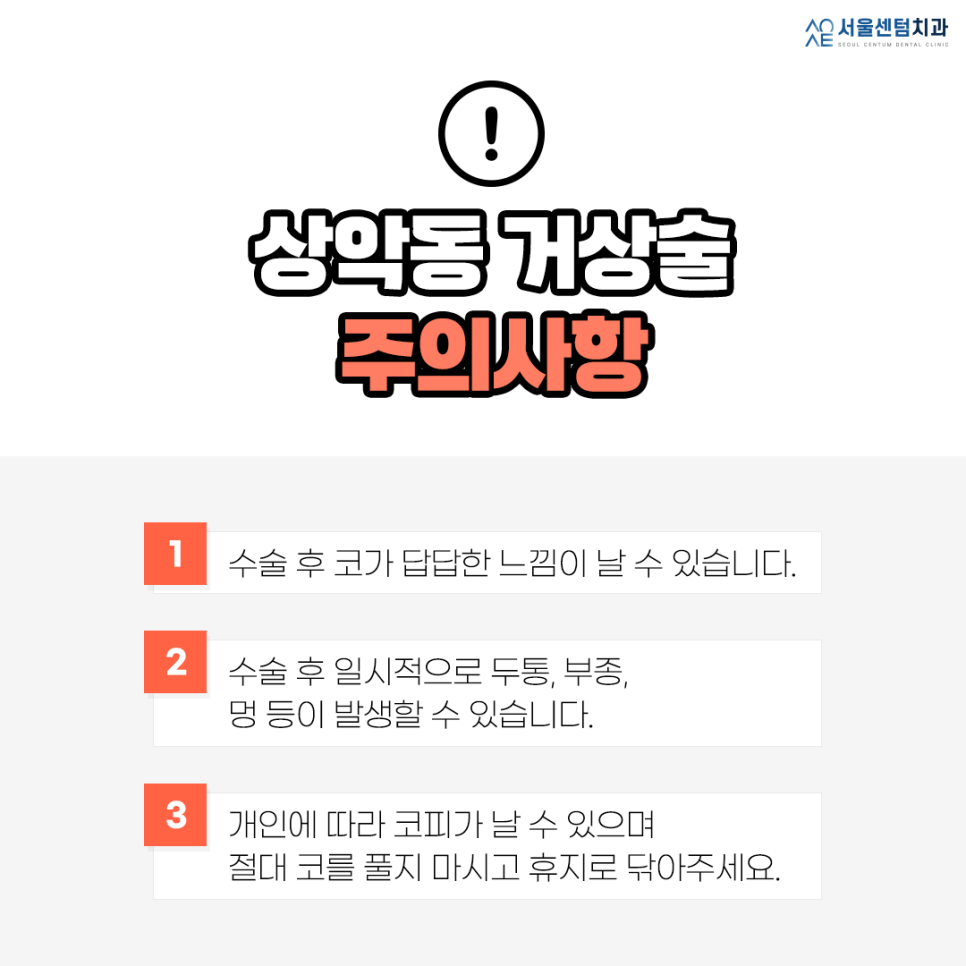
- Precautions after a sinus lift procedure
Now, I will explain the things
you must check after surgery.
After surgery, you may temporarily feel nasal congestion,
and headaches, swelling, or bruising may occur.
Depending on the individual, nosebleeds may also occur,
and in that case, do not blow your nose under any circumstances.
Instead, gently wipe away the blood that comes out with tissue.
Blowing your nose can put pressure on the maxillary sinus area,
so you must avoid it.
The next important thing is
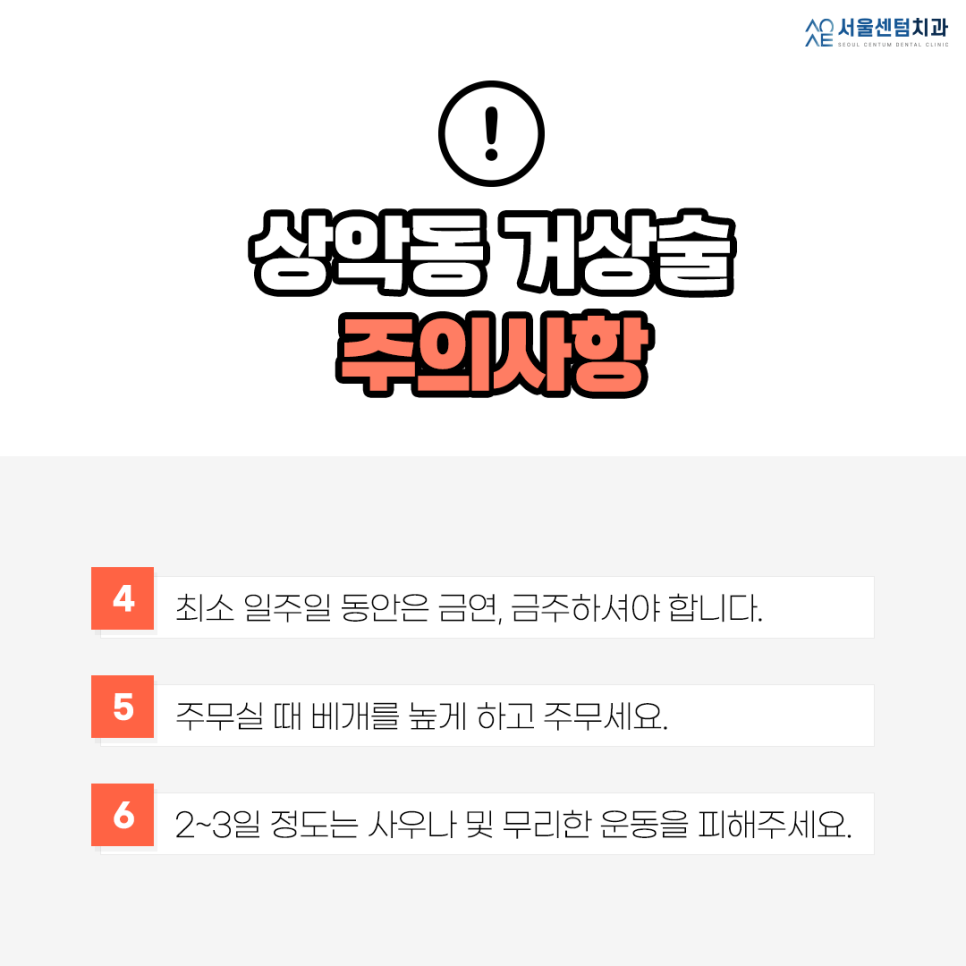
to stop smoking and drinking!
I know this part is really hard to follow,
but because it can cause the surgery to fail,
please try to observe it for at least one week, even if it is difficult.
Also, when sleeping, raise your pillow
and sleep with your head elevated,
and avoid saunas and exercise for about 2 to 3 days.
The rest should be relatively easy, right?
The detailed instructions will be kindly explained at the clinic,
so please refer to the guidance sheet.
Today, I explained mainly the sinus lift procedure precautions
that you must check,
but was it easy to understand?
If you need a more detailed explanation
or would like a consultation,
please feel free to contact us anytime.
Thank you^^
This post was written in compliance with the Medical Service Act.
All treatments may have side effects, so sufficient consultation with medical staff is necessary.