
Sleep is an essential time for recovery and
recharging in life.
If sleep time is too short, immunity may decline,
you may have trouble focusing on work or study, and headaches can occur,
which can interfere with daily life.
For adults, an average of 7 to 9 hours of sleep
is recommended.
When adequate sleep is maintained,
it can improve your condition and efficiency.
When you wake up after getting enough sleep,
you should feel refreshed, but if you have a headache and
feel stiffness in your jaw, it may not be simple fatigue,
but rather a problem called bruxism.
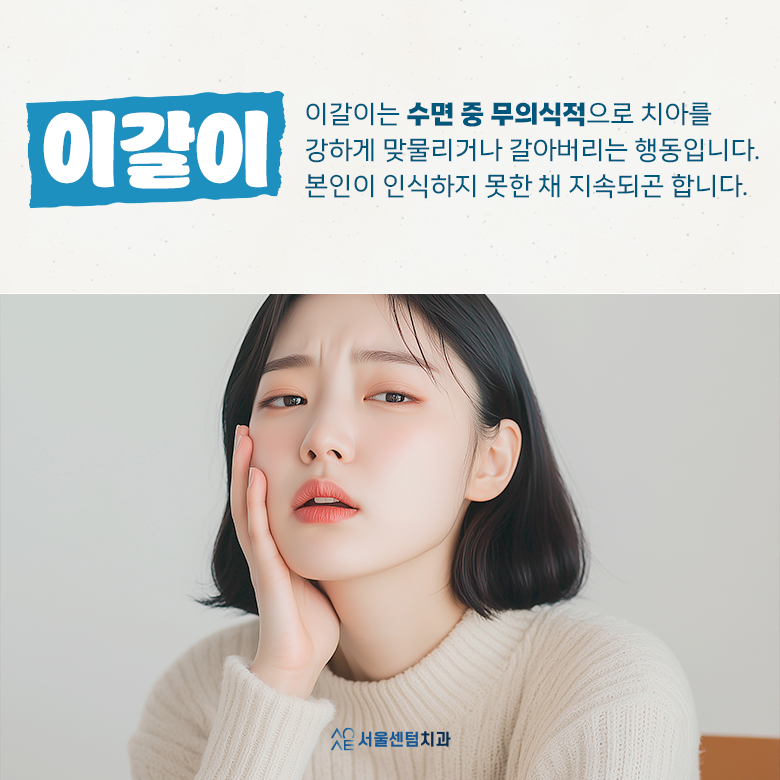
Bruxism refers to the symptom of clenching the teeth tightly,
and it can occur for various reasons such as psychological anxiety, stress,
improper bite alignment, smoking, and drinking.
Because it occurs unconsciously during sleep,
it is hard to notice and can easily continue for a long time.
If it becomes prolonged, it may affect not only the jaw but also oral health,
so if you suspect bruxism,
do not dismiss it lightly or leave it untreated.
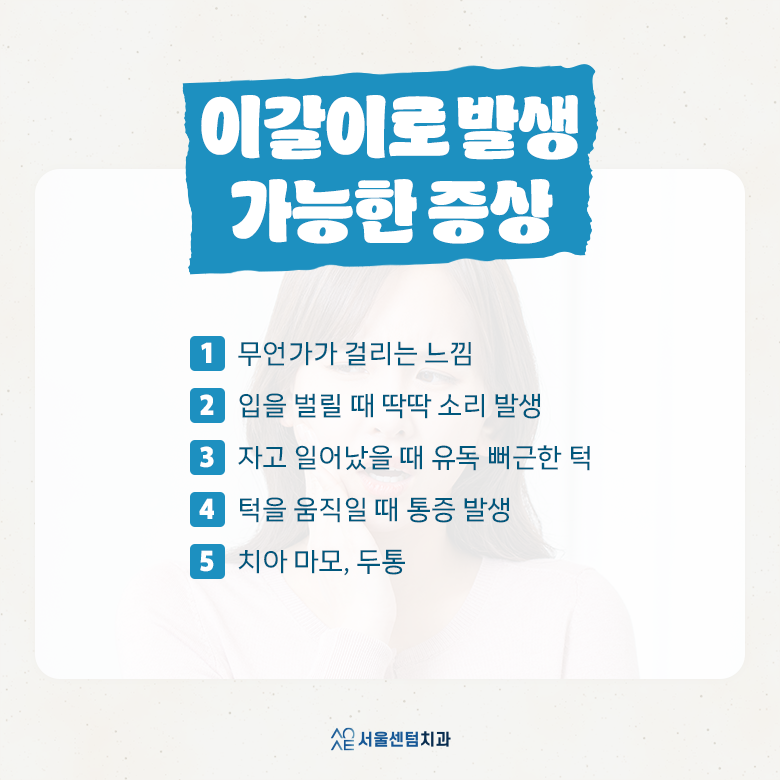
Symptoms that can occur with bruxism
When stress is placed on the temporomandibular joint due to bruxism,
a stuck feeling may occur and a clicking sound may be heard when opening the mouth.
You may also feel pain every time you move your jaw.
Later, the mouth may not open as well as usual,
or problems such as difficulty opening or closing the mouth (trismus)
can develop.
Pressure on the teeth
can cause hairline cracks or fractures.
These symptoms may worsen over time,
and sleep quality may decline or
systemic fatigue may become more severe,
so it is advisable to receive prompt diagnosis and treatment
early on.
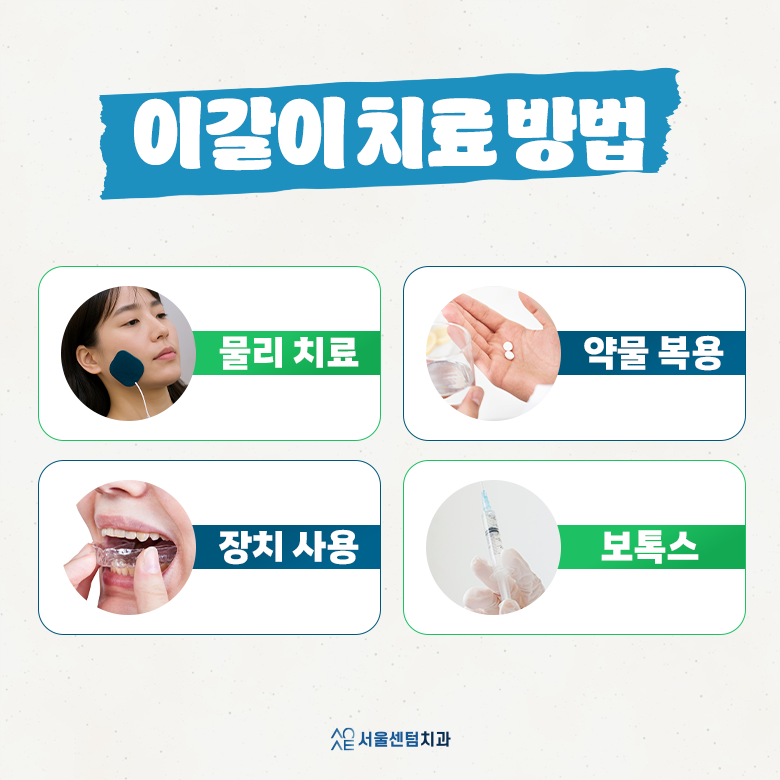
Representative methods available for treating bruxism include
✅ Physical therapy (infrared therapy, TENS, etc.)
✅ Medication (muscle relaxants, anti-inflammatory pain relievers)
✅ Device use (splint)
and others.
Recently, bruxism Botox has also been used.
Bruxism Botox is a simple treatment method,
but its duration is relatively long.
By relieving excessive tension in the masseter muscle,
it reduces the burden on the teeth and jaw,
so more and more people are choosing it.
Bruxism Botox
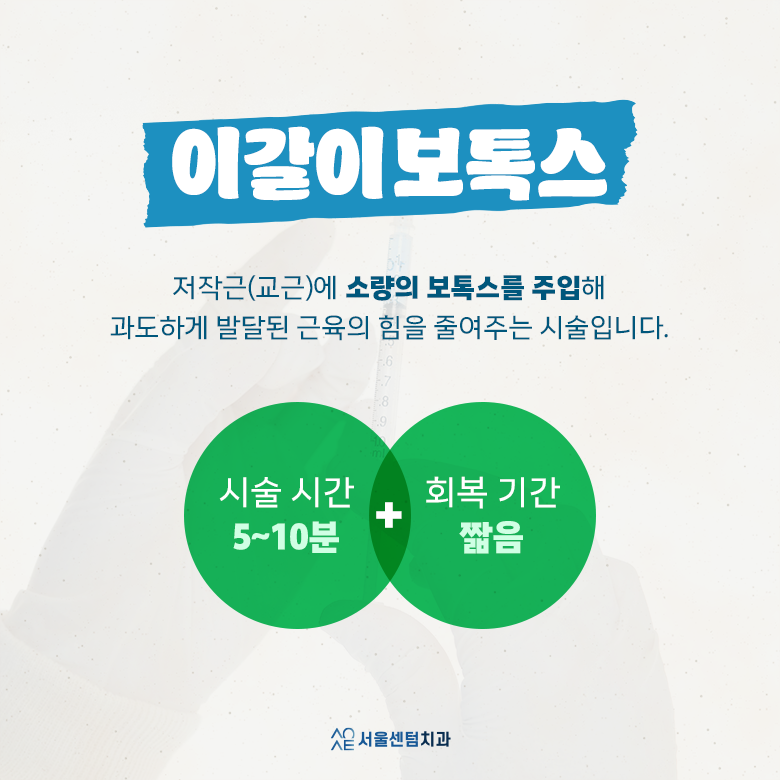
To explain bruxism Botox in more detail,
it is a procedure that injects a small amount of Botox into the masseter muscle
to reduce the strength of an overdeveloped muscle.
Since it is performed for treatment purposes rather than cosmetic ones,
it can help relieve bruxism symptoms.
The procedure takes about 5 to 10 minutes,
and anesthesia is not required, so you can return to daily life immediately.
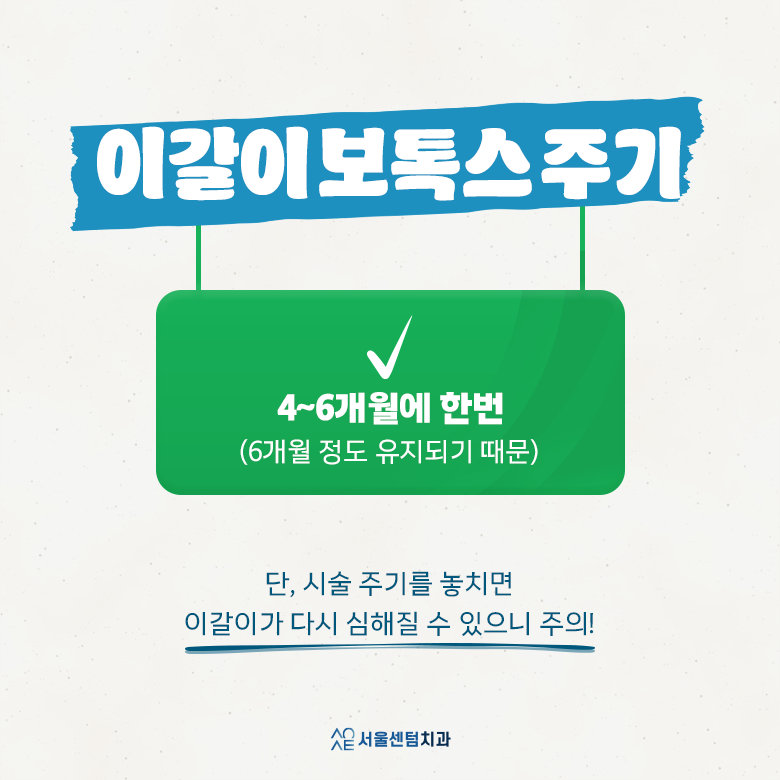
The effects appear gradually
and last for up to about 6 months,
so it is good to receive it once every 4 to 6 months.
As time passes, the effect gradually decreases
and bruxism symptoms may recur,
so it is best not to miss the treatment interval.
Also, immediately after the procedure, to help the effects appear properly,
it is recommended to avoid massaging the treatment area,
drinking alcohol, smoking, and strenuous exercise for 2 to 3 days.
If swelling occurs, you may apply a cold compress.
Problems that can be addressed with bruxism Botox
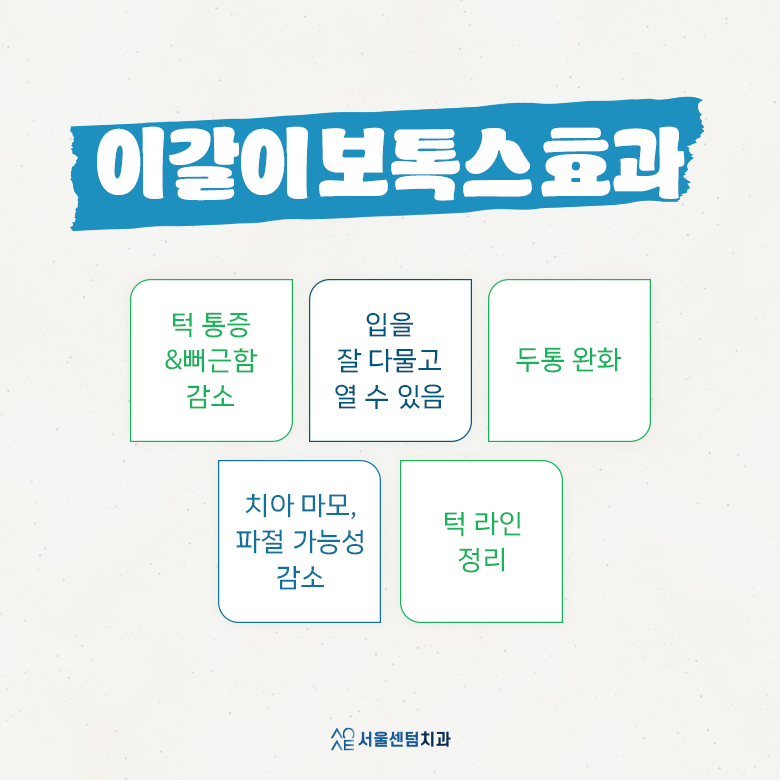
| - As the tension in the jaw muscles continues and the strength of the overdeveloped chewing muscles decreases, pain and stiffness in the jaw are reduced. |
|---|
| - Clicking sounds from the temporomandibular joint improve. |
| - You will be able to open your mouth as usual again. |
| - Headaches ease, and discomfort around the ears decreases. |
| - The likelihood of tooth wear or fracture is reduced. |
| - As the volume of the chewing muscles decreases, the jawline may appear more refined. |
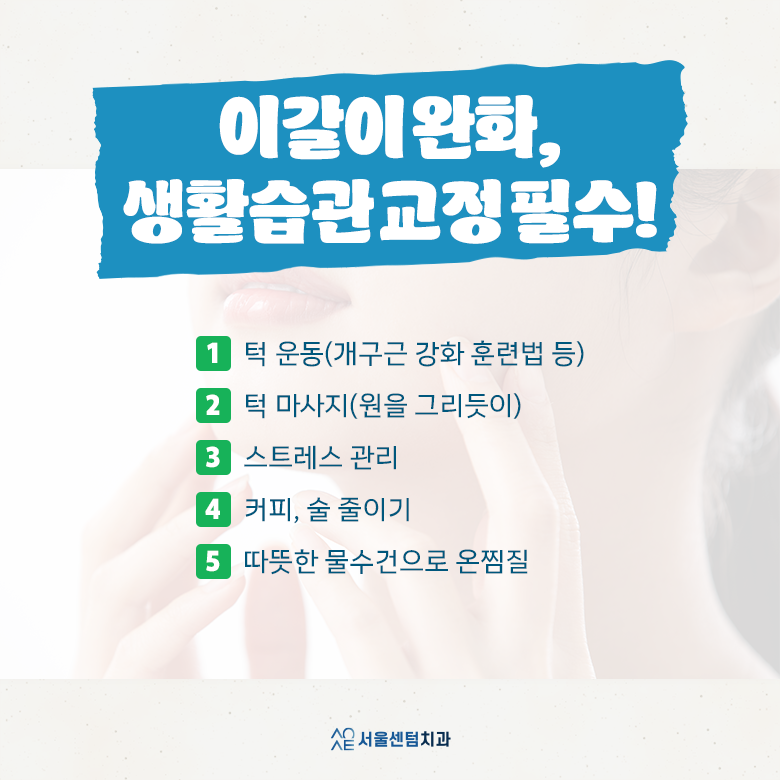
Bruxism also requires lifestyle correction
Correcting lifestyle habits
is a very important key point in improving bruxism.
So if you have habits such as clenching your teeth,
biting your nails, or resting your chin on your hand,
you need to make a conscious effort to improve them.
In addition, if you frequently massage your jaw or do jaw exercises,
it can help relax the muscles.
Psychological factors can also affect bruxism,
so manage stress through meditation, exercise, and hobbies.

Bruxism should be recognized not simply as a problem of
grinding your teeth while sleeping,
but as an issue that can affect overall temporomandibular joint and dental health.
Bruxism Botox helps relieve muscle tension,
so if your jaw has been feeling stiff or making sounds frequently these days,
we recommend visiting a place like Seoul Centum Dental Clinic
to receive help.
However, because the cause, symptoms, and condition differ from person to person,
it is important to receive customized treatment after sufficient consultation
with the medical staff.
If you start the treatment that is right for you, your quality of life
may change significantly.