Regular floss use helps protect implants.
An artificial tooth is not something that can be used for a long time just because the placement was done well, so ongoing care must begin immediately after placement.
Especially around implants, the gums have weaker defense against various bacteria than natural teeth do.
Since brushing alone makes it difficult to clean deep between the teeth, using implant floss to remove plaque and food debris from the interdental area is essential.

If used regularly and consistently, it can help prevent inflammation, bone loss, and even peri-implantitis.
If the timing or method of use is wrong, it may instead put strain on the gums, so it is important to learn the correct way to use it.
When should you start using it?
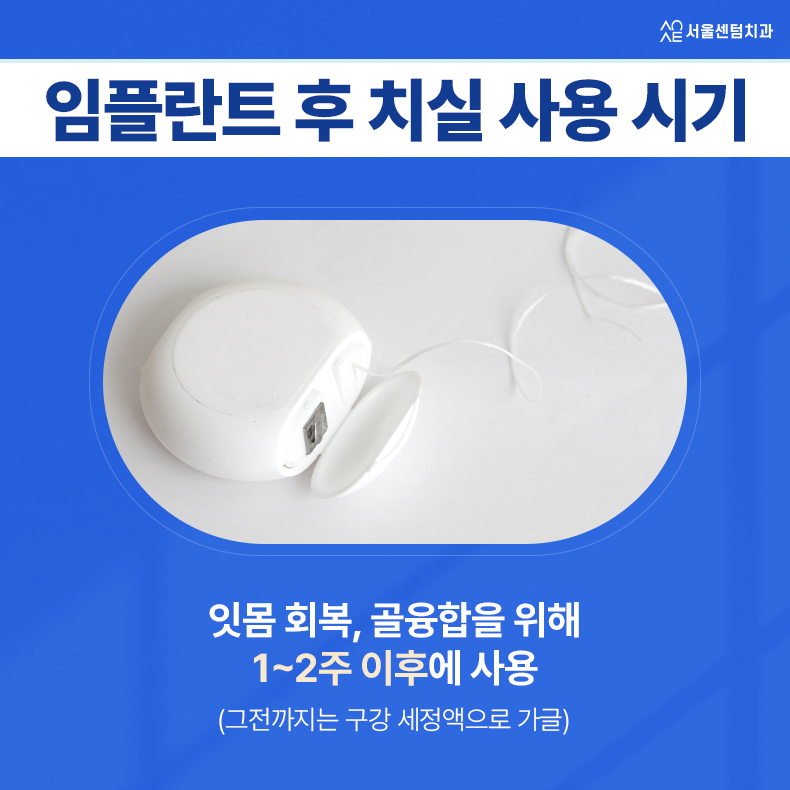
Immediately after implant placement, the gingiva and bone tissue need time to recover and integrate stably, so floss use is generally recommended starting about 1 to 2 weeks later.
Because each patient has a different recovery speed and the condition of the placement site also varies, it is best to follow the judgment of the attending dentist for the exact timing.
Using it too early can cause the sutured area to open or increase the risk of inflammation.
Therefore, during the initial period, gentle brushing (excluding the placement site) and mouthwash-centered care are preferable.
At this stage, it is a good habit to brush or rinse immediately after meals so that food debris does not remain. Then, when the time comes that floss can be used, you will be able to maintain cleaner teeth and oral care.
How to choose implant floss
Around implants, the interdental space is structurally wide and there are many special curves, so it is better to use floss designed specifically for this purpose.

A representative example is Super Floss.
- A slightly stiff threaded tip (to pass easily between teeth)
- A soft spongy section (to remove plaque)
- A regular floss section (for finishing cleaning)
These three sections work in sequence, allowing you to thoroughly clean around the crown and along the gum margin.
You can also use regular floss, but if the material or thickness is not suitable, problems such as gum damage may occur, so it is ideal to choose one that matches the width of the interdental space and the shape of the implant.
If you are unsure, ask the dental staff for guidance.
Here is how to use it correctly.
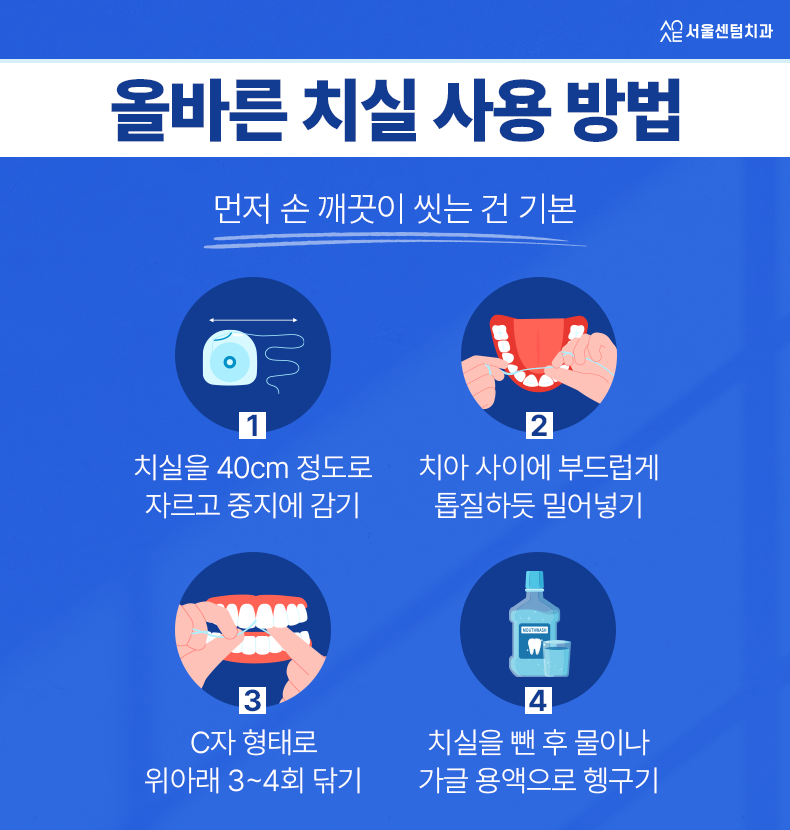
Implant floss should not be used as a scraping tool; rather, it should be used with the idea of gently polishing the sides of the teeth and the gum margin.
Forcing it in or pulling it hard can cause bleeding and gum damage.
With Super Floss, gently insert the stiff tip between the teeth, then use the spongy section to move up and down in a C-shape, and finish by removing residue and bacteria with the regular floss section.
With regular floss, too, the key is the same: a wiping motion.
Using it 1 to 2 times a day, especially before bed, is important because it minimizes bacterial growth.
And be sure to wash your hands before use.
What if it gets stuck and won’t come out?
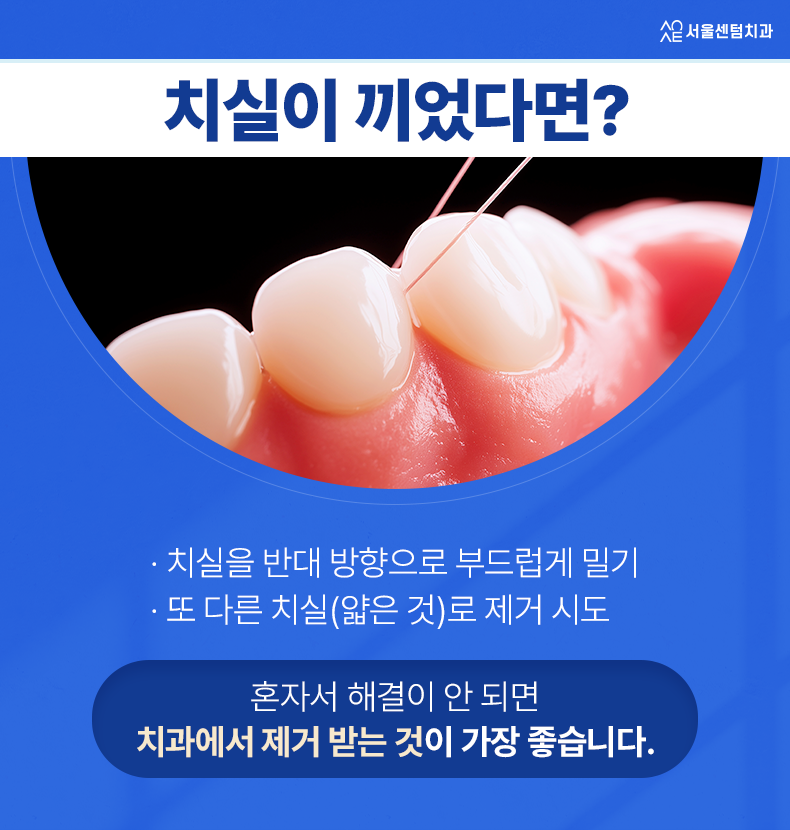
Sometimes floss can get caught between implants and not come out.
If you pull too hard, the gums may become inflamed, or the floss may break and part of it may remain between the teeth.
In this case, try rinsing your mouth with lukewarm water or mouthwash to reduce friction, then attempt to remove it by pushing it out in the opposite direction.
If it is still difficult to remove, do not force it; visit the dental clinic to resolve the problem.
If the floss breaks repeatedly or does not come out easily, try changing the floss.
If the problem is not resolved, the covered area may be problematic, or there may be an indentation caused by decay, so have it checked and treated.
Floss use = longer implant lifespan
Peri-implantitis is a major cause of implant failure.
Bacteria and tartar slowly weaken the gums and bone, and because symptoms may be mild at first, detection can be delayed. If left untreated, it can even lead to removal.
Implant floss is an efficient tool for cleaning areas that are difficult to reach with a toothbrush or interdental brush, and it helps prevent peri-implantitis.
By investing a little time to reduce plaque buildup, you can extend the lifespan of your implant by years.
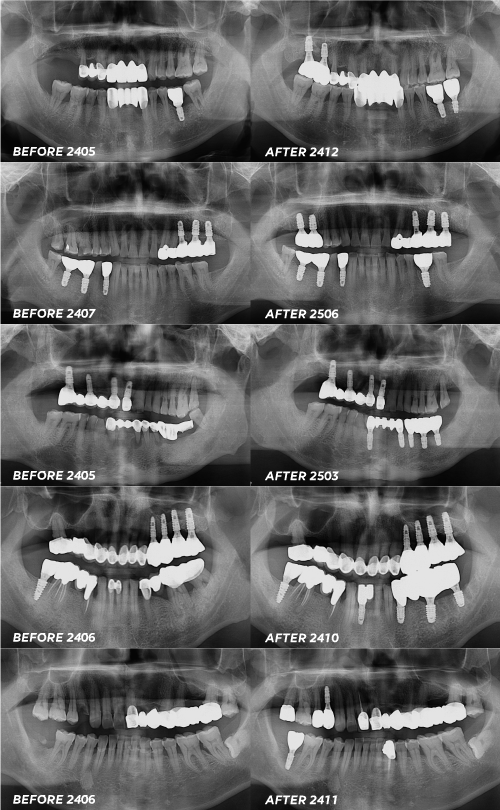
It is easy to assume that once you get an implant, you can use it for life, but in reality, it can vary depending on post-treatment care.
At the core of that care is the habit of using floss.
It may feel a bit inconvenient, but with just a few minutes of care each day, you can preserve your teeth and oral health over the long term, so make implant flossing part of your daily routine starting today!