You went to the dentist after seeing an implant price advertisement, and they suddenly told you that you need a sinus lift?
You may have visited after seeing an advertisement for implant prices only, but
you have probably heard many times that there may be additional charges.
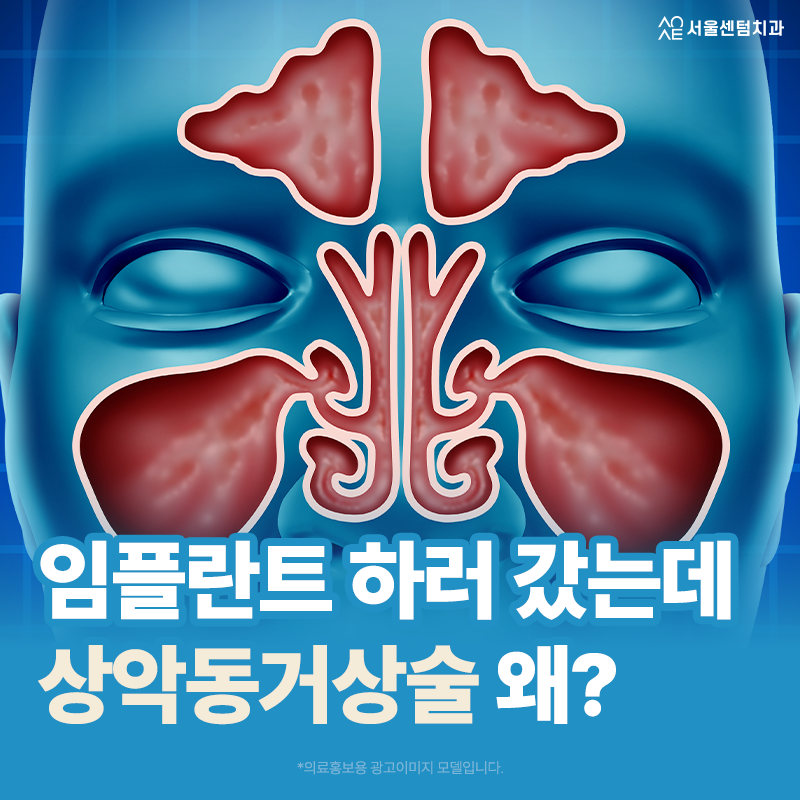
The additional procedure most commonly performed,
"bone grafting," may be familiar to you, but a "sinus lift"
may not be as familiar.
Some people also ask,
"Why on earth do I need a sinus lift?"
Today, I’ll give you a [complete essential guide] in this one article!
What Is the Maxillary Sinus?
“Maxillary sinus” may be a term you are hearing for the first time.
It is also called the “sinus.”
It is located directly above the molars in the upper jaw
and refers to an air-filled, pouch-like space beside the nose.
The maxillary sinus functions in our body
like an air sac that distributes the weight of the head,
and, because it is connected to the nose, it is an organ
involved in breathing and mucus drainage.
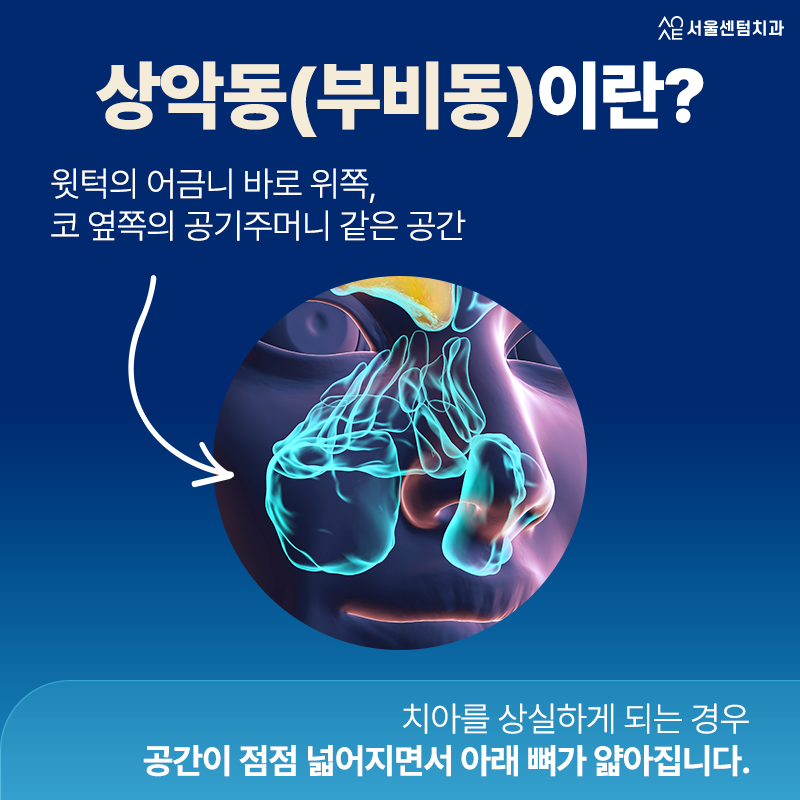
The maxillary sinus changes as we age, too.
As we grow older and lose teeth,
the maxillary sinus gradually expands,
causing the bone beneath the space to become thinner.
To put it simply,
you can think of the maxillary sinus as
an empty room located inside the upper jaw.
When a tooth is missing, the floor gradually lowers.
The floor is the bone located directly beneath the tooth.
Bone Resorption
“I’ve heard that wearing dentures for a long time causes bone resorption, making implants impossible.”
“As you get older, your bones are gradually resorbed, so you need a bone graft.”
You have probably heard statements like these from people around you at least once.
Bone resorption means, quite literally, that the bone
gradually becomes smaller.
When a tooth is lost, a space is created in that location.
The bone that had been supporting the tooth
no longer has any use there.

It gradually loses its function,
and the bone becomes thinner.
In particular, the bone beneath the maxillary sinus
is not especially thick to begin with,
so it decreases rapidly after a tooth is lost.
When a tooth is lost,
visiting a dentist promptly
may significantly reduce the likelihood
of needing a sinus lift or bone graft.
Why, Then, Is a Sinus Lift Necessary?
To explain a sinus lift again,
it is a procedure performed to secure sufficient bone height.
The floor of the thinned bone must be raised
and filled with bone graft material
for implant placement to be possible.
Space is needed to place this bone graft material.
If the patient has insufficient bone volume,
a sinus lift is necessary.
Proceeding when the bone volume is insufficient
can greatly increase the risk of failure.
A sinus lift may also be performed
when the maxillary sinus has enlarged,
creating more space.
What complications could occur if an implant is placed
without performing a sinus lift?
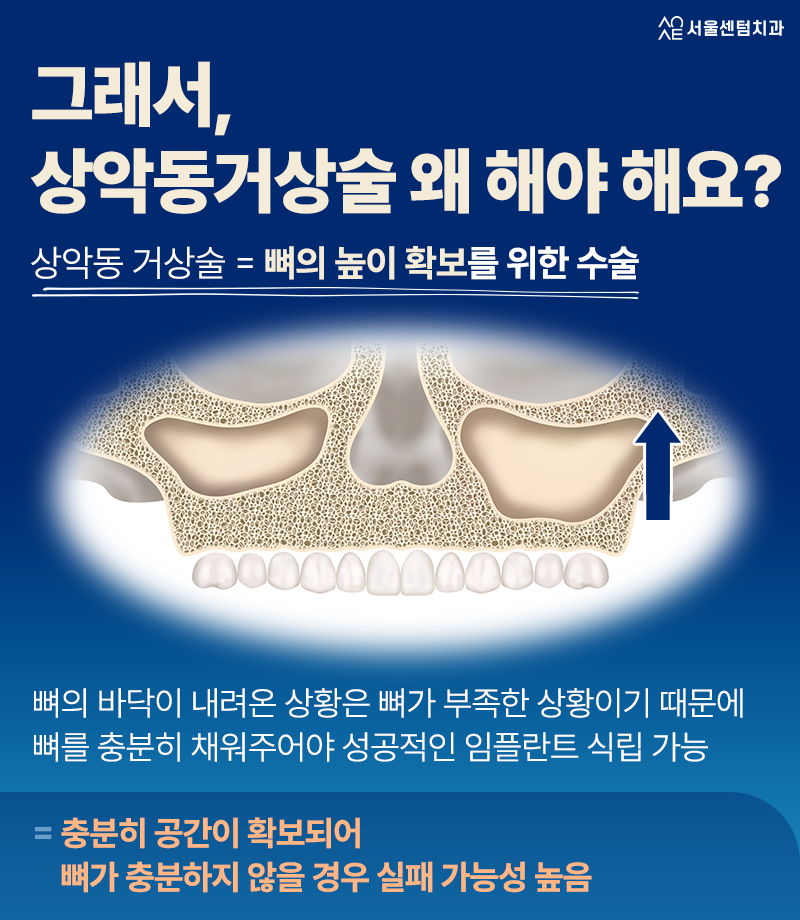
A sinus lift is performed to secure sufficient bone height.
If this is not done properly, it means that the implant
may be placed in bone that is too thin,
which can cause the implant to loosen or fail.
Even if the implant can be placed,
the screw may loosen,
or the implant itself may become loose.
In addition, even if the implant is placed,
the gum line may recede or the result may be crooked,
leaving the teeth uneven.
When there is insufficient bone,
the implant may accidentally enter the maxillary sinus.
This can damage the mucous membrane inside the maxillary sinus
and greatly increase the possibility of inflammation,
so the likelihood of implant failure is naturally high.
Sinus Lift Pain: Patient Experiences
“Does a sinus lift hurt more?” is
also one of the questions we are frequently asked.
Because local anesthesia is used, there is almost no pain during the procedure.

This is probably a question asked by people who remember
having undergone a procedure for a condition that caused severe pain
after the anesthesia wore off.
If you are asking whether there is no pain afterward,
there may be a feeling of pressure in the jaw, mild pain,
or a small amount of bleeding for a few days.
In practical terms, when undergoing implant treatment,
you can think of it as not causing more severe pain
just because a sinus lift is added.
However, it is best to avoid actions
such as blowing your nose forcefully.
Sinus Lift Cost
The cost of a sinus lift may vary depending on
which bone graft material is used,
the difficulty of the procedure,
and the number of implants being placed.

In general, the average cost is 700,000–1,500,000 won.
However, every procedure has high-difficulty cases,
and complicated cases may cost more than 2,000,000 won,
so it is best to remember that the cost may vary by case.
A sinus lift can be considered necessary
when a doctor diagnoses that it is needed.

If an implant is placed without a sinus lift,
the likelihood of failure is naturally high.
Rather than simply asking, “Why do I need it?”
because the cost is higher,
it is better to receive a diagnosis based on your situation
and current dental condition,
then establish a treatment plan.
What if an implant screw comes loose on the weekend?
What to suspect when an implant feels loose