What foods should you eat to avoid irritation?
I believe one of the things that brings happiness is
enjoying delicious food.
Do you agree?
After receiving dental treatment, there are cases where
food intake must be restricted for a certain period,
so you may wonder,
“ What should I eat after getting an implant?”
In the early stages after implant placement, the gums and bone
have not yet fused, leaving the implant in an unstable state.
As a result, food choices can directly affect the speed of recovery
and the stability of the implant.
If you eat inappropriate foods from the beginning,
this could lead to pain, bleeding, and even failure of osseointegration.
Focusing on recommended foods after implant surgery,
I will introduce suitable diets for each stage, foods to avoid,
and important points for long-term care.
- Immediately afterward, choose soft and thick foods
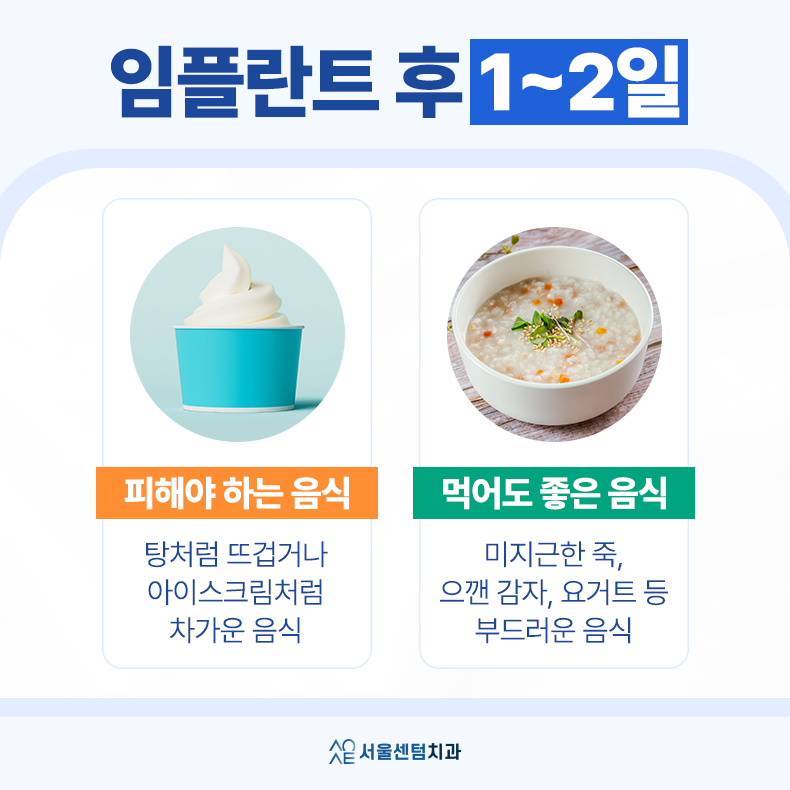
On the day of implant placement and the following day,
minimizing irritation is the key.
Hot or cold foods can irritate the blood vessels,
interfere with hemostasis, or cause bleeding,
so avoid them and instead have lukewarm porridge,
finely blended rice gruel, mashed potatoes, or soft liquid foods such as yogurt.
For a protein source, eating tofu, soft tofu, and eggs
may help support faster recovery,
so include them in your meals as well.
Even when choosing foods rich in protein,
it is appropriate to consume them as soft liquid foods like these.
Rather than choosing foods solely because they are easy to eat,
it is better to consume foods that minimize stress on the gums and bone
while still providing essential nutrients.
- After about one week, soft regular meals are also possible
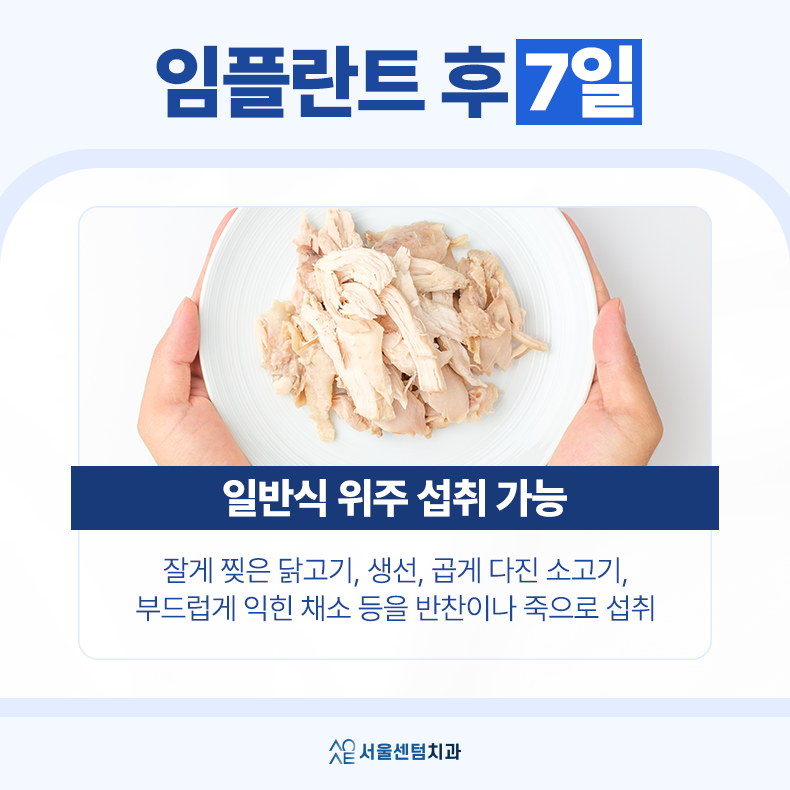
After about 5–7 days, swelling and discomfort
will likely have eased compared with the initial period.
From this point, you can eat a somewhat wider variety of regular foods,
but caution is still necessary.
Try eating finely shredded chicken, fish, finely minced beef,
and softly cooked vegetables
as side dishes or in porridge.
Vitamin D also plays an important role in the osseointegration process,
so be sure to get enough of it.
There are also foods and drinks that should be avoided.
So far, I have recommended foods to eat after implant surgery,
but there are also foods that can interfere with implant stabilization.
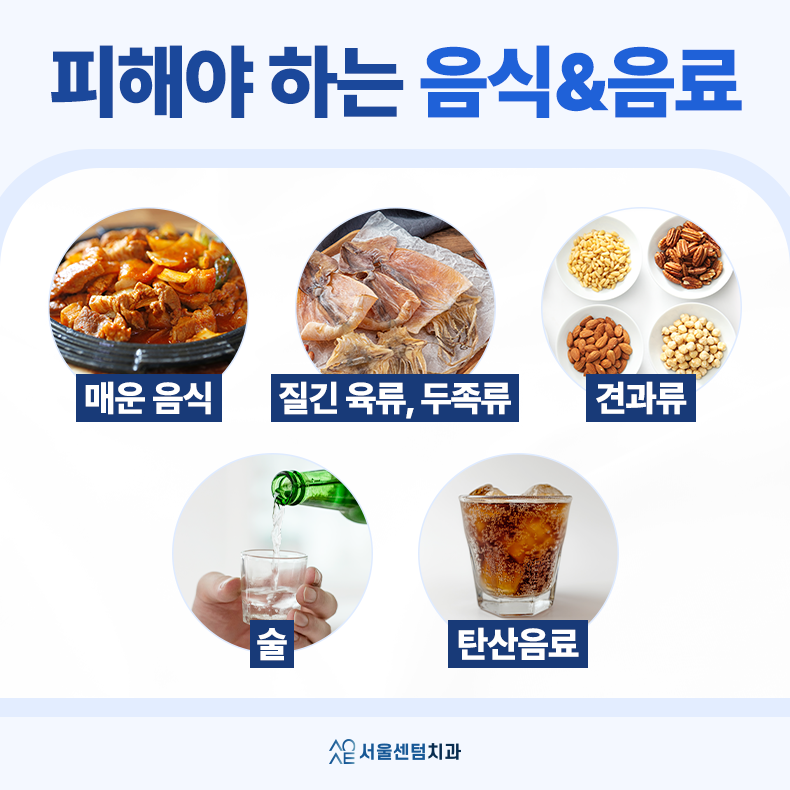
Spicy foods containing a lot of chili powder, hot soup,
tough meat or cephalopods, nuts, and hard vegetables or fruits
can place excessive force on the area and cause irritation,
which may slow the recovery process.
Alcohol can also affect blood circulation
and promote an inflammatory response,
while carbonated beverages are highly acidic
and can worsen the microbial environment in the mouth,
so they should be avoided.
Particular caution is needed because these foods and drinks
can negatively affect the osseointegration process itself.
Why long-term dietary management is important
Because the lifespan of an implant can vary considerably depending on dietary habits,
it should be approached from the perspective of lifelong care.
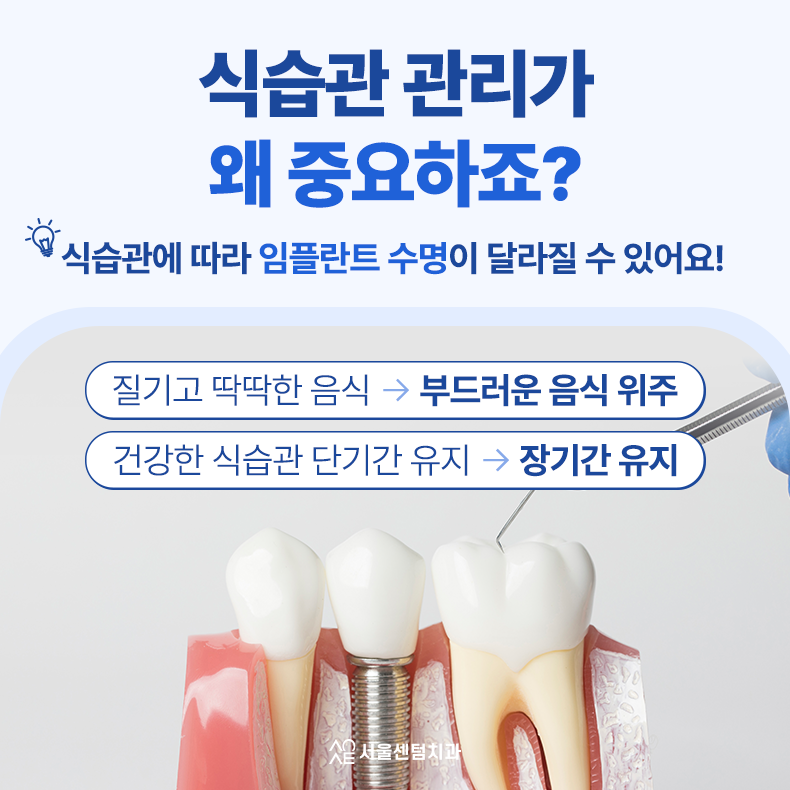
Frequently consuming inappropriate foods and drinks
can damage the implant or affect the gums,
potentially leading to peri-implantitis.
To prevent this from happening,
maintain a soft and balanced diet over the long term
rather than a diet consisting of hard and tough foods.
Foods such as calcium-rich tofu and anchovies, vitamin-rich oranges and
kiwis, and antioxidant-rich blueberries
can help improve gum health.
Vegetables high in dietary fiber
also play a positive role in maintaining the balance of bacteria in the mouth,
so include them regularly in your diet.
Are you eating this way?
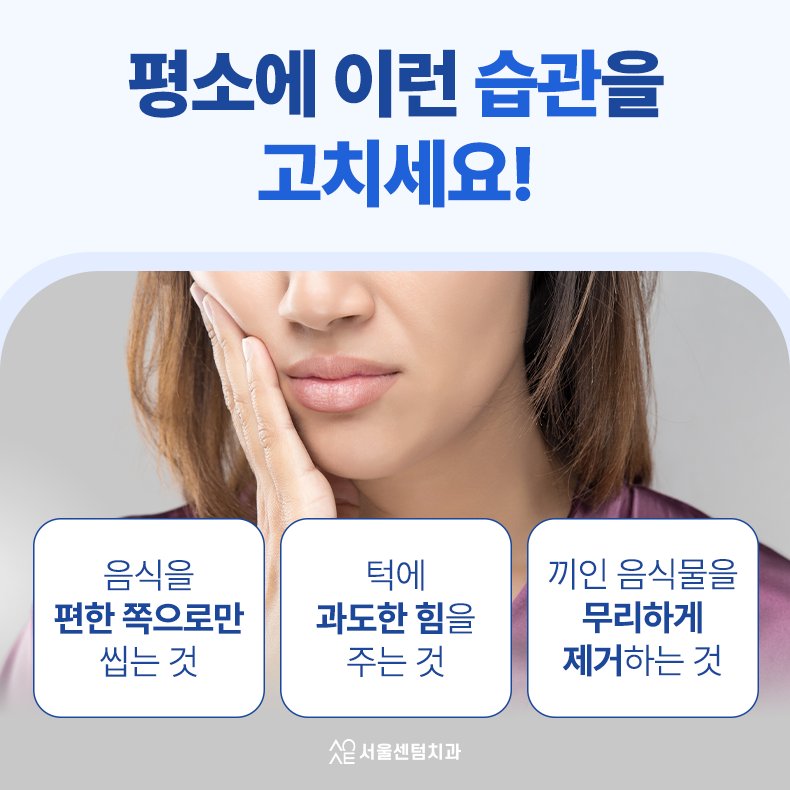
A common mistake patients make
is developing the habit of eating only on the more comfortable side.
Applying chewing force unevenly
can damage the area around the implant,
so try to distribute your chewing evenly on both sides.
Please also avoid chewing with excessive force on the jaw
or chewing too quickly.
Food may occasionally become lodged between the prosthetic components,
but trying to remove it forcefully can cause damage,
so using implant-specific dental floss or a water flosser is recommended.
If it still does not come out, visit your dentist,
and they can remove it for you, so there is no need to worry.
^^
A small daily habit can help prevent inflammation
and ultimately become a key factor in extending
the lifespan of your implant.
With implant treatment, aftercare can be just as important
as the treatment itself in achieving a successful outcome.
In particular, the foods you eat
are an important factor that can affect the treatment results.
Refer to the recommended foods after implant surgery summarized today:
eat a soft diet immediately after surgery,
and after one week, manage your diet with foods that remain reasonably soft
while providing a balanced range of nutrients.
Eating properly benefits not only your implant
but also your overall health,
helping you use your implant for a long time.
Please do your best to help the implant that was placed
settle into place properly.
~