Thorough preparation determines the success of an implant.
An implant is a highly precise treatment in which an artificial tooth root is placed in the jawbone
so that it can settle properly,
and then a prosthetic tooth is placed on top.
Not only is there the tension of the surgery day itself,
but also your preparation beforehand
can greatly affect recovery speed and success rate.
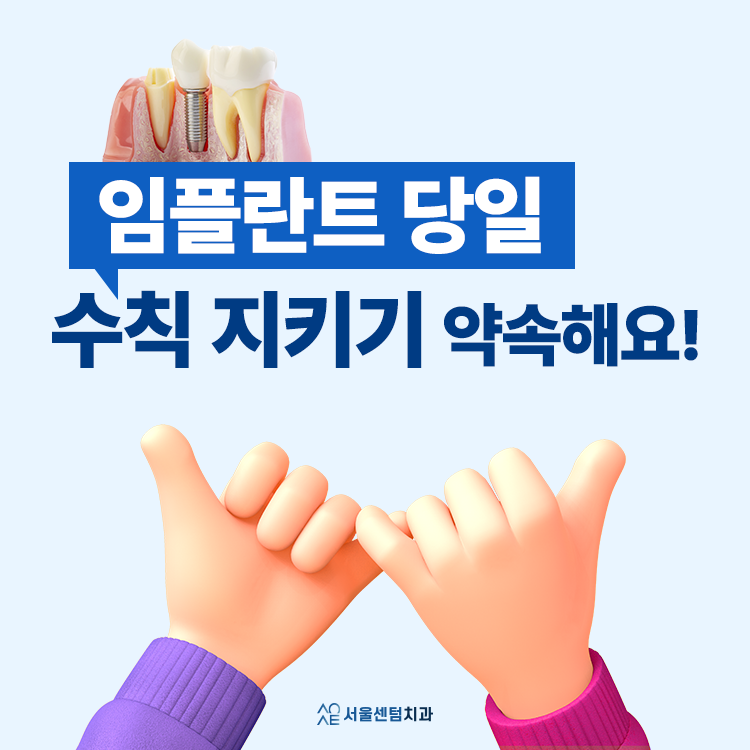
In particular, even a small mistake can slow recovery,
so extra caution is needed.
In this post, let’s go over the key rules
you should follow from the day before the implant
through immediately after the procedure.
Keep your condition as good as possible until the day before
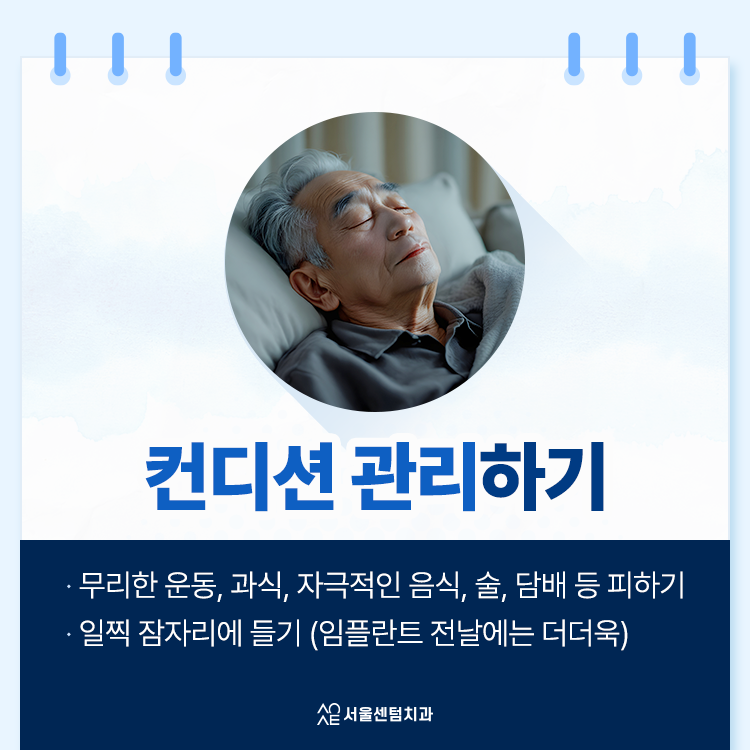
Good condition is the basic foundation not only for implants
but for all treatments,
so stabilizing and maintaining your condition
is the most important thing.
Avoid strenuous exercise, overeating, spicy foods,
alcohol, smoking, and the like,
and it is best to go to bed early.
You know that tartar can
cause gum inflammation, right?
If you continue brushing and flossing until the day of placement,
it will help prevent other problems from occurring.
Make sure to eat before you go

On the day of the implant, preparation needs to start
earlier than usual.
Even if it is scheduled in the morning,
it is better to eat at least a light meal.
If you are too full, it can cause tension,
and if you are on an empty stomach, low blood sugar can cause
dizziness or nausea.
If you are receiving local anesthesia, be sure to!
Even if it is only about half a bowl of rice,
make sure to eat something.
The more comfortably you can receive treatment,
the better, so we also recommend coming in wearing
loose-fitting clothing!
Don’t forget to manage caffeine and medications, either.
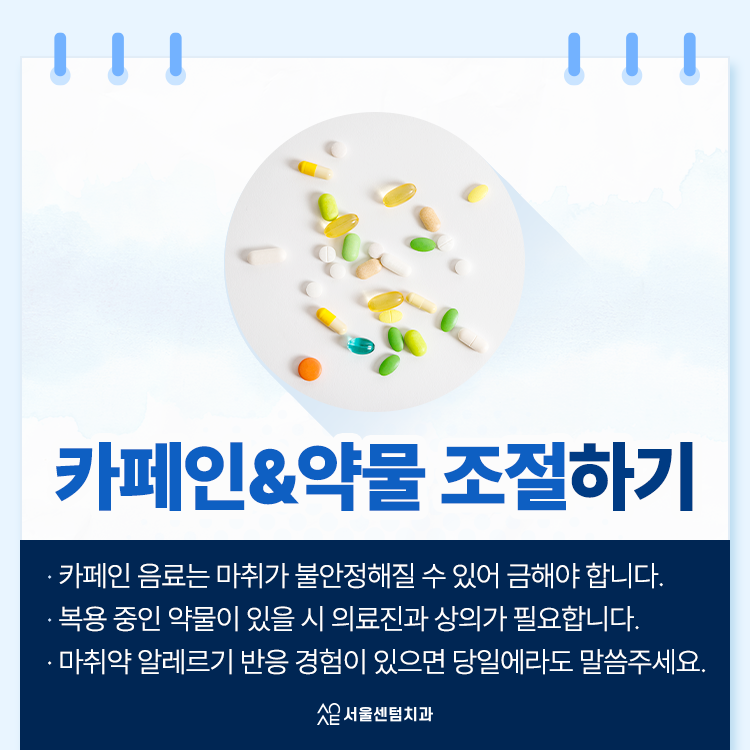
Caffeinated drinks such as coffee and energy drinks
stimulate the autonomic nervous system,
which can make anesthesia unstable,
so they should be avoided starting the day before.
Some people need blood pressure or blood sugar control,
and if you are taking medication for this, bleeding may not be controlled well during placement.
Consult the medical staff about how to take your medication
and consider temporarily stopping it.
If you have ever had an allergic reaction
to an anesthetic,
be sure to let the medical staff know.
Overall condition management
is a criterion for whether surgery is appropriate.
What should you avoid immediately after?
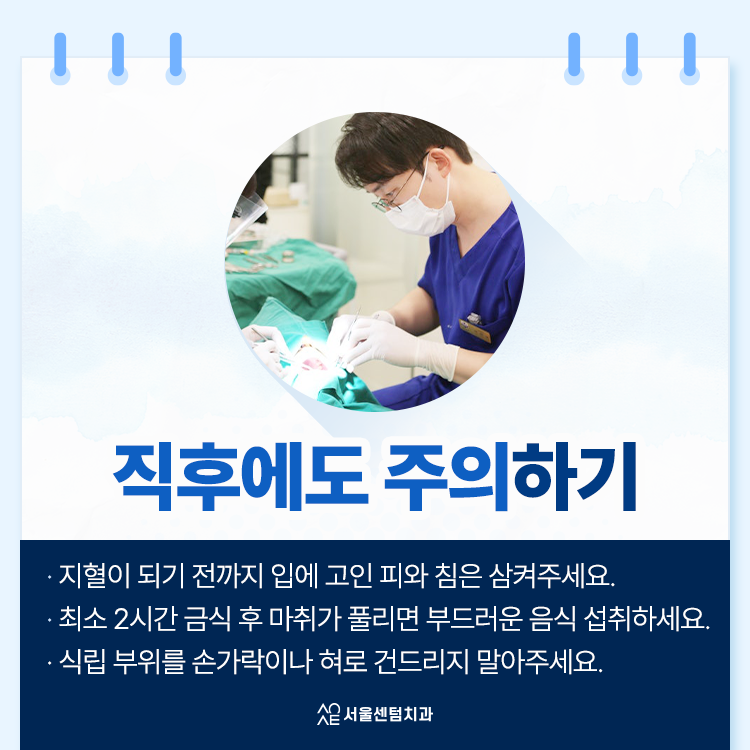
A common mistake immediately after surgery
is rinsing the mouth or eating while bleeding has not yet stopped.
If the blood clot comes off as a result,
bleeding may continue and the risk of infection increases,
so it is important not to spit out the blood that has pooled in your mouth
and not to deliberately remove the gauze
before bleeding has stopped.
Because the anesthesia needs to wear off as much as possible,
for at least 2 hours immediately after the implant
you should fast and absolutely not rinse your mouth with water.
If you touch the placed area with your finger or tongue,
it may lead to inflammation,
so please be sure to avoid that!
Are pain, swelling, and bleeding normal reactions? Or not?
For most patients, mild pain,
swelling, and slight bleeding occur.
This is a normal phenomenon
and usually improves almost completely within 2 to 3 days.
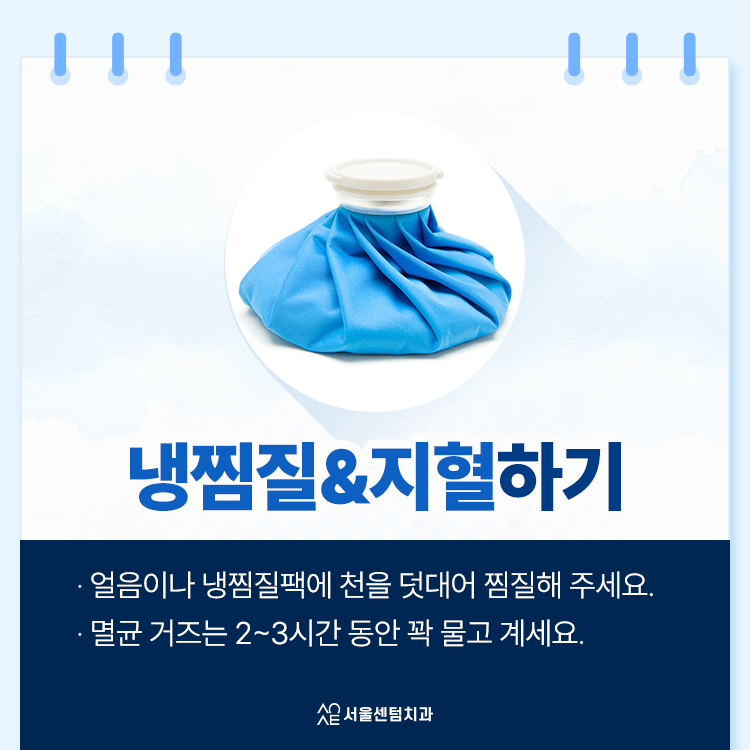
Cold compresses are effective in relieving swelling.
If you place ice directly on the skin,
frostbite can occur,
so it is recommended to use one or two layers of cloth,
such as a towel, between them.
Even if you have a cold pack,
it is better to wrap it in one layer of cloth
rather than applying it directly.
The sterile gauze given to you immediately after treatment
should be bitten down on firmly for about 2 to 3 hours,
and if bleeding continues, you should keep biting a little longer.
If bleeding does not stop that night,
or if severe pain continues abnormally even after taking medication,
or if the anesthesia does not wear off,
it is better to receive additional care,
even at the emergency room.
Lifestyle habits that help recovery
Since the process of the artificial tooth root
fusing with the jawbone over several months is very important,
during this period regular meals, enough sleep,
no smoking, and no alcohol are essential!
Avoid strenuous exercise, saunas, and jjimjilbangs
for a few days as well.
Take antibiotics and pain relievers on time,
and brush your teeth gently with a toothbrush,
while avoiding the implant area for the time being.
When eating, use only the side that was not implanted.
Soft foods are recommended.

Since implants are something you will live with for a long time,
it is important to manage them properly before and after.
In the case of the day of the implant,
it is a day that becomes a turning point in recovery,
so while be sure to follow the medical staff’s instructions,
why not use this opportunity to review your overall daily routine?
After all, oral health can only begin with
the choices and management of your lifestyle.
Once you have the prepared mindset that you will absolutely practice
the correct care methods,
you will be able to shake off anxiety about the implant results
and side effects.
What should you do if the temporary tooth falls out?
What happens if you do not get an implant