Although they are a substitute that is not inferior to natural teeth,
their maintenance period can vary.
As a widely chosen treatment when teeth are lost,
implants are gaining attention.
They resemble natural teeth in appearance
and there is not much difference in function either.
They are also more stable than dentures,
so they contribute greatly to improving quality of life.
Many people often ask whether they can be used for a lifetime,
but the reality is a little different:
a concept of usage period does exist.
Over time, function may decline,
or the possibility of needing re-implantation may arise.

The important point here, however, is that
durability is, to put it lightly,
determined by your own care habits.
How long can implant usage last,
and what are the factors and management methods that affect it?
You can tell the lifespan by looking at the condition!
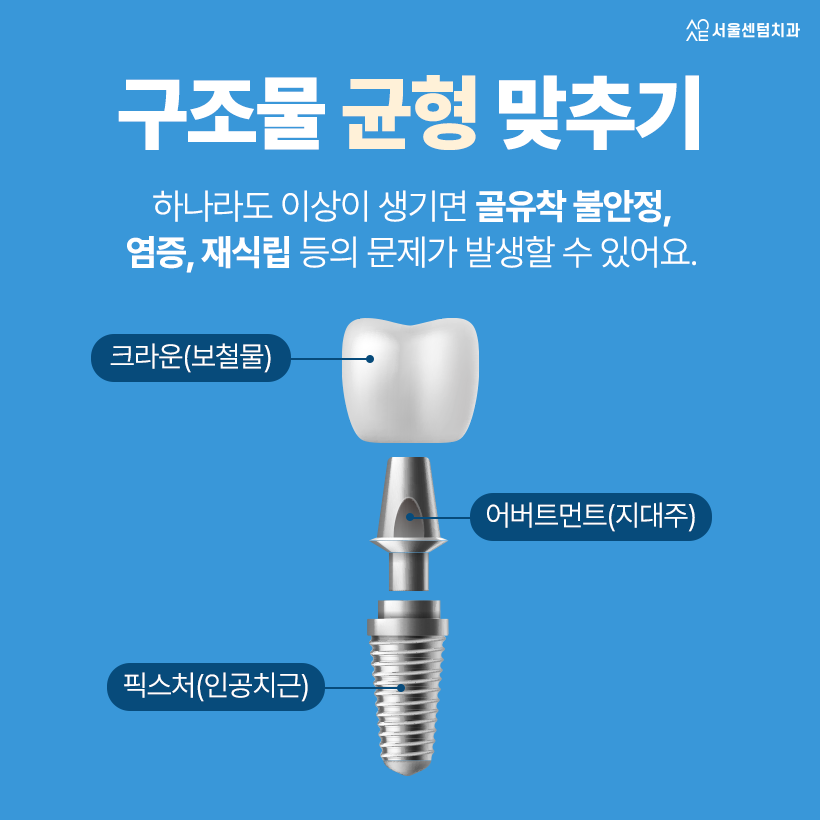
Implants are structured as shown above,
and while they may seem simple,
because they are a combination of delicate structures,
if even one of these three elements becomes unstable,
the entire structure is affected.
For example, if the abutment
starts to shake even slightly,
it can cause bone resorption over time.
A small crack in the prosthesis
may not be easy to see at first,
but later it can cause an imbalance in occlusal force,
which may lead to long-term damage accumulation.
The placement technique is important, but more than that,
checking the condition can be considered even more important.
How long do implants actually last?
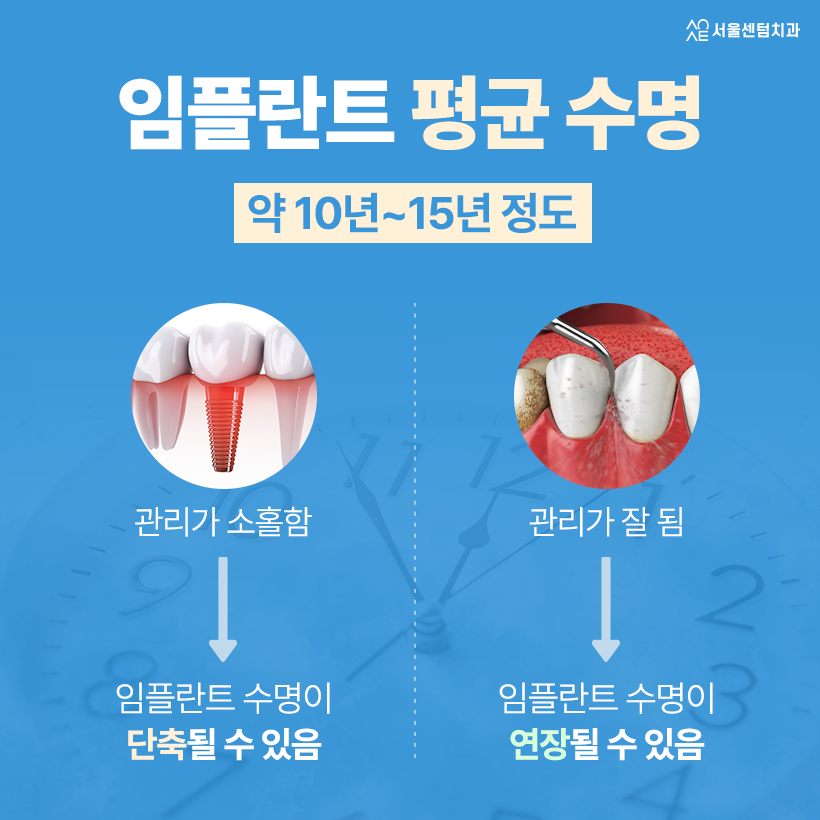
According to many domestic and international research data,
they are reported to last about 10 to 15 years.
This figure assumes proper maintenance.
If poor oral hygiene is maintained
or regular checkups are neglected,
it means the lifespan could be cut to less than half, right?
On the other hand, if proper care habits
are maintained thoroughly,
there are many cases of use lasting over 20 years.
In Korea as well, patients who have used them for more than 20 years
are being continuously observed,
and overseas, cases of long-term maintenance
for more than 30 years have also been reported.
It is necessary to recognize this as a treatment that requires long-term care.
Factors that shorten the usable period
Once placed,
if you want to use them as long as possible,
you must pay close attention to the following four factors.
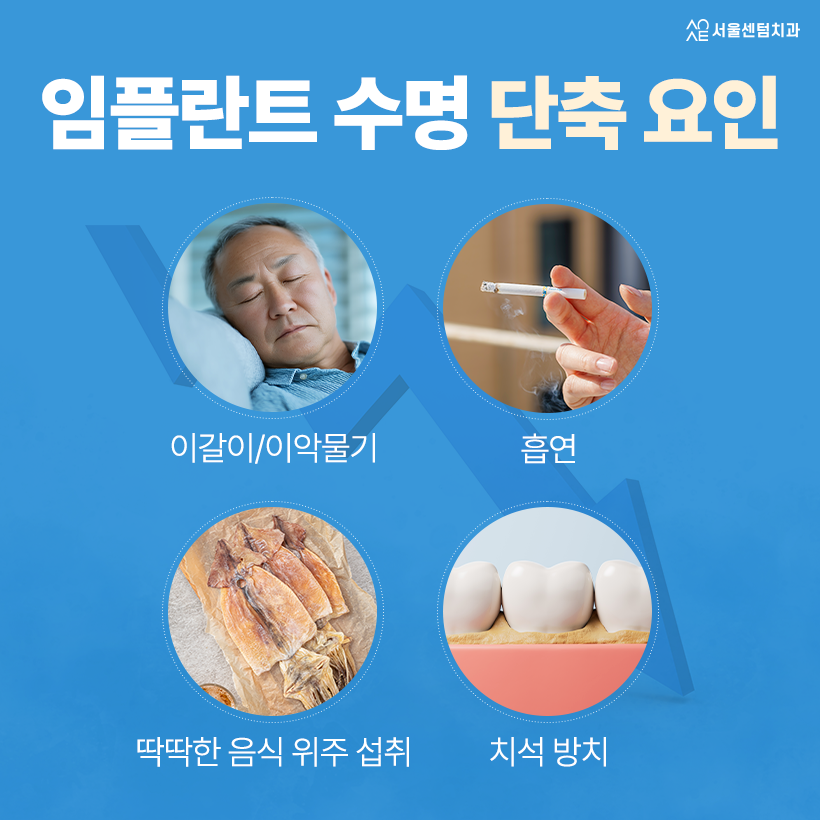
| 1) Teeth grinding / clenchingContinuous pressure causes microscopic damage to the structure 2) SmokingReduced blood flow delays gum recovery and increases the risk of inflammation 3) Eating hard foodsIncreases the possibility of prosthesis cracking and breakage 4) Leaving tartar untreatedRaises the likelihood of peri-implantitis |
Habits repeated unconsciously in daily life like these
can have a subtle impact.
Among other issues,
peri-implantitis is something you should be especially careful about.
If treatment is delayed, depending on the situation,
it can lead to fatal results to the point that
re-implantation may be necessary.
Please do not forget that a single lifestyle habit can create
a difference of several years, even decades.
Systematic care is required.
Because food easily gets trapped,
simply brushing well may not be enough to
extend implant usage.
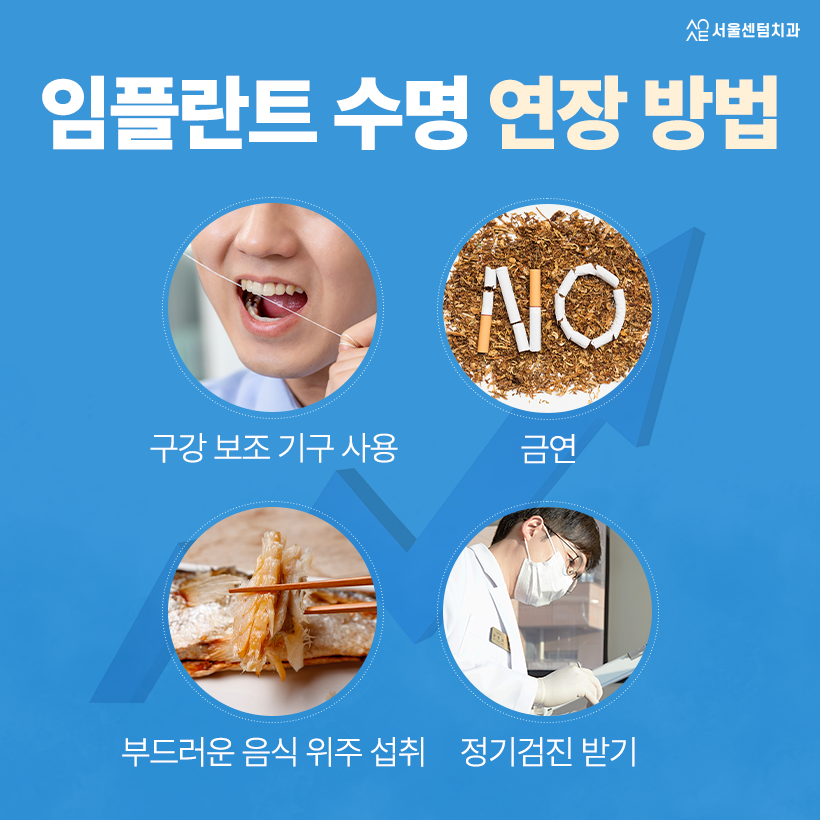
To clean every nook and cranny,
at least one of the following must be used: interdental brushes, floss, or a water flosser.
It is also important to use a toothbrush with soft bristles
to reduce irritation to the gums.
You also need to avoid brushing with excessive force.
Get checkups every six months to inspect hidden issues
such as screw loosening, prosthesis wear, and osseointegration status.
Although they are artificial teeth, they are structures that bond with the gums,
so they last longer when observed regularly like natural teeth.
The usable period varies from person to person
It can vary depending on individual gum and bone density,
occlusal force, constitution, and other factors.
For people with high bone density and stable occlusal force,
structural stability is maintained more smoothly,
so the lifespan of the structure is relatively longer.
On the other hand, in cases such as full-mouth implants,
where all teeth are replaced,
maintenance becomes more difficult.
Because it is difficult to distribute the load evenly,
and as the number increases, more precise design and adjustments are needed.
Rather than being defined by a certain number of years,
it can be said to vary according to my lifestyle habits and treatment schedule.
The real lifespan of an implant
begins on the first day of care.
Like building and maintaining a house,
or regularly inspecting a car,
it is difficult for them to last long without steady attention and care.
Because implant usage period is the result of what patients and
medical professionals create together,
I hope you will look in the mirror now, check your gum condition,
and think back to when you last had a checkup.

A small habit of regular scaling and checkups can protect you for
10 years, 20 years, and even longer,
so if you missed your checkup, make a reservation right away.
Previous post